
18 min 56 sec
100 Million Years Of Food: What Our Ancestors Ate and Why It Matters Today
By Stephen Le
Explore a hundred-million-year journey through the evolution of human nutrition. This biological perspective reveals why modern diets fail and how ancestral eating patterns can help us reclaim our health in the modern world.
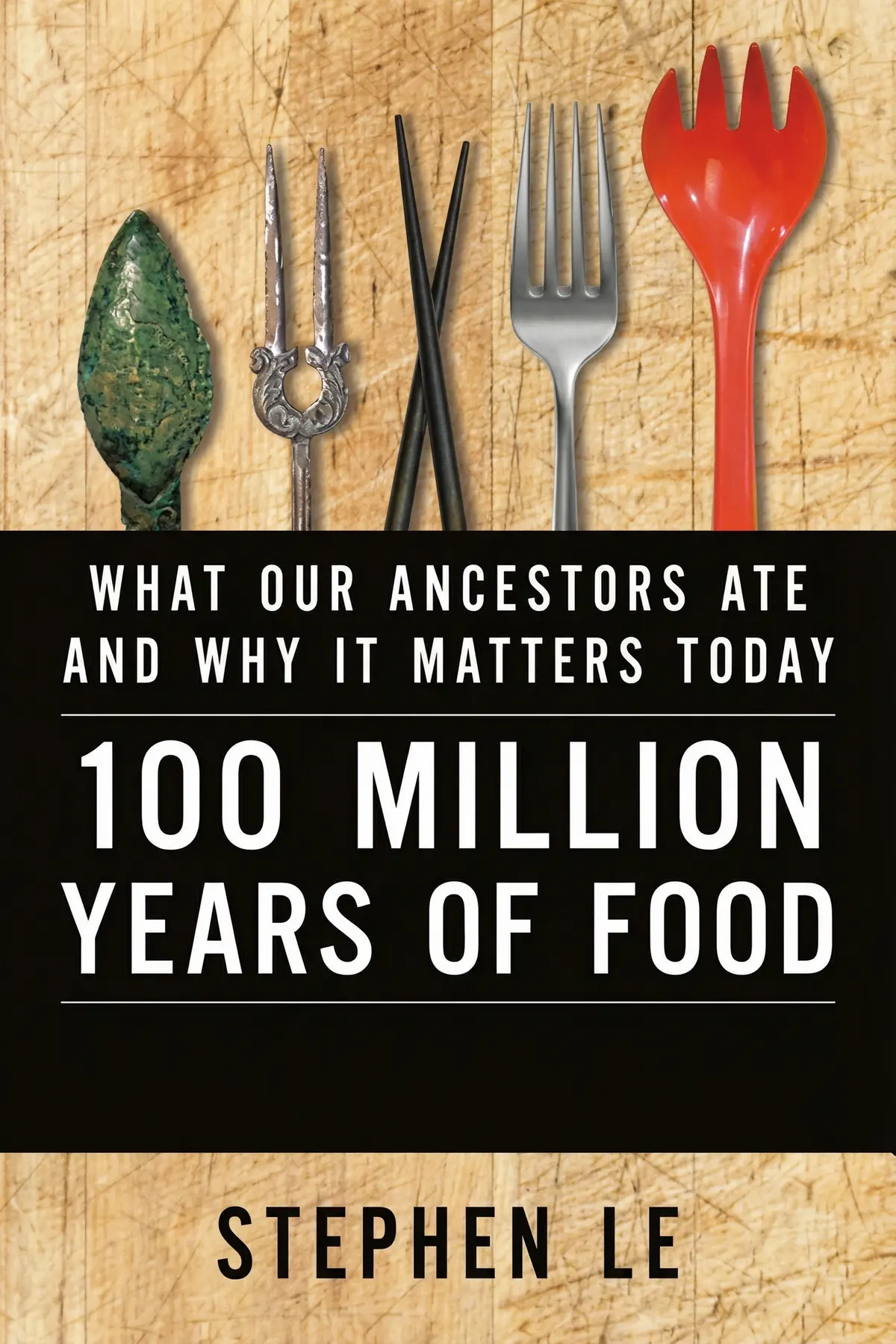
Table of Content
1. Introduction
1 min 45 sec
Walking down the aisle of a modern supermarket, it is easy to feel like we have reached the pinnacle of human convenience. We have access to fruits from the tropics in the middle of winter, processed grains that last for years on the shelf, and more protein options than our ancestors could have dreamed of. Yet, beneath this veneer of abundance lies a troubling paradox: we are sicker than ever. Rates of type 2 diabetes are skyrocketing, obesity has become a global epidemic, and food allergies that were once unheard of are now commonplace. We are left wondering where we went wrong.
To find the answer, we have to look much further back than the latest fad diet or the invention of fast food. We have to go back to the beginning—not just to the early humans of the Paleolithic era, but all the way back to our tree-dwelling ancestors one hundred million years ago. By tracing the long, winding path of our dietary evolution, we can start to see how our bodies were built and what they were actually designed to process.
In this exploration, we will look at the various stages of our nutritional history. We will see how shifting from insects to fruit, and then from fruit to meat and eventually to farmed grains, fundamentally reshaped our biology. We will uncover the hidden dangers of ‘superfoods’ like milk and the surprising benefits of carrying a few extra pounds. This isn’t just a history lesson; it’s a guide to understanding the biological mismatch of the twenty-first century. As we travel through time, we’ll discover that the secret to health isn’t about finding a single ‘perfect’ diet, but about understanding how our deep past continues to influence our health today. Let’s begin the journey by looking at the very first items on the human menu.
2. The Ancient Foundations of Insects and Fruit
2 min 36 sec
Discover why our earliest ancestors thrived on creepy-crawlies and how a massive climate shift forced us to become fruit-eaters with a specific biological vulnerability.
3. How Meat Fuelled the Human Brain
2 min 27 sec
The transition from the trees to the savanna brought a new food source that changed our intelligence forever, but it came with a metabolic price tag.
4. The Diversity of Alternatives: Fish and Dairy
2 min 09 sec
Not every culture chose meat, and those that turned to the sea or the herd developed unique biological adaptations and risks.
5. The Chemical War and the Rise of Farming
1 min 59 sec
We often think of vegetables as purely beneficial, but plants have spent millions of years developing defenses to stop us from eating them.
6. The Danger of Rapid Dietary Shifts
2 min 08 sec
Our bodies evolve slowly, but our food technology moves fast. This gap has created a breeding ground for ‘diseases of civilization.’
7. Rethinking the Calorie and the Scale
1 min 59 sec
Is weight loss really just about ‘calories in versus calories out’? The history of human metabolism suggests the answer is much more complex.
8. Ancestry, Age, and the Power of the Table
2 min 04 sec
Health is personal. What works for you depends on where your ancestors came from, how old you are, and who you’re eating with.
9. Conclusion
1 min 49 sec
The story of human nutrition is a hundred-million-year epic, and we are currently living in its most chaotic chapter. We have traveled from the canopies of ancient forests to the sterilized aisles of modern supermarkets, and along the way, we have gained incredible knowledge while losing touch with our biological foundations. The central lesson of this journey is that our bodies are still largely adapted to the worlds of our ancestors, and the more we deviate from those ancient patterns, the more our health suffers.
However, this doesn’t mean we need to live in caves or eat nothing but raw meat. Instead, it’s about making informed, biologically respectful choices. We can start by paying attention to our ancestry and how our specific heritage influences our tolerance for things like dairy or alcohol. We can look at our age and adjust our intake of protein and fats accordingly. We can be wary of the ‘chemical warfare’ in plants and return to traditional methods of food preparation that make grains and legumes safer to digest.
But perhaps the most important changes are the ones that affect our lifestyle. We evolved to move, so we should find ways to integrate physical activity into our daily routines—not just as a chore at the gym, but as a natural part of how we get around. And finally, we should stop treating food as a lonely transaction of calories. By returning to the communal table, we honor the social bond that allowed our species to survive and thrive for millions of years. Health isn’t found in a pill or a perfect macro-ratio; it’s found in the harmony between our ancient biology and our modern choices. By looking back, we can finally find a sustainable way to move forward.
About this book
What is this book about?
100 Million Years Of Food provides a sweeping biological and anthropological history of what humans have eaten since our earliest ancestors lived in the trees. Stephen Le takes us through the major transitions of our dietary history, from insect-eating primates to fruit-loving apes, and eventually to meat-hunting humans and grain-dependent farmers. By examining these shifts, the book uncovers why the modern Western diet is so often at odds with our genetic makeup. The book promises a deeper understanding of chronic illnesses like diabetes, cancer, and heart disease, framing them not as random misfortunes but as the result of a massive 'mismatch' between our ancient bodies and our current food environment. Rather than advocating for a one-size-fits-all diet, Le explores how factors like ancestry, age, and local environment dictate our unique nutritional needs. Ultimately, the book provides a roadmap for navigating modern food choices by looking backward, encouraging a return to traditional preparation methods, communal eating, and a lifestyle defined by natural movement.
Book Information
About the Author
Stephen Le
Stephen Le is a visiting professor of Biology at the University of Ottawa. He earned his PhD in biological anthropology from the University of California, Los Angeles (UCLA). His academic background allows him to blend rigorous scientific research with cultural observation. This book, 100 Million Years Of Food, represents his first major best-seller, bringing complex evolutionary concepts to a wide public audience.
Ratings & Reviews
Ratings at a glance
What people think
Listeners find the book to be an outstanding read. Nevertheless, the takeaways are varied, with some finding it highly educational while others describe it as a jumbled collection of details.
Top reviews
Charles
I honestly wasn’t expecting to enjoy a book about biological anthropology this much, but Stephen Le has a way of making complex evolutionary history feel like a conversation over dinner. The most fascinating part for me was his exploration of how our specific ancestral backgrounds—not just 'human' ancestry—dictate what we should be eating today. Being of mixed heritage myself, his questions about whether he should eat traditional Vietnamese food versus a Mediterranean diet really hit home. It’s a refreshing departure from the usual one-size-fits-all Paleo or Keto manifestos that dominate the shelves. I particularly loved the chapter on insects; while I’m not exactly rushing out to fry up some crickets, he makes a compelling moral and environmental case for them. The writing is modest and adventurous without being pretentious. It’s less of a 'diet book' and more of a global travelogue through time and culture.
Show moreRoydao
Stephen Le has written something truly special here. Most food books are just lists of 'eat this, not that,' but Le wants you to understand *why* our bodies react the way they do based on millions of years of evolution. I found the section on the 'pact' we have with parasites and the hygiene hypothesis to be absolutely mind-blowing. It really changed how I think about cleanliness and allergies. He’s a very likeable narrator—modest and willing to try anything once (including bugs!). I particularly loved his advice to look at 'whole cuisines' rather than just individual nutrients. It makes so much more sense to eat the way our specific ancestors did, rather than following a generic 'Paleo' template. This book is a must-read for anyone who is tired of the 'food wars' on the internet and wants a more sensible, evidence-based approach to living well.
Show moreSun
This book is a gem. I loved the personal touch Le brings to the subject. As an ethnic Vietnamese man living in Canada, he provides a perspective that is so often missing from the 'Western-centric' nutrition world. His exploration of how different ethnicities might have different tolerances for things like milk or gluten is so important and rarely discussed because of political correctness. The chapters on how we evolved to need meat, yet struggle with too much protein, were a masterclass in nuance. I also appreciated his 'authorial fearlessness'—starting a book with a chapter on eating insects is a bold move, but it totally works! It’s like having a long, fascinating dinner conversation with a very smart friend. I've already recommended it to three people. It’s not just a book about food; it’s a book about what it means to be human.
Show moreWeera
This was a really refreshing take on the 'how should we eat' genre. I’ve read Michael Pollan and the usual suspects, but Le brings a biological anthropology lens that feels much more grounded in long-term history. I was especially struck by the section on how our ancestors lost the ability to synthesize Vitamin C—it really puts your daily fruit intake into perspective! He also tackles the meat and dairy debate with a lot of nuance, suggesting that what works for you at twenty might not be what your body needs at sixty. My only real gripe is that he can be a bit dismissive of modern agricultural science, which felt a bit one-sided. Still, his descriptions of his travels and the 'exotic' foods he tries are vivid and engaging. It definitely made me want to go for a long walk and rethink my relationship with processed snacks.
Show moreSebastian
A solid, thought-provoking read that challenges a lot of modern health dogmas. I loved the chapters on the geography of health—visiting Ikaria and Okinawa to see how movement is built into their daily lives was much more convincing than just telling someone to join a gym. Le's writing style is easy to digest, and he doesn't sound like a 'preachy' doctor. I did find the parts about genetic mutations and uricase enzymes a bit dense, but he usually follows them up with a relatable story that helps the medicine go down. I’m giving it four stars because I felt the ending was a little rushed, and he never quite settled the debate on whether his own Vietnamese genes meant he should avoid dairy entirely. Regardless, it’s one of the more unique health books I've picked up in years.
Show moreConnor
I’d give this a 4.5 if I could. Le’s basic message is simple: move more and eat what your ancestors ate. But the way he gets there is fascinating. He looks at everything from the evolutionary loss of vitamin C synthesis to the modern-day impact of watching too much TV. The travel elements are great, and he describes the food in a way that makes you feel like you're there with him. I do think he’s a bit too biased toward organic farming and anti-GM sentiments, which felt more like a personal political stance than a biological one. However, the rest of the book is so well-researched and engaging that I can overlook that. It’s a very human look at biology, and I finished it feeling like I had a much better grasp on why my body craves the things it does.
Show morePruet
There’s a lot to like here, but also a lot that frustrated me. Le is clearly a knowledgeable guy, and his perspective as a 'second generation naturalist' is unique, especially when he discusses the evolutionary implications of ethnicity and diet. However, the book feels a bit like a compendium of interesting facts that don't always hang together. One minute we're talking about uric acid in primates, and the next we're in Okinawa looking at how much people walk. It’s all very interesting, but the narrative flow is clunky. I also felt his bias against GMOs and his push for organic farming was a bit unscientific and ignored the realities of global food security. It’s a decent read if you want some 'did you know?' facts for a cocktail party, but maybe don’t take it as a definitive health guide. It’s a bit of a mixed bag, honestly.
Show moreSayan
I have complicated feelings about this book. On one hand, the information is absolutely jammed in there—you’ll learn about everything from castor oil to the history of alcohol in China. On the other hand, it often feels like Le is trying to do too much at once. The tone shifts from academic to casual travelogue so quickly it can give you whiplash. I did appreciate his honesty about how fad diets don't work, but some of his 'traditional' advice felt a bit like he was romanticizing the past. For instance, he spends a lot of time on insect-eating, which is fine, but it’s not exactly a practical tip for the average reader living in a food desert. It’s a fun, 'light' read for a science book, but I found myself wishing for a more cohesive argument instead of just a series of interesting chapters.
Show morePornthip
To be perfectly honest, the title '100 Million Years of Food' is pretty misleading. I was expecting a deep dive into paleobiology, but what I got felt more like a disorganized collection of 'grandma’s stories' and personal travel anecdotes. Le seems to rely heavily on popular culture and 'what people agree on' rather than rigorous, peer-reviewed data for some of his larger claims. At one point, he makes a comment about plants having no nutritional significance on their own, which just left me scratching my head in confusion. Is he being metaphorical? Or just provocative for the sake of it? I found the structure quite jarring, jumping from serious genetic discussions about the GLO gene to his personal hunt for authentic fish sauce. It felt like a book made for impressionable readers who want to feel like they're reading science without actually doing the heavy lifting.
Show moreYulia
I really wanted to like this, but I ended up putting it down halfway through. It’s just too disorganized. One paragraph he’s talking about the laws of physics and weight loss, and the next he’s telling a story about a trip to a salmon hatchery. There's no clear thesis. Even worse, some of the 'science' felt incredibly flimsy. He makes these huge generalizations based on 'traditional wisdom' that just don't stand up to scrutiny. The line about plants having no nutritional significance was the final straw for me—it’s such an absurd statement that I couldn't trust anything else he wrote. It feels like he’s trying to be the 'edgy' version of an anthropology professor, but it just comes across as confusing and poorly researched. Save your time and read a real biology textbook instead.
Show moreReaders also enjoyed
Alien Earths: The New Science of Planet Hunting in the Cosmos
Lisa Kaltenegger
A Life Decoded: My Genome: My Life
J. Craig Venter
A Planet of Viruses
Carl Zimmer
AUDIO SUMMARY AVAILABLE
Listen to 100 Million Years Of Food in 15 minutes
Get the key ideas from 100 Million Years Of Food by Stephen Le, plus 5,000+ more titles in English and Thai.
- 5,000+ titles
- Listen as much as you want
- 7-day free trial
- Cancel anytime







