

Ali: A Life
Jonathan Eig
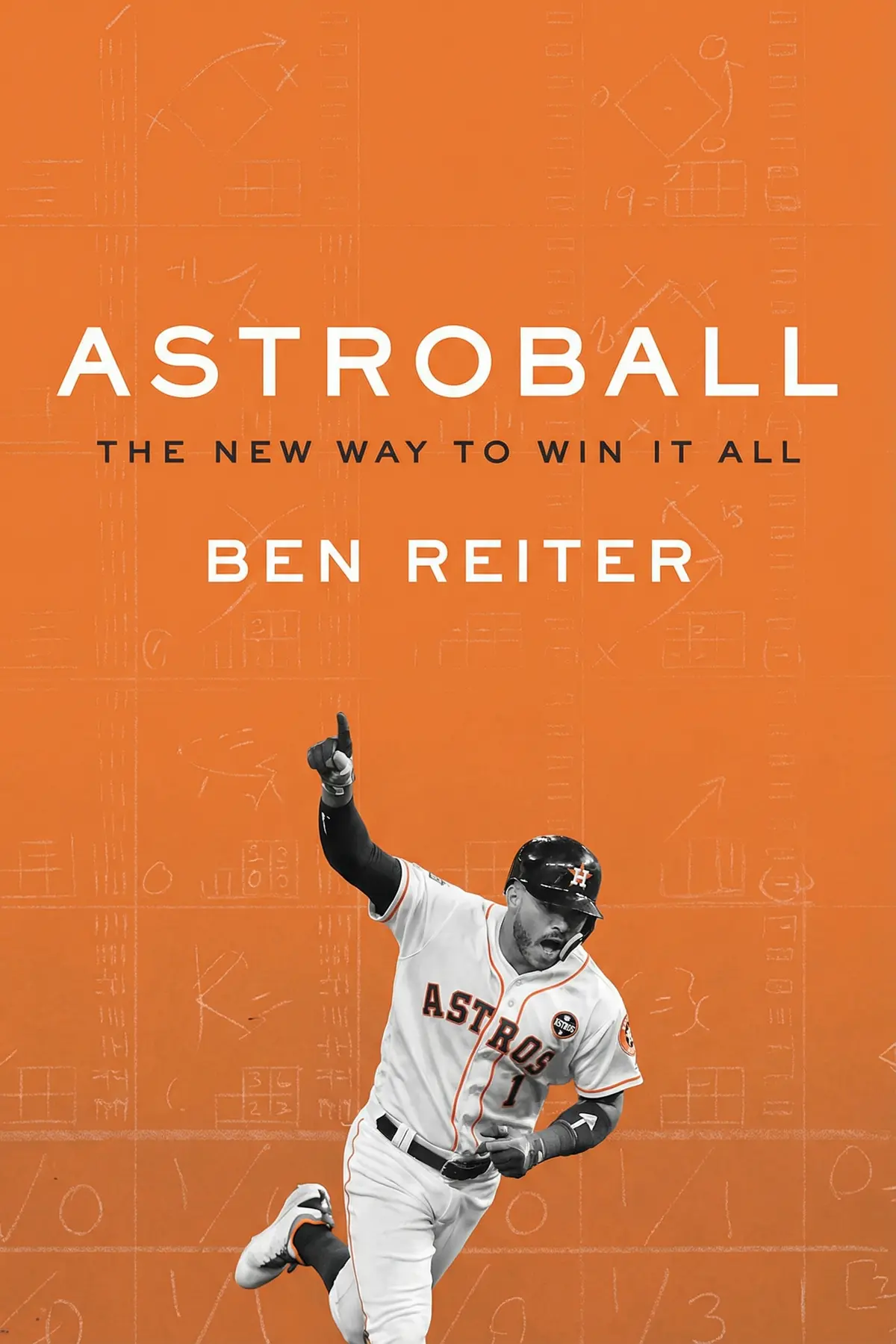
Discover how the Houston Astros utilized a revolutionary blend of big data and human insight to transform from baseball’s basement dwellers into World Series champions in a remarkably short period.
1 min 56 sec
For decades, the world of professional sports has been dominated by a single, powerful ideology: that victory is the product of intangible qualities. We talk about ‘heart,’ ‘grit,’ and the ‘instinct’ of a seasoned coach who can see greatness in a player’s eyes. In baseball, this was the law of the land. Scouts would travel the country, relying on their years of experience to judge a prospect’s potential based on how they looked, how they carried themselves, or even the sound the ball made when it hit their bat. But as we see in the story of the Houston Astros, that traditional approach was eventually challenged by a new kind of power—the power of math.
Astroball is the story of how a team that was once the laughingstock of the league decided to stop guessing and start calculating. It’s the account of a managerial revolution led by two outsiders: Sig Mejdal, a former NASA engineer with a passion for probability, and Jeff Luhnow, a scouting director who saw baseball as a complex system that could be decoded. Together, they embarked on an experiment to see if they could build a championship team by following the data, even when it contradicted everything the experts believed.
As we move through this summary, you’ll see that the Astros’ journey wasn’t just about replacing people with computers. Instead, it was about finding the perfect ‘mixture’ of talent. It’s about how they used technology to see things the human eye misses, how they leveraged the economics of age and salary, and how they eventually realized that even the most advanced algorithm needs a human touch to truly succeed. This is the story of how ‘Astroball’ became a new way to win it all, taking a team from the bottom of the rankings to the pinnacle of the World Series in 2017. Let’s dive into how they changed the game.
2 min 22 sec
Explore how a background in casino gambling provided the perfect framework for rethinking baseball strategy and challenging the reliability of human intuition.
2 min 26 sec
See how advanced camera systems and complex algorithms allowed the team to uncover hidden talents that were invisible to traditional scouting methods.
2 min 30 sec
Discover why the team prioritized signing younger players and how that financial strategy allowed them to build a more complete roster.
2 min 20 sec
Learn how the Astros found one of their greatest stars by ignoring traditional physical archetypes and focusing strictly on performance metrics.
2 min 11 sec
Explore the difficult and often cold business decisions that must be made when data predicts a career-ending injury before it even happens.
2 min 29 sec
Understand why even talented players can fail if they don’t adapt, and how the Astros learned from the mistake of letting one such player go.
2 min 15 sec
See how the Astros moved beyond numbers to address the human side of the game, breaking down language barriers to foster true team unity.
2 min 24 sec
Examine the moment the team’s leadership had to ignore their own data to make the final move that secured their championship victory.
1 min 45 sec
The journey of the Houston Astros from a cellar-dwelling team to World Series champions is more than just a sports story; it’s a blueprint for how to innovate in an established field. We’ve seen how they moved from the high-stakes probability of the blackjack table to the high-tech triangulation of the pitch, always looking for the edge that others were too biased to see. They proved that by valuing what is measurable—like the spin rate of a curveball or the hitting efficiency of a five-foot-five infielder—you can find success where others see only failure.
But perhaps the most important takeaway from ‘Astroball’ is the recognition of balance. The Astros didn’t succeed just because they had the best computers. They succeeded because they learned when to trust those computers and when to trust the people running them. They bridged language barriers to build team chemistry, they supported players through difficult mechanical changes, and they had the courage to overrule their own algorithms when human intuition pointed toward a different truth.
The throughline of this story is clear: data should inform our decisions, but it shouldn’t dictate our humanity. Whether you are managing a baseball team, a business, or your own career, the lesson of the Astros is to look for the hidden metrics while never losing sight of the people behind the numbers. By combining the precision of the scientist with the wisdom of the scout, you can build something truly extraordinary. As you move forward, ask yourself: where are the biases in my own field, and what data might be hiding the next world-class talent right in front of me? The ‘Astroball’ way is about having the courage to look closer and the wisdom to see the whole picture.
Astroball explores the radical transformation of the Houston Astros, a team that once seemed destined for permanent mediocrity. The narrative follows the journey of data analyst Sig Mejdal and scouting director Jeff Luhnow as they challenge the traditional norms of Major League Baseball. By moving away from purely instinct-based scouting and embracing a sophisticated, data-driven methodology, they managed to identify undervalued talent that others missed. But this isn't just a story about spreadsheets and algorithms. The book promises to reveal how the Astros discovered that data alone wasn't enough to win it all. They had to learn how to integrate human factors—like chemistry, communication, and veteran leadership—into their mathematical models. This summary illustrates how the combination of high-tech metrics and traditional human insight created a blueprint for success that changed the sport of baseball forever, culminating in the team's historic 2017 World Series title.
Ben Reiter is an accomplished journalist based in New York. He is a regular contributor to prominent publications including Sports Illustrated, Time, and the Village Voice. Astroball marks his debut as a book author, bringing his deep experience in sports journalism to the forefront.
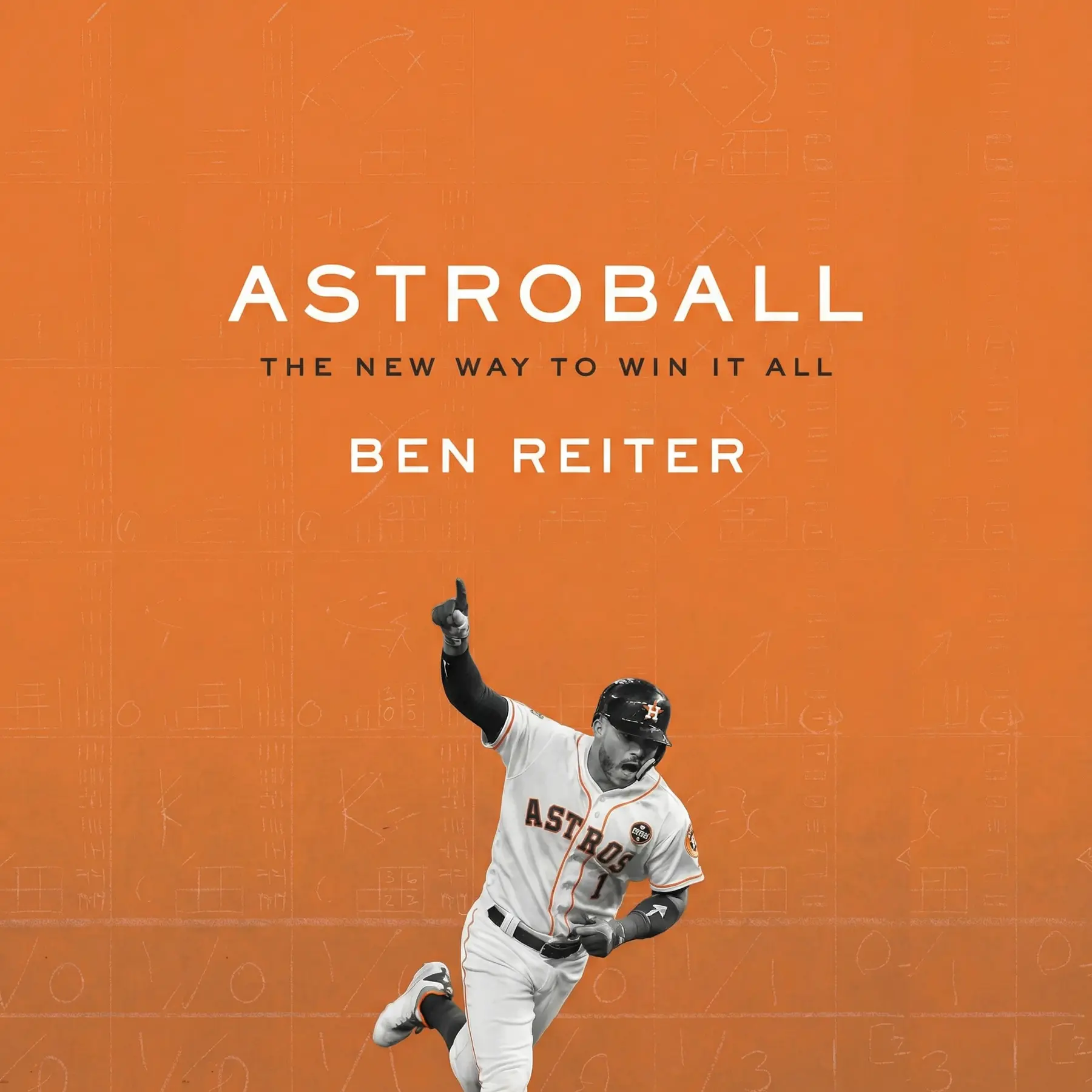
Listeners find this baseball narrative absorbing and expertly crafted, featuring poignant individual stories that offer a deep look into the Astros' distinctive strategy. Furthermore, the account is celebrated for documenting the franchise's path to success, and listeners value the principles that can be used across many different disciplines. The work is also lauded for being highly accessible, with one listener mentioning it acts as a perfect partner piece to Moneyball.
Ben Reiter delivers a masterclass in sports journalism that feels like the natural evolution of the Moneyball era. While Michael Lewis focused on the inefficiencies of the market, Astroball digs into the fascinating intersection of nerd analytics and old-school scouting. I was captivated by the portraits of Sig Mejdal and Jeff Luhnow as they built the infamous Nerd Cave. The book beautifully articulates how the Astros didn't just look at spreadsheets; they looked for the human traits that numbers often miss. It’s a compelling narrative about how a team can endure three years of 100-plus losses to reach the pinnacle of the sport. Frankly, the writing style is so fluid that it makes complex statistical concepts feel like high-stakes drama. Even if you aren't a die-hard Houston fan, the logic behind their 2017 run is undeniably brilliant.
Show moreThe Nerd Cave comes alive in these pages as a place where traditional baseball wisdom was dissected and rebuilt. Reiter captures a moment in time when the Astros were the most innovative force in professional sports. The lessons on decision-making and risk management are applicable to almost any field, from tech startups to traditional corporations. I found the stories about the draft process, especially regarding the decision to pick Correa over other prospects, to be the most enlightening parts of the text. In my experience, the book moves fast and doesn't get bogged down in too much dry math, which is a relief. It’s a great companion piece for anyone who loved Michael Lewis’s work but wanted more focus on the players themselves. A definitive account of how the game changed forever.
Show moreAfter hearing the hype, I finally dove in and was moved by the Houston Strong narrative woven throughout the final chapters. The way the team galvanized the city following Hurricane Harvey adds an emotional weight that balances out the cold analytics of the first half. Watching the development of Jose Altuve from a tiny kid nobody wanted to an MVP is a classic underdog story that Reiter tells with great flair. Personally, I think the book is worth reading just for the behind-the-scenes look at the 2017 World Series. It’s a well-written, engaging chronicle of a team's journey from being the laughingstock of the league to the top of the mountain. While the subsequent scandal makes some of the integrity talk feel misplaced, the sheer effort of the rebuild is still fascinating to witness.
Show moreEver wonder how a team loses 100 games and then wins it all just four years later? Ben Reiter’s account is a gripping, fast-paced look at the most successful rebuild in modern sports history. It serves as the perfect successor to Moneyball, proving that data is even more powerful when you don’t ignore the scouts. The details about the Nerd Cave and the draft room are absolute gold for any baseball nerd. I loved the focus on the Verlander trade; it really showed the human side of the front office's calculations. While the current reputation of the Astros is tarnished, this book remains a vital document of how they initially climbed the mountain. It’s a page-turner that makes you feel like you’re right there in the dugout during the 2017 World Series. Five stars for the storytelling alone.
Show moreAs a lifelong baseball fan, I found the personal narratives of players like Jose Altuve and Carlos Correa to be the real heart of this story. Reiter doesn’t just focus on the front office; he shows how these young athletes were pieces of a much larger, high-stakes puzzle. The way the book describes the acquisition of Justin Verlander at the waiver deadline is particularly thrilling, capturing the tension of a franchise going all-in. Truth is, the 2017 World Series victory felt inevitable by the end of the book because of the foundation laid years prior. However, reading this after the sign-stealing scandal broke adds a layer of bittersweet irony that’s hard to ignore. It’s a well-written chronicle of a journey to greatness, though some sections regarding Carlos Beltran’s leadership aged quite poorly in hindsight. Still, it’s a necessary read for anyone interested in team building.
Show morePicked this up on a whim after a friend called it the better version of Moneyball, and I have to agree. The pacing is incredible, moving from the humid days of the Astrodome's history to the high-tech innovations of the modern era. I especially enjoyed the deep dive into Sig Mejdal’s background as a literal rocket scientist turned baseball guru. The book does a great job explaining Astroball as a philosophy that blends objective data with subjective human evaluation. My only real complaint is that it occasionally feels a bit too much like a PR piece for Jeff Luhnow and the McKinsey-style management. Regardless, the story of the team’s transformation is a blueprint for any organization looking to disrupt their industry. It’s engaging, deeply researched, and provides a front-row seat to the most successful rebuild in baseball history.
Show moreWhy does one team win while others tank for years without any progress? This book answers that by focusing on the relentless discipline of the Astros' management. Jeff Luhnow’s strategy was brutal—losing intentionally to hoard assets—but Reiter shows the human toll that took on the fans and the players. I liked the focus on the human element, particularly how they tried to quantify leadership through veterans like Carlos Beltran. In my experience, sports books usually lean too far into either stats or anecdotes, but this one finds the sweet spot. There are a few moments where the corporate-speak gets a little heavy, which might bore some casual readers. But if you want to understand why the defensive shift and launch angle became the law of the land, this is the book. It’s an essential, albeit now complicated, history of a championship team.
Show moreTo be fair, you don't even need to love the sport to appreciate the methodology here. This is a book about process, patience, and sticking to a plan when everyone else is calling you crazy. The way the Astros front office ignored the media's mockery during the 100-loss seasons is a great lesson in conviction. I was fascinated by the Decision Analysis software they built to evaluate every single player in the system. The book is incredibly readable, avoiding the math homework feel that some modern sports books suffer from. I do wish there was a bit more skepticism regarding the culture of the front office, as they come across as somewhat robotic at times. Overall, it’s an insightful look at how big data can be used to achieve seemingly impossible goals in a very short timeframe.
Show moreIt is extremely difficult to read this now without seeing a massive asterisk on every page. Reiter is a fantastic writer, and his 2014 Sports Illustrated prediction remains one of the greatest calls in sports history. But every time the book praises the intelligence of the organization, I couldn't help but think about the trash cans. The sections detailing Yu Darvish tipping his pitches in Game 7 feel particularly uncomfortable given what we know now about the scheme. Look, the analysis of how they tanked to get high draft picks is interesting, but the glorification of their unique approach feels hollow. I appreciated the insight into the front office's logic, but the cheating scandal has effectively turned this into a work of historical fiction. It is a tragic case of a great book being undermined by the reality of its subjects.
Show moreThe prose is excellent, but the context is ruined by the revelations of 2019. Reiter paints a picture of a team that was smarter, faster, and more analytical than the rest of the league. It's hard to reconcile that with the reality of the sign-stealing scheme that was happening during the exact timeframe this book celebrates. When Reiter writes about the team getting out of a late-season slump in 2017, you can't help but think about the trash can banging. I found the chapters on the draft and the Verlander trade to be the most authentic parts remaining. Not gonna lie, it’s frustrating to read about their brilliance knowing they were also breaking the rules. It’s a 5-star piece of writing about a 1-star situation, so I’m settling on a middle-ground rating. A great read, but take every genius moment with a grain of salt.
Show moreJonathan Eig

Billie Jean King


Christopher McDougall


Des Linden
AUDIO SUMMARY AVAILABLE
Get the key ideas from Astroball by Ben Reiter, plus 5,000+ more titles in English and Thai.







