
19 min 32 sec
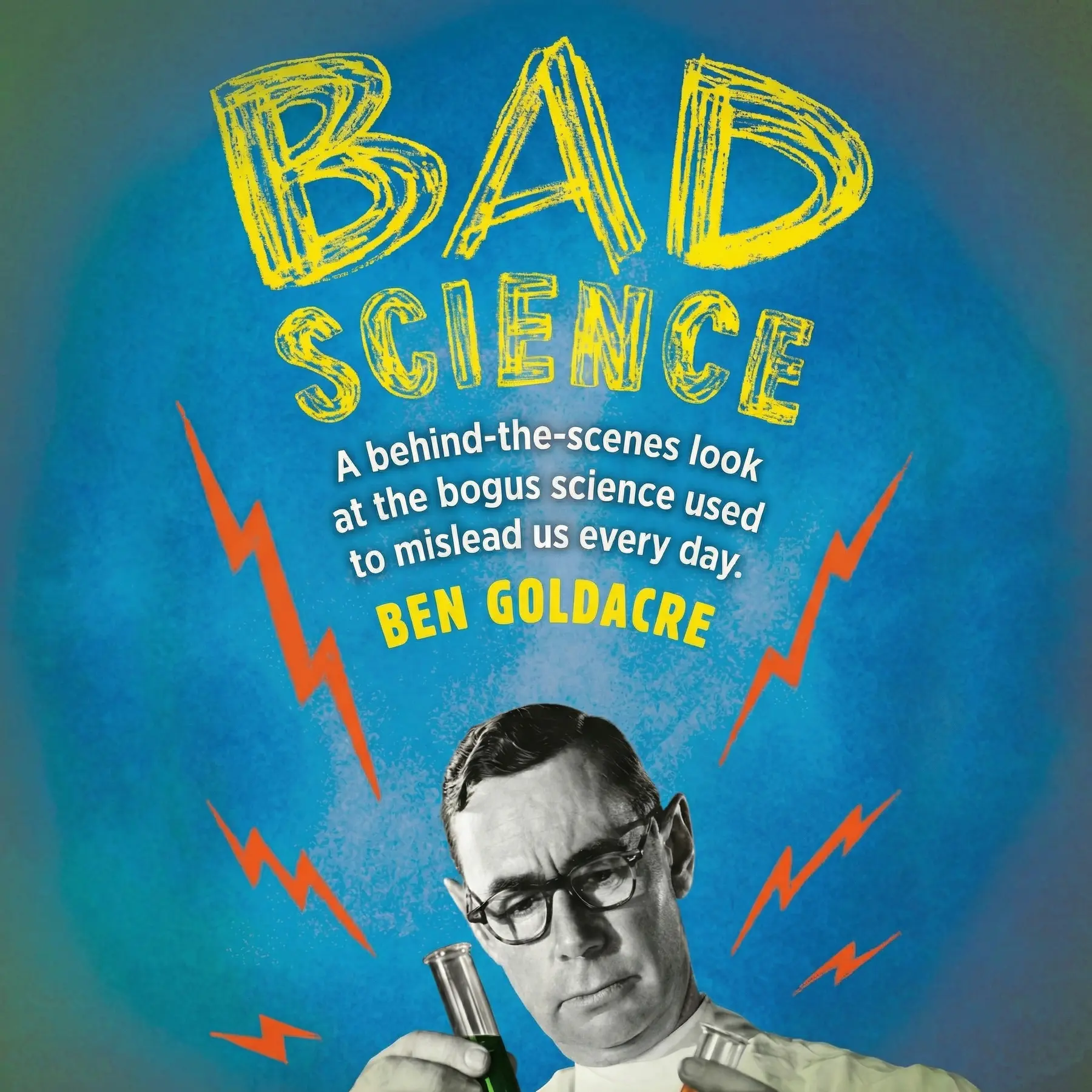
Bad Science: Quacks, Hacks, and Big Pharma Flacks
By Ben Goldacre
A sharp critique of how science is manipulated by corporations and the media. This summary exposes the flaws in medical research and provides tools to identify misinformation in everyday life.
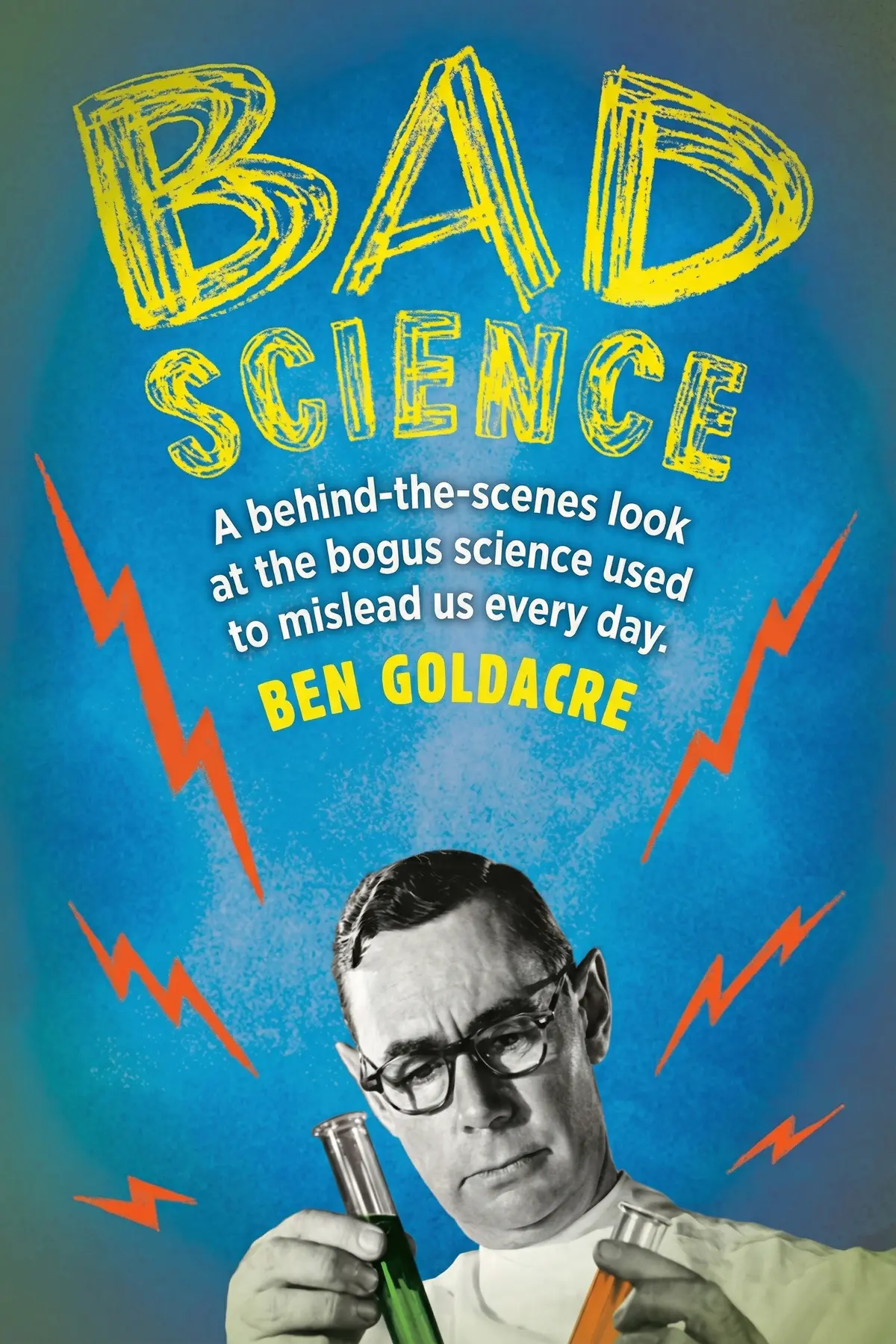
Table of Content
1. Introduction
1 min 52 sec
Welcome to an exploration of the invisible battles being fought over your health and your wallet. Every single day, we are surrounded by claims that sound authoritative, look professional, and promise to change our lives for the better. We see them in the aisles of the local drugstore, on the evening news, and in the breathless headlines of our favorite websites. Science is the most powerful tool humanity has ever devised for understanding reality, but because it carries so much weight, it is also a tool that is frequently hijacked.
In this journey, we are going to look behind the curtain of the ‘scientific’ industry. We will see how certain big players—including pharmaceutical giants, nutritionists, and even the mainstream media—use the language of science to sell us ideas and products that are often entirely hollow. The problem isn’t science itself; it’s the ‘bad science’ that mimics the real thing to deceive us. We’ll uncover how data is cherry-picked, how negative results are buried, and how our own brains are naturally wired to believe things that aren’t actually true.
The throughline of our discussion today is simple but vital: scientific literacy is a form of self-defense. By the time we finish, you will have a clearer understanding of how to separate the signal from the noise. We are going to look at why a detox footbath changes color, why the media is so obsessed with scaring us, and how a single misunderstood statistic can change the course of a person’s life. This isn’t just about debunking myths; it’s about empowering ourselves with the analytical tools to demand better evidence and make more informed choices. Let’s begin by looking at the clever tricks used in the health and beauty industry to exploit our trust.
2. The Seduction of Pseudo-Scientific Jargon
2 min 16 sec
Discover how the beauty industry uses complex-sounding language to sell products with zero evidence, from detox footbaths to DNA-infused skin creams.
3. The Perils of Nutritional Overextrapolation
2 min 05 sec
Learn why the ‘expert’ advice given by some nutritionists is based on flimsy lab studies that don’t translate to human health.
4. The Hidden Bias in Pharmaceutical Research
1 min 54 sec
Explore how the drug industry controls the flow of information by burying negative results and inflating the appearance of efficacy.
5. Understanding the Theater of the Placebo Effect
2 min 02 sec
Discover how the appearance and method of a treatment can trick the brain into healing the body, even when the ‘medicine’ is just sugar.
6. The Architecture of a Fair Medical Trial
2 min 01 sec
Uncover the common flaws in study design—from poor randomization to a lack of blinding—that can make a useless treatment look like a miracle.
7. The Misuse of Statistics in the Justice System
1 min 47 sec
See how a misunderstanding of probability can lead to tragic miscarriages of justice, as shown in the heartbreaking case of Sally Clark.
8. Our Brains Are Natural Pattern-Seeking Machines
1 min 55 sec
Explore why the human mind is prone to seeing correlations where none exist and how ‘regression to the mean’ fools us into believing in fake cures.
9. The Media’s Role in Distorting Scientific Reality
2 min 01 sec
Analyze how news outlets prioritize sensational headlines over boring, incremental scientific progress, leading to massive public health scares.
10. Conclusion
1 min 39 sec
In our journey through the landscape of bad science, we’ve seen that misinformation isn’t just a matter of honest mistakes. It is often a manufactured product, built from cherry-picked data, hidden trials, and clever marketing. We’ve learned that the beauty industry sells us jargon, the pharmaceutical industry sometimes hides its failures, and the media frequently trades accuracy for sensation. But more importantly, we’ve learned that we don’t have to be passive victims of these tactics.
The throughline here is that the tools of science belong to everyone. You don’t need a PhD to ask if a study was randomized, to wonder if a nutritionist is overextrapolating from a petri dish, or to understand that a headline might be designed to scare you rather than inform you. By understanding concepts like the placebo effect, regression to the mean, and publication bias, you’ve started to build your own ‘baloney detection kit.’
As you move forward, remember that the most powerful word in science is ‘Why?’ Why was this study done? Who paid for it? Are there other studies that say something different? Being a critical consumer of information is an ongoing process, but it is one of the most important skills you can possess in the modern world. True science is a humble, rigorous pursuit of truth. By demanding that same rigor from the products we buy and the stories we read, we can help pull back the veil on bad science and ensure that the real breakthroughs—the ones that truly save lives—are the ones that get our attention. Stay curious, stay skeptical, and always look for the evidence.
About this book
What is this book about?
This exploration of modern scientific discourse reveals the unsettling reality of how data is twisted for profit and prestige. From the misleading marketing of beauty products to the high-stakes world of pharmaceutical trials, the narrative exposes the various ways that 'evidence' can be manufactured or hidden. It sheds light on why we fall for health scams and how the media amplifies fringe theories, turning minor studies into major scares. The promise of this work is a better-informed public. By breaking down the complex mechanisms of clinical trials, statistical analysis, and cognitive bias, it equips readers with a metaphorical 'baloney detection kit.' It offers a path to becoming a more critical consumer of information, ensuring that you can distinguish between life-saving medical breakthroughs and mere publicity stunts.
Book Information
About the Author
Ben Goldacre
Ben Goldacre is a doctor, a journalist and the author of two books. His Bad Science column in the Guardian attacked alternative medicine and was the starting point for this book, which was shortlisted for the BBC Samuel Johnson Prize for nonfiction.
Ratings & Reviews
Ratings at a glance
What people think
Listeners consider this work highly accessible and articulate, enjoying the dry British wit and useful advice for incorporating scientific value. The book is further praised for its eye-opening material, with one listener mentioning it serves as a solid prompt to maintain a skeptical mindset. On the other hand, responses to the prose and tempo are varied; one listener felt compelled to keep reading, whereas another viewed the tone as excessively sarcastic. Views on the writer are also split, as some value their deep knowledge while others perceive them as being extremely opinionated.
Top reviews
Praepimon
Finally got around to reading Goldacre’s takedown of the wellness industry, and it’s every bit as sharp as I’d hoped. He doesn’t just debunk things like homeopathy or those ridiculous detox foot baths; he explains why our brains are so easily fooled. The section on the placebo effect was particularly eye-opening, showing that even when there is no active ingredient, the ritual of care matters. To be fair, his British wit is quite dry and might rub some the wrong way, but it kept me engaged through some of the heavier statistical sections. It’s a necessary manual for anyone living in an era of 'alternative facts' and celebrity-endorsed health scams. I found myself checking the sources of every health article I’ve seen since. Truly a must-read for developing a sharper bullshit detector.
Show moreZoe
Ever wonder why people swear by those brown-sludge foot baths or magnetic bracelets? Goldacre dives headfirst into the world of 'mountebanks' and medical scams with a level of snark that I found absolutely refreshing. The way he deconstructs 'Brain Gym' is both hilarious and deeply concerning, showing how easily nonsense can infiltrate our education systems. While some might find him opinionated, his arguments are backed by a solid understanding of the scientific method that is rare in popular writing. I loved the chapters on the pharmaceutical industry; he doesn't just attack the small-time gurus, he goes after the giants too. If you enjoy a bit of dry British humor mixed with rigorous data analysis, you’ll find this hard to put down. It changed how I view every medical headline I read.
Show morePhichai
Wow. This should be required reading for every high school student before they’re allowed to browse the internet. Goldacre dismantles the 'miracle cure' industry with surgical precision, showing exactly how nutritionists and 'doctors' with mail-order degrees exploit our fears. I found the chapter on the MMR vaccine particularly moving, as it shows the real-world harm that comes from sloppy journalism and bad data. He doesn't hold back on the media, calling out editors for prioritizing sensationalism over public health. The writing is snappy and the examples—like the 'magical' properties of antioxidants—are easy to grasp. It’s empowering to realize that with a little bit of knowledge, you can see through the tricks that billion-dollar industries use to deceive us. I’ve already bought copies for three of my friends.
Show moreJob
The chapter on the MMR hoax alone makes this book worth the price of admission. Goldacre meticulously tracks how a single flawed paper in The Lancet, fueled by a media frenzy, led to a legitimate public health crisis. It’s a sobering reminder that 'bullshit' isn't just annoying—it can be deadly. I loved how he didn't just target easy marks like psychics, but also went after the systemic issues in big pharma and academia. His passion for the scientific method is infectious, and he provides practical guidance on how to evaluate claims yourself. Some might find him a bit arrogant, but I think a certain amount of anger is justified when you're talking about lives being put at risk. This is a brilliant, funny, and deeply necessary book that everyone should read.
Show moreEli
This book is a fascinating, if sometimes frustrating, exploration of how the media fails us when it comes to science reporting. Goldacre illustrates that you don't need to be a professional scientist to spot flaws in a study, but you do need to be a critical thinker. I particularly appreciated the breakdown of how statistics are manipulated—moving the goalposts or choosing selective populations to make a drug look more effective than it is. It’s a bit of a hybrid between a narrative and a guide to scientific literacy. Look, it’s not always an easy read, especially when he gets into the nitty-gritty of trial design, but the payoff is worth it. My only real complaint is that it feels very UK-centric at times, but the lessons on skepticism are universal. Definitely worth your time.
Show moreSaranya
Picked this up on a whim after seeing it mentioned in a column, and I have to say, it was a wake-up call. Goldacre does a brilliant job explaining how journalists, who often have no background in maths, turn minor studies into global health scares. The fish oil chapter was particularly enlightening for me because I’ve been taking those supplements for years without ever questioning the evidence. The truth is, reality is complex and there are rarely 'miracle cures,' which is a hard pill for the public to swallow. He balances the serious stuff with a lot of humor, though his sarcasm can be a bit thick at times. To be fair, the pharmaceutical sections are a bit dense and felt a little like a lecture, but the overall message is vital. It’s a great tool for anyone wanting to be less gullible.
Show moreYui
After hearing so much about Ben Goldacre, I finally dove into this, and his dry wit didn't disappoint. It's a bracingly honest look at why we believe things that aren't true, from homeopathy to the supposed dangers of MRSA. The book is quite readable despite the complex topics, though some sections on clinical trial manipulation are definitely a bit more demanding. Personally, I enjoyed the deep dives into the 'bad science' of the cosmetics industry—it’s amazing what companies can get away with just by using science-y sounding words. It’s not a perfect book, as the author's opinionated nature can be a bit grating after 300 pages, but the core message is too important to ignore. It makes you realize that the world is much more interesting when you actually look at the data.
Show morePang
As someone who values scientific literacy, I really wanted to love this book more than I did. Goldacre raises incredibly important points about how Big Pharma manipulates data and how nutritionists often rely on shaky correlations to sell supplements. However, the tone is frequently off-putting. He has this elitist edge that makes it feel like he’s talking down to the reader, even when you’re on his side. It’s hard to stay focused on the brilliant breakdown of the MMR vaccine controversy when the author is busy being a bit of a jackass to everyone involved. Frankly, it starts to feel a bit like a textbook disguised as a polemic, which makes the pacing drag in the middle chapters. Important info, definitely, but the delivery could use a lot less arrogance.
Show moreCameron
To be fair, the science in this book is rock solid, and I appreciate Goldacre’s dedication to debunking harmful myths. The problem is that it often feels like he’s preaching to the converted. If you already understand the scientific method, a lot of this will feel like a long-winded confirmation of things you already know. There are plenty of graphs and detailed explanations of p-values that might scare off a casual reader. At times, the book feels more like a collection of his Guardian columns rather than a cohesive narrative, leading to some repetitive sections. I think the information on how drug trials are buried is the most valuable part, even if the delivery is a bit elitist. It’s a good reference book, but I didn't find it to be the page-turner that others have described.
Show moreAmelia
I struggled paragraph by paragraph to finish this, and honestly, I nearly gave up halfway through. While the content regarding the MMR hoax and the flaws in nutritional 'science' is undeniably important, the author’s personality is just too much to handle. He alternates between being incredibly rude to the public and acting like he’s the only person in the room with a functioning brain. It’s one thing to be skeptical, but it’s another to be so insulting that you alienate the very people who need to hear your message most. The book is repetitive and the pacing is all over the place, making it feel twice as long as it actually is. If you want to learn about these topics, there are better sources that don't make you feel like an idiot for being curious. Very disappointing.
Show moreReaders also enjoyed

A Life Decoded: My Genome: My Life
J. Craig Venter
A Planet of Viruses
Carl Zimmer
A Short History of Nearly Everything
Bill Bryson
A Thousand Brains: A New Theory of Intelligence
Jeff Hawkins
AUDIO SUMMARY AVAILABLE
Listen to Bad Science in 15 minutes
Get the key ideas from Bad Science by Ben Goldacre, plus 5,000+ more titles in English and Thai.
- 5,000+ titles
- Listen as much as you want
- 7-day free trial
- Cancel anytime







