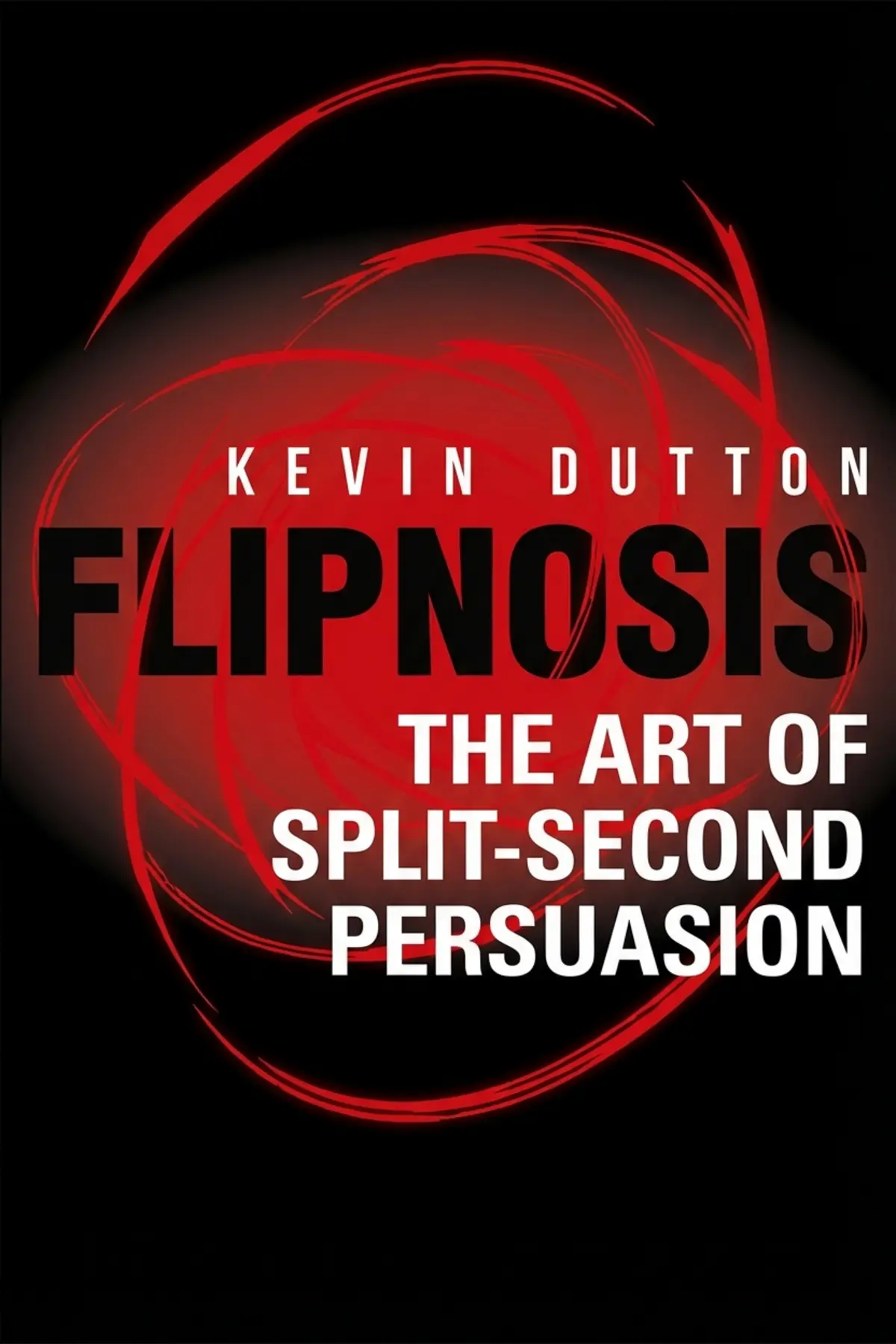
Flipnosis: The Art of Split-Second Persuasion
Kevin Dutton
Explore the biological and psychological roots of binary thinking. This summary reveals why our brains crave simple categories, the dangers of rigid perspectives, and how to embrace the complexities of a gray world.
1 min 57 sec
Imagine you are sitting on your couch, scrolling through Netflix. You might notice that the platform doesn’t just offer broad categories like ‘Comedy’ or ‘Drama.’ Instead, it boasts an incredible 76,000 specific sub-genres. You could find yourself choosing between anything from ‘Sea Creatures Playing Sports’ to something as niche as ‘Psycho-Biddy’ movies. On one hand, this level of granularity is impressive. But on the other hand, it highlights a fundamental tension in the human experience: the way we categorize the world around us.
We live in a world that is inherently messy, fluid, and full of nuance. Yet, our brains often seem wired for the exact opposite. We crave simplicity. We love binaries. We want to know if something is good or bad, safe or dangerous, friend or foe. This tendency toward black-and-white thinking isn’t just a personal quirk; it’s a deeply ingrained biological survival mechanism. However, as we will explore, this same mechanism that once saved our ancestors can now lead us into traps of prejudice, rigid ideology, and social fragmentation.
The throughline of our exploration today is balance. We need categories to function—without them, the world would be an overwhelming sensory soup. But when our categories become too rigid, we lose sight of reality. We start to ignore the ‘gray areas’ where most of life actually happens. Over the next several sections, we are going to look at the evolutionary origins of this mindset, the psychological spectrum of how people categorize, and the ways in which language and tribalism can distort our perception. By the end, you’ll have a better understanding of how to spot these binary traps and how to develop a more flexible, nuanced perspective on the complex world we inhabit.
2 min 05 sec
Humans are born with a natural drive to group things together, a skill that starts developing just months after birth.
2 min 04 sec
Categorization often fails when we encounter the ‘Sorites paradox,’ where the line between two distinct states becomes impossible to define.
2 min 08 sec
Our individual mental styles dictate whether we group things too broadly or too narrowly, impacting how we live and think.
1 min 57 sec
People vary in their need for certainty, with some craving quick answers and others embracing complexity and ambiguity.
2 min 01 sec
Our loyalty to our ‘in-group’ doesn’t just change our opinions—it actually changes how we perceive the world around us.
2 min 01 sec
The words we choose to describe our experiences can actually shrink or expand the mental boundaries we perceive.
2 min 10 sec
Persuasion often relies on ‘supersuasion’—tapping into the ancient binaries of survival, tribalism, and morality.
1 min 39 sec
As we have seen, the human brain is a magnificent machine designed for a world that no longer exists. Our ancestors survived because they could make split-second, binary decisions. Today, however, that same tendency toward black-and-white thinking can lead us to see enemies where there are none, to ignore the complexities of justice, and to fall prey to manipulative rhetoric. We are essentially walking around with ancient survival software trying to navigate a high-definition, multi-layered modern reality.
The goal is not to eliminate categorization—that would be impossible and frankly dangerous. We need categories to organize our lives and our societies. Instead, the goal is to develop ‘cognitive flexibility.’ We must learn to recognize when we are slipping into a binary trap. We must be mindful of the language we use and the way we frame our arguments. Most importantly, we must learn to be comfortable in the gray areas.
A powerful way to practice this is by applying the Sorites paradox to your own beliefs. Next time you find yourself holding a rigid position, ask yourself where the boundary truly lies. If you believe someone should be held accountable for a mistake they made years ago, at what exact age does accountability begin? If you feel a certain policy is ‘right,’ at what point would it become ‘wrong’? By forcing yourself to find the ‘grain of sand’ that changes the category, you’ll realize just how fuzzy most of our boundaries really are. This mental exercise doesn’t just make you a more logical thinker; it makes you a more empathetic and effective inhabitant of our beautifully complex world.
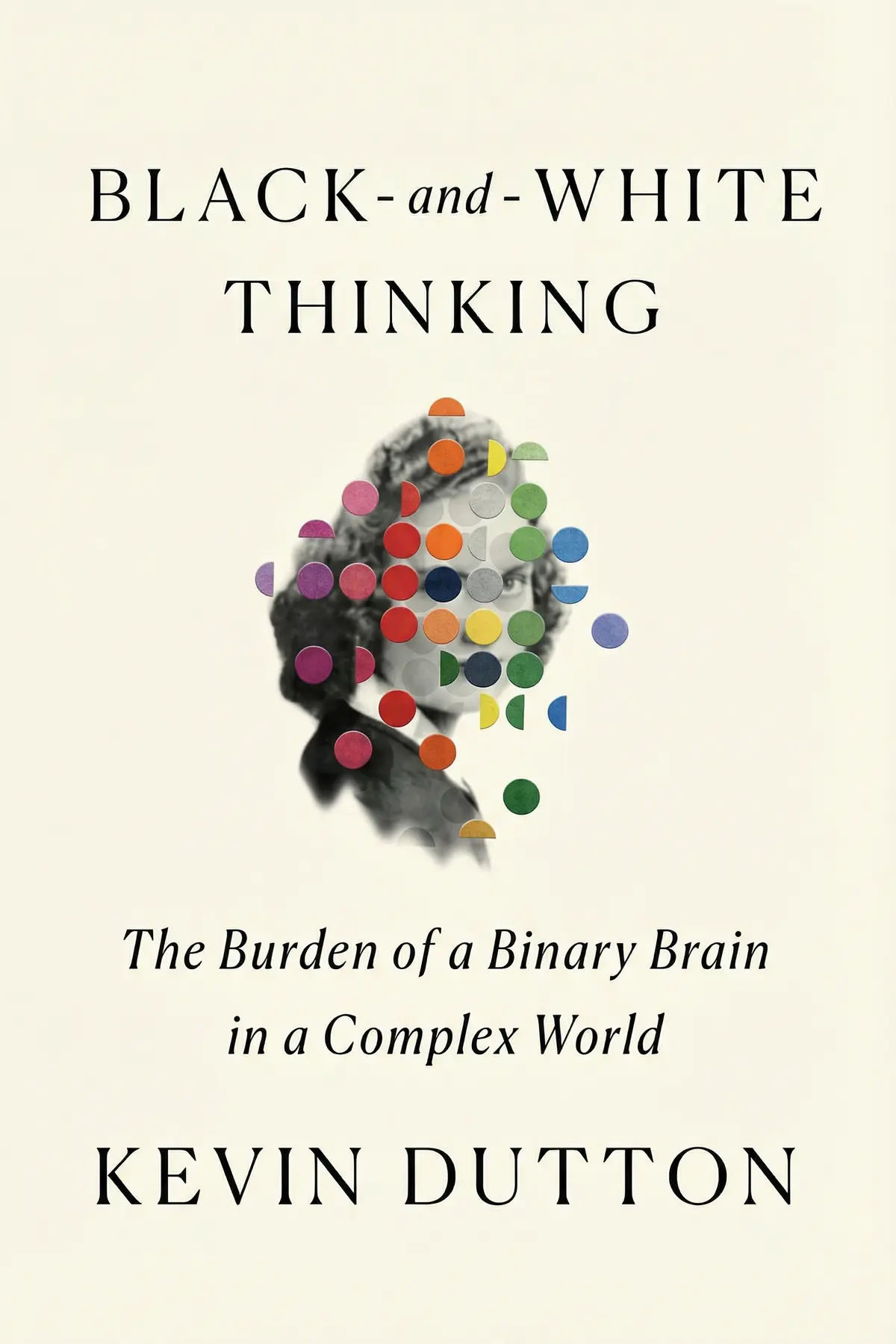
Have you ever wondered why we tend to see the world in opposites? Why is it so easy to divide people into us and them, or actions into right and wrong? Black-and-White Thinking investigates the evolutionary foundations of our binary minds. It explains that while our ancestors needed quick, life-or-death categorizations to survive, the modern world is far more nuanced. This summary takes you on a journey through psychology and neuroscience to uncover how our need for cognitive closure can lead to stereotyping, tribalism, and extreme political divides. You will learn about the 'Sorites paradox' and how the very language we use can sharpen the boundaries in our minds. By understanding the mechanics of how we sort information, you can learn to strike a balance between necessary structure and the flexibility required to navigate complex relationships and global issues. Ultimately, the book promises a clearer, more nuanced way of perceiving reality.
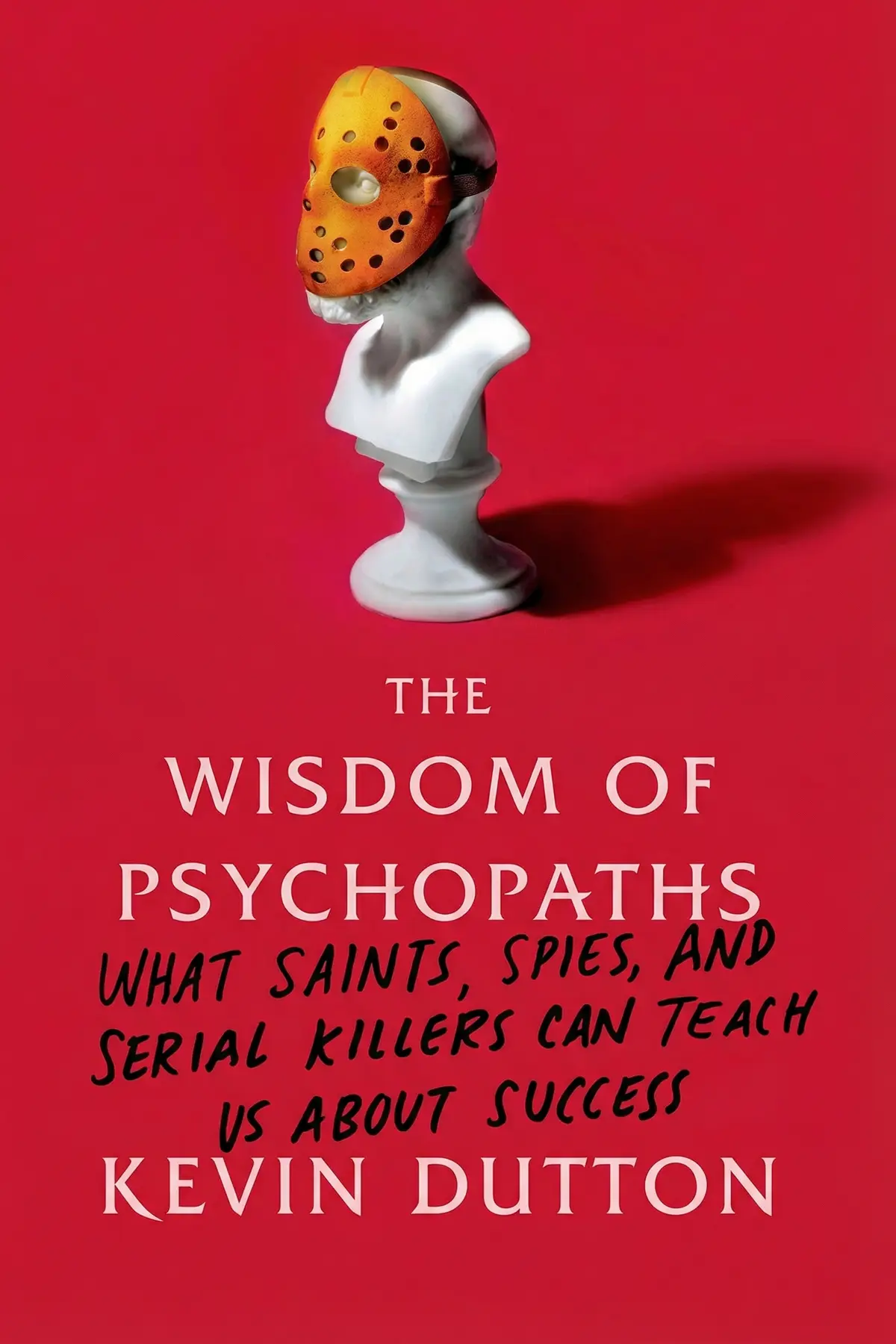
Kevin Dutton is a distinguished British psychologist who has spent his career exploring the darker and more persuasive corners of the human mind. He is particularly well-known for his extensive research into the traits of psychopathy and the mechanics of social influence. Currently serving as a researcher at the University of Oxford, his previous works include The Wisdom of Psychopaths and Flipnosis: The Art of Split-Second Persuasion.
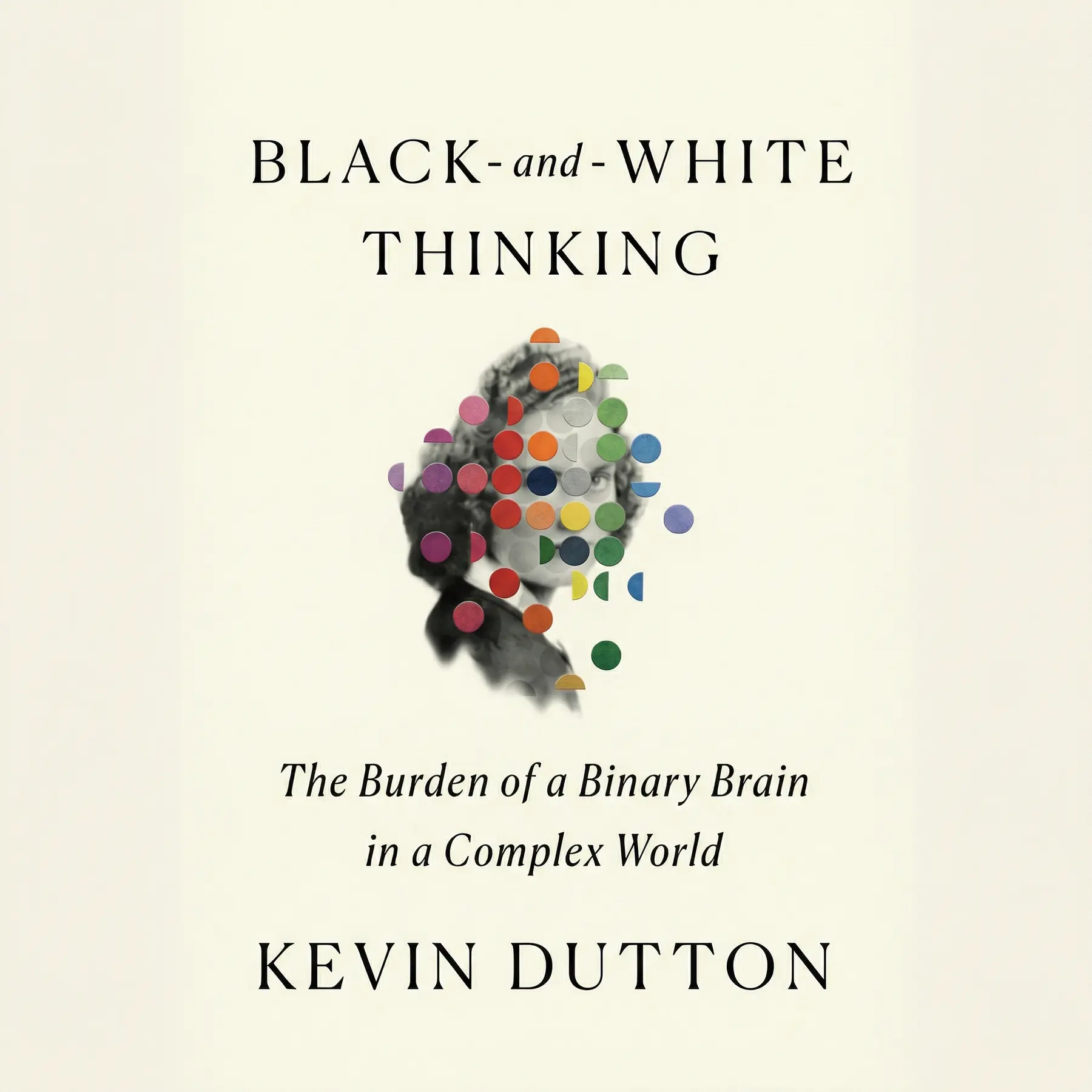
Listeners find the book’s exploration of dualistic logic to be highly stimulating, though perspectives differ regarding the author’s winding narrative and his use of political stories. Many listeners value how the text applies evolutionary biology to clarify why human minds naturally revert to basic categories. Furthermore, the observations on framing and cognitive dissonance are considered deeply educational. Listeners also highlight the quality of the included citations, with one listener noting that the work effectively encourages people to move past inflexible mindsets and instead welcome the complexities of the "gray areas" of life.
Finally got around to reading this and it’s easily one of the most relevant books of the decade. The exploration of the binary brain is groundbreaking stuff that everyone should understand. Dutton explains how detecting risk used to be black and white, but our current world is full of nuance we aren't wired for. Not gonna lie, I was gripped from the very first page to the end. It is a masterclass in understanding cognitive dissonance and why we struggle to see the other side of an argument. This should be required reading in schools.
Show moreAs someone who struggles with seeing the middle ground, this was a complete revelation for my personal growth. I’ve always been a categorical thinker, and this book helped me realize that it’s just my evolutionary hardwiring acting up. The research on Kahneman and Tversky’s loss avoidance was integrated into the narrative beautifully. It’s a well-written guide to training your brain to embrace the complexity of the gray matter in life. Highly recommended for anyone interested in the why behind human behavior and our constant need for simplistic categories.
Show moreIn an era of increasing extremism, this is the psychological manual we desperately need to read. Dutton pulls back the curtain on the mind’s machinery with incredible precision and wit. I loved the super categories framework—fight or flight, us vs them, and right or wrong. It’s an uplifting guide that motivates you to move beyond simplistic stereotypes and actually think for yourself. Frankly, this is going on my must-read list for the year because it explains the world so well. Seeing the gray really does matter more than ever now.
Show moreAfter hearing Dutton on a podcast, I had to grab the book to see if the hype was real. It is a thought-provoking look at how our ancestors’ survival mechanisms now cause modern chaos. The way he breaks down right or wrong as a mental shortcut is brilliant and really made me reflect on my own life. Some of the narrative paths are a bit winding, sure, but the payoff in the final chapters regarding the gray area makes it worth the effort. It definitely changed how I view my snap judgments in daily life and made me more empathetic toward others.
Show moreThis book is essentially a wake-up call for anyone currently trapped in rigid ideologies or social media echo chambers. Using evolutionary biology to explain modern extremism is a clever angle that offers much-needed perspective on our behavior. I found the sections on linguistic determination and George Orwell especially relevant to today's political climate. While he does meander into personal politics occasionally, the core message about escaping binary traps is too important to ignore. It is a dense read, but deeply informative if you have the patience to stick with the author's wandering style.
Show moreWait, why do we keep drawing lines where none exist in the real world? Dutton answers this by looking at our 'chessboard' environment of the evolutionary past. The writing is accessible, which I appreciated since neuroscience can often be dry and impenetrable to laypeople. Look, it’s not perfect—there are some repetitive sections that could have been trimmed down quite a bit. But the appendices alone are worth the price of admission for the cognitive closure tests. It really makes you question your own biases and why you categorize people the way you do.
Show moreEver wonder why we are so incredibly polarized in the modern world? Dutton attempts to explain our cognitive drive to pigeon-hole everything into neat, manageable buckets using evolutionary psychology. To be fair, the research on framing and the three super categories of survival is genuinely fascinating to read. However, the middle section of the book drags significantly with anecdotes that don't always feel relevant to the core science. It’s a solid read that could have been a masterpiece with a tighter narrative. Personally, I found the appendices more useful than several of the actual chapters.
Show moreThe concept of the 'uncertainty reduction engine' is probably the most insightful part of the entire text. I appreciated the deep dive into how smartphones and social media exacerbate our evolutionary instincts for categorization. But frankly, the book falls into the very trap it warns against by being quite one-sided in its choice of political examples. It is a bit of a mixed bag for me. It’s good for beginners to psychology, but might feel too basic for those already familiar with cognitive dissonance theory. I wanted more depth and fewer stories about the author's personal views.
Show morePicked this up because I enjoyed 'The Wisdom of Psychopaths,' but this one missed the mark for me. The concept of the binary brain is okay, but the writing is incredibly repetitive and slow. He keeps hammering the same points about us vs them without offering any real actionable solutions for the reader. If you have already read Kahneman or Tversky, you’ve seen most of this research presented much better elsewhere. To be fair, it’s not a total loss, but it definitely needed a more aggressive editor to trim the fat and keep the narrative focused on the science.
Show moreI really wanted to love this, but it felt like a massive chore to get through. The core thesis is simple: we categorize to survive, but sometimes it causes issues. Dutton stretches this one-sentence idea across 400 pages filled with meandering stories. While the evolutionary biology bits are interesting at first, the book stays on a basic level for way too long. Truth is, there is probably an article out there that conveys this information in a tenth of the time. Plus, the political bias and the author’s fixation on specific anecdotes felt distracting and unnecessary.
Show more
Anthony Pratkanis
Richard Wiseman
Steven C. Hayes
AUDIO SUMMARY AVAILABLE
Get the key ideas from Black-and-White Thinking by Kevin Dutton, plus 5,000+ more titles in English and Thai.