
16 min 26 sec
Flipnosis: The Art of Split-Second Persuasion
By Kevin Dutton
Explore the psychological mechanics behind rapid influence. This summary reveals how split-second persuasion works by tapping into biological triggers, cognitive blind spots, and the specific SPICE formula to change minds instantly.
Table of Content
1. Introduction
1 min 44 sec
Consider a typical day in your life. From the moment you wake up and scroll through your phone to the time you settle in for the night, how many attempts do you think are made to influence your choices? Most people guess a dozen or perhaps twenty. They think of the obvious ones: a salesperson at the mall, a commercial on television, or a friend suggesting a specific restaurant for dinner. However, the reality is far more staggering. Researchers suggest we are targeted by persuasive messages roughly 400 times every single day. This constant barrage is so woven into the fabric of our existence that we often fail to notice it at all.
Persuasion is the invisible thread that holds society together. Without it, we would be left with a much more brutal alternative: coercion. In a world without the art of the ‘flip,’ people would resort to physical force or threats to get what they want. Persuasion allows us to negotiate, to cooperate, and to coexist. But while we are all familiar with the slow grind of a long argument, there is another level of influence—one that happens in the blink of an eye. This is the world of split-second persuasion, a psychological phenomenon where resistance vanishes and behavior changes instantly.
In this exploration of the science of influence, we are going to look behind the curtain of the human mind. We will see how masters of this craft use specific biological and psychological keys to unlock our cooperation. We’ll look at the behaviors of professional persuaders, the dangers of group conformity, and a specific five-part formula that anyone can use to become more effective in their communication. Whether you want to protect yourself from manipulation or enhance your own ability to lead and convince, understanding these mechanics is the first step toward mastering the art of the mental flip.
2. Biological Triggers and the Human Instinct for Compliance
2 min 33 sec
Discover how ancient survival instincts and primal signals can be used to defuse high-pressure conflicts and trigger automatic responses in others.
3. Exploiting the Three A’s of Cognitive Blind Spots
2 min 49 sec
Explore the three psychological vulnerabilities—Attention, Approach, and Affiliation—that experts use to slip past our mental defenses.
4. Framing Reality Through Narrative Control
2 min 35 sec
Learn how the way we describe a situation can completely alter how others judge the facts and determine who is to blame.
5. The Invisible Pressure of the Collective
2 min 22 sec
Uncover the psychological mechanics of groupthink and how the desire for conformity can lead even the most rational individuals to make shocking choices.
6. The SPICE Formula for High-Impact Influence
2 min 35 sec
Learn a practical, five-part framework that combines simplicity, interest, and empathy to achieve persuasive breakthroughs in any situation.
7. Conclusion
1 min 48 sec
As we have seen, the art of persuasion is far more than just winning an argument. It is a sophisticated blend of biology, psychology, and strategic communication that operates largely beneath our conscious awareness. From the instinctual triggers we share with the animal kingdom to the complex social pressures of the modern world, we are constantly being shaped by the influence of others. By understanding the ‘Three A’s’ of mental blind spots and the power of narrative framing, we can start to see the strings that are being pulled in our daily lives.
The SPICE formula—Simplicity, Perceived self-interest, Incongruity, Confidence, and Empathy—provides a roadmap for anyone looking to navigate these waters more effectively. It teaches us that influence isn’t about brute force, but about finding the right key to unlock a person’s willingness to cooperate. It shows us that a well-timed joke, a simple message, or an unexpected gesture can be more powerful than hours of logical debate.
However, with this knowledge comes a significant responsibility. The same techniques used by a life-saving negotiator can also be used by those with less noble intentions. By learning how these ‘flips’ occur, you empower yourself with a form of psychological inoculation. You can recognize when a marketer is pulling your biological triggers or when a group is pressuring you to ignore the truth. Ultimately, the goal is to use these tools ethically—to bridge divides, to solve conflicts, and to encourage positive change. In a world of 400 daily persuasion attempts, being a conscious participant in the process is the only way to ensure you are the one in control of your own mind.
About this book
What is this book about?
Have you ever wondered why some people can change someone’s mind in a heartbeat while others struggle for hours? Flipnosis examines the hidden science of extreme influence, moving beyond simple negotiation into the realm of split-second psychological shifts. The book investigates how high-stakes persuaders—from con artists and trial lawyers to hostage negotiators—bypass our logical defenses to trigger automatic responses. You will learn about the biological origins of influence, such as the primal signals that animals use to survive, and how these same triggers operate in modern human interactions. The book introduces the 'Three A’s' of cognitive vulnerability and provides a practical framework called SPICE—Simplicity, Perceived self-interest, Incongruity, Confidence, and Empathy. By understanding these components, you can learn to recognize when your own mind is being swayed and how to use these ethical tools to increase your own impact in any social or professional setting.
Book Information
About the Author
Kevin Dutton
Kevin Dutton is a British psychologist and researcher at the Department of Experimental Psychology at Oxford University. He specializes in the study of psychopathy and has also written The Wisdom of Psychopaths.
Ratings & Reviews
Ratings at a glance
What people think
Listeners find the book offers great perspectives, with one listener mentioning its basis in scientific research. Feedback regarding the prose is divided; while some find it effectively written, others disagree. The pacing draws criticism for being disjointed, and both the narrative length and visual components elicit varied reactions. Readability is another point of contention, as one listener describes the material as easy to digest and follow, yet another finds the text hard to get through.
Top reviews
Arnav
Picked this up because I loved 'The Good Psychopath's Guide' and I wasn't disappointed by the raw data here. Dutton is a master at taking the 'scary' topic of manipulation and showing how it’s actually a neutral tool used by everyone from saints to sinners. The chapter on the arsonist who saves people from burning buildings really stuck with me—it perfectly illustrates the thin line between a predator and a hero. I found the book easy to absorb, despite some of the more complex biological sections. Not gonna lie, I’ve already started noticing the SPICE principles in the advertisements I see every day. It’s like having a curtain pulled back on the world of social engineering. If you go into it with an open mind and a desire to learn about the human condition rather than just 'hacks,' you'll love it.
Show moreNitaya
Finally got around to finishing this, and my view on social interaction has shifted slightly. What I loved most was the scientific rigor behind the stories. Unlike a lot of self-help gurus, Dutton actually knows his stuff and provides the research to back up his claims. The book is a bit of a rollercoaster—one minute you're learning about the amygdala, and the next you're in a high-security prison. This variety kept it fresh for me, even when the pacing slowed down. It's not a light read, but it's a rewarding one for those who want to understand the 'instant' nature of persuasion. I found the writing to be sharp and often funny. It's easily one of the better books on influence I've encountered in years, even if it doesn't hold your hand through the application process.
Show moreWyatt
Truth is, most books on influence are just fluff, but this is backed by real clinical insight and fascinating field work. I was hooked from the first chapter. The way Dutton explains the intersection of psychopathy and persuasion is brilliant and, quite frankly, a little bit terrifying. It’s a deep dive into how our evolution has left us vulnerable to specific types of 'flips.' I didn't find the case studies disjointed at all; rather, they felt like pieces of a larger puzzle about how the human brain functions under pressure. The readability is excellent, and I finished it much faster than I expected. It’s a must-read for anyone in sales, law, or just anyone who wants to understand the hidden currents of daily life. This isn't just a book; it's a toolkit for understanding the world.
Show moreChokdee
The SPICE acronym alone makes this worth the price of admission for anyone interested in communication. I've read a lot of these types of books, and while this one isn't the most 'practical' in terms of exercises, the insights are top-tier. Kevin Dutton has a way of making complex neurological concepts accessible, even if he gets a bit sidetracked by his own anecdotes. The stories about the psychopathic arsonist and the master con artists are genuinely gripping. You start to see how these 'persuasion ninjas' operate in the real world, which makes you much more aware of when it's happening to you. My only gripe is that the book is a bit long-winded in places. Some chapters felt like they were retreading old ground just to fill pages. Still, it’s a fascinating deep dive into the darker corners of the human mind.
Show moreMuk
Dr. Dutton has a surprisingly snappy prose style for a university fellow, which kept me engaged through some of the more technical bits. I wasn't entirely persuaded by every single case study, but the overall exploration of 'flipnosis' is compelling. It’s not just about lying or tricking people; it’s about the fundamental way our brains process influence. The book is heavily based on scientific research, which I appreciate in a genre often filled with pseudoscience. To be fair, the pacing is a bit hit-or-miss, and some sections definitely flow better than others. I found myself highlighting a lot of the sections on incongruity and how it breaks down people’s mental barriers. It’s a thoughtful look at influence that requires you to engage your brain rather than just follow a list of tips. Not a perfect book, but definitely a smart one.
Show moreWoravit
Ever wonder why some people can talk their way out of anything? This book attempts to answer that by looking at everything from the behavior of predators in the wild to the high-stakes world of elite hostage negotiators. It’s an exciting tour through the mind, and Dutton's writing is surprisingly glamorous and energetic. I didn't find it to be a 'how-to' guide, but rather a series of observations on the mechanics of charm and pressure. Frankly, I think the people complaining about the lack of instructions are missing the point. Understanding the 'why' is much more valuable in the long run than a script. The visual descriptions of the experiments helped me visualize the data, which was a nice touch. It's a dense read, but if you're a fan of social psychology, you'll find plenty to chew on here.
Show moreClara
If you're looking for a step-by-step manual on how to influence people, keep walking. I think the reason this book has such mixed reviews is that it’s marketed as self-help when it’s actually pop-science. Personally, I found the SPICE formula (Simplicity, Perceived Self-interest, Incongruity, Confidence, Empathy) to be a very helpful framework for understanding why certain pitches work. However, knowing the ingredients isn't the same as being a chef. You’ll have to do all the heavy lifting yourself to turn these principles into actual skills. The book goes into extreme detail on specific experiments which might bore some readers, but I appreciated the scientific grounding. It’s a decent read for psychology buffs, but don't expect to walk away as a master manipulator without a lot of outside practice. It’s more about recognition than execution.
Show morePot
As someone who enjoys psychology, I found the depth of the experimentation a bit much at times. Dutton is clearly a brilliant guy, and his thesis about the 'flip'—that instant moment of persuasion—is powerful stuff. But the book often feels like it's dragging you through a labyrinth of research papers that could have been summarized in half the time. It's a bit of a dense slog. I did enjoy the sections on how surgeons and lawyers use these tactics, but the connections between the chapters felt thin. Truth is, I preferred his other work more because it felt more focused. This one tries to cover too much ground—from biology to social engineering—and ends up feeling a bit disjointed. It's a solid 3-star effort that provides some good 'aha' moments if you're willing to dig through the academic weeds.
Show moreKek
This felt like a collection of random anecdotes rather than a cohesive argument. Dutton tries to emulate the Malcolm Gladwell style of storytelling, but it lacks the narrative glue that makes those books so readable. One minute we are talking about animal behavior, the next we are looking at con men, and the transitions are jarringly abrupt. While the stories about psychopaths and their inherent charm are somewhat fascinating, they don't offer much in the way of personal development. I kept waiting for the 'flip' to be explained in a way I could use, but it remained elusive. The pacing is quite slow in the middle sections, making it a struggle to get through. It’s not that the information is wrong—it’s just poorly organized and fails to deliver on the promises made by the back cover.
Show moreSaengdao
Don't let the flashy cover fool you; this book is the ultimate bait-and-switch. I went in expecting a tactical guide on persuasion, something concrete I could actually apply in my professional life, but instead, I got a dry collection of case studies. It’s frustrating because the marketing promises you’ll become a 'persuasion ninja,' yet the content is more like a disjointed research paper. The writing style is all over the place, oscillating between overly academic and trying too hard to be cool. To be fair, some of the science regarding the brain's 'binary' responses is interesting, but it's buried under so much fluff. I frankly couldn't find the motivation to finish the last third. If you want a how-to manual, this isn't it. It’s more of a 'why it happens' book that never quite connects the dots for the reader.
Show moreReaders also enjoyed
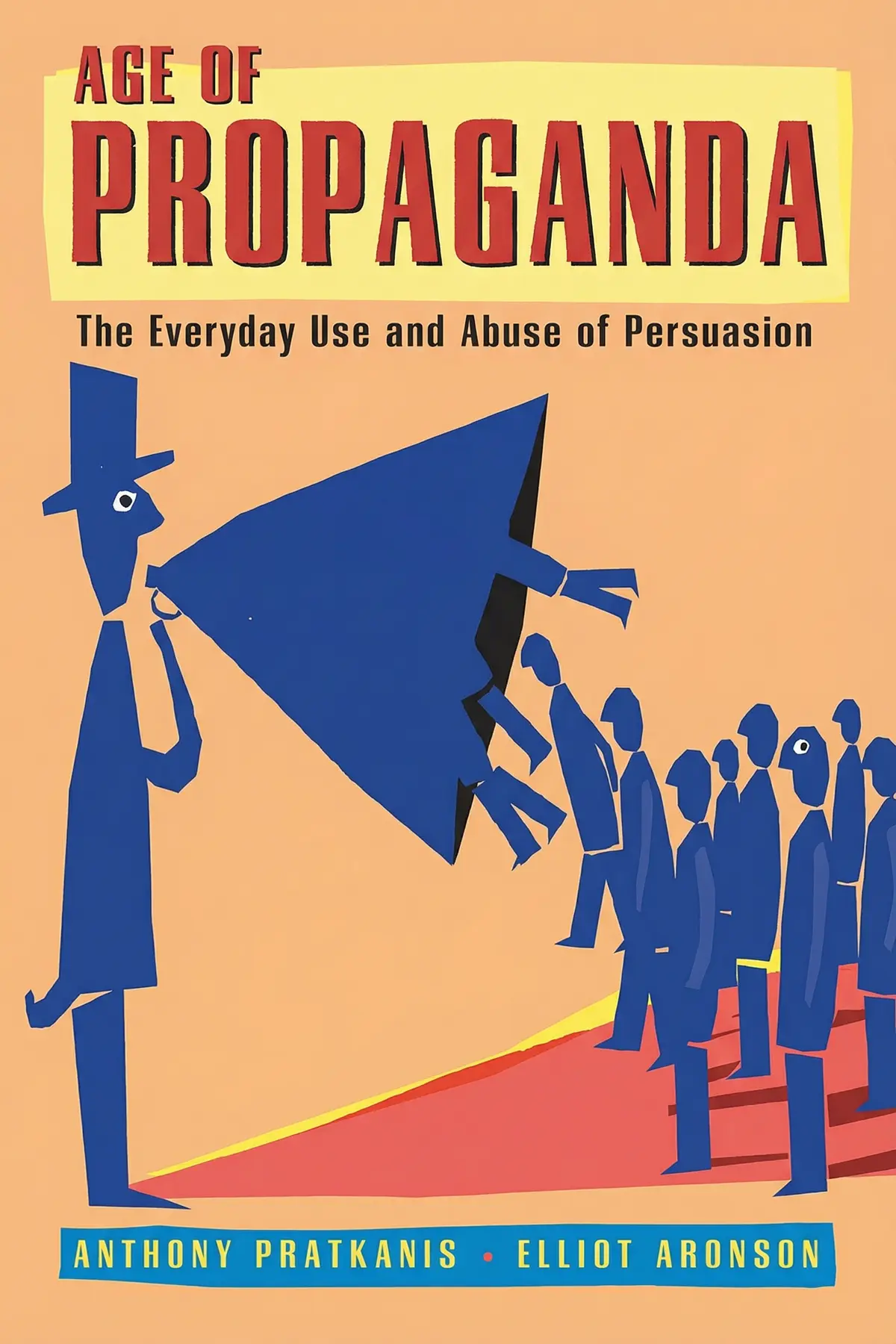
Age of Propaganda: The Everyday Use and Abuse of Persuasion
Anthony Pratkanis

59 Seconds: Change Your Life in Under a Minute
Richard Wiseman

AUDIO SUMMARY AVAILABLE
Listen to Flipnosis in 15 minutes
Get the key ideas from Flipnosis by Kevin Dutton, plus 5,000+ more titles in English and Thai.
- 5,000+ titles
- Listen as much as you want
- 7-day free trial
- Cancel anytime







