
Apollo’s Arrow: The Profound and Enduring Impact of Coronavirus on the Way
Nicholas A. Christakis
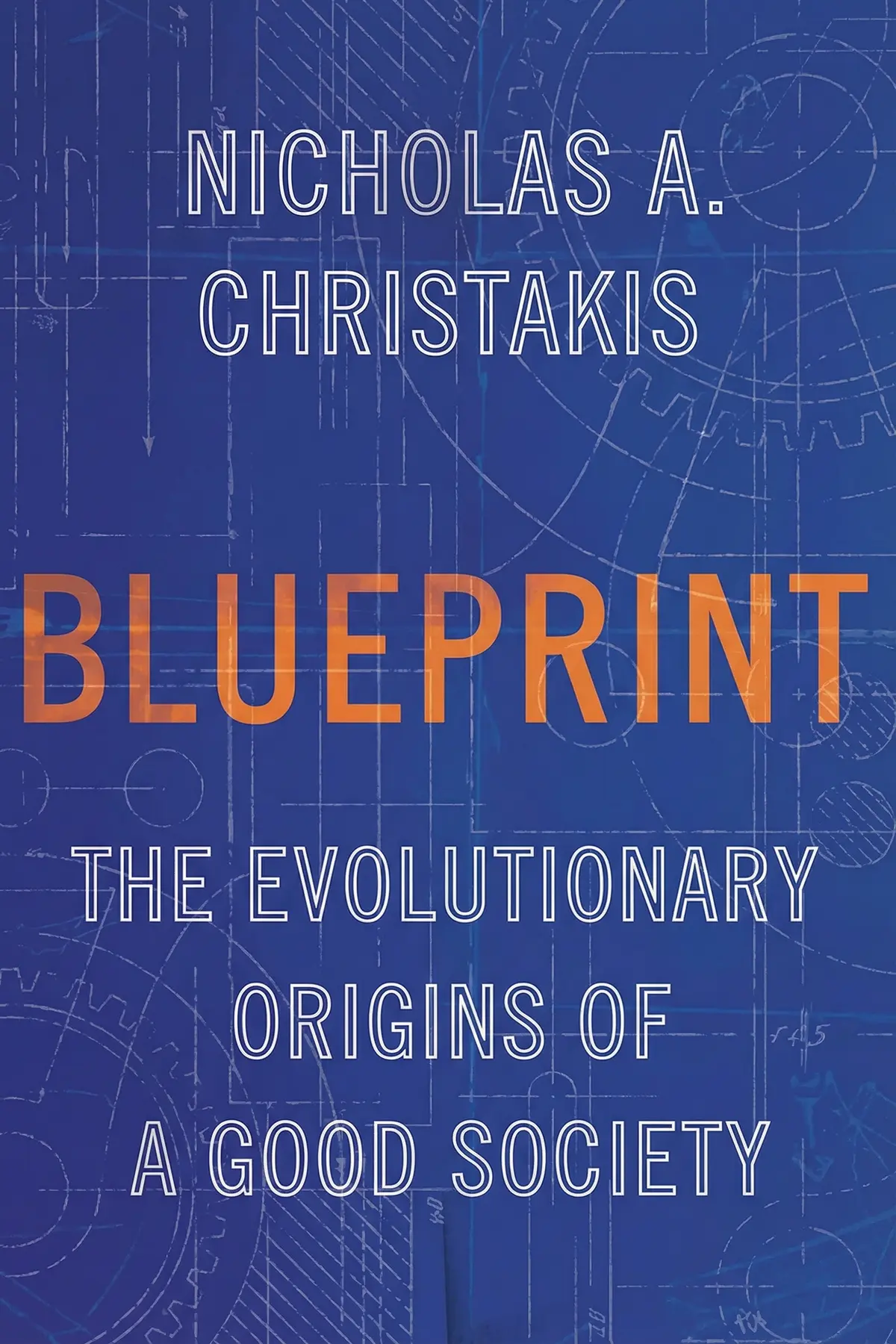
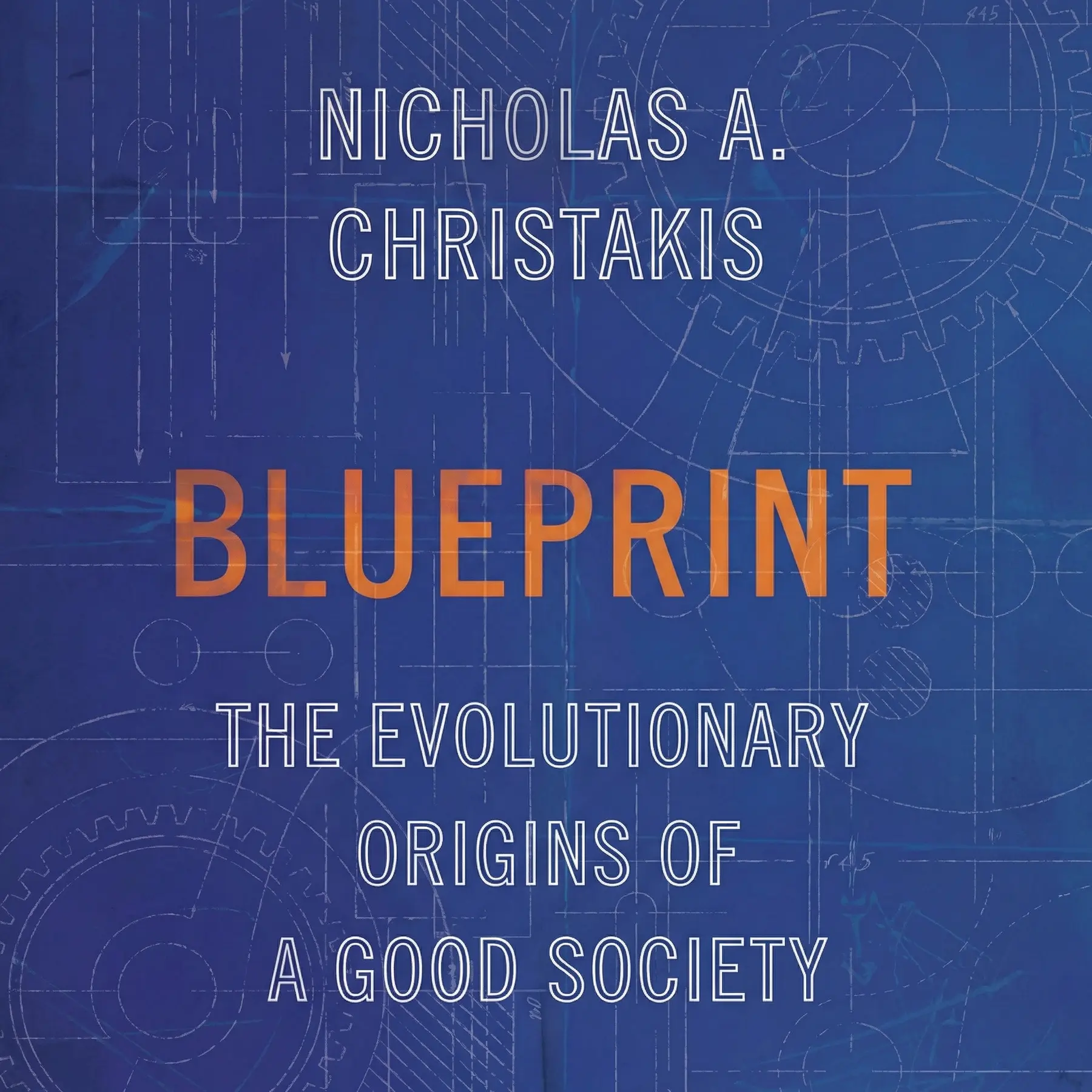
Blueprint explores how our genetic makeup creates a universal foundation for human society, revealing that traits like love, friendship, and cooperation are biological imperatives rather than just cultural accidents.
2 min 05 sec
In our modern era, it often feels as though the world is pulling apart at the seams. From the daily friction of partisan politics to the endless debates over cultural identity, we are constantly reminded of the boundaries that separate us. We are told that our differences—whether they are based on where we were born, what we believe, or how we vote—are the most significant things about us. But what if this perspective is fundamentally flawed? What if, beneath the surface-level noise of our disagreements, there is a deep, ancient, and unshakeable commonality that unites every single human being on this planet?
This is the central premise of Nicholas A. Christakis’s illuminating work. He suggests that we are not just creatures of our environment or products of our specific cultures, but rather, we are born with a biological mandate for sociality. We come equipped with a genetic map—a blueprint—that guides how we interact, how we bond, and how we organize ourselves into groups. This isn’t just about survival in the sense of finding food or avoiding predators; it’s about a universal set of psychological tools that enable us to build what Christakis calls a ‘good society.’
Throughout this exploration, we’re going to look at the ‘social suite,’ a collection of eight core traits that appear in every human culture, from the most isolated tribes to the busiest modern metropolises. We’ll see how these traits manifest in unexpected places—like the harrowing stories of shipwreck survivors or the social networks of elephants. We’ll also examine why things like romantic love and lasting friendship aren’t just pleasant experiences, but are actually evolutionary adaptations that helped our ancestors thrive. By the end of this journey, the throughline will be clear: we are genetically predestined to be similar, to be connected, and to cooperate. Our shared biology provides a hopeful foundation for understanding our species, reminding us that despite our many differences, we are all following the same ancient blueprint for connection.
2 min 35 sec
Discover how a simple summer on a Turkish island reveals the hidden genetic manual that allows humans to connect across language barriers.
2 min 22 sec
What happens when human society is stripped away? The contrasting fates of two shipwrecks reveal why our social instincts are a matter of life and death.
2 min 46 sec
Is love just a biological accident? Explore how our feelings for our partners evolved and why monogamy might be the secret to a stable society.
2 min 30 sec
Why would a teenager sacrifice his life for his friends? Understanding the deep-seated biological necessity of non-familial bonds.
2 min 26 sec
Can a digital ‘tribe’ on Amazon Mechanical Turk reveal the secrets of how human cooperation thrives—and why it can disappear in an instant?
2 min 18 sec
Humans aren’t the only ones with a social blueprint. See how elephants, whales, and even rats share our most ‘human’ qualities through a process called convergence.
2 min 36 sec
Explore the life-saving power of cultural knowledge and why our genes have evolved specifically to help us learn from one another.
1 min 54 sec
As we look back over the landscape of human history and biology, the message is one of profound hope. Nicholas A. Christakis has shown us that while the headlines may be dominated by what divides us, our DNA tells a much more unified story. We are not a species defined by conflict, but by our extraordinary capacity for connection. We carry within us a ‘social suite’—a biological inheritance that compels us to love, to form friendships, to cooperate, and to teach.
These traits aren’t just pleasant side effects of our intelligence; they are the very reason we have survived and thrived. From the survivors on Auckland Island who chose cooperation over chaos, to the digital communities on the internet, the evidence is clear: when we follow our social blueprint, we succeed. We have seen that this blueprint isn’t even unique to us—nature has found these social solutions to be so effective that they have appeared in elephants, whales, and apes as well. It seems the universe itself favors the ‘good society.’
What does this mean for our lives today? It means that our better angels aren’t just a choice; they are our nature. In a time of polarization, it’s worth remembering that we are literally built for togetherness. We are designed to find common ground, to trust one another, and to build communities. Our genetic blueprint doesn’t just make society possible; it makes a good society inevitable, provided we don’t fight against our own best instincts. The path forward for humanity isn’t to reinvent who we are, but to lean more deeply into the cooperative, social creatures we have always been. By recognizing the universal ties that bind us, we can work with our biology rather than against it, ensuring that our shared future is as bright as the ancient blueprint we all carry.
In a world often defined by its divisions, Blueprint offers a radical and hopeful perspective: that humans are biologically programmed to be social, cooperative, and kind. Nicholas A. Christakis argues that we carry an evolutionary 'social suite'—a set of innate capabilities including love, friendship, and the drive to teach others—that has allowed us to build successful societies across the globe. Drawing on diverse examples from shipwrecks and isolated communes to animal behavior and online networks, Christakis demonstrates that these social traits are not merely learned behaviors, but are actually written into our DNA. The book promises to change how you view human nature, moving past the focus on conflict to highlight the deep-seated biological origins of a good society.
Nicholas A. Christakis, MD, PhD, MPH, is the Sterling Professor of Social and Natural Science at Yale University. In 2009, Time magazine named him as one of the world’s most influential people. Elected to the American Academy of Arts and Sciences in 2015, Christakis also runs the Human Nature Lab, where his team researches a wide variety of social behavior.
Nicholas A. Christakis
Listeners find the book highly engaging and skillfully written, while one review highlights its ability to bridge natural and social sciences to clarify human culture. Furthermore, they value its observations on human nature, and one listener characterized the text as a compelling treatise on evolutionary precepts of behavior. Listeners also consider the work heartening, with one review stating it offers a fresh outlook on our society.
Ever wonder why, despite all the chaos in the news, humans haven't completely annihilated each other yet? Nicholas Christakis offers a stunningly optimistic answer in Blueprint, arguing that our very DNA is hardwired for goodness and cooperation. He introduces the "social suite," a set of eight traits like friendship and social learning that appear across every human culture, from ancient Rome to modern online gaming communities. The truth is, I finished this book feeling incredibly hopeful about our species' future. His comparison between the aggressive chimpanzees and the peaceful, playful bonobos was a particular eye-opener regarding how evolution shapes social dynamics. By looking at shipwrecks and intentional communes, he proves that we are destined to build societies that value connection over isolation. It’s a rare scientific read that actually makes you feel better about being human.
Show moreWow. Christakis has managed to do something truly difficult: he bridged the gap between the hard sciences and the messy reality of human culture. The way he describes the "social suite"—those eight core traits we all share—makes so much sense when you look at how different cultures actually operate on the ground. I loved the deep dive into the Turkana people and how their social networks mirror the structures we see in modern, high-tech cities. It’s a powerful reminder that our similarities are far more profound than the superficial differences that dominate our political discourse. Gotta say, his argument that morality isn't just a religious invention but a biological necessity for survival is incredibly compelling. This is a must-read for anyone who wants to understand the biological foundations of a "good" society.
Show moreAfter hearing Christakis talk about his experiences with campus "mobs" and the Yale Halloween controversy, I was curious to see how he viewed the human species as a whole. Blueprint is his answer, and it is a masterpiece of interdisciplinary research that feels both scholarly and deeply personal. He argues that even when we are stripped down to our basics—as in the case of shipwreck survivors—we instinctively move toward the same social structures. The "social suite" isn't just a list of traits; it's the core of what makes us human. Personally, the chapter on how genes can affect culture (and vice-versa) changed the way I think about human history. It’s a thick book, but every chapter offers a new insight that makes you want to keep underlining passages.
Show moreThe chapter on bonobos versus chimpanzees alone is worth the price of admission. Christakis uses these two distinct ape species to illustrate the different paths evolution can take, ultimately showing that humans have carved out a unique space centered on cooperation. I was particularly fascinated by the idea of the "extended phenotype"—that our tendency to create social networks is as much a part of our biology as the color of our eyes. Frankly, it’s rare to find a science book that is this uplifting without sacrificing its intellectual integrity. It reminds us that we are hardwired to be decent to one another, a fact that remains true even when our modern world feels more divided than ever. If you want to understand the "blueprint" of our common humanity, this is the book to get.
Show moreThis book represents a massive undertaking in "stamp collecting" for the social sciences, gathering data from disparate fields to build a unified theory of human society. Christakis moves beyond just looking at the individual, suggesting that our genes create an "extended phenotype" that manifests as the structures of our communities. I was particularly gripped by the chapter on shipwrecked survivors and how their success hinged on their ability to replicate the social suite under extreme pressure. To be fair, the section on AI and genetic modification at the end felt a bit rushed compared to the historical and biological depth of the earlier chapters. It’s a dense read at times, but the writing is accessible enough for a layperson to grasp complex evolutionary concepts. Overall, it’s a refreshing departure from the cynical "nature is red in tooth and claw" narrative we often see.
Show moreAs someone who spends a lot of time thinking about sociology, I found this to be a fascinating, if occasionally sprawling, look at our evolutionary origins. Christakis does a great job of explaining how traits like love for partners and children aren't just personal feelings, but evolutionary strategies to ensure the survival of our bloodlines. The sections comparing human friendship to social bonds in elephants and whales were particularly enlightening and helped ground the "human" experience in a broader biological context. Truth is, the book is quite long and sometimes meanders through philosophical asides that don't always feel strictly necessary to the core thesis. However, his optimistic conclusion—that we are fundamentally cooperative creatures—is a much-needed tonic for the current age of polarization. It’s a thoughtful, well-researched piece of scholarship that stays with you.
Show moreNot what I expected from a book about evolutionary biology, but in a good way! Instead of focusing on "survival of the fittest" in a violent sense, Christakis highlights how cooperation and social learning are actually our greatest evolutionary advantages. I was especially interested in the discussion about "fluid communities" in online gaming and how those environments reward or punish cheaters based on social ties. In my experience, most science books tend to be pretty dry, but the prose here is lively and full of personal observations that keep things engaging. There’s a bit of a "Bill Gates' reading list" vibe to the whole thing—very big-picture and generally positive. While it doesn't solve the world's problems, it provides a framework for understanding why we keep trying to build better societies.
Show morePicked this up hoping for a groundbreaking synthesis of biology and culture, but it felt a bit like a greatest hits album of ideas I'd already encountered in Sapolsky’s Behave or Dawkins’ The Selfish Gene. Christakis is a gifted writer, and his "social suite" framework—covering everything from individual identity to social learning—is undeniably organized. However, the tone occasionally leans more toward optimistic storytelling than rigorous, data-driven proofs. Frankly, the shipwreck anecdotes are the highlight, offering a gritty, fascinating look at how small groups rebuild order from chaos. While it’s a solid introduction for someone new to evolutionary psychology, seasoned readers in this niche might find it a little too "CliffNotes" in its execution. It's a competent, well-argued book, but it lacks that final punch of novelty I was craving.
Show moreTo be fair, this is a very competent and user-friendly breakdown of how evolutionary biology influences society, but it felt a bit like retreading old ground. Christakis builds his argument by stringing together various anecdotes from psychology experiments and ethnographic data, which makes for an easy read but sometimes lacks depth. I found the "social suite" concept useful, yet I kept thinking of other books, like Oren Harman's The Price of Altruism, that tackled similar themes with more scientific rigor. The book bangs around through time and scientific disciplines in a way that is entertaining but occasionally leaves the reader feeling a bit hopscotched. It’s a good overview for a beginner, but maybe skip it if you’re already well-versed in the field of sociobiology.
Show moreFinally got around to reading this after hearing all the buzz, but I found it surprisingly repetitive and surface-level for such a weighty topic. While Christakis is clearly brilliant, the book spends far too much time on anecdotes—like the various shipwreck stories—without digging into the hard biological mechanisms that other authors explain more clearly. Look, the idea that we are "built to be good" is a lovely sentiment, but the book often glosses over the darker aspects of human nature that are just as evolutionary. It felt like a 500-page version of a point that could have been made in a long-form essay. If you’ve already read Robert Sapolsky or Frans de Waal, you probably won't find anything particularly revolutionary here. It’s not a bad book, just one that prioritizes a hopeful narrative over nuanced scientific debate.
Show more
Lisa Kaltenegger
J. Craig Venter
Carl Zimmer
Bill Bryson
AUDIO SUMMARY AVAILABLE
Get the key ideas from Blueprint by Nicholas A. Christakis, plus 5,000+ more titles in English and Thai.







