
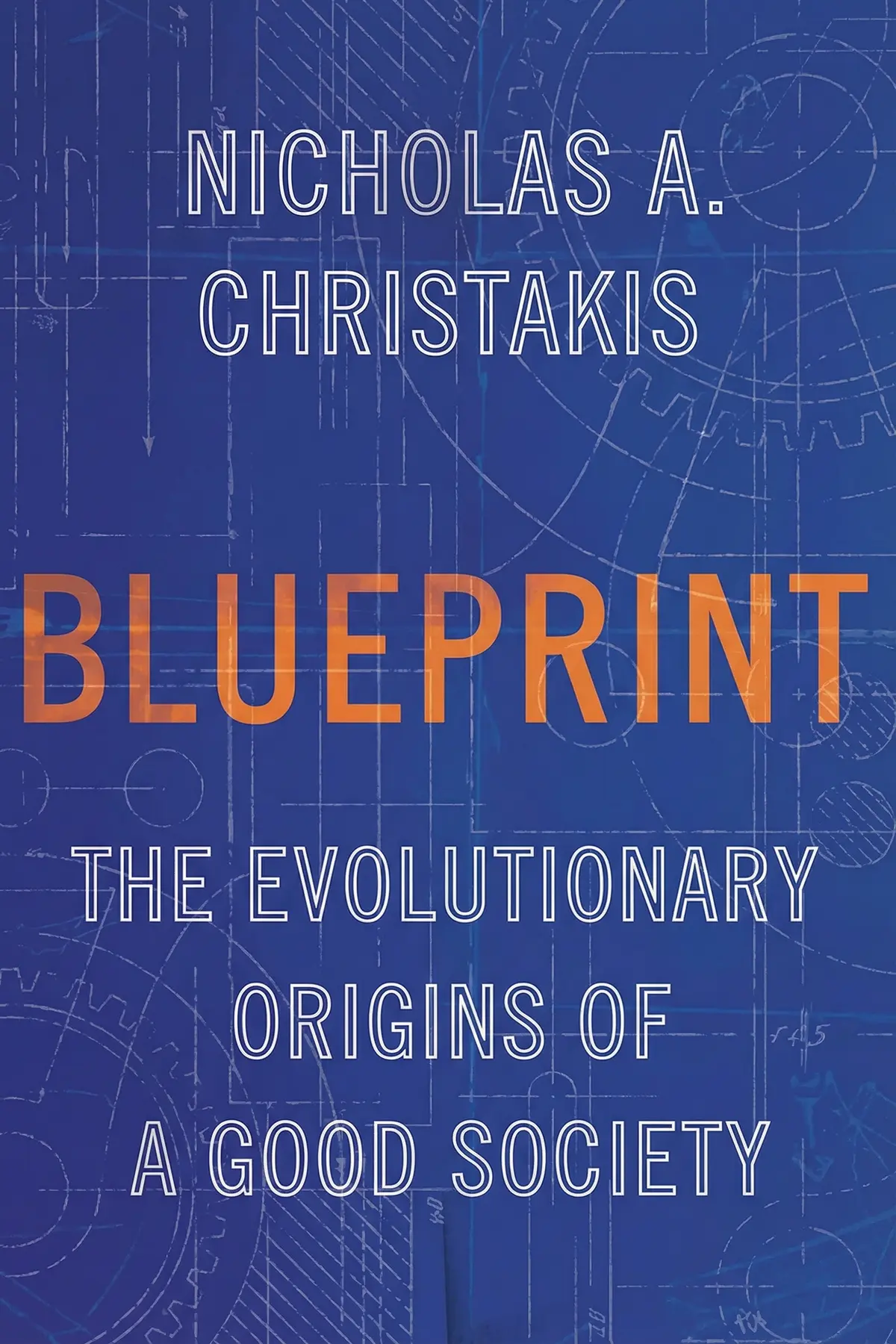
Blueprint: The Evolutionary Origins of a Good Society
Nicholas A. Christakis
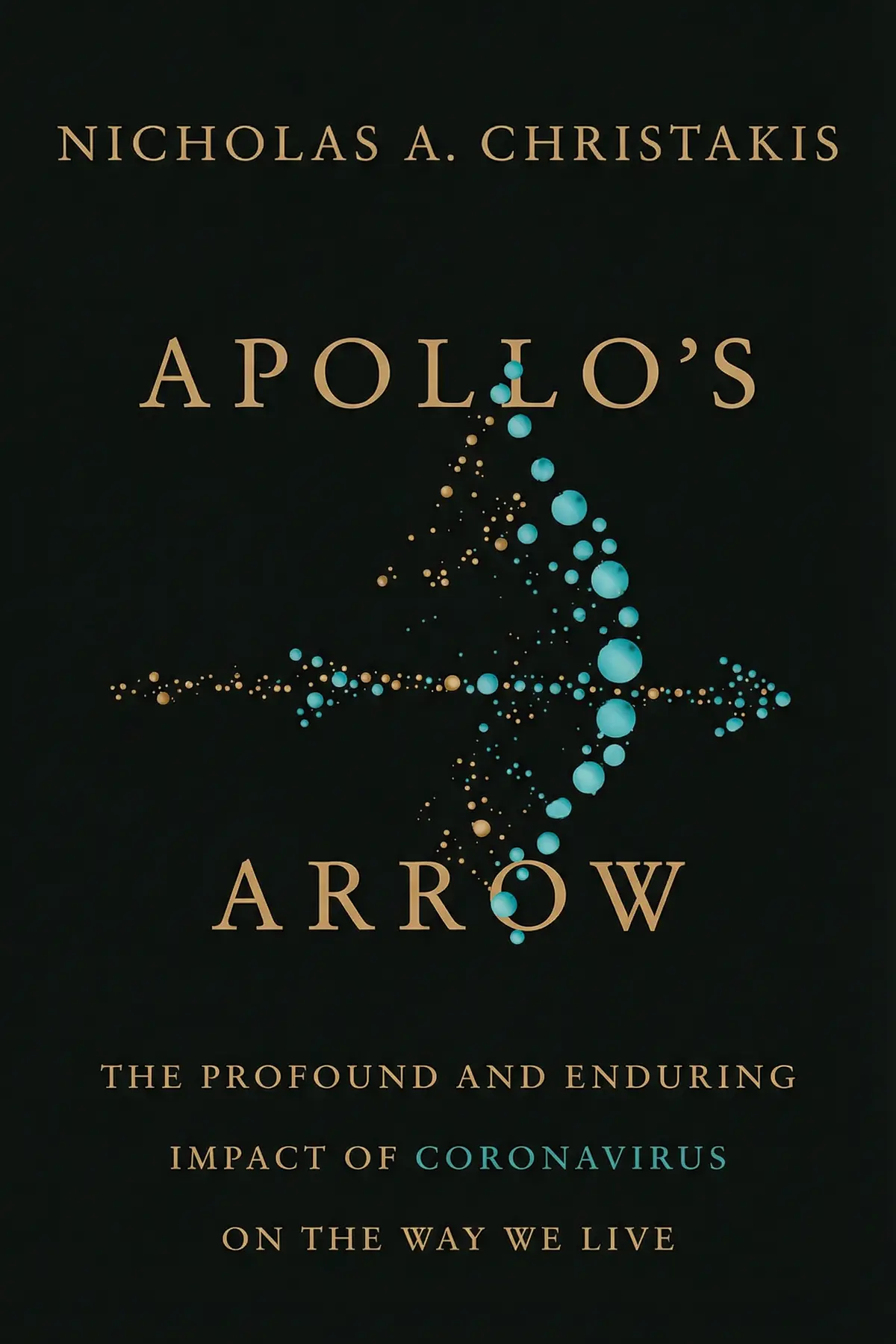
In Apollo’s Arrow, Nicholas A. Christakis offers a deep exploration of the COVID-19 pandemic. He examines how biological traits, historical patterns, and social behaviors converge to redefine our modern world.
1 min 49 sec
The world as we knew it seemed to vanish in the opening months of 2020. Suddenly, the bustling streets of our major cities went silent, replaced by the eerie quiet of lockdowns. We moved our lives behind screens, covered our faces with masks, and began a collective, anxious obsession with infection rates and daily news cycles. It was a transformation so swift and total that it felt unprecedented to those of us living through it. However, as Nicholas A. Christakis argues in his deep dive into the COVID-19 crisis, this event was not an anomaly. It was a biological and social phenomenon that follows patterns etched deep into human history. This is the story of how a microscopic pathogen can bend the trajectory of an entire civilization.
In this exploration, we aren’t just looking at medical charts or viral genomes. We are looking at the soul of society. We are investigating why this specific virus, SARS-CoV-2, managed to jump the hurdles that stopped other outbreaks. We are looking at the way fear spreads faster than germs, how inequality acts as an accelerant for suffering, and how, in our darkest hours, the impulse to help one another remains our most potent defense. This isn’t just about a disease; it’s about what happens when the natural world and human society collide at high speed. By the end of this journey, you’ll understand the biological mechanics of the pandemic, the sociological shifts it forced upon us, and the long-term changes that will likely linger for decades. We are witnessing the unfolding of a historical drama, and the throughline is clear: pandemics do not just happen to us; they reveal who we are and shape who we will become.
2 min 26 sec
Explore the pivotal moments in late 2019 when a mysterious cluster of illness in a Chinese market signaled the start of a transformative global event.
2 min 29 sec
Discover why SARS-CoV-2 succeeded in causing a pandemic where other, more lethal viruses failed, focusing on the perfect balance of contagiousness and timing.
2 min 19 sec
Learn why basic changes in how we live and interact are often more effective at stopping a plague than the most advanced medical treatments.
2 min 21 sec
Examine the psychological and social toll of the pandemic, where misinformation and anxiety can be as destructive as the virus itself.
2 min 16 sec
Investigate how the pandemic acted as a magnifying glass, exposing and widening the deep-seated social and economic divisions in our society.
2 min 25 sec
Explore the inspiring ways that crisis can bring out our best impulses, from grassroots mutual aid to global scientific collaboration.
2 min 28 sec
Assess the long-lasting changes to our daily lives, from the way we greet each other to the rise of pervasive digital surveillance.
2 min 42 sec
Delve into the scientific and social possibilities for how the pandemic might conclude, from the evolution of the virus to the achievement of herd immunity.
1 min 28 sec
The journey through Apollo’s Arrow brings us to a sobering but necessary realization: the pandemic was not a detour from history, but a deep dive into it. We have seen how a single mutation in a viral protein could stall the engine of global commerce, and how the biological traits of SARS-CoV-2 were perfectly tuned to exploit our social nature. We’ve looked into the mirror of our society and seen both the ugly reality of our inequalities and the beautiful resilience of our altruism. From the quiet streets of Wuhan to the seismic stillness of a locked-down planet, we have witnessed a transformation that will define the twenty-first century.
As we look forward, the lesson is clear: we cannot separate our health from our behavior or our politics. The best defense against the next pandemic isn’t just a better vaccine, though that is vital; it is a more cohesive society. We must take the actionable advice of following health guidelines, not just for our own safety, but as an act of solidarity with the most vulnerable. We must protect the truth as fiercely as we protect our borders. The pandemic has changed the way we work, how we greet one another, and how we view our neighbors. While we cannot change the fact that the virus arrived, we can choose how we respond to its legacy. By embracing the spirit of cooperation and the lessons of history, we can ensure that when the next arrow is fired, we are ready to meet it together.
Nicholas A. Christakis provides a multi-disciplinary look at the SARS-CoV-2 pandemic, blending history, medicine, and sociology. The book explores why this specific virus caused a global standstill, the mechanics of its spread, and the psychological toll of widespread fear. It promises to help readers understand not just the biological reality of the pathogen, but the profound ways it reshapes our social structures, ethics, and future. By analyzing past plagues like the Spanish flu and modern outbreaks like SARS-1, the author illustrates the recurring patterns of human response to crisis. Readers will gain insight into the importance of non-pharmaceutical interventions, the challenges of social inequality, and the potential paths toward long-term recovery and herd immunity. Ultimately, it serves as a guide for navigating the intersection of biological threats and human resilience.
Nicholas A. Christakis is a sociologist, medical doctor, and the Sterling Professor of Social and Natural Science at Yale University. His previous works include the best-sellers Blueprint: The Evolutionary Origins of a Good Society and Connected: The Surprising Power of Our Social Networks.
Nicholas A. Christakis
Listeners find the book thought-provoking regarding previous pandemics, valuing its blend of medical and historical viewpoints. Furthermore, the narrative is organized effectively for a compelling experience, and listeners are especially fascinated by the historical information concerning plagues. The work also feels remarkably pertinent, with listeners highlighting how closely it connects to modern developments.
Christakis has managed to distill an overwhelming amount of information into a readable, high-quality narrative. Personally, I found the blend of virology and social science to be exactly what we needed during the height of the chaos. It’s essentially a 'data-vaccine' for anyone drowning in misinformation. The author’s background as both a physician and a sociologist shines through in every chapter. He doesn’t just explain how the virus spreads; he explains how we, as a society, react to that spread. Some might say it’s a bit dry in parts, but the level of research is simply undeniable. It’s a timely intellectual firmware upgrade that provides much-needed clarity. I appreciated how he balanced the cold hard science with the very real human elements of caring and mutual aid. The show must go on, and this book helps explain how.
Show moreFew authors can bridge the gap between medical science and sociology as effectively as Nicholas Christakis. This book is a masterclass in interdisciplinary writing, weaving together history, medicine, and network theory into a cohesive narrative. The historical context regarding previous plagues was particularly fascinating and helped put our current situation into perspective. It’s impressive how he manages to make virology feel like a page-turning thriller at times. Looking at the pandemic through the lens of human behavior was a revelation for me. The truth is, we often ignore the social factors that determine the trajectory of a disease. This isn’t just a book about a virus; it’s a book about us. Highly recommended for anyone seeking a deep, analytical dive into the sociology of contagion. It is a concise, high-quality distillation of pertinent insights.
Show moreThis book acts as a roadmap for understanding how a biological threat becomes a social disaster. Christakis uses his expertise in social networks to show why some communities were hit harder than others. It’s not just about the virus; it’s about the 'arrows' of infection that travel through our friendships and families. The pacing is excellent, and the author manages to make even the more technical aspects of virology feel engaging. I found the sections on the development of public health and vaccines to be especially enlightening. It shows how far we’ve come while also highlighting our persistent vulnerabilities. This is a high-quality distillation of many different fields of study into one readable volume. It’s a bullseye for anyone wanting a comprehensive overview of the 2020 experience. Five stars for the clarity and breadth of knowledge.
Show moreWow, what a comprehensive look at the intersection of medicine and society. Christakis has written a book that feels both urgent and timeless by anchoring current events in the long history of human plagues. The writing style is engaging and avoids the dry, academic tone you might expect from a Yale professor. I loved the way he explored how the pandemic both tore us apart and brought out remarkable moments of innovation and mutual aid. It's a very timely piece of work that captures the zeitgeist of the early 2020s perfectly. Even if you think you’ve heard it all, the interdisciplinary perspective offers new ways to think about the crisis. It's well-produced, thoroughly researched, and provides a much-needed sense of context in a chaotic world. Definitely worth the read for the historical plague content alone.
Show morePicked this up because I wanted a more structured understanding of the pandemic beyond the daily headlines. Christakis delivers a remarkably clear account that bridges the gap between complex epidemiology and social behavior. His even-handed approach to apportioning blame—hitting both the US administration and the Chinese government—was refreshing and felt objective. The book explains the biology of coronaviruses in a way that’s easy to grasp even if you don't have a science degree. I specifically liked the discussion on how social networks influence the spread of both the virus and our emotional responses. My only gripe is that some chapters feel a little dated already, but that’s the risk of publishing mid-crisis. Overall, it’s a very reliable and thoughtful account of a world-changing event that will serve as a strong historical record.
Show moreEver wonder how our ancestors dealt with similar catastrophes? Christakis spends a good deal of time looking back at historical pandemics to help us understand our current predicament. This historical grounding makes the book feel much more substantial than your average 'current events' title. The writing is incredibly well-structured, moving from the microscopic reality of the virus to the macroscopic impact on our economy and social structures. I found the explanation of SARS-1 vs SARS-2 particularly helpful for understanding why this specific coronavirus was so uniquely disruptive. It’s a timely read that manages to be both scientifically thorough and emotionally resonant. Even the parts about the 'invisible' suffering of long-haulers were handled with great empathy. A very solid, four-star history of a difficult time that stays accessible for any reader regardless of their background.
Show moreAfter hearing the author on a podcast, I decided to give this a shot to see the full data. It’s a remarkably clear and accessible look at the pandemic, requiring zero prior scientific knowledge to enjoy. Christakis does a great job of explaining how our response—both the good and the bad—is rooted in human nature. I was particularly struck by his point that much of the suffering is 'invisible' because we don't see the reality of the bodies or the long-term illness in our daily lives. The book is fair and unbiased, which is a rare find these days. He’s critical of both the federal delays and the Chinese government’s cover-ups, which feels like a balanced take. It’s a thoughtful, book-length account that will likely serve as a primary source for years to come.
Show moreWhile the writing is undeniably crisp and accessible, I found myself waiting for an 'aha moment' that never quite arrived. If you’ve been obsessively following the news and scientific journals since early 2020, you might find this a bit repetitive. It’s a solid summary of where we’ve been, but it feels more descriptive than analytical. To be fair, writing a definitive account while the pandemic is still a moving target is a Herculean task. The sections comparing COVID-19 to historical plagues like the Spanish Flu were the highlights for me. However, the lack of groundbreaking predictions made it feel like a very long news recap. It’s well-researched, certainly, but perhaps a bit too programmatic for those already immersed in the topic. It's a good tick-box confirmation that I haven't missed anything.
Show moreThe truth is that writing a book about an ongoing pandemic is a bit of a gamble, and this one shows some wear. Christakis is an excellent writer, but a lot of this information feels like it would have been better suited for a weekly podcast format. It’s a very programmatic read that stays on the surface of most topics without digging as deep as I’d hoped. I didn't really learn anything new, though I appreciated the clear summary of the epidemiology involved. The sociologist in him offers some good points about how we've become more divided, but it's nothing you haven't heard before. It’s an okay summary if you’ve been living in a bunker, but for the rest of us, it’s a bit redundant. Good for a historical archive, maybe, but not much of an 'aha' experience for current readers.
Show moreQuite frankly, I expected more insight from someone with such an impressive academic pedigree. Much of the book feels like a tick-box confirmation of things we already knew from Twitter and the nightly news. I also felt the author was far too stubborn to acknowledge different global approaches, like Sweden's strategy, which I found frustrating. Instead, we get a very US-centric view that feels more like a lecture than a fresh analysis. The subtitle promises a look at the 'profound' impact on the future, but there’s actually very little of that here. It’s mostly just a history of what happened in the first six months. If you want a basic summary, it's fine, but don't expect any groundbreaking revelations or unique perspectives. The second wave shows we can't do much anyway. It was a bit of a slog.
Show more
J. Craig Venter
Daniel Goleman
Carl Zimmer
Bill Bryson
Virginia Woolf
Jeff Hawkins
Tracy Rosenthal
Jessica Valenti
AUDIO SUMMARY AVAILABLE
Get the key ideas from Apollo’s Arrow by Nicholas A. Christakis, plus 5,000+ more titles in English and Thai.







