
25 min 50 sec
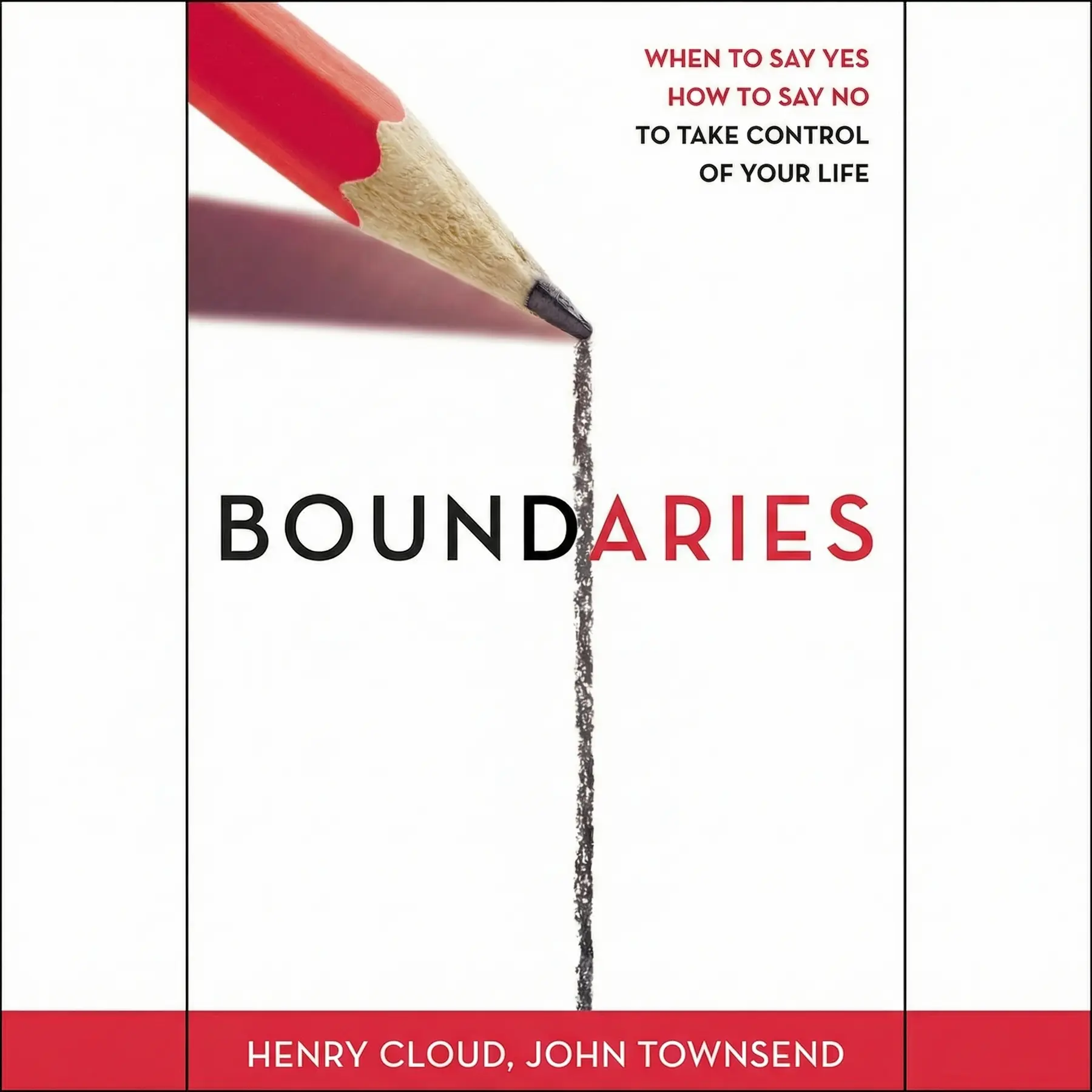
Boundaries: When to Say Yes, How to Say No to Take Control of Your Life
Boundaries provides a transformative framework for reclaiming personal agency. By establishing clear emotional and mental limits, individuals can foster healthier relationships, reduce burnout, and live a life aligned with their core values and responsibilities.
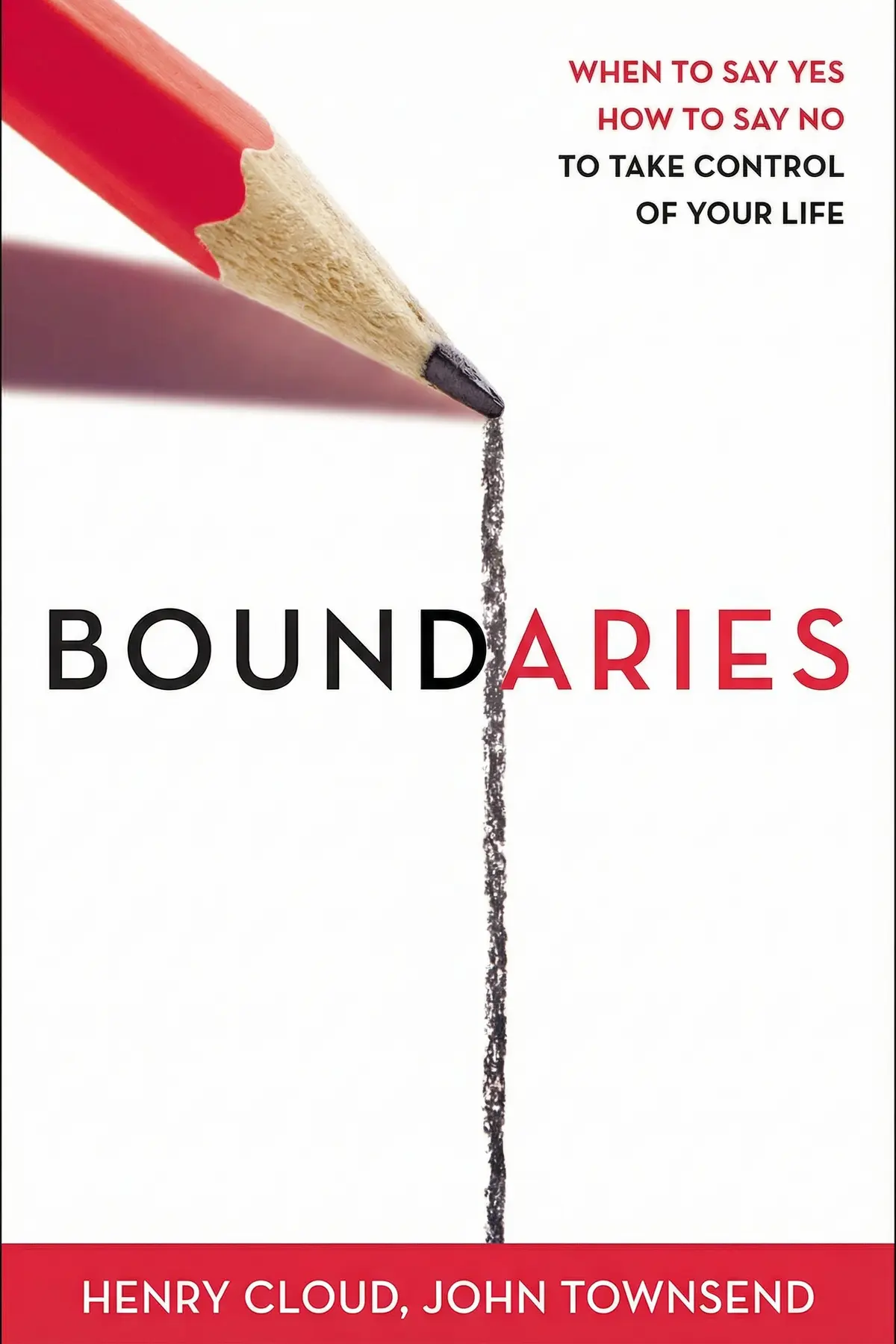
Table of Content
1. Introduction
2 min 02 sec
Picture a typical Tuesday morning that begins long before the sun rises. You are already in the kitchen, preparing a full breakfast for your children because you feel it is your duty, even though you have a massive presentation at work that requires every ounce of your focus. You could ask your partner for help, but the words stay trapped in your throat. You do not want to be a burden. By the time you get to the office, you find the conference room in disarray. It is not your department’s responsibility, yet you find yourself untangling cables and moving chairs anyway. Before you can even open your laptop, your supervisor drops by with a request: Can you lead the committee for the company holiday gala? He mentions how swamped he is, and before you can think, you have already said yes. It is not even noon, and you are already spiritually and physically depleted.
If this narrative feels like a mirror of your own life, you are not alone. This is the reality of a life lived without clear markers of where you end and where someone else begins. Many of us navigate our days as if we are responsible for the happiness and success of everyone around us, often at the direct expense of our own health and peace of mind. But there is a different way to live—a way that involves reclaiming the power of the word ‘no’ so that your ‘yes’ can actually carry weight.
Setting boundaries is often misunderstood as a wall intended to shut people out. In reality, it is much more like a fence with a gate. It is a system that allows you to protect your internal resources while still remaining connected to the world. Throughout this exploration, we will dive deep into the mechanics of why we struggle to set limits, how these patterns are formed in our earliest years, and why establishing these lines is actually the most compassionate thing you can do for the people in your life. We will look at how boundaries transform marriages, friendships, and the workplace, providing a throughline of ownership and personal agency that allows you to take control of your life once and for all. By the end, you will see that a boundary is not just a tool for self-preservation; it is a prerequisite for a fulfilling, love-filled existence.
2. The Virtue of Ownership
2 min 35 sec
Explore why setting emotional limits is an act of deep kindness that fosters personal growth and prevents the toxic cycle of enabling others.
3. Identifying Different Boundary Profiles
2 min 59 sec
Not all boundary issues look like being a doormat; learn about the four distinct ways people struggle with limits, from avoidance to control.
4. Shattering the Myths of Selfishness and Guilt
2 min 49 sec
Challenge the common misconceptions that keep people trapped in cycles of compliance, including the fear that boundaries are inherently angry or irrevocable.
5. The Emotional Path to Progress
2 min 51 sec
Learn to use resentment as a tool for self-discovery and understand why the road to setting limits is often uncomfortable but ultimately liberating.
6. Navigating the Roots of Family Dysfunction
2 min 52 sec
Understand how childhood dynamics shape adult boundary issues and how to break free from unhealthy patterns through forgiveness and intentional response.
7. Establishing Limits in Romantic Partnerships
2 min 42 sec
Discover why the most intimate relationships actually require the clearest boundaries to prevent resentment and foster genuine connection.
8. Friendship and the Power of Feedback
2 min 19 sec
Examine how to maintain balance in friendships by choosing honesty over compliance and addressing the ‘controller’ dynamic with love.
9. Professional Boundaries and the Work-Life Divide
2 min 59 sec
Learn to manage workplace stress by identifying overresponsibility, setting limits with coworkers, and protecting your finite time from infinite demands.
10. Conclusion
1 min 42 sec
In the end, the journey of setting boundaries is not about building a fortress to hide behind, but about cultivating a garden where you can truly thrive. It is the process of defining where you end and others begin, ensuring that your life is directed by your own values and choices rather than by the demands, guilt-trips, or dysfunctions of those around you. We have seen how boundaries are a form of ownership—a way of taking responsibility for the beautiful but finite resources of our own lives. We have seen how they serve as the bedrock of respect in our families, our marriages, and our workplaces.
While the process of establishing these limits can be painful and may involve moments of conflict, the reward is a life characterized by genuine freedom. You will find that when you have the power to say ‘no,’ your ‘yes’ finally gains its true value. You will no longer be a victim of circumstances or a prisoner to other people’s expectations. Instead, you will be a steward of your own soul, capable of giving out of a place of abundance rather than out of a place of fear.
As you move forward, consider this actionable step: look for a ‘boundary support group.’ This doesn’t have to be a formal organization; it can be a small group of trusted friends who are also committed to this journey. Share your successes when you finally say ‘no’ to a draining request, and talk through the guilt when you feel it creeping back in. We are not meant to do this alone. By supporting one another, we can maintain the strength needed to keep our gates working properly—letting in the love and opportunities that nourish us, and firmly shutting out the chaos that seeks to overwhelm us. Take ownership today; your life is worth the effort.
About this book
What is this book about?
Many people find themselves overwhelmed by the demands of others, feeling guilty for saying no and resentful for saying yes. This summary explores the profound psychological and spiritual necessity of setting limits. It challenges the misconception that boundaries are selfish, illustrating instead how they are a foundational act of love for oneself and others. Through practical strategies and relatable scenarios, this guide examines how boundary issues take root in childhood and manifest in adulthood—from the workplace to the marriage bed. Readers will discover the distinction between being responsible to someone versus being responsible for them, a shift that unlocks true freedom. The promise of this work is a life of greater clarity, where your yes means yes, and your no is respected, leading to deeper intimacy and professional success without the cost of your personal well-being.
Book Information
About the Author
Henry Cloud
Dr. Henry Cloud is a clinical psychologist and leadership expert. Dr. John Townsend is a business consultant, leadership coach, and psychologist. Separately, each has authored multiple books on leadership and psychology. Together, they are co-authors of the New York Times best-selling Boundaries and leaders of the acclaimed GrowthSkills workshop series.
Ratings & Reviews
Ratings at a glance
What people think
Listeners find this title accessible and remarkably useful, noting that it reveals fresh perspectives and delivers principles that transform lives. Additionally, the quality of information is praised, with one listener specifically mentioning the thorough subject index. Listeners also appreciate the way it strengthens relationships, especially in family contexts. Nevertheless, the spiritual elements draw mixed reviews; some value the Christian viewpoint while others consider the material too religious.
Top reviews
Sawit
This book really shifted my perspective on what it means to be a "good" person versus a "compliant" person. I used to think that saying no was synonymous with being selfish, but Cloud and Townsend illustrate how boundaries are actually the foundation of healthy love. The opening chapter describing a day in a boundaryless life hit way too close to home; it was like looking in a mirror of my own exhaustion. To be fair, the Christian framework is very prominent, but the core psychological principles are incredibly sound. I appreciated the specific breakdown of how to handle intrusive family members and demanding bosses. It isn't just about walling people out; it's about building a gate that lets the good in and keeps the bad out. My relationships have improved because I finally stopped feeling responsible for everyone else's emotions.
Show moreStella
Finally got around to reading this classic, and I must admit, the insights on personal responsibility are staggering. The authors don't pull any punches when they explain that we are responsible to others, but not for them. That distinction changed my life. While I found some of the "pastor stories" a bit cheesy and perfectly packaged, the logic behind their advice is hard to argue with. The book is organized beautifully with a comprehensive subject index that makes it easy to go back and find specific advice for work or parenting. Frankly, even if you aren't religious, there is a wealth of wisdom here about self-worth and discipline. It helped me realize that my lack of limits was actually hurting the people I was trying to help. Truly an eye-opening read for anyone feeling burnt out by the demands of others.
Show moreWyatt
Wow. I didn't realize how much I was drowning until I read the description of a "boundaryless life" in the introduction. It’s a bit of an older book, sure, but the principles are timeless. The way the authors describe "triangulation" and the guilt-trips we allow ourselves to suffer through was incredibly convicting. I’ve started applying the "law of sowing and reaping" in my own house, and the change in my teenagers' attitudes has been remarkable. They’re finally learning that their choices have consequences. Look, some people might find the Christian tone a bit much, but I found it provided a solid moral grounding for why self-care isn't selfish. It’s about being a better steward of your own life so you can actually be useful to others. This is a life-changing resource that I’ll be recommending to everyone.
Show moreAnna
After hearing so many people rave about this, I finally picked it up to deal with a difficult work situation. It’s an easy read, but it packs a heavy punch. The central metaphor of boundaries being like a fence with a gate is something I’ll never forget. It helped me realize that I had no gate—I was just letting everyone trample over my lawn. The authors are brutally honest about how we enable other people's bad behavior by "rescuing" them. It’s painful to realize you might be part of the problem, but it’s also very freeing. I appreciated the comprehensive subject index at the back, which I’ve already used to look up specific advice for dealing with my parents. If you feel like you're losing your identity to the needs of others, you need to read this immediately.
Show moreRose
Picked this up on a whim after a friend mentioned it, and I’m glad I did. It’s rare to find a self-help book that actually provides a "how-to" rather than just vague encouragement. Cloud and Townsend give you actual phrases to use and specific scenarios to visualize. I particularly liked the distinction between "forgiveness" and "reconciliation"—that was a lightbulb moment for me. You can forgive someone without letting them back into your life to hurt you again! The tone is very encouraging, almost like having a session with a wise, if slightly old-fashioned, counselor. While the religious aspects are definitely front and center, the universal truths about human dignity and respect are what shine through. It’s an essential guide for anyone who feels like they’ve lost control of their own peace of mind.
Show moreIce
As someone who struggles with people-pleasing, I found the practical steps in this book to be a necessary wake-up call. The authors provide a very clear roadmap for identifying where your property lines end and someone else's begin. I particularly liked the section on "safe suffering" and allowing people to experience the natural consequences of their actions. However, I’m only giving it four stars because the writing can feel a bit repetitive in the middle sections. It felt like they used the same formula for every relationship type: a story about "Susan" or "John," a list of problems, and then the suggestion to join a support group. Still, the message is powerful. It’s a great resource for learning that your "no" has just as much value as your "yes." If you can look past the 90s-style anecdotes, you'll find some serious gold here.
Show morePongpan
Ever wonder why you feel so much resentment after doing favors for people? This book explains exactly why: you’re operating without a fence. Cloud and Townsend use Biblical principles to show that setting limits isn’t just okay, it’s actually a spiritual requirement. I loved the chapters on boundaries at work; they helped me see that I was letting my coworkers' lack of planning become my emergency. The text is accessible and moves quickly, though I did catch a few minor typos that felt a bit unprofessional for such a big title. To be fair, the advice to "find a support group" felt a little dated or maybe just easier said than done. Despite that, the empowerment I felt after finishing the final chapter was worth the price of admission. It gave me the permission I didn't know I needed to stop carrying everyone else's heavy loads.
Show moreDuangjai
The chapter on boundaries with yourself was probably the most challenging part of this entire book for me. Most of us think boundaries are about other people, but the authors argue that our own lack of discipline is often the biggest culprit. They dive into how we fail to set limits on our own spending, eating, and time management. It’s a very logical, structured approach to self-improvement. My only real gripe is the lack of scientific citations; for a book written by two doctors, it relies almost entirely on anecdotes and scripture rather than clinical studies. I’m a bit of a data nerd, so that was jarring. Regardless, the information quality is high, and the advice on navigating in-laws was particularly helpful for my current situation. It's a solid four-star read that offers a lot of common-sense wisdom.
Show moreHassan
Truth is, I have mixed feelings about this one even though I ultimately found it helpful. On one hand, the concept of "ownership" over one’s life is brilliant and much-needed in our culture of victimhood. On the other hand, the writing style feels very formulaic and "Christian-lite." Every chapter starts with these suspiciously perfect stories where someone says "no" and then, after a brief conflict, everyone lives happily ever after. In my experience, setting boundaries with toxic people usually results in an explosion, not a neat resolution. I wish the authors had spent more time on the messiness of the process. That said, the "myth-busting" section towards the end was fantastic. It addressed my guilt about being "selfish" head-on. It’s a good book if you’re willing to sift through the fluff to get to the core concepts.
Show moreCharlotte
Not what I expected at all, and frankly, I’m a bit baffled by the glowing reviews. I was looking for psychological tools to manage my time better, but instead, I got a sermon. The biblical references are so thick that it’s hard to find the actual "meat" of the advice if you aren't part of that specific faith tradition. Even worse, the "transformed" version of the woman in the closing chapters felt like she’d gone from one extreme to the other. She went from being a doormat to being someone who seemed almost cold and unwilling to make any sacrifices for her family. It felt less like healthy boundaries and more like a swing toward total isolation. Plus, the authors seem to blame every single adult character flaw on poor parenting, which feels incredibly reductive. It’s just too fanatical and one-dimensional for my taste.
Show moreReaders also enjoyed
A Return to Love: Reflections on the Principles of a Course in Miracles
Marianne Williamson
59 Seconds: Change Your Life in Under a Minute
Richard Wiseman
Aflame: Learning from Silence
Pico Iyer
Alcoholics Anonymous
Alcoholics Anonymous World Services
A Guide to the Good Life: The Ancient Art of Stoic Joy
William B. Irvine
AUDIO SUMMARY AVAILABLE
Listen to Boundaries in 15 minutes
Get the key ideas from Boundaries by Henry Cloud, plus 5,000+ more titles in English and Thai.
- 5,000+ titles
- Listen as much as you want
- 7-day free trial
- Cancel anytime







