
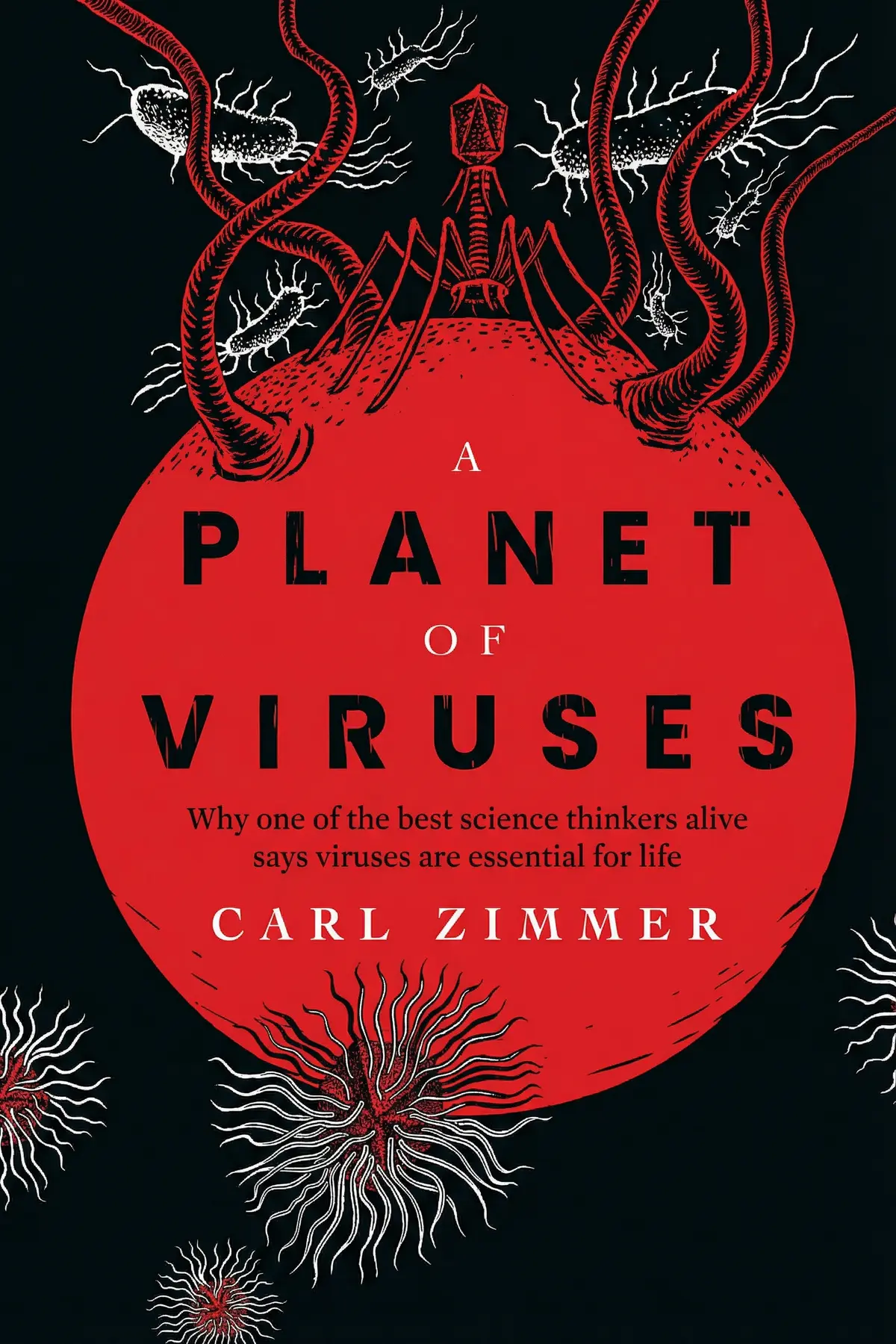
A Planet of Viruses
Carl Zimmer
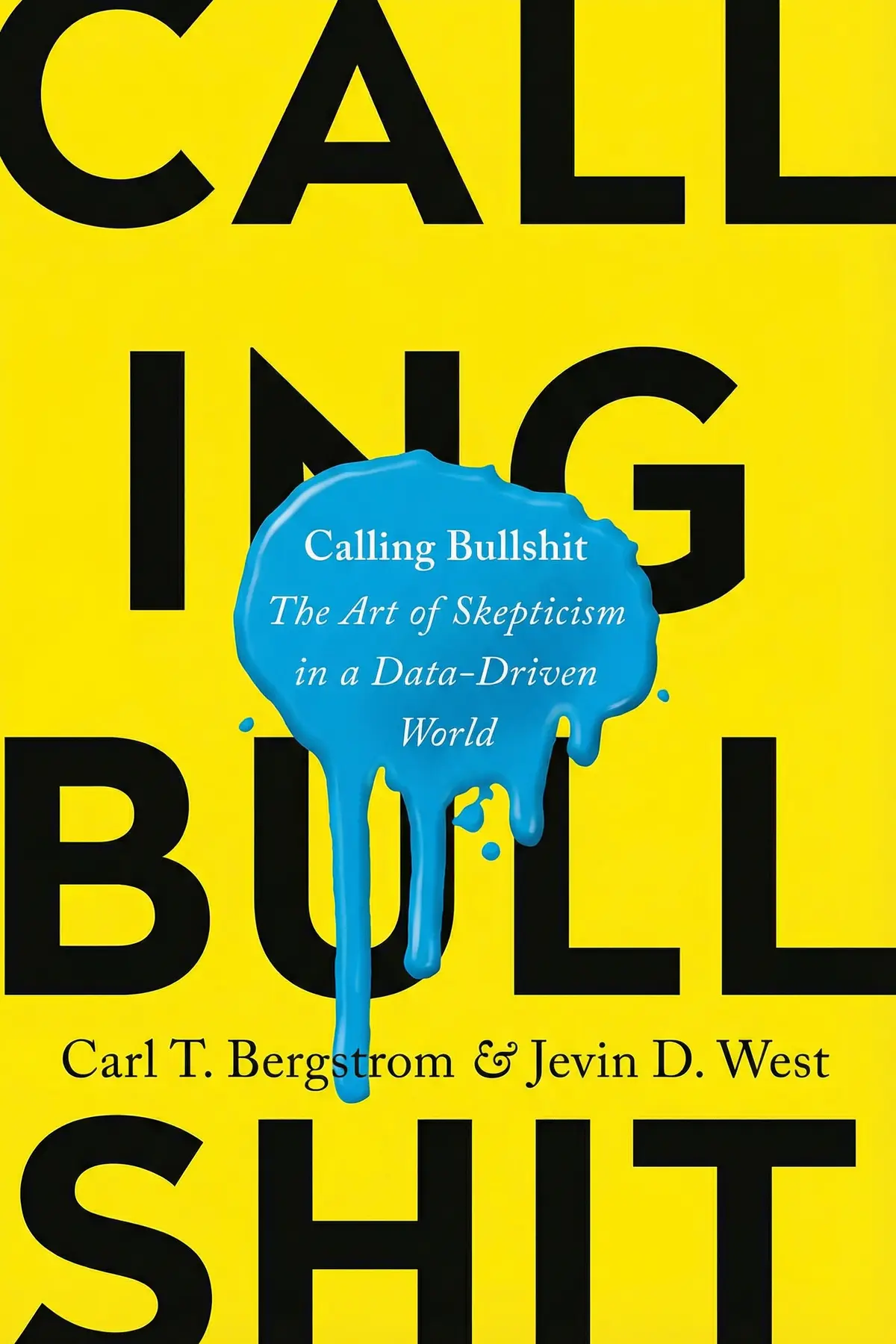
Calling Bullshit explores how to identify and dismantle misinformation. Authors Carl T. Bergstrom and Jevin D. West provide a toolkit for navigating data-driven nonsense in science, news, and everyday life.
1 min 46 sec
We live in an age defined by the constant flow of information. It pours out of our smartphones, dominates our professional lives, and saturates every news cycle. But while we have more access to data than any generation in human history, we are also facing a massive pollution problem: the sheer volume of bullshit we encounter every day. In Calling Bullshit, authors Carl T. Bergstrom and Jevin D. West argue that this isn’t just a minor annoyance; it’s a fundamental threat to our ability to make informed decisions as individuals and as a society.
Many of us feel like we have a decent radar for lies, but bullshit is a different beast altogether. While a liar knows the truth and tries to lead you away from it, a bullshitter simply doesn’t care what the truth is. Their goal is to impress, to persuade, or to win an argument by any means necessary. Often, this involves dressing up nonsense in the respectable clothing of science and statistics—the very tools we usually trust to tell us the truth.
This summary provides a deep dive into the art of skepticism. We will explore why it is so much harder to clean up misinformation than it is to spread it, and why even the most sophisticated algorithms can produce total nonsense if they are fed the wrong data. We’ll look at the common traps of correlation and causation, the subtle ways numbers are manipulated to look scary or impressive, and how the scientific process itself sometimes allows bullshit to slip through the cracks. By the end of this journey, you’ll have a clearer understanding of how to protect yourself from the sea of disinformation and how to use the tools of logic and inquiry to demand better evidence from the world around you.
2 min 22 sec
Discover why false claims spread with such ease and why the ‘antivax’ movement remains a powerful example of how difficult it is to undo the damage of a single discredited study.
2 min 30 sec
Learn the vital distinction between a lie and bullshit, and how the ‘black box’ of algorithms can give a false sense of objectivity.
2 min 16 sec
Explore why seeing two things happen together doesn’t mean one caused the other, and how the media often strips away the nuance of careful research.
2 min 19 sec
Understand how a simple change in framing—like using percentages instead of absolute numbers—can make a tiny risk seem like a major threat.
2 min 24 sec
Learn why where you get your data is just as important as the data itself, and how non-random samples lead to skewed conclusions.
2 min 25 sec
Discover why ‘Big Data’ and machine learning are not immune to producing nonsense, and why algorithms often find patterns where none exist.
2 min 34 sec
Examine how the pressure to publish positive results leads to selection bias and ‘p-hacking’ within the world of academic research.
2 min 27 sec
Learn simple mental habits and ‘Fermi estimations’ that can help you quickly determine if a claim is plausible or just pure nonsense.
1 min 34 sec
The world will likely never be free of bullshit. As long as there are people trying to gain power, sell products, or simply look impressive, there will be individuals who play fast and loose with the truth. But as we have seen, we are not helpless. By understanding the techniques used to dress up nonsense in the language of authority, we can protect ourselves and our communities.
The throughline of Calling Bullshit is that data is a human product. It is collected by people, analyzed by people, and interpreted by people—all of whom have biases, goals, and limitations. When we see a graph, a statistic, or a ‘black box’ algorithm, we should remember that it is not an absolute truth handed down from on high. It is a piece of communication, and it deserves to be scrutinized just as much as any speech or editorial.
To move forward, make it a habit to check the source and the sample. Don’t let a scary percentage or a fancy-looking diagram distract you from the basic question of whether a claim actually makes sense. Use Fermi estimations to test the scale of a problem, and stay alert to the ways your own emotions might be making you vulnerable to misinformation. Most importantly, have the courage to ask for better evidence. When we collectively raise the bar for what we are willing to believe, we make it much harder for bullshit to thrive. Information is the lifeblood of our democracy and our personal lives; it is up to all of us to keep it as clean as possible.
In an era of endless digital noise, Calling Bullshit serves as a necessary guide to maintaining intellectual clarity. The book moves beyond simple fact-checking to address the sophisticated ways that data, statistics, and scientific language are used to mislead and persuade without regard for truth. The authors demonstrate that you don't need a PhD in statistics to see through deceptive graphics, flawed algorithms, or misleading headlines. By focusing on the mechanics of misinformation—such as correlation-causation errors, selection bias, and the pitfalls of machine learning—the book empowers readers to challenge the 'black boxes' of modern technology. It promises a roadmap for becoming a more critical consumer of information, helping you recognize when a claim is too good to be true and providing the tools to call out nonsense effectively and politely.
Jevin D. West and Carl T. Bergstrom are distinguished scientists at the University of Washington. West is an associate professor in the Information School and serves as the director of the Center for an Informed Public, where his research focuses specifically on the spread of misinformation. Bergstrom is a professor of biology who explores the complex ways that information moves through both biological and social networks.
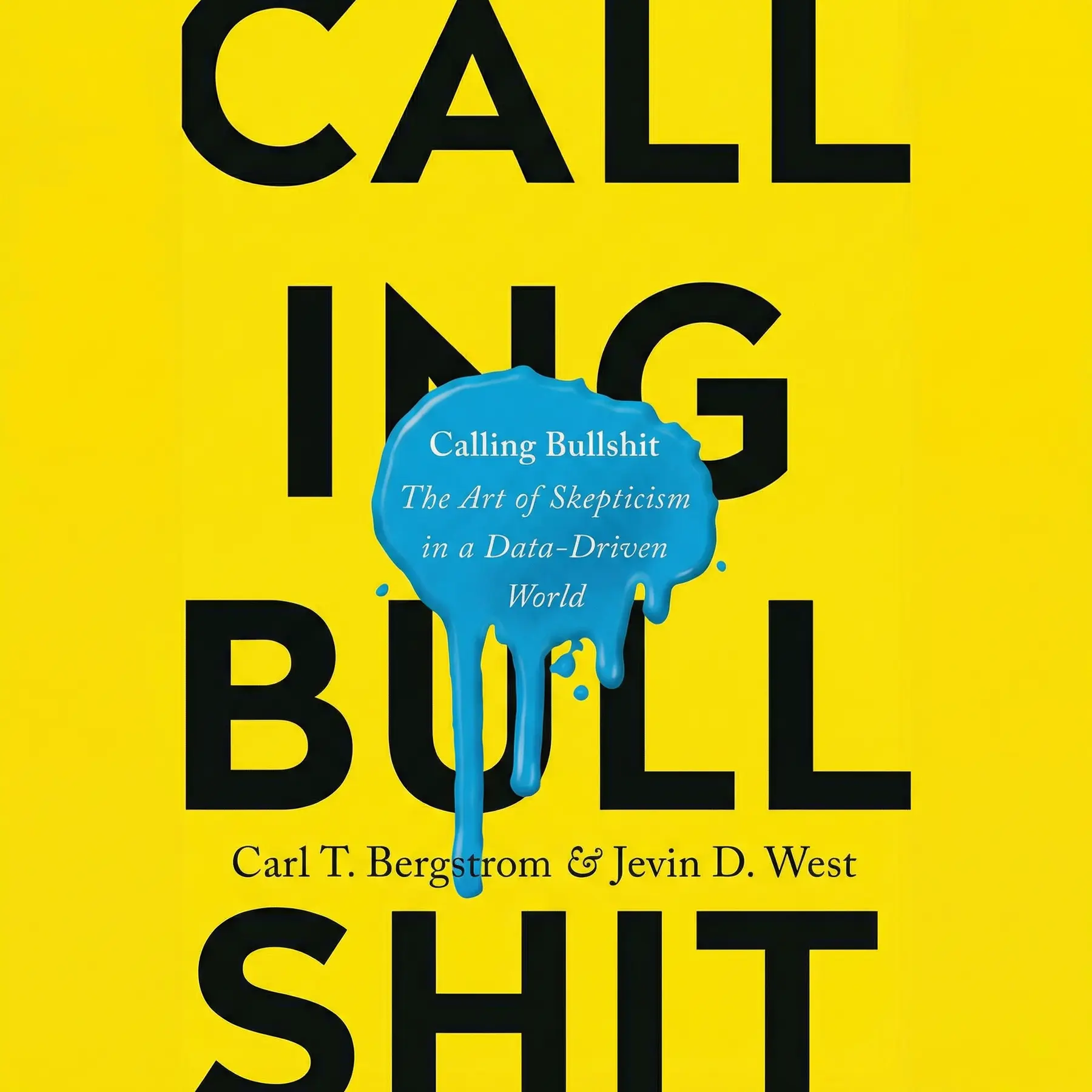
Listeners find the text readable and well-crafted, with one noting how it makes technical content accessible. It is packed with excellent examples and provides an impressive guide to critical thinking. They also enjoy the humor, with one review highlighting the use of plain English illustrations. Furthermore, listeners value its precision, with one mentioning its effectiveness in spotting falsehoods and considering it a vital resource for informed citizens.
Finally got around to reading "Calling Bullshit," and it's basically a survival guide for the 21st century. Bergstrom and West do a brilliant job of deconstructing how data can be used to mislead us without technically lying. I loved the deep dive into p-hacking and the "black box" of algorithms; they make complex statistical concepts feel surprisingly intuitive for a layperson. The writing is sharp and frequently funny, keeping the tone light even when the subject matter feels overwhelming. It’s not just about debunking fake news, but about understanding the structural reasons why misinformation spreads so fast. In my experience, the section on data visualization alone is worth the price of admission. It truly feels like essential reading for anyone who wants to navigate the internet without losing their mind.
Show moreEver wonder why it takes five minutes to make up a lie but five hours to debunk it? This book introduces Brandolini’s Law, and truth is, that concept alone changed how I view my social media feed. The authors move past old-school rhetoric to tackle the "new-school" bullshit that hides behind fancy charts and scientific jargon. It’s written with a fantastic sense of humor that makes even the technical sections on selection bias and correlation versus causation fly by. I particularly appreciated the distinction they make between spotting bullshit for yourself and the social performance of "calling" it out. They warn us not to become "well-actually" guys, which is a trap many of us fall into. This is a powerful tool for informed citizens.
Show morePicked this up hoping for a way to win arguments online, but I walked away with something much more valuable: a mirror. The authors brilliantly point out that the person most likely to bull-shit you is actually yourself, especially when a factoid confirms your existing prejudices. Their advice to pause when something feels "too good or too bad to be true" is simple yet profoundly difficult to implement in the heat of the moment. The writing style is engaging, mixing academic rigor with casual anecdotes that make the material feel incredibly accessible. I loved the section on "Fermi estimation" as a way to quickly check the logic of a claim. It’s a fantastic guide for anyone who wants to be a more discerning consumer of information in a data-drenched world.
Show moreWow. This is a must-read for anyone who feels exhausted by the constant "tsunami of crap" we face every day. Bergstrom and West are total masters at taking technical, intimidating material and making it feel like a conversation at a bar. I especially liked the examples involving the Covid epidemic and how science being done in real-time creates the perfect breeding ground for misinformation. The book is accurate, well-researched, and manages to be funny without being flippant about the very real dangers of bad data. It teaches you how to look for the "mendacious element" in a claim without needing a PhD in mathematics. This is truly the art of skepticism refined for a world where everyone has a megaphone.
Show moreAs someone who works in data, I found the breakdown of "mathiness" to be the most satisfying part of this entire book. The authors explain how people use complex-looking formulas to intimidate others into silence, which is a tactic we see everywhere in business today. Frankly, the way they explain the "Trust Equation" as a nonsensical formula was both hilarious and eye-opening. The book is filled with great examples that use plain English to explain why certain graphs are designed to deceive our eyes. My only real gripe is that it feels very US-centric, often ignoring international contexts or cases that might be more familiar to global readers. Still, it provides an amazing guide to critical thinking that is desperately needed in our current media landscape.
Show moreThe chapter on AI and machine learning was the absolute highlight of this book for me. Most people treat algorithms like magic oracles, but the authors strip away that mystique to show how "garbage in" always leads to "garbage out." It’s a sobering look at how automated systems can perpetuate bias while maintaining an air of objective authority. I also found the discussion of p-hacking in scientific journals to be incredibly illuminating, if a bit disheartening for my faith in academia. While the book can get a little repetitive with its warnings about confirmation bias, the examples are current and relevant. Not gonna lie, I’ll never look at a "wine is good for your heart" headline the same way again. It’s a very readable and necessary reality check.
Show morePersonally, I think every high school student should be required to read the section on misleading graphics. We are constantly bombarded with "ducks" and "glass slippers" that warp our perception of reality, and this book gives you the goggles to see through them. To be fair, some of the statistical deep dives went a little over my head, but the authors always brought it back to a practical takeaway. I appreciated that they didn't just focus on "fake news" but also on well-intended scientists who accidentally misinterpret their own data. It makes the whole problem of bullshit feel more like a collective challenge than a battle against villains. My only complaint is that the section on actually calling out the bullshit was a bit short. I wanted more scripts for those awkward family dinners!
Show moreFrankly, the authors deserve a lot of credit for making a book about statistics actually feel fun to read. They tackle everything from the Wakefield vaccine debacle to the Prosecutor's Fallacy with clarity and a healthy dose of wit. I did find the book a bit long-winded in the middle sections, but the "Top Tips" summary at the end is pure gold for quick reference. It’s a wonderful resource for learning how to spot selection bias and the dangers of unrepresentative samples in the media. While it doesn't solve the problem of people who want to believe lies, it empowers the rest of us to stay grounded in reality. It’s a solid, well-written guide that turns complex data into something you can actually use.
Show moreWas this book actually bull-shitting me? I found it incredibly dense, with a relentless barrage of examples that made the reading experience feel heavier than it needed to be. While the information on p-values and statistical methods is certainly accurate, it felt a bit like a textbook disguised as a popular science read. To be fair, the authors are clearly experts, but the "negative lilt" of the prose wore me down after a few chapters. I would have preferred more interactive exercises where I could practice calling bullshit on headlines before they gave away the answer. It's a solid refresher for anyone who has studied stats, but I didn't feel like I was truly being trained in a new skill. It’s useful, just a bit of a slog to get through.
Show moreLook, the title is "badass" and the marketing is great, but there just wasn't enough new information here to justify three hundred pages. Much of what is covered—correlation isn't causation, checking sources, etc.—is ground that has been trodden a thousand times before in better books. The truth is, if you’ve watched a couple of TED Talks on data literacy, you’ve already got the gist of what Bergstrom and West are selling. I also found the tone to be a bit condescending at times, as if the authors assume the reader is constantly being duped by the simplest tricks. It’s fine for a total beginner, but for anyone with a modicum of skepticism, it’s a lot of fluff around a few simple ideas. I’d recommend just reading the last chapter and moving on.
Show moreCarl Zimmer
Bill Bryson
Jeff Hawkins

Lisa Kaltenegger


AUDIO SUMMARY AVAILABLE
Get the key ideas from Calling Bullshit by Carl T. Bergstrom, plus 5,000+ more titles in English and Thai.







