
19 min 49 sec
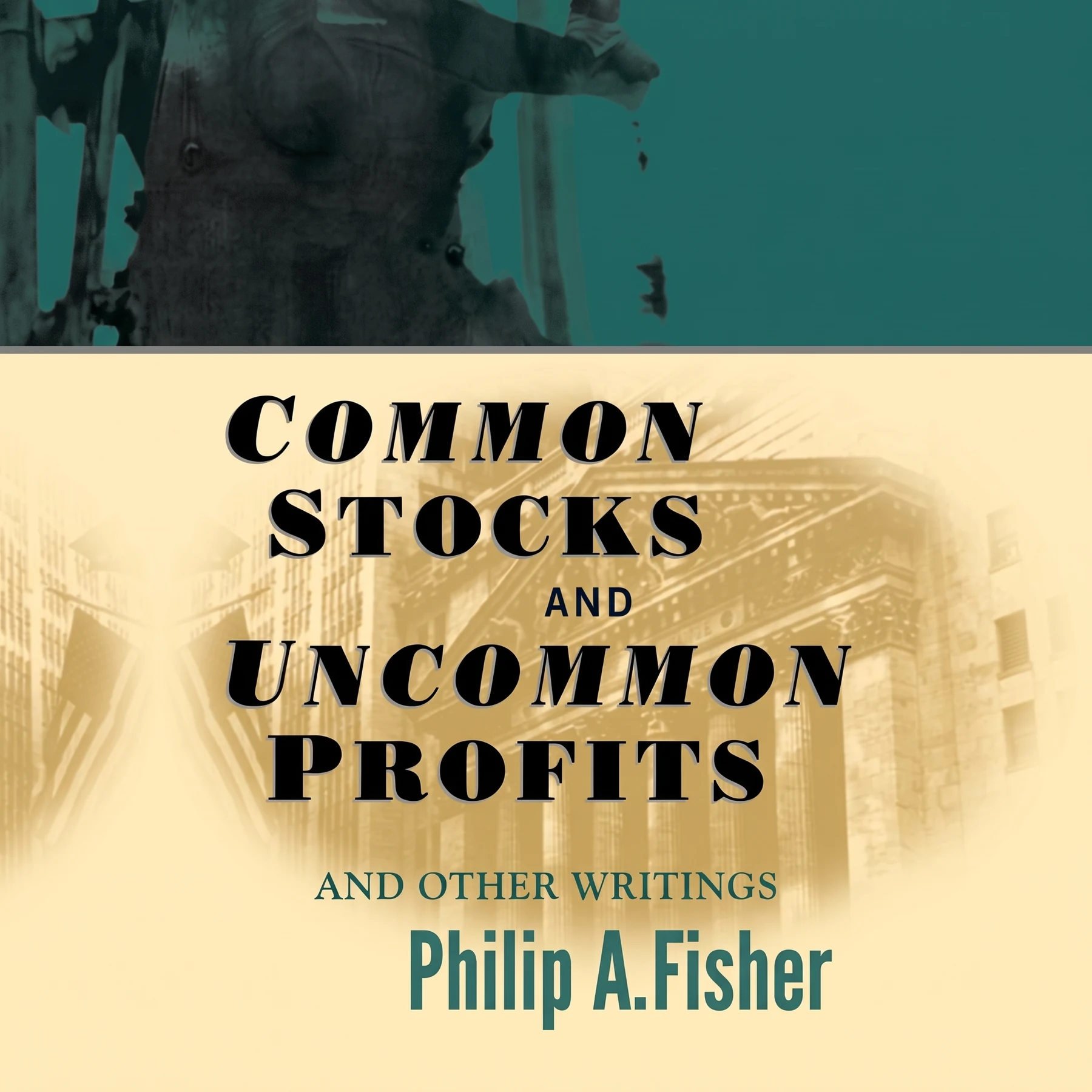
Common Stocks and Uncommon Profits and Other Writings
An essential guide to long-term investing that emphasizes identifying companies with exceptional growth potential, strong management, and resilient business models to achieve superior market returns over time through disciplined research.
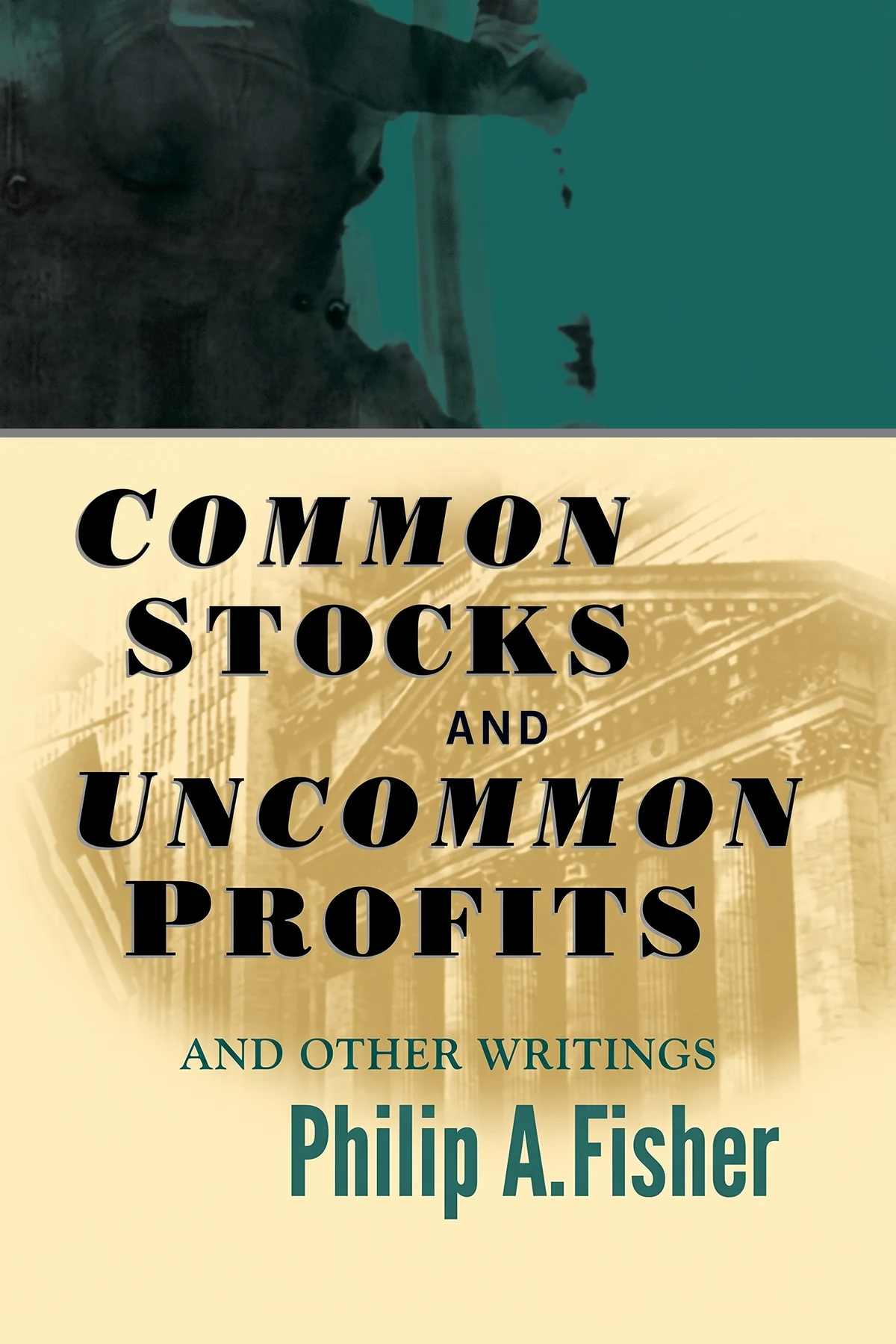
Table of Content
1. Introduction
1 min 49 sec
In the fast-moving world of modern finance, where algorithms and high-frequency trading often dominate the headlines, it is easy to assume that the old rules of the game no longer apply. However, if you look beneath the surface of the most successful portfolios in history, you will find that the core principles of intelligent investing are remarkably consistent. The wisdom found in Common Stocks and Uncommon Profits and Other Writings dates back to the mid-twentieth century, yet its lessons are perhaps more vital now than ever before.
This is not a guide about timing the market or finding the next ‘get-rich-quick’ scheme. Instead, it is an exploration of how to look at a company the way a detective looks at a crime scene. We are going to explore the idea that the real value of a stock isn’t found in a ticker symbol or a daily price chart, but in the internal culture, the management quality, and the long-term vision of the organization itself.
As we move through these concepts, we will establish a throughline: the idea that ‘uncommon profits’ are the reward for doing uncommon work. Most investors follow the crowd, reacting to news with fear or excitement. But the successful investor operates differently. They use a methodical approach to find businesses that are not just surviving, but are built to dominate their fields for decades. We will break down how to identify these rare opportunities, how to distinguish between a risky gamble and a calculated conservative bet, and why the most difficult part of investing is often simply having the patience to stay the course when everyone else is jumping ship.
By the end of this journey, you will have a new lens through which to view your portfolio. You will understand how to dig deeper into a company’s story and why, in the world of the stock market, the most valuable information is often the kind you won’t find in an official financial report.
2. Prioritizing Sustainable Growth and Innovation
1 min 59 sec
Discover why the best investments aren’t found in quick wins, but in companies that possess the stamina to expand their sales and evolve their products over decades.
3. The Power of the Scuttlebutt Method
2 min 07 sec
Go beyond the numbers and learn how to uncover the hidden truth about a company by gathering intelligence from unconventional sources and real-world players.
4. Capitalizing on Market Irrationality
2 min 12 sec
Learn to see stock price drops as opportunities rather than threats by understanding the often-illogical behavior of the broader financial community.
5. The Discipline of Holding and the Logic of Selling
2 min 16 sec
Explore why staying the course is often harder than the initial purchase, and identify the only three valid reasons to ever let a good stock go.
6. A Framework for Conservative Investing
2 min 00 sec
Discover that being ‘conservative’ doesn’t mean settling for low returns; it means finding established leaders that still have the agility to grow.
7. The Crucial Role of Human Capital
1 min 56 sec
Uncover why a company’s treatment of its employees is one of the most reliable indicators of its future financial success and stability.
8. Protecting Profits with Strategic Moats
2 min 01 sec
Learn how to identify companies that don’t just make money today, but have built structural defenses to keep competitors at bay for the long haul.
9. Mastering Valuation and the P/E Ratio
2 min 01 sec
Demystify the math of the stock market and understand how to determine if a share price is a bargain or a trap by looking at earnings.
10. Conclusion
1 min 28 sec
As we wrap up our look at the enduring principles of Philip A. Fisher, the core message should be clear: successful investing is an exercise in depth, discipline, and detail. We have moved from the broad strokes of identifying growth potential to the granular detective work of the scuttlebutt method. We’ve seen how the psychology of the crowd can create opportunities for the patient, and why the strength of a company’s human culture is often the truest predictor of its financial future.
The throughline of this journey is that ‘uncommon profits’ are not the result of luck, but of a superior process. Whether you are seeking high-growth innovators or stable, conservative leaders, the requirements are the same. You must look past the daily fluctuations of the stock market and focus on the fundamental health of the business. You must have the courage to buy when others are fearful and the patience to hold when others are restless.
As an actionable final step, consider your current portfolio or a company you’ve been watching. Don’t just look at its chart. Instead, start your own scuttlebutt investigation. Talk to a customer, read a trade journal, or even reach out to your bank for professional introductions and perspectives. By digging deeper than the average investor, you position yourself to find the hidden gems that the rest of the market has missed. Remember, in the world of stocks, the most valuable assets are the ones built on a foundation of integrity, innovation, and long-term vision. Stick to these fundamentals, and the profits will eventually follow.
About this book
What is this book about?
Common Stocks and Uncommon Profits and Other Writings serves as a foundational blueprint for anyone looking to move beyond surface-level stock picking. It promises to transform the way you view the market by shifting focus from short-term price fluctuations to the underlying health and trajectory of a business. The book outlines a rigorous methodology for researching companies, famously known as the scuttlebutt method, while also exploring the psychological discipline required to hold onto winning investments. Whether you identify as a conservative investor or a growth-seeker, this work provides the framework to distinguish between overhyped trends and genuine, long-term wealth generators. It is ultimately about finding the few companies capable of delivering extraordinary returns over decades.
Book Information
About the Author
Philip A. Fisher
Philip A. Fisher is one of the original fathers of investment theory and the founder of the renowned money management company, Fisher & Company. His book, Common Stocks and Uncommon Profits, originally published in 1958, has remained in print ever since.
Ratings & Reviews
Ratings at a glance
What people think
Listeners find the book accessible and value its reliable investment guidance, often viewing it as the perfect companion piece to The Intelligent Investor. The quality of the content is well-regarded; one listener specifically highlights the helpful inclusion of actual successes and failures in stock selection. On the other hand, the prose style draws varied opinions, as some consider it well-crafted while others disagree. Finally, reactions to the book's age are divided, with some praising the principles as timeless and others finding the material outdated.
Top reviews
Sook
Finally got around to reading this investment classic, and it’s easy to see why it influenced legends like Buffett. Fisher’s 'Scuttlebutt' method is a total game-changer for anyone tired of just staring at spreadsheets and P/E ratios all day. He explains how to dig deep into a company’s reputation by talking to competitors and vendors, which provides a much clearer picture of long-term potential. While some of the specific examples are from the 1950s, the underlying philosophy of identifying high-quality management and R&D remains incredibly relevant. It’s the perfect complement to Graham’s more quantitative approach, offering a necessary focus on business quality over mere price. If you want to understand how a business actually grows, this is essential reading.
Show moreLandon
The chapter on 'Scuttlebutt' is easily worth ten times the price of the book. Fisher argues that the real secrets of a company’s success aren't found in the annual report, but in the opinions of its customers and former employees. This focus on qualitative research helped me realize that the numbers on a balance sheet are just a lagging indicator of a company's internal culture. I loved how he included specific stories of his own successes and failures, which humanized the advice. Despite being written decades ago, his warnings about over-diversification and the importance of holding great companies for the long haul are timeless truths. It’s a foundational text for anyone serious about growth.
Show moreGoy
Look, if you want to find the next generational compounder, you have to look at the qualitative aspects mentioned here. Fisher was way ahead of his time in understanding that a company's sales organization and its internal labor relations are the real drivers of long-term stock price appreciation. This isn't a book for someone looking for a quick formula or a technical indicator. It’s for the serious investor who is willing to do the hard work of investigating a company’s DNA. The stories of his own investment career add a lot of credibility to his claims. It’s a masterpiece that transformed how I view 'expensive' stocks. Sometimes you have to pay up for quality.
Show morePannipa
Fisher offers a refreshing departure from the spreadsheet-heavy world of traditional value investing. His 15 points for evaluating a company are remarkably comprehensive, covering everything from sales organization efficiency to the integrity of management during difficult times. I found the sections on the '15 points' particularly actionable, even if some of the corporate cultural references feel a bit like a time capsule. To be fair, the writing style can be a bit dense and wordy in certain chapters, making it a slower read than modern finance books. However, the information quality is top-tier. The book provides a solid framework for anyone looking to transition from a 'cigar butt' mentality to owning truly great growth franchises.
Show moreVarinee
Ever wonder why Buffett credits Fisher for his transition from 'cigar butts' to high-quality companies? This book bridges the gap between pure value and growth investing by emphasizing the people behind the business. Fisher breaks down what makes a research and development department effective, which is a rare find in investment literature even today. I found his '5 Don'ts' lists to be excellent reminders for staying disciplined during market cycles. Truth is, the book could have been fifty pages shorter without losing any of the core wisdom. The language is a bit flowery and formal for my taste, but the insights into management integrity are invaluable for any long-term portfolio builder.
Show moreSuwit
To be fair, some of the corporate culture references feel like they belong in a black-and-white movie from the mid-century. However, once you look past the dated social context, the actual investment principles are pure gold. Fisher’s focus on 'organizational depth' is something many modern analysts ignore at their own peril. He provides a fantastic roadmap for identifying companies that can sustain high growth for decades rather than just a few quarters. I particularly enjoyed the section on when to sell a stock—or rather, why you almost never should if you've picked correctly. It’s a dense read, but the clarity it brings to your investment process is well worth the mental effort.
Show moreCameron
Picked this up after finishing Graham’s 'The Intelligent Investor' and found it to be the perfect counterweight. Where Graham focuses on the margin of safety in price, Fisher focuses on the margin of safety in business quality and management excellence. His 15 points are a great checklist that I now use for every stock I research. I’ll admit that the writing is a bit tangled and he uses way more words than necessary to make simple points. But the logic is sound. Fisher teaches you how to think like a business owner rather than a gambler. It’s not a quick read, but the depth of insight into sales force effectiveness and labor relations is unmatched.
Show moreAndrei
Few investment books manage to stay relevant for over sixty years, but Fisher’s 15 points remain a gold standard for due diligence. I specifically liked his take on why dividends aren't always a good sign for a growing company. He makes a compelling case for reinvestment that every growth investor should study. My only real gripe is the introduction by his son, which felt a bit self-promotional and arrogant compared to the humbler tone of the main text. Aside from that, the book is a treasure trove of wisdom on management transparency and long-term vision. It challenges you to look past the ticker tape and see the living, breathing organization behind the ticker symbol.
Show moreJib
While I appreciate the historical significance of Fisher’s work, the prose is often frustratingly repetitive and relies heavily on the passive voice. It feels quite dated in its social outlook, and the advice to 'just call a friend at the company' isn't exactly practical for a retail investor in the digital age. Frankly, it lacks the quantitative rigor I expected from a book so highly recommended by the greats. Fisher’s disdain for dividends and his focus on qualitative judgment can be dangerous for someone who doesn't have his decades of experience. It is a decent scorecard for business quality, but as a standalone investment manual, it leaves too much to chance and subjective interpretation.
Show moreManop
It is hard to deny the influence this book has had on the industry, yet I found the lack of valuation metrics frustratingly thin. Fisher seems to suggest that if the business is good enough, the price barely matters, which is a dangerous philosophy in a high-valuation market. The 'Scuttlebutt' method sounds great in theory, but for a modern individual investor, getting that kind of access to industry insiders is nearly impossible. Additionally, the writing style is incredibly dry and filled with clunky, passive sentences that make it a chore to get through. It’s an interesting piece of financial history, but for practical guidelines today, I’d stick with Buffett’s shareholder letters which communicate similar ideas much more clearly.
Show moreFeatured in
Readers also enjoyed




AUDIO SUMMARY AVAILABLE
Listen to Common Stocks and Uncommon Profits and Other Writings in 15 minutes
Get the key ideas from Common Stocks and Uncommon Profits and Other Writings by Philip A. Fisher, plus 5,000+ more titles in English and Thai.
- 5,000+ titles
- Listen as much as you want
- 7-day free trial
- Cancel anytime







