
21 min 56 sec
Cosmos
By Carl Sagan
Explore the majesty of the universe and the history of human discovery. This summary traverses billions of years, from the birth of stars to the pioneering voyages of space exploration.
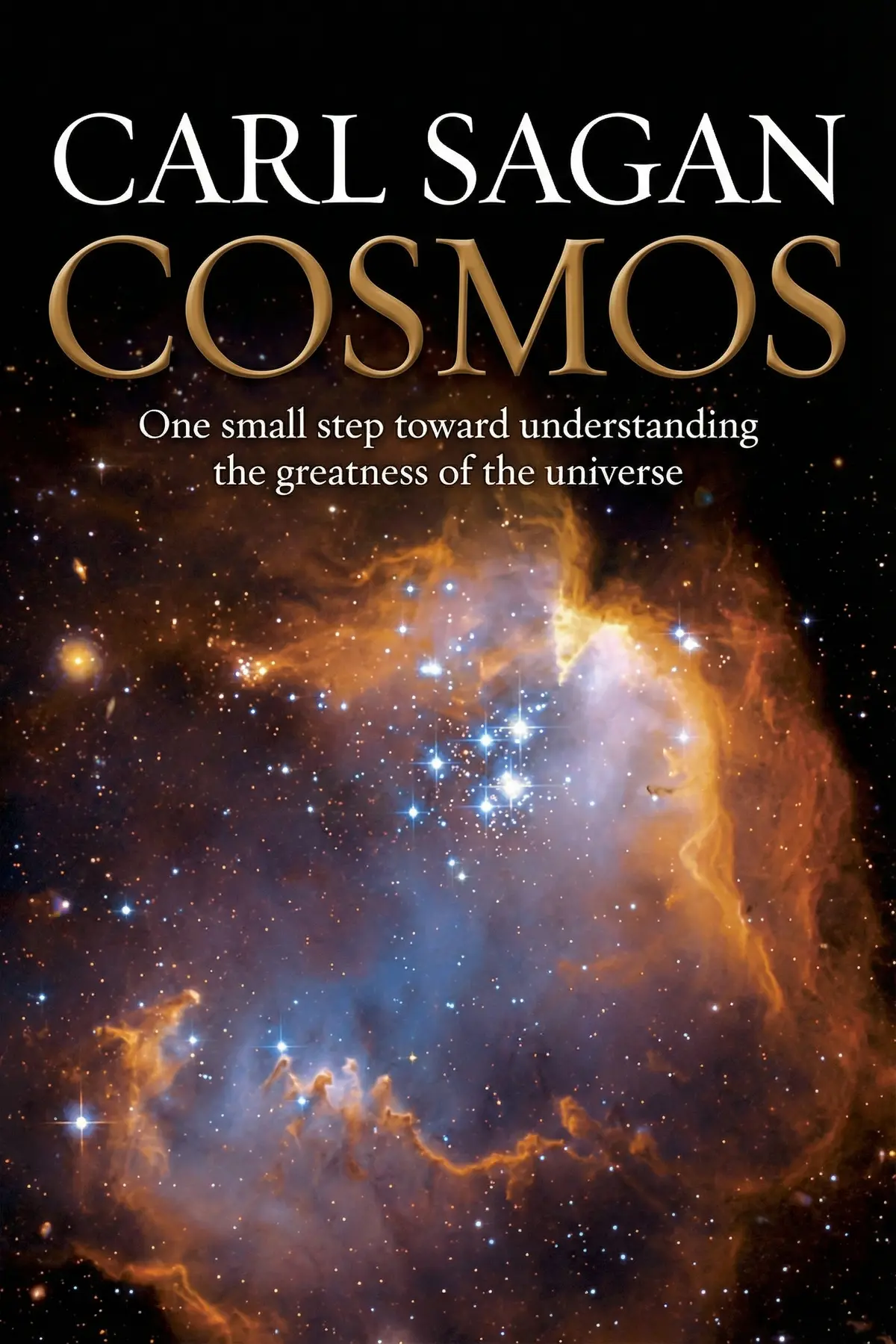
Table of Content
1. Introduction
2 min 03 sec
Imagine for a moment that you are looking up at the night sky on a perfectly clear evening. The stars appear as tiny, shimmering points of light, seemingly close enough to touch, yet unimaginably distant. In the rush of our daily lives, it is easy to feel as though our personal world—our jobs, our mistakes, our local dramas—is the absolute center of reality. We fret over a missed appointment or a minor failure as if the entire world hinges on that single moment. But as we begin this journey, we must step back and look at the bigger picture. When we view our lives through the lens of the universe, we start to see that our Earth is just one incredibly small grain of sand on a beach that stretches forever.
This exploration is more than just a collection of scientific facts; it is a story of how we, a relatively young species, have attempted to decode the grand mysteries of the environment we inhabit. Carl Sagan had a unique gift for taking the most massive concepts imaginable and making them feel intimate and relevant. He understood that to study the universe is to study our own history. We aren’t just looking at cold rocks and distant fires; we are looking at our origins and our potential future.
Throughout this summary, we will follow the throughline of human curiosity. We will move from the ancient libraries of Egypt to the cutting-edge laboratories of the twentieth century. We will see how our ancestors used the stars to survive and how their descendants used that same light to unlock the secrets of time and space. We are going to explore the hellish heat of our neighbors, the possibility of life on other worlds, and the incredible technology that is currently carrying our legacy into the dark void. By the end, you will see that while we may be physically insignificant in the face of the infinite, our ability to understand it is what makes us truly remarkable. Let’s take that first step into the greatness of the cosmos.
2. The Infinite Scale of the Universe
2 min 53 sec
Discover how the sheer size of the cosmos renders our home planet a mere speck and learn how an ancient scholar first measured the Earth.
3. The Evolution of Celestial Understanding
2 min 34 sec
Explore how our ancestors transitioned from using stars as a seasonal calendar to revolutionizing our view of the Sun and planetary motion.
4. Contrasting Worlds: The Lessons of Venus and Mars
2 min 44 sec
Delve into the hostile environment of Venus and the intriguing possibilities of Mars to understand the fragility of life and our future potential.
5. The Search for Life and Interstellar Connection
2 min 28 sec
Ponder the potential forms of extraterrestrial life and why radio waves might be our best chance at making first contact with another civilization.
6. The Hidden History of Scientific Inquiry
2 min 29 sec
Uncover how the ancient Ionians pioneered the scientific method and why their groundbreaking work was suppressed for over a thousand years.
7. Einstein and the Constant of Light
2 min 28 sec
Grasp the counterintuitive reality of the speed of light through Albert Einstein’s famous thought experiments and their impact on our perception of time.
8. Voyager: Humanity’s Message to the Stars
2 min 23 sec
Learn about the incredible engineering of the Voyager probes and the ‘Golden Record’ they carry as a testament to human life and culture.
9. Conclusion
1 min 54 sec
As we conclude this journey through the cosmos, we are left with a profound sense of perspective. We have traveled from the surface of our own world, across the scorched plains of Venus and the frozen deserts of Mars, and out to the very edges of our solar system where the Voyager probes continue their lonely trek. We have seen how our ancestors first began to decode the movements of the stars, and how that quest for knowledge was sometimes suppressed and sometimes reborn, leading eventually to the revolutionary insights of thinkers like Einstein.
The throughline of all these stories is our own insatiable curiosity. We are a species of explorers, constantly pushing against the boundaries of the unknown. We have learned that our planet is not the center of the universe, but rather a precious, fragile oasis in a vast and often indifferent ocean of space. This realization shouldn’t make us feel small; it should make us feel responsible. Since we are the only ones we know of who can understand and appreciate the grandeur of the cosmos, it is up to us to preserve the life that exists here.
Science is not just a collection of facts; it is a way of thinking. It is a commitment to looking at the world as it really is, rather than how we wish it to be. By embracing the spirit of the ancient Ionians—valuing evidence, asking questions, and remaining open to wonder—we can continue to uncover the mysteries of our existence. Whether we are looking at the smallest atom or the largest galaxy, we are looking at the same story of which we are a part. Take this cosmic perspective back into your daily life. Remember that while our problems may feel overwhelming, we are part of something much larger, a grand and beautiful universe that is waiting to be explored. Let your curiosity be your guide as you continue your own journey through the stars.
About this book
What is this book about?
This summary explores the profound questions of our existence by looking toward the stars. It traces the evolution of our understanding of the universe, from ancient Greek philosophers who first measured the Earth to the modern scientists who decoded the laws of physics. It offers a narrative journey through our solar system, stopping at the scorched surface of Venus and the dusty plains of Mars, while pondering the vastness of the galaxies beyond. At its heart, the book is a call to recognize our place in the cosmic perspective. It bridges the gap between complex science and human wonder, explaining the speed of light, the nature of atoms, and the potential for life elsewhere. Ultimately, it promises to transform the way you view our 'tiny speck' of a planet, encouraging a deep appreciation for the fragility and brilliance of life on Earth.
Book Information
About the Author
Carl Sagan
Carl Sagan was an American astronomer, author, and famous popularizer of science. He co-wrote and narrated the television series Cosmos: A Personal Voyage, which was accompanied by his best-selling companion book. It won him several awards, including an Emmy for Outstanding Individual Achievement.
Ratings & Reviews
Ratings at a glance
What people think
Listeners view this work as a spectacular experience that offers deep insight and stimulating material, with one review comparing the narrative to a mystery novel. The prose is easy to follow, mirroring Carl Sagan's own way of speaking, and listeners value the thorough exploration of the cosmos and the way it blends historical events with scientific discovery. They characterize the work as mind-blowing and an excellent resource for fueling curiosity, with one listener mentioning it's required reading in public schools. Although some listeners feel it is timeless, others observe that the information is somewhat dated.
Top reviews
Henry
"We are made of starstuff." This iconic phrase alone captures the soul of the book, doesn't it? Sagan has this incredible ability to make complex astrophysics feel like a personal love letter to humanity. I was struck by how he connects the iron in our blood to the deaths of distant stars. It’s not just a textbook; it’s a philosophical journey through time and space. Even though it was written decades ago, the core message about our place in the universe remains staggering. His writing is lyrical, almost poetic, yet grounded in rigorous logic. It makes you realize how precious our tiny blue dot really is. Every chapter feels like a revelation that stays with you long after you've finished.
Show moreBun
Watching the series first made this reading experience even better. I could practically hear Sagan’s distinct, soothing voice narrating every sentence on the page. He had such a unique way of articulating the grandeur of the cosmos without ever being condescending. This book is a magnificent bridge between the hard sciences and the humanities. He explores how our ancestors looked at the same sky and tried to make sense of the chaos. The illustrations and the focus on the Ionian awakening were highlights for me. It’s more than just a science book; it’s a plea for sanity and unity in a world often obsessed with petty, meaningless conflicts.
Show moreSaranya
The way Sagan weaves history into the stars is nothing short of genius. Most science writers stick to the "what," but Sagan is obsessed with the "why" and the "how." He takes us from the dusty halls of the Great Library of Alexandria to the edge of the known universe. I loved the emphasis on how fragile our knowledge is and how easily it can be lost to superstition or violence. His defense of libraries as the indicator for the "health of our civilization" really resonated with me. It’s a deeply human book that looks outward to the galaxies to help us look inward at ourselves. It really is a life-changing read for any curious mind.
Show moreOlivia
An absolute masterclass in science communication. If you’ve ever felt intimidated by physics or astronomy, you should definitely start here. Sagan doesn't lecture; he invites you on a voyage. The book is structured perfectly, building from our local neighborhood out to the furthest reaches of space and time. I’ve given this as a gift to so many people because it nurtures that sense of childhood wonder we all tend to lose as adults. It makes the universe feel less like a cold, empty void and more like a home waiting to be understood. His excitement is contagious and makes the most complex topics accessible to everyone. It’s a masterpiece that deserves every bit of praise it gets.
Show moreDuangjai
Picked this up on a whim and it completely blew my mind. I’m not typically a non-fiction reader, but the prose here is so engaging that it felt like a narrative. It honestly felt like I was sitting around a campfire with the world’s smartest teacher. He makes things like the curvature of spacetime or the lifecycle of a star feel intuitive rather than impossible. I especially appreciated his take on the search for extraterrestrial intelligence and why it matters to our own ego. It’s a mind-expanding experience that stays with you long after you close the cover. If you want to understand the scale of reality, this is the definitive guide to the heavens.
Show morePenelope
While the science has naturally evolved since the 1980s, the sense of wonder remains completely intact. I’ll admit some of the data on planetary flybys feels like a time capsule now. We've learned so much more about the Martian surface and the outer rim since this was first published. However, the way Sagan explains the scientific method is timeless. He doesn't just give you facts; he teaches you how to think critically. The prose is conversational and easy to follow, even when he's diving into relativity or the Library of Alexandria. Truth is, I found the historical sections just as fascinating as the astronomy. It’s a bit dense in the middle, but absolutely worth the effort.
Show moreKae
It’s rare to find a science book that reads like a gripping mystery novel. Not gonna lie, I expected something much drier when I first picked this up. Instead, I found myself hooked on the stories of Eratosthenes and Kepler. Sagan presents scientific discovery as a series of clues left by the universe for us to find. The language is accessible enough for a layman but never feels like it's being "dumbed down." I did find some of the biology sections toward the beginning a little slow compared to the space exploration parts. Still, the breadth of topics covered is impressive. It’s a comprehensive account of everything that makes us human specimens in a vast vacuum.
Show moreAnong
Few books manage to make you feel both incredibly small and deeply significant at once. Sagan’s perspective on the "pale blue dot" mindset is a necessary antidote to modern cynicism. He reminds us that we are the "eyes of the cosmos" looking back at ourselves. My only minor gripe is that he occasionally gets a bit repetitive with the sweeping, grandiloquent tone. Some sections on chemical evolution are a bit technical if you don't have a background in it. But look, the overall message of unity and curiosity is something we need now more than ever. It’s a thoughtful, provocative piece of writing that challenges you to think about our long-term survival.
Show moreAubrey
Reflecting on the sections about our self-destructive tendencies made me realize how little has changed since 1980. Sagan was writing during the height of the nuclear arms race, but his warnings about tribalism and the misuse of technology are still incredibly relevant today. He makes a compelling case for science as a "self-correcting tool" for survival rather than just a collection of facts. Personally, I think every student should be required to read the final chapters on the "Encyclopedia Galactica." The science might be forty years old, but the sociology and ethics are spot on. It’s a sobering but ultimately hopeful look at our potential as a species. A solid four stars for the message alone.
Show moreMeen
To be fair, this is a product of its time. I know this is considered a "classic," but I genuinely struggled with the pacing in several of the chapters. Some of the long-winded passages about 17th-century astronomers felt like they belonged in a completely different history book. Also, if you’re looking for the most up-to-date information on things like dark energy or exoplanets, you obviously won't find it here. The heavy Cold War anxiety is palpable throughout, which makes the tone feel a bit dated and paranoid for a modern reader. It’s certainly an important work of literature, but as a practical science guide, it’s clearly showing its age. I appreciate the grand vision, but frankly, it was a bit of a slog to finish the final third.
Show moreReaders also enjoyed
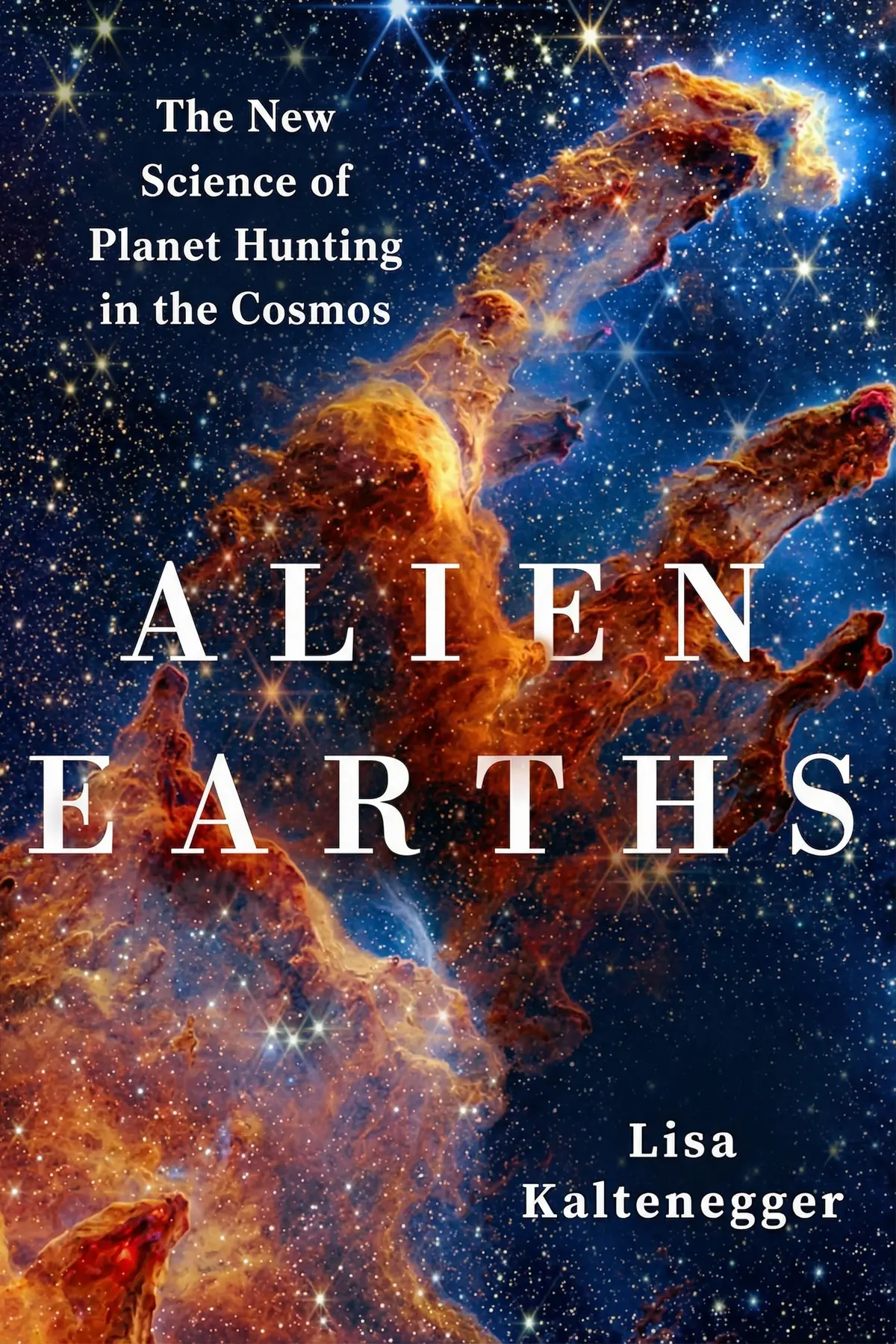
Alien Earths: The New Science of Planet Hunting in the Cosmos
Lisa Kaltenegger
A Life Decoded: My Genome: My Life
J. Craig Venter
A Planet of Viruses
Carl Zimmer
AUDIO SUMMARY AVAILABLE
Listen to Cosmos in 15 minutes
Get the key ideas from Cosmos by Carl Sagan, plus 5,000+ more titles in English and Thai.
- 5,000+ titles
- Listen as much as you want
- 7-day free trial
- Cancel anytime







