
17 min 30 sec
Could Should Might Don’t: How We Think About the Future
By Nick Foster
Explore the psychological frameworks we use to envision tomorrow. Nick Foster breaks down how four distinct mindsets—Could, Should, Might, and Don’t—shape our decisions, our anxieties, and our collective future.
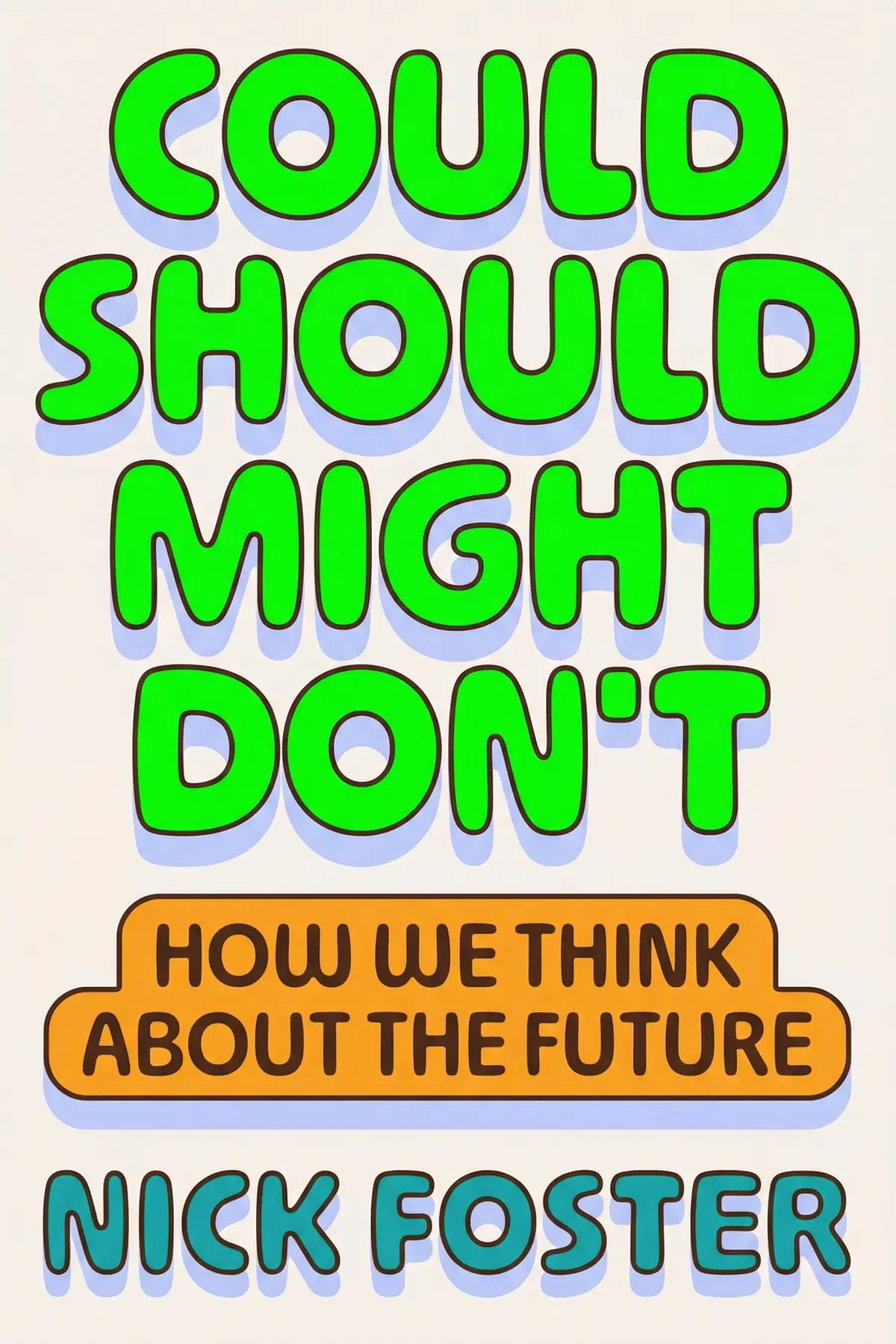
Table of Content
1. Introduction
1 min 49 sec
Imagine for a moment that you are standing in a high-stakes meeting where the world’s most powerful leaders are trying to map out the next decade. On one side of the room, you have the optimists, sketching out visions of clean energy and flying vehicles. On the other side, the skeptics are pointing at historical data and warning of inevitable collapse. In the middle, a group of strategists is trying to calculate every possible variable. It is a scene of immense intellectual effort, yet if history is any guide, much of it will be completely wrong.
We are a species obsessed with the future. We spend billions of dollars and countless hours trying to peek around the corner of time. From corporate boardrooms to our own kitchen tables, we are constantly planning, worrying, and dreaming about what comes next. But despite all this focus, our ability to think clearly about the future hasn’t necessarily improved. We often find ourselves trapped between wild technological fantasies and paralyzing anxiety.
In this summary, we are going to explore a new way of organizing these thoughts. Rather than trying to find a single ‘correct’ way to predict the future, we will look at the four distinct mindsets that govern our thinking: Could, Should, Might, and Don’t. Each of these categories represents a different way of processing possibility and risk. By learning to identify these lenses, you can start to see through the noise of modern life. You’ll understand why certain predictions get all the headlines, why some plans fail before they start, and how you can develop a more sophisticated, balanced approach to your own tomorrow. This isn’t just about guessing what will happen; it’s about refining the very way you think.
2. The Modern Crisis of Future Thinking
2 min 43 sec
Despite spending more on research and planning than any previous generation, our collective vision of the future is increasingly mired in anxiety and shallow clichés.
3. The Could Mindset and the Lure of Tech Spectacle
2 min 42 sec
Learn why the most visible form of futurism relies on a specific aesthetic of ‘possibility’ that often masks a lack of real substance.
4. The Should Mindset and the Trap of Ideological Certainty
2 min 31 sec
Explore how our personal and political blueprints for ‘better’ can create a dangerous illusion of control over the future.
5. The Might Mindset and the Discipline of Scenarios
2 min 53 sec
Discover how military and corporate strategists use the science of uncertainty to prepare for multiple futures at once.
6. The Don’t Mindset and the Necessity of Pessimism
3 min 02 sec
Uncover the vital role of the ‘professional pessimist’ in identifying risks and preventing catastrophe before it’s too late.
7. Conclusion
1 min 50 sec
As we have seen, thinking about the future is not a single skill, but a complex interplay of four different perspectives. The techno-optimism of Could gives us inspiration. The ideological blueprints of Should give us a sense of direction. The strategic scenarios of Might give us a map of the landscape. And the cautionary warnings of Don’t give us the safety checks we need to keep from running off a cliff.
The real secret to better future-thinking isn’t picking one of these lenses and sticking to it. It’s learning how to use all of them in concert. If you find yourself getting caught up in the hype of a new gadget or trend, try to pivot into the Might mindset and ask what the alternative outcomes could be. If you feel yourself becoming paralyzed by a Don’t mindset, look for a Should that provides a constructive path forward.
Most of the errors we make when thinking about tomorrow come from being too narrow. We get blinded by the shiny or we get paralyzed by the scary. But by recognizing these four categories, you can begin to audit your own thoughts. You can start to ask: Am I being told what *could* happen just to sell me something? Am I being told what *should* happen just to control my behavior?
The future is a vast, unwritten space. It will arrive with all its messiness and surprises, regardless of how well we plan for it. But we owe it to ourselves to approach it with a higher quality of thought. By balancing these four mindsets, you won’t just be waiting for the future to happen to you. You will be better equipped to navigate it, understand it, and—perhaps—even help shape it for the better. The quality of your tomorrow starts with the quality of your thinking today.
About this book
What is this book about?
Have you ever wondered why our predictions about the future are so often wrong, yet we never stop making them? Could Should Might Don't examines the architecture of future-oriented thinking. It moves beyond simple forecasting to explore the deeper psychological and cultural lenses through which we view what is yet to come. From the flashy promises of Silicon Valley to the strategic caution of global corporations, this book maps out four primary ways humans process the unknown. By understanding these frameworks, readers can learn to distinguish between genuine strategic insight and mere technological hype, ultimately fostering a more grounded and effective way to plan for whatever the future holds.
Book Information
About the Author
Nick Foster
Nick Foster is a prominent designer, writer, and futurist who has lent his expertise to industry giants like Apple, Google, and Sony. In 2021, he was awarded the title of Royal Designer for Industry, the highest honor for design in Britain. He is also a fellow of the Royal Society of Arts and frequently contributes to global discourse through his essays and public speaking.
Ratings & Reviews
Ratings at a glance
What people think
Listeners find the book to be deeply insightful, particularly valuing its engaging take on long-term thinking. They characterize it as a superb read, with one listener mentioning that it details four essential mindsets. Listeners applaud the author’s professional knowledge, with one listener describing him as a futurist extraordinaire.
Top reviews
Samart
Nick Foster provides a refreshing, grounded perspective on what it actually means to look ahead without falling into the trap of glossy marketing. This isn't your typical tech-hype manual; instead, it lays out four core mindsets that help deconstruct how we perceive what's coming next. I found the discussion on the "mundane" aspects of the future—the consequences and real-life users—to be incredibly insightful. To be fair, Foster does spend some time defending his profession as a futurist, but once you get past that, the wisdom is palpable. It’s a brilliant read for those who want to move beyond gimmicky predictions and start asking harder, more relevant questions about long-term consequences. I really enjoyed the way it forced me to rethink my own assumptions about technology.
Show moreRohan
Finally, a business book that isn't just a gimmicky five-step guide to "disrupting" the market. Foster is a futurist extraordinaire who isn't afraid to call out the bullshit machine that drives so much of the tech industry today. His emphasis on asking better questions rather than providing certain answers is exactly what the industry needs right now. I particularly loved the framework of "Could, Should, Might, Don't"—it's a practical way to filter through the noise of marketing and stories. The book is an informative take on long-term thinking that feels both professional and deeply personal. It’s easily one of the most interesting ways to look at things I've encountered this year. Highly recommended.
Show moreChatri
This is a brilliant read for anyone tired of the Silicon Valley bullshit machine and the constant cycle of hype. Foster manages to be both an insider and a critic, offering a broad philosophy of asking questions that actually matter to real-life users. I loved his take on how we should push back on the "grandiose" visions of the future and focus on the consequences of the technology we’re building today. The conversational tone made it feel like I was having a beer with a very smart friend who has seen it all. In my experience, books on the future are usually too optimistic or too doomsday—this one finds the perfect middle ground. Truly excellent.
Show moreLeo
Ever wonder if 'futurist' is just a fancy word for a professional guesser? Nick Foster tackles that skepticism head-on in the opening chapters, and frankly, he makes a compelling case for the necessity of his role in big tech. The book excels when it moves away from high-level theory and into the practical conversation about how sci-fi tropes often mislead us. I appreciated the way he breaks down the four types of futurists, as it gave me a new lens through which to view corporate strategy. It’s a bit repetitive with historical anecdotes from 20 years ago, but the overall philosophy is solid. A very interesting, conversational listen for anyone in business.
Show moreYulia
As a chronic over-thinker, I found Foster’s approach to deconstructing ideas to be strangely comforting. He doesn't offer a grandiose five-step plan for success, which is a relief in a market saturated with "hacks." Instead, he focuses on the mundane details and the real-life users who often get forgotten in the rush toward the "next big thing." Gotta say, the section comparing our current reality to old sci-fi movies was the highlight for me. It’s written in a very relatable, conversational style that makes complex business concepts feel accessible. It definitely helped me feel more comfortable with the uncertainty of the future, even if I ended up skimming some of the more defensive sections at the beginning.
Show moreMind
After hearing about Foster's work at big tech firms, I was curious to see if his "futurist" title was just hype. It turns out he’s actually quite grounded and skeptical of the very industry he works in. This book is a great tool for anyone in a professional setting who needs to balance innovation with a realistic understanding of consequences. The way he categorizes the four mindsets is very useful for hiring or team-building. It’s not too in-depth or overly complicated, which makes it a quick, engaging read. Personally, I found the last section on the different "futurist" archetypes we meet in our daily lives to be both funny and accurate. Thanks NetGalley for the copy!
Show moreYuwadee
The chapter on how we use Sci-Fi as a crutch really hit home for me as someone who loves the genre but realizes it’s a terrible blueprint for reality. Foster’s expertise shines when he’s deconstructing how companies fall in love with their own stories without considering the actual mundane details of execution. The book pulls you in without being overwhelming or too academic. I do think he could have trimmed some of the older anecdotes, as they felt a bit repetitive for anyone who has lived through the last twenty years of tech. Still, it’s a really interesting way to look at the world and definitely worth the time for long-term thinkers and chronic over-thinkers alike.
Show morePaiboon
I picked this up thinking it would be a deep dive into cognitive psychology and how the human brain processes future possibilities. Instead, it’s more of a memoir-meets-manifesto about the author's career at companies like Google and Sony. While I enjoyed the musings on why we should stop using science fiction as an anchor for our expectations, I found the delivery a bit sluggish in the middle. Truth is, a lot of the examples felt like common knowledge if you’ve followed tech for the last decade. It’s an okay read if you’re looking for a broad philosophy on questioning hype, but don’t expect a "how-to" guide for personal growth. It just didn't have the depth I was looking for.
Show morePruet
Look, the first fifty pages of this book are a bit of a slog because the author seems so intent on justifying his career path. If you can push past that, there is some value in how he discusses the mundane details of future-thinking and the importance of including varied voices. However, I struggled with the delivery at times; it felt like a series of "fun facts" that didn't always connect back to a central thesis. It’s an informative take, but it lacks the punch I was expecting from someone with his level of experience. Good for a casual listen if you're interested in the business of design, but not exactly life-changing for the average person.
Show moreSam
Not what I expected at all, and I'm honestly a bit disappointed. I was hoping for some actual foresight or interesting predictions about where technology is headed, but the author basically spent eight hours of this audiobook telling me that predicting the future is impossible and not worth the effort. Why write a book about it then? The first fifty pages felt like a defensive rant about why his job as a futurist deserves more respect, which was a bit of a turn-off for a casual reader. While there was some food for thought regarding sci-fi anchors, the rest of the text was just a boring compilation of old anecdotes. It felt more like a resume than a helpful guide.
Show moreFeatured in
Readers also enjoyed

AUDIO SUMMARY AVAILABLE
Listen to Could Should Might Don’t in 15 minutes
Get the key ideas from Could Should Might Don’t by Nick Foster, plus 5,000+ more titles in English and Thai.
- 5,000+ titles
- Listen as much as you want
- 7-day free trial
- Cancel anytime







