
21 min 33 sec
Cryptoassets: The Innovative Investor’s Guide to Bitcoin and Beyond
A comprehensive guide to understanding and investing in the digital finance revolution, exploring the mechanics of blockchain, the history of Bitcoin, and the strategies for building a robust cryptoasset portfolio.
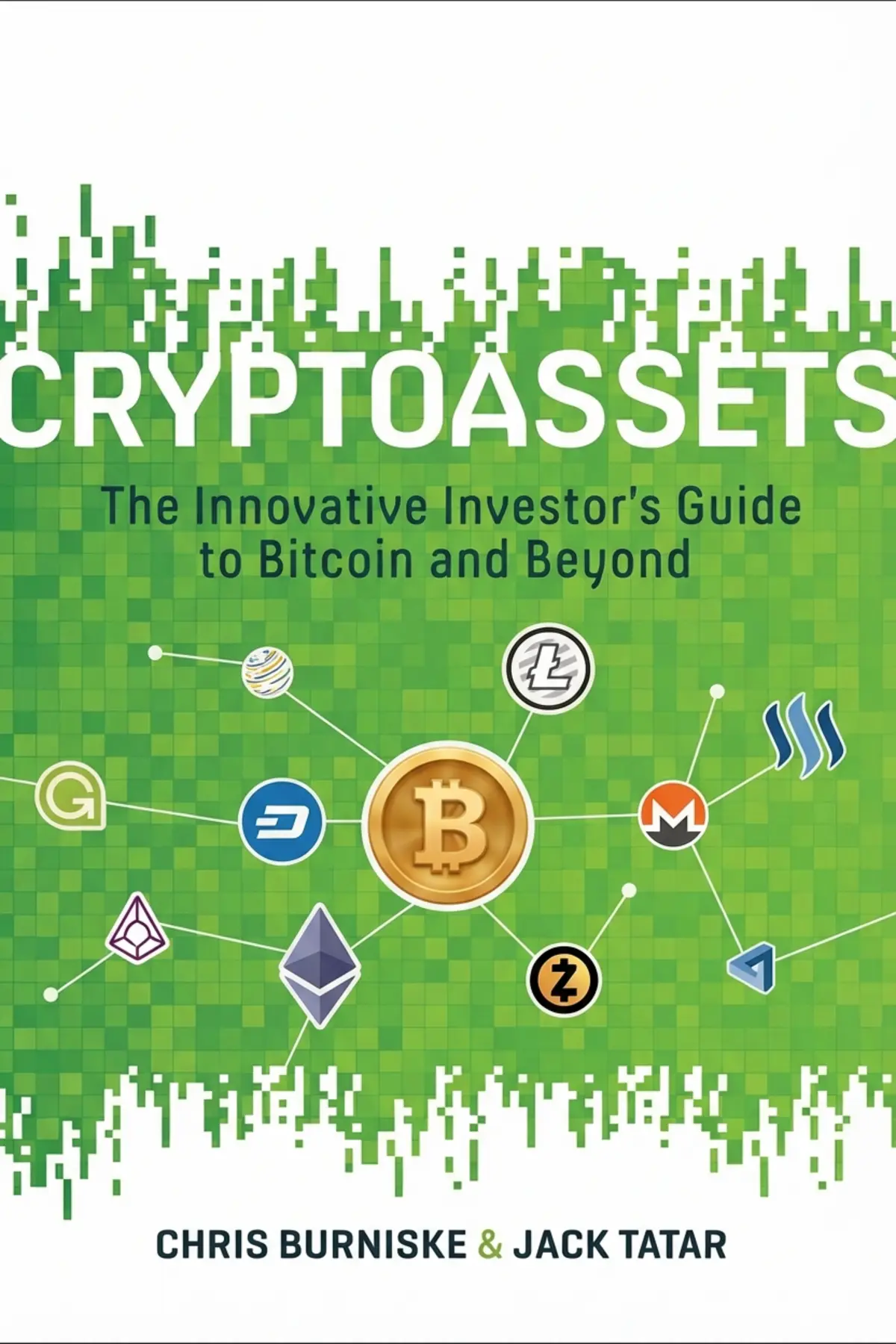
Table of Content
1. Introduction
1 min 32 sec
The financial world is currently standing at a massive crossroads, and at the center of this transition is the rise of cryptoassets. Depending on who you ask, these digital tools are either the most significant breakthrough since the invention of the internet or a dangerous speculative bubble that will eventually burst and leave latecomers with nothing. For many, the jargon alone—blockchain, mining, decentralization—is enough to make them look the other way. However, ignoring this shift may mean missing out on a generational shift in how value is created and moved around the globe.
To understand cryptoassets, we have to look past the daily price fluctuations and see them for what they truly are: a brand-new asset class that blends the properties of software and currency. This summary will guide you through the transition from traditional finance to the decentralized future. We will explore where these assets came from, how the technology works under the hood, and how an innovative investor can evaluate them without getting swept up in the hype.
The central throughline here is one of informed discipline. The crypto market moves incredibly fast, and the risks are real, but for those willing to do the research, the potential rewards are unprecedented. We are going to break down the mechanics of the blockchain, analyze the different types of assets available, and look at the practical steps for securing your investments. By the end of this journey, you won’t just know what a Bitcoin is; you’ll understand how to evaluate the entire landscape of digital commodities and currencies. Let’s begin by defining the very foundation of this new world and why these assets are unique in the history of finance.
2. Defining a New Hybrid Asset Class
1 min 57 sec
Discover why cryptoassets are more than just digital money, acting as a unique blend of software and commodities that challenge our traditional views of value and investment.
3. The Power of Decentralized Ledgers
2 min 09 sec
Uncover the mechanics of blockchain technology, the transparent and unchangeable system that allows for trust without the need for a middleman or central authority.
4. A Legacy of Innovation and Alternatives
2 min 01 sec
Trace the history of Bitcoin from its mysterious beginnings during a global financial crisis to the emergence of specialized assets like Ethereum and privacy-focused coins.
5. The Evolutionary Shift in Finance
1 min 55 sec
Explore why many experts compare the current state of cryptoassets to the early days of the internet, offering a second chance for visionary investors.
6. Identifying Speculative Dangers
2 min 02 sec
Learn to distinguish between sound investing and dangerous gambling by understanding the psychological traps and the ‘this time it’s different’ fallacy.
7. Strategies for a Balanced Portfolio
1 min 56 sec
See how adding cryptoassets to a traditional portfolio can actually reduce overall risk through the principles of zero and negative correlation.
8. Navigating Exchanges and Trading Pairs
2 min 09 sec
Get practical advice on how to enter the market, from choosing the right exchange to understanding the significance of trading pair diversity.
9. The Vital Importance of Secure Storage
1 min 58 sec
Understand the critical choice between convenience and security, and learn how to protect your private keys from hackers and physical loss.
10. Evaluating Longevity and Legitimacy
2 min 02 sec
Master the art of fundamental analysis by scrutinizing white papers, developer teams, and the fairness of issuance models to find truly valuable assets.
11. Conclusion
1 min 52 sec
The world of cryptoassets is much more than a collection of digital coins; it is a fundamental shift in how we conceive of value, trust, and financial independence. Throughout this summary, we’ve seen that these assets represent a new class that combines the utility of software with the scarcity of commodities. We’ve explored the revolutionary power of the blockchain—a decentralized, immutable ledger that allows us to move value around the world without the need for traditional intermediaries. We’ve also looked at the historical context of Bitcoin’s birth during a financial crisis and how it paved the way for a diverse ecosystem of platforms like Ethereum and privacy-focused assets.
However, as with any frontier, there are significant risks. The psychological traps of speculation and the ‘herd mentality’ can lead even smart people to make poor decisions. The key to navigating this space successfully is discipline. By understanding the importance of zero correlation, you can use cryptoassets to build a more resilient and diversified portfolio. By mastering the balance between hot and cold storage, you can protect your wealth from the unique threats of the digital age. And by performing deep fundamental analysis—reading white papers and checking issuance models—you can distinguish between a flash-in-the-pan fad and a truly transformative technology.
As you move forward, the most important thing you can do is continue your education. This market moves at a breakneck pace, and what is true today may evolve by tomorrow. Never invest more than you can afford to lose, but don’t be afraid to engage with this technology. The future of finance is being written in code right now, and by staying informed, doing your homework, and keeping a long-term perspective, you can be more than just a spectator—you can be a participant in one of the most exciting economic shifts of our time. The tools are in your hands; how you choose to use them will define your financial future.
About this book
What is this book about?
This summary explores the foundational principles of the cryptoasset market, a new frontier that merges software innovation with financial utility. It provides a deep dive into the underlying blockchain technology that makes these assets decentralized, immutable, and secure. Readers will learn how to distinguish between different types of assets, from the store-of-value proposition of Bitcoin to the programmable utility of the Ethereum network. Beyond the technical details, the summary offers a strategic framework for the modern investor. It covers essential topics such as market psychology, the importance of asset correlation, and the practicalities of secure storage through hot and cold wallets. By focusing on fundamental analysis—including how to evaluate white papers and issuance models—it equips investors with the tools to navigate a volatile market with confidence and foresight. The promise of this guide is to transform crypto-confusion into a disciplined investment approach.
Book Information
About the Author
Chris Burniske
Jack Tatar is a pioneer in the financial services industry with over twenty years of experience. He authored one of the earliest guides on the subject, What’s the Deal with Bitcoins, and is an active angel investor in the crypto startup ecosystem. Chris Burniske is a cofounder of the New York-based firm Placeholder. He is widely recognized for his role in educating Wall Street about the legitimacy of cryptoassets as an independent and significant asset class.
Ratings & Reviews
Ratings at a glance
What people think
Listeners find this title strongly recommended for grasping crypto assets, as it offers a superb introduction to blockchain technology. The writing is also noted for being accessible and well-organized, providing a succinct survey of the field. Its utility as an investment primer is highly valued, with one listener highlighting how it brings disciplined investor mindsets to the subject. Additionally, listeners appreciate the book's historical accuracy and its straightforward perspective on cryptocurrencies.
Top reviews
Sara
Finally got around to reading this staple, and it definitely provides a grounded perspective on why Bitcoin and its digital siblings aren't just a flash in the pan. The authors take a disciplined approach to the subject, treating these tokens as a legitimate asset class rather than just a speculative frenzy. I appreciated the historical context regarding the 2008 financial crisis; it helps you understand the 'why' behind Satoshi's whitepaper. While some of the specific coin data feels a bit dated now, the underlying framework for analyzing protocol value remains incredibly relevant for anyone trying to build a diversified portfolio. It’s a well-written primer that avoids the usual 'to the moon' hype and focuses on long-term sustainability.
Show moreNarut
This book is basically the 'Intelligent Investor' but updated for the digital age, offering a principled way to navigate the volatility of the blockchain world. The authors demonstrate an incredible intuition for the space, likely because they were involved long before the journalists started paying attention. I found the explanation of how value captures at the protocol layer instead of the application layer to be a total 'lightbulb' moment. Even if you're skeptical of the tech, the historical accuracy and direct approach to market mechanics make this an essential read. It’s a masterclass in how to stay rational when everyone else is losing their heads over the next big ICO.
Show moreRatchada
Ever wonder why certain tokens actually have value while others are just noise? This guide provides the most coherent answer I’ve seen yet, diving into the regulatory landscape and the historical significance of decentralized ledgers. It brings a much-needed sense of discipline to a market that often feels like a digital casino. I especially appreciated the case studies on Ripple and Zcash, as they show the breadth of the ecosystem beyond just Bitcoin maximalism. For anyone coming from a traditional finance background, this is the definitive starting point. It’s concise, well-researched, and remarkably insightful for a book written in such a fast-evolving field.
Show moreSudarat
As someone with a traditional banking background, I found the taxonomy of cryptocommodities versus cryptotokens to be the most helpful part of the entire text. Burniske and Tatar translate complex technological concepts into a language that finance professionals can actually understand and use. To be fair, the book does gloss over some of the more systemic risks like infinite supply through forks or the lack of legal protection in certain jurisdictions. However, the focus on asset allocation and risk management is a breath of fresh air in a space that is usually dominated by chaos. It’s a solid, analytical guide for the modern investor who wants to move beyond the basic headlines and understand the mechanics of the market.
Show moreCharles
The chapter on portfolio management was the real standout for me, specifically how it discusses correlation with traditional markets. Most crypto content you find online is just a collection of tweets and Reddit threads, but this actually feels like a cohesive investment thesis. Frankly, some of the charts are a bit repetitive—we’ve all seen the Bitcoin price climb before—but the way they break down the utility of assets like Monero and Ethereum is quite clear. It serves as a great bridge between old-school value investing and the new digital frontier. I’d recommend it to anyone who wants to stop gambling on random coins and start investing with a strategy.
Show morePakpoom
Look, the crypto world moves at light speed, but the core principles here regarding fundamental analysis still hold a lot of weight. Burniske and Tatar don't just push you toward the latest craze; they demand that you look at the developer community and the security models. I gotta say, the section on storing private keys and using wallets was a bit basic, but it’s necessary for a book aimed at a general audience. The prose is approachable and concise, which is impressive given how dense the subject matter can be. It’s a necessary anchor for any innovative investor’s bookshelf, even if it ignores some of the darker regulatory clouds on the horizon.
Show moreAlice
Burniske and Tatar do a stellar job of stripping away the 'get rich quick' noise that usually surrounds this industry. By providing a clear framework for valuation, they empower the reader to think independently rather than just following the herd on Reddit. The book excels at explaining the difference between digital commodities and finished digital goods, which is a distinction most beginners miss. My only gripe is that it can be a bit repetitive in its praise for the underlying technology, and it misses some of the more nuanced arguments against deflationary assets. Nevertheless, it remains one of the most important books to gift someone who is curious about Bitcoin but afraid of the inherent risk.
Show morePrinya
Picked this up hoping for a deep dive into valuation models, but it felt a bit introductory for anyone who has been in the space for more than a few months. The authors tell you to read the whitepaper, which isn't exactly groundbreaking advice if you’re already active on exchanges. In my experience, the fast-paced nature of crypto means that several of the case studies already feel like ancient history. It’s a decent summary of the scene, yet it misses the mark on providing a truly 'intelligent' way to price emerging alts. While it’s balanced and well-written, the shelf life is limited because it lacks a deep dive into the real-world applications outside of the top three coins.
Show moreKai
Truth is, I found the first half far more engaging than the second half, which felt like it was filling space with basic investment advice available elsewhere. The 'blockchain, not bitcoin' debate is touched upon, but I wish they had taken a harder stance on the risks of technological displacement and the lack of legal protections. One cycle of returns is not enough to prove an asset class's permanence, and the authors seem a bit too optimistic at times. Still, it’s a balanced and well-written introduction for those who are just starting to wonder about that 'magic internet money.' It’s a mixed bag, but the good parts regarding historical context are worth the time.
Show moreChamnong
Not what I expected given the hype from the crypto-twitter crowd; there are just too many graphs showing numbers going up without enough critical dissent. The book focuses heavily on the upside while largely ignoring the devastating effects that hoarding could have on a currency’s actual utility. Personally, I found the lack of discussion on the legal risks and the lack of investor protection to be a major oversight for a book titled as a guide for investors. It feels like a book written to make people feel better about money they’ve already committed to the market. If you want a rigorous critique of the blockchain revolution, you should definitely look elsewhere.
Show moreReaders also enjoyed
Digital Gold: The Untold Story of Bitcoin
Nathaniel Popper
Going Infinite: The Rise and Fall of a New Tycoon
Michael Lewis

AUDIO SUMMARY AVAILABLE
Listen to Cryptoassets in 15 minutes
Get the key ideas from Cryptoassets by Chris Burniske, plus 5,000+ more titles in English and Thai.
- 5,000+ titles
- Listen as much as you want
- 7-day free trial
- Cancel anytime







