

16 min 50 sec
Decentering Whiteness in the Workplace: A Guide for Equity and Inclusion
A deep look at how white-centered norms dominate corporate culture and actionable strategies to build equitable organizations by shifting focus toward the experiences of marginalized employees.
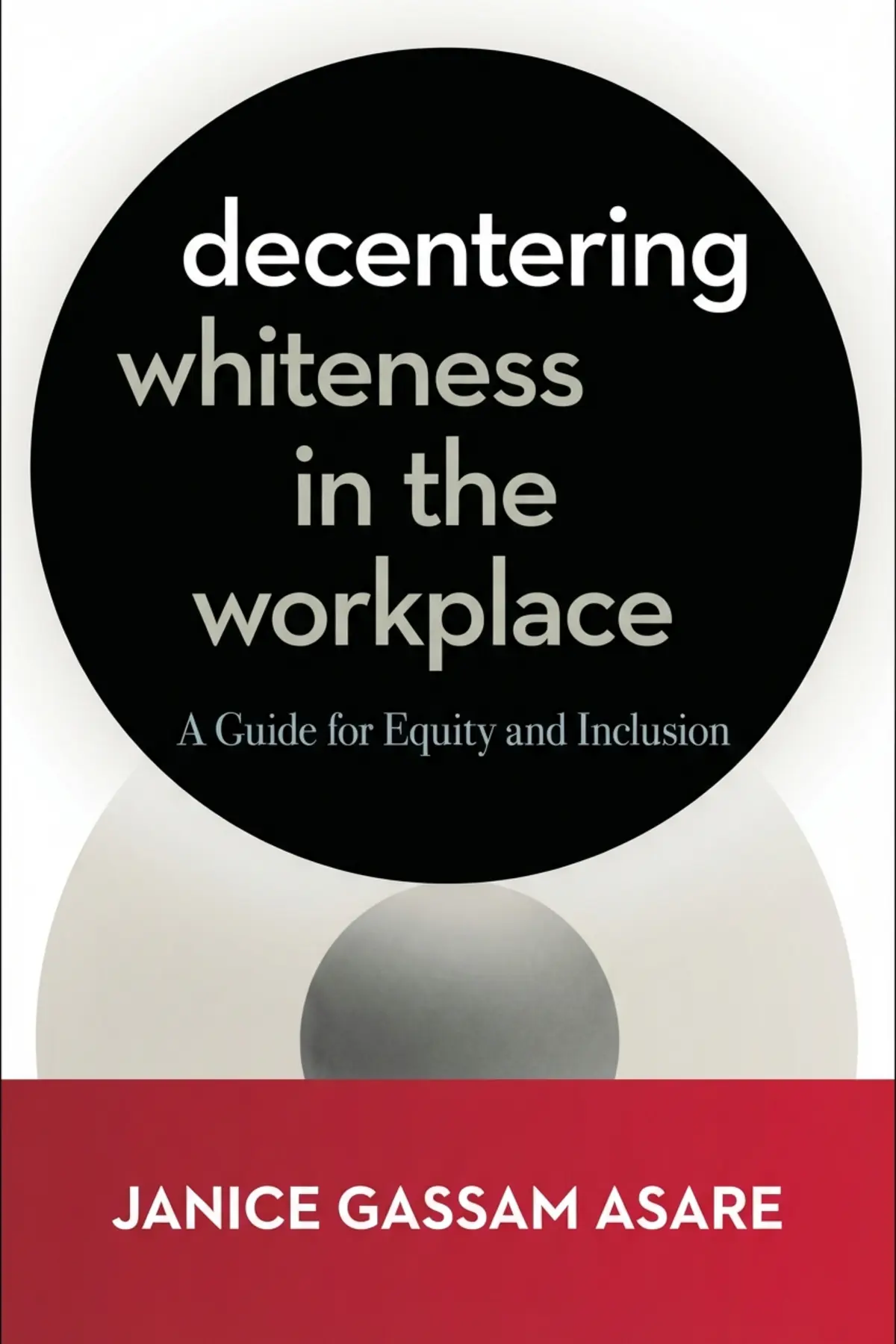
Table of Content
1. Introduction
2 min 18 sec
In many modern offices, diversity initiatives are common, yet they often fail to make a meaningful dent in the lived experiences of marginalized employees. To understand why, we might look at a typical boardroom scene. Imagine a leader named Shonda, a Black woman who has navigated the corporate world with grace but constant exhaustion. She finally finds the courage to speak up about a specific form of bias: hair discrimination. She explains the pressure to conform to European standards of beauty and the professional risk she takes every time she wears her hair naturally.
Then, imagine a well-meaning colleague, Julia, who tries to empathize by comparing Shonda’s experience to the time people made fun of her own red hair. While Julia’s intent is to connect, the impact is a centering of her own experience as a white person, which effectively silences the unique, systemic weight of the racial discrimination Shonda just shared. This disconnect is at the heart of why many inclusion efforts stall.
This summary explores the concepts presented by Janice Gassam Asare in her work on transforming the workplace. We will look at the historical roots of how a single cultural standard became the default ‘norm’ and how that standard continues to operate invisibly in hiring, promotion, and daily office culture. More importantly, we will discuss how to move past ‘diversity theater’ and into a space of actual equity. This journey requires us to look closely at the concept of whiteness—not as a person, but as a system of power—and learn how to intentionally move it out of the center.
Through this exploration, you’ll gain a better understanding of the ‘undercurrents’ that pull against progress. We will identify the specific policies that reinforce bias and the leadership shifts necessary to foster a culture where everyone, especially those at the margins, can truly belong. By the end, the goal isn’t just a more diverse headcount, but a fundamentally more just and innovative environment for every member of the team.
2. The Historical Construction of Whiteness
2 min 48 sec
Whiteness is more than a demographic; it is a legal and social system designed to maintain power through the centuries.
3. The Invisible Weight of Workplace Norms
2 min 39 sec
Centering one cultural experience creates an environment where others must constantly adapt, leading to exhaustion and lack of belonging.
4. The Power of Centering the Margins
2 min 19 sec
When we design systems for those most impacted by exclusion, we create solutions that improve the environment for everyone.
5. Tactical Strategies for Organizational Change
2 min 41 sec
Building an inclusive workplace requires a complete overhaul of hiring and accountability practices to remove hidden biases.
6. The Shift from Empathy to Justice
2 min 36 sec
Well-meaning empathy can often backfire if it centers the wrong experience; true solidarity requires a commitment to systemic fairness.
7. Conclusion
1 min 29 sec
The journey of decentering whiteness in the workplace is not about exclusion, but about the radical act of inclusion. Throughout this summary, we have explored how deeply embedded the ‘white default’ is in our professional history, our daily norms, and even our attempts at empathy. We’ve seen how these invisible structures create a burden of exhaustion for marginalized employees while robbing organizations of the very innovation and insight they claim to value.
True change requires us to move beyond superficial gestures and dive into the difficult work of systemic reform. This means auditing our hiring processes, demanding transparency in our data, and holding leaders accountable for the cultural health of their teams. It requires a shift in perspective—viewing the challenges faced by those at the margins as the most critical indicators of where our systems are failing.
As you move forward, remember that this is a continuous process of unlearning and action. It’s about building a culture where equity is the baseline and where collective dignity is the highest priority. By intentionally shifting the center, we don’t just fix a broken system; we build a new one that is capable of realizing the full potential of every human being within it. The path to inclusive excellence is open to those courageous enough to confront the status quo and commit to a future of shared power and genuine justice.
About this book
What is this book about?
Decentering Whiteness in the Workplace examines the invisible structures that keep professional environments from being truly inclusive. It challenges the assumption that white-centered norms are the universal standard for professionalism, exploring how history and systemic bias shape everything from hiring practices to daily social interactions. The book provides a roadmap for leaders and employees to move beyond superficial diversity initiatives. By understanding the concept of whiteness as a social and legal construct, readers learn how to recognize and dismantle the barriers that prevent Black, Indigenous, and other marginalized groups from thriving. Ultimately, it promises a shift toward genuine equity and shared humanity in the professional world.
Book Information
About the Author
Janice Gassam Asare
Dr. Janice Gassam Asare is an organizational psychologist and anti-racism strategist who focuses on transforming harmful cultures by centering oppressed voices. She founded the Racial Justice Network and is a recognized speaker and Forbes contributor on diversity, belonging, and systemic discrimination.
Ratings & Reviews
Ratings at a glance
What people think
Listeners find this work to be both educational and thought-provoking, with one listener noting it serves as an excellent resource for DEIA committees and officers. Furthermore, the writing style is well-received, and listeners value the book’s impact, with one highlighting actionable steps for positive change. The title is also praised for its pacing, with one review mentioning how it is interwoven with personal stories, and listeners appreciate its focus on fairness, with one noting its strategies to center equity. Finally, they find the material to be a great value, with one describing it as "worth its weight in gold."
Top reviews
Champ
This book is a masterclass in shifting corporate culture toward true equity. Gassam Asare provides a values-centered framework that doesn't just point out problems but offers strategic solutions. I especially appreciated the deep dive into how 'urgency' is often weaponized within white-dominant professional spaces to stifle thoughtful progress. It’s an educational read that feels both pressing and deeply conscientious. For anyone leading a DEIA committee, this is an essential manual that you will find yourself referencing monthly. The writing is sharp and direct, making complex systemic issues much easier to navigate. It is worth its weight in gold for any leader.
Show moreJoy
Picked this up after my HR director mentioned it, and it's easily one of the most practical guides I've read this year. The focus on decentering whiteness isn't about exclusion but about expanding the room for everyone to succeed. Janice Gassam Asare writes with a tone that is both challenging and supportive of organizational growth. I loved the specific suggestions for dismantling systemic barriers that often go unnoticed by well-meaning managers. Truth is, most workplace manuals are dry, but this one keeps you engaged with its relatable anecdotes and clear pacing. It really provides a roadmap for sustainable change rather than quick, performative fixes that never stick.
Show moreJames
The chapter on how we define 'professionalism' was a total game-changer for my perspective on hiring. Janice Gassam Asare has a way of making you see the water you’re swimming in without being overly academic. This isn't just a book; it's a strategic toolkit for anyone serious about racial equity in the workplace today. The mix of personal stories and data-driven insights creates a compelling narrative that keeps you turning pages even when the content is heavy. Not gonna lie, I was skeptical about another DEI book, but this one is truly worth its weight in gold. It offers practical suggestions that you can actually implement by next Monday morning.
Show moreDuang
Wow, Janice Gassam Asare really hit the nail on the head with every single chapter of this book. Her insights resonated deeply with my own experiences in the tech industry, where these patterns are so often ignored. Gassam Asare doesn’t hold back, but she also provides the grace necessary for people to learn and pivot their behavior. The way she centers equity isn't just theoretical; it’s a strategic plan for long-term systemic change. I found the practical suggestions for daily interactions especially helpful for middle managers who feel stuck between two worlds. It’s thought-provoking and a breath of fresh air in a field that is often too afraid to name the problem directly.
Show moreMoon
Ever wonder why your office's inclusion efforts feel like they’re spinning in circles? This book offers a thought-provoking look at the underlying structures we often take for granted. The pacing is fantastic, largely because the author interweaves personal stories with high-level strategy. Personally, I found the actionable steps for positive change much more useful than the abstract theories found in similar titles. My only slight gripe is that some chapters felt a bit repetitive towards the end, which slowed my momentum. However, the core message remains powerful. It’s a solid resource for those looking to center equity in their daily operations without feeling overwhelmed by theory.
Show moreMonthon
As someone who has been a DEIA officer for five years, I can say this is an excellent resource for committees and leadership teams. The book moves beyond the 'why' and gets straight into the 'how' of systemic change within a corporate environment. I particularly enjoyed the section on how urgency is an aspect of white culture because it validated so many of my frustrations with corporate timelines. The writing style is professional yet accessible, which makes it a great choice for a company-wide book club or training session. Look, it’s not going to solve every problem overnight, but it gives you the tools to start the real work. It’s a strategic look at a very difficult topic.
Show moreThanakorn
Finally got around to finishing this, and I’m impressed by the strategic depth Gassam Asare brings to the table. She treats racial equity as a core business value rather than a side project or a simple compliance checkbox. The pacing is quite good, and she manages to balance the strategic look with a high level of emotional intelligence. I did find the transition between some sections a bit abrupt, which occasionally broke my concentration. Regardless, the content is too valuable to ignore for anyone in a management position. If you want a roadmap for creating a more inclusive environment, start here. It’s a very conscientious and necessary piece of work.
Show moreHiroshi
In my experience, most leadership books ignore the racial dynamics that shape our offices, so this was a refreshing change. The author does a great job of explaining why the way we have always done things might be rooted in white-centered norms. It’s a values-centered approach that prioritizes long-term organizational health over short-term optical wins. I appreciated the specific examples of how to dismantle these structures without causing unnecessary chaos. Gotta say, it makes you look at your own biases in a way that feels productive rather than purely guilt-driven. It’s a strategic and highly necessary addition to any modern business library and worth the time spent reading.
Show moreSaengdao
To be fair, I appreciate the effort to provide actionable steps for positive change in such a stagnant field. There are some very good points here about how manufactured urgency can actually derail authentic equity work in the long run. However, I found the tone a bit academic and occasionally hard to slog through during the middle chapters. It’s definitely educational, but I was hoping for more variety in the personal stories to keep the energy up. It’s a decent resource for a DEIA committee but maybe not the best light read for a casual weekend. Useful, but it requires a lot of mental focus to get through the denser sections.
Show moreRatthapong
Not what I expected, and frankly, I’m disappointed with the tone of this book. While I agree that workplace equity is important, I felt the author leaned too heavily into blame rather than bridge-building. It feels like it assumes every person in power is intentionally creating a hostile environment based on their background. In the 21st century, shouldn’t we be focusing on our shared humanity instead of constant racial categorization? To be fair, there are a few decent tips on management tucked away in the chapters, but they get buried under what feels like divisive rhetoric. It didn't resonate with me as a black man who believes we all have equal chances if we work hard.
Show moreReaders also enjoyed

Afropean: Notes From Black Europe
Johny Pitts

All About Love: New Visions
bell hooks

A Bigger Prize: How We Can Do Better Than the Competition
Margaret Heffernan



A Biography of Loneliness: The History of an Emotion
Fay Bound Alberti

A Force for Good: The Dalai Lama's Vision for Our World
Daniel Goleman
AUDIO SUMMARY AVAILABLE
Listen to Decentering Whiteness in the Workplace in 15 minutes
Get the key ideas from Decentering Whiteness in the Workplace by Janice Gassam Asare, plus 5,000+ more titles in English and Thai.
- 5,000+ titles
- Listen as much as you want
- 7-day free trial
- Cancel anytime







