

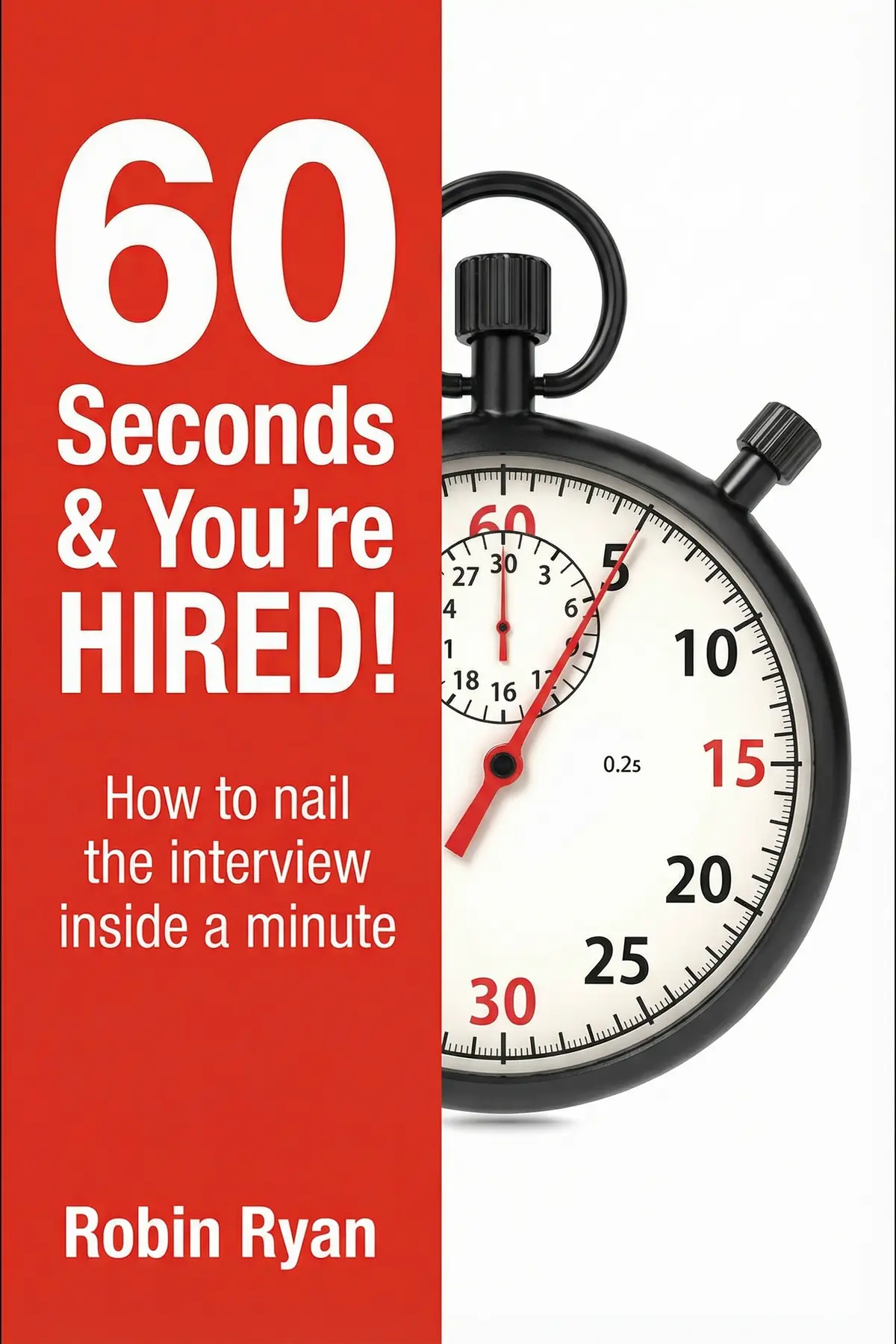
60 Seconds & You’re Hired!
Robin Ryan
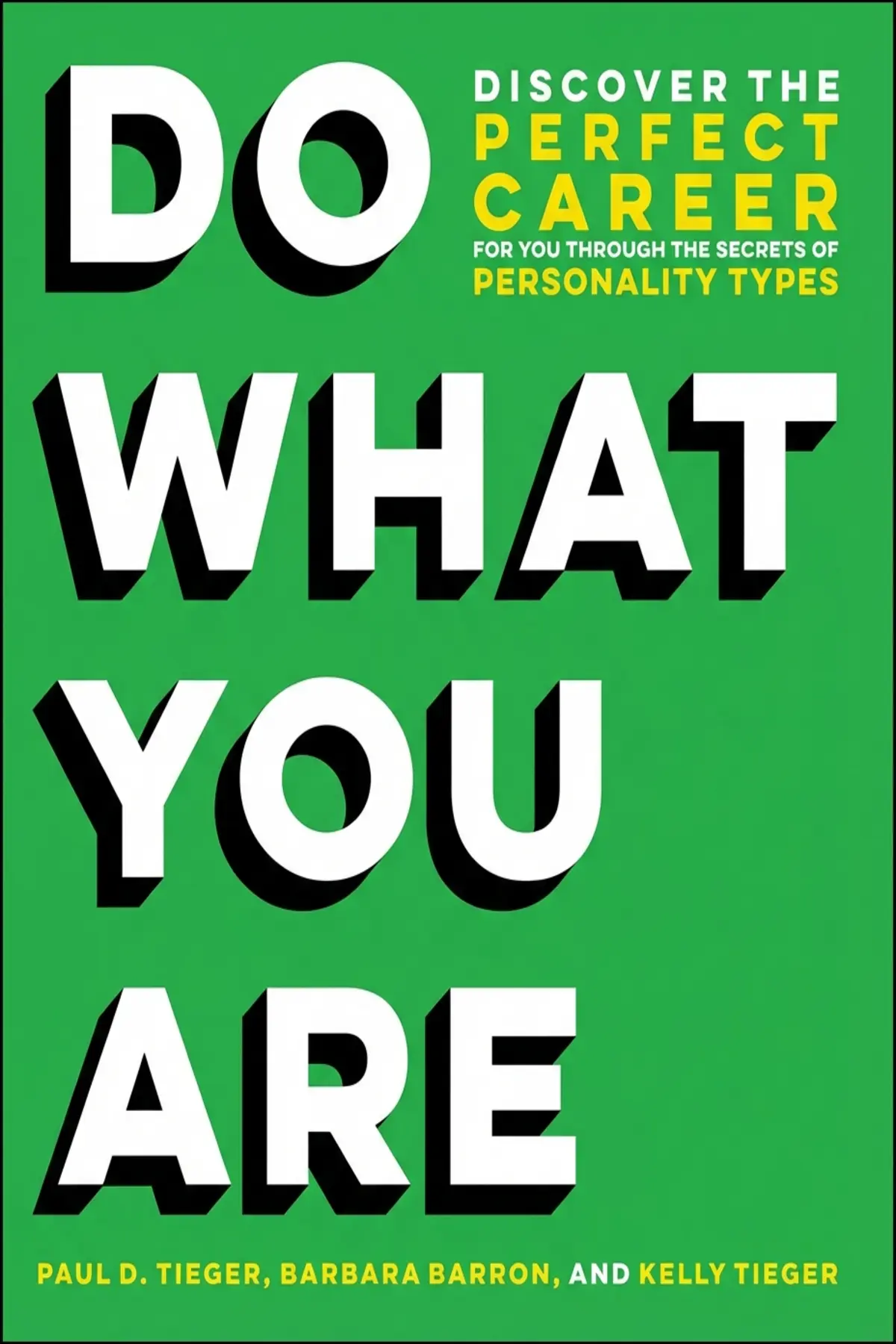
Do What You Are provides a comprehensive framework for identifying your unique personality type and leveraging that self-knowledge to find a career that aligns with your natural strengths, values, and energy.
1 min 40 sec
Imagine waking up on a Monday morning and feeling a genuine sense of excitement rather than a heavy cloud of dread. For many, work is a source of exhaustion, a place where they feel like they are constantly performing a role that doesn’t fit. You might see a colleague handling a high-pressure negotiation with a smile, while the same task leaves you feeling drained and hollow for the rest of the day. This difference isn’t about intelligence or effort; it’s about the fundamental architecture of your personality. No two people experience the world in exactly the same way, and what one person finds invigorating, another might find tedious.
The central throughline of our exploration is that professional success and personal fulfillment are not the results of luck, but of alignment. By understanding the inner workings of your personality type, you can stop guessing what kind of job might make you happy and start making choices based on the reliable patterns of human behavior. We often find it much easier to list the things we hate doing than the things we love, but by looking through the lens of personality theory, we can reverse that trend.
In the following segments, we are going to dive deep into a system that has helped millions of people find their way. We will explore how your personality affects the way you gather information, how you make tough calls, and how you prefer to organize your calendar. We will see how these traits cluster into different temperaments and why your ‘dominant function’ is the key to effortless productivity. We will also look at how our needs change as we move through different stages of life, proving that it is never too late to pivot toward a career that matches who you truly are. By the end of this journey, you’ll have a clearer picture of your own psychological blueprint and a strategy for finding work that feels less like a chore and more like a calling.
2 min 13 sec
Explore why some jobs feel like a constant struggle while others feel natural, using the historical context of personality theory to explain the mechanics of workplace fulfillment.
2 min 23 sec
Discover the first two pillars of personality type: how you interact with your environment and how you observe the world around you.
2 min 26 sec
Learn about the final two scales of personality: the ways we make difficult choices and the level of order we require in our daily lives.
2 min 25 sec
A look at the diverse profiles created by the MBTI and why no single personality type has an inherent advantage in the professional world.
2 min 19 sec
Examine the first two major temperaments, focusing on the personalities that provide the world’s stability and its adventurous spirit.
2 min 28 sec
Understand the two temperaments driven by intuition, exploring the worlds of personal growth, empathy, and innovative strategy.
2 min 21 sec
Learn how to identify the strongest part of your personality to find the ‘zone of genius’ where work feels naturally rewarding.
2 min 20 sec
A guide to how our interests and skills shift throughout our lives, explaining why midlife career changes are often a natural part of growth.
2 min 01 sec
Practical steps for conducting a job search that prioritizes self-awareness, personal values, and real-world research.
2 min 10 sec
Why it’s never too late to align your work with your personality, highlighting the trend of late-life career shifts and their rewarding outcomes.
1 min 53 sec
As we wrap up our exploration of this personality-based approach to career planning, the core message remains clear: the most powerful tool in your professional arsenal is self-knowledge. When you understand the specific four-letter code that defines your preferences, you aren’t putting yourself in a box; you are identifying the tools you have at your disposal. By aligning your daily tasks with your dominant functions and your broader temperament, you move away from the exhaustion of ‘writing with the wrong hand’ and toward the ease of natural talent.
We have seen that there are no superior personality types, only different ways of contributing to the world’s complex tapestry. Whether you are a Traditionalist keeping the world’s systems running, an Experiencer responding to immediate crises, an Idealist fostering human growth, or a Conceptualizer designing the future, your contribution is essential. We have also seen that our needs and interests are dynamic, shifting as we mature and making room for new parts of ourselves to emerge.
Your actionable next step is to begin the process of discovery. Take the time to identify your type, but don’t stop there. Look at the education and training options available to you. The digital age has made it easier than ever to bridge the gap between where you are and where you want to be. Check out training programs, online accredited courses, or local workshops that can help you qualify for a role that matches your profile.
Remember, your work should be a source of energy, not just a means to an end. By doing what you are, you honor your unique psychological architecture and open the door to a career that is as rewarding as it is productive. It is never too early to start looking, and it is never too late to make a change. Your ideal career isn’t just a dream—it’s a destination that becomes reachable once you have the right map.
Have you ever felt like your professional life is an uphill battle while others seem to glide through their tasks with ease? This guide explores the foundational idea that career dissatisfaction often stems from a fundamental mismatch between a person's inherent personality and their daily work responsibilities. By utilizing the Myers-Briggs Type Indicator system, the book breaks down human behavior into sixteen distinct types, helping readers identify where they fall on the spectrum of energy, information processing, decision-making, and lifestyle structure. Beyond simple identification, the promise of this work is to provide a roadmap for professional transition. It explains the specific temperaments that define our work styles, the dominant functions that make certain tasks feel effortless, and how our needs shift as we age. Whether you are a young professional just starting out or an experienced worker looking for an encore career later in life, this approach offers the tools to stop fighting your nature and start thriving in a role that feels truly authentic.
Paul D. Tieger is a widely recognized expert in personality types, and he uses his knowledge to help individuals, teams and businesses thrive. Barbara Barron uses her insight into personality types in her career as an advancement consultant, where she works with nonprofits and private schools in areas such as program development and fundraising. Kelly Tieger has gone from an editorial assistant for her parents, Paul D. Tieger and Barbara Barron, to being an integral part of researching and developing material for the newest editions of Do What You Are.
Listeners consider this title a top-tier guide for career planning, with one listener emphasizing its usefulness for identifying their work style. Additionally, the book assists listeners in pinpointing personality types through a reliable test, and listeners appreciate how it clarifies their relationship with their environment. They generally find the content enjoyable, worth the cost, and impressively spot-on. However, views on readability vary, with some finding it a breeze to get through while others find the flow hard to track.
This career guide is easily one of the most effective resources I’ve encountered for navigating professional transitions. Unlike generic advice that tells everyone to ‘network more,’ this book helps you understand your specific work style through the lens of Myers-Briggs. The test provided is surprisingly accurate, and the way it breaks down the sixteen temperaments gave me a much clearer picture of why my current office environment feels so draining. I realized I was fighting against my natural introversion instead of leaning into it. My only real gripe is that the text can get a bit dense when discussing the hierarchy of functions, which might be a turn-off if you aren't into the 'nitty-gritty' of psychology. To be fair, it’s a small price to pay for such individualized insights. It truly helped me connect the dots between my values and my career path. Highly recommended for anyone feeling stuck.
Show morePicked this up during a total mid-life career crisis and I’m so glad I did. I had previously taken the MBTI and came out as an ENFJ, but I never knew how to apply that to my job search until now. The book helped me see the common thread between my interests in teaching and event planning. It’s eerie how accurate the descriptions are! Not gonna lie, I teared up a little reading about my 'ideal' work environment because it described exactly what I’d been missing for a decade. The authors do a great job of explaining how our needs change as we age, specifically how our third and fourth functions start to emerge after forty. It made me feel less crazy for wanting a radical change at this stage of my life. It’s an empowering read that makes you feel seen and understood in a way most career books don't.
Show moreTieger and Barron have created something truly detailed here that stands the test of time. I first read this years ago and recently revisited it during a transition, and I'm struck by how relevant the advice remains. It helps you find your personality type through a series of exercises that feel much more accurate than the quickie tests you find on the internet. I love that it addresses the nuances of how an introvert might extravert certain functions. It’s a sophisticated look at human nature that actually applies to the real world of work. The specific advice for job seekers of each type—like how to prep for an interview or write a cover letter—is incredibly practical. It gave me the confidence to pursue a path in nutrition that I had previously dismissed as a mere hobby. This is essential reading for anyone who wants their work to have meaning.
Show moreAs someone who has always been obsessed with personality tests—from the Enneagram to the Big Five—I found this deep dive into MBTI quite refreshing. It goes far beyond the four-letter alphabet soup and explores how your dominant and auxiliary functions actually manifest in a workspace. Personally, the most valuable part was the 'Fourmula' for career satisfaction. It isn't just about what you’re good at; it’s about how you process information and make decisions. I do think the authors are a bit too rigid in suggesting that personality is set in stone, which can feel limiting if you believe in the power of self-improvement. However, the sheer volume of detail regarding specific professions is impressive. It’s a great tool for understanding why certain 'dream jobs' might actually be nightmares for your specific temperament. Definitely worth the price of admission for the self-awareness alone.
Show moreEver wonder why you and your coworkers can look at the exact same project and see two completely different problems? This book explains that beautifully by breaking down the sensing versus intuition divide. I finally understand that my 'sloppy' tendencies are actually just a 'perceiving' trait that allows me to stay flexible, which has saved me a lot of self-loathing. The career lists for each type are expansive, though some of the job descriptions feel a bit dated in the digital age. Frankly, it’s one of the few self-help books that I keep on my shelf for reference rather than reading once and donating. While the readability is a bit hit-or-miss in the middle chapters, the practical exercises at the end are gold. It helped me find a work environment that actually respects my need for autonomy. If you’re willing to trudge through some technical jargon, you’ll find some real gems here.
Show moreThe chapter on the hierarchy of functions was a total lightbulb moment for me. I’ve always tested as an ISTJ, and seeing the breakdown of how I use sensing and thinking to process the world explained so much about my past professional frictions. This book is a fantastic resource for career decision making because it forces you to look at the 'why' behind your preferences. I especially liked the 'Ten Steps to Creating a Personal Career Plan' at the end. It takes the abstract personality stuff and turns it into something you can actually use. My only criticism is that the book assumes you can easily identify what a job is like before you're in it. We all know that 'marketing' at one company is totally different from another. Still, for a deep dive into the 16 types and how they fit into the economy, this is a top-tier choice.
Show moreThe truth is, while the insights are solid, I struggled with the layout of this book. It’s a bit of a dense slog. I found myself flipping back and forth between the type descriptions and the career charts constantly, which made it difficult to follow a cohesive narrative. I think the four axes of the MBTI are interesting frames for the world, but this book treats them as gospel. To be fair, it’s much better than the generic advice you find online. I appreciated the section on how different types handle the job hunting process, especially as an introvert who finds networking to be a special kind of hell. It’s a helpful resource for identifying your strengths, but I wouldn't treat the career recommendations as a definitive list. Use it as a starting point for brainstorming rather than a final destination. It's okay, just a bit dry.
Show moreLook, the MBTI isn't a magic wand, but this guide is worth the price for the case studies alone. I found it quite entertaining to read about the different types, even if I don't fully buy into the idea that we’re all hard-wired from birth. It helped me understand my current environment much better, particularly why I clash with my 'Judging' boss. The readability is a bit of a mixed bag; some parts are breezy and fun, while other sections on 'typograms' felt like a college textbook. I’m still not 100% sure I found my perfect match in the career lists, as I seem to fluctuate between INTJ and INFJ depending on my mood. It’s a bit frustrating when the book tells you that you are one or the other with no middle ground. That said, it’s a fun exercise in self-awareness if you have the patience for it.
Show moreFinally got around to reading this after a friend recommended it. It’s a bit like a more advanced version of 'What Color is Your Parachute?' but focused entirely on personality. While I enjoyed the self-assessment portion, I found the didacticism a bit much at times. It felt like the authors were saying, 'This is who you are, so this is what you must do.' I prefer to think of myself as more complex than a four-letter code. However, the section on work-related strengths was legitimately useful for updating my resume. It helped me articulate skills I had taken for granted. If you can get past the somewhat dated feel and the rigid categories, there’s a lot of value here. It’s a solid 3-star read—useful for a specific purpose, but don't expect it to solve all your life's problems in one go.
Show moreWow, talk about putting people in boxes. While I love a good self-help book, this felt more like a ‘zodiac guide’ for the workplace than a piece of scientific literature. The authors argue that your personality is set in stone from childhood, which personally feels incredibly limiting and frankly, a bit depressing. If we can’t change our core traits, what is the point of growth? I found the Thinking/Feeling binary to be a massive oversimplification that doesn't account for maturity or emotional intelligence. Plus, the job suggestions are bizarrely specific—apparently, as an INFP, I should just quit my stable job to be a freelance poet? It’s fun for a laugh or some casual self-reflection if you don't take it too seriously, but as a serious career planning tool, it misses the mark for me. The detail is astounding, but it feels like it’s built on a foundation of imaginary facts.
Show moreRobin Ryan
William Vanderbloemen
AUDIO SUMMARY AVAILABLE
Get the key ideas from Do What You Are by Paul D. Tieger, plus 5,000+ more titles in English and Thai.







