

21 Lessons for the 21st Century
Yuval Noah Harari
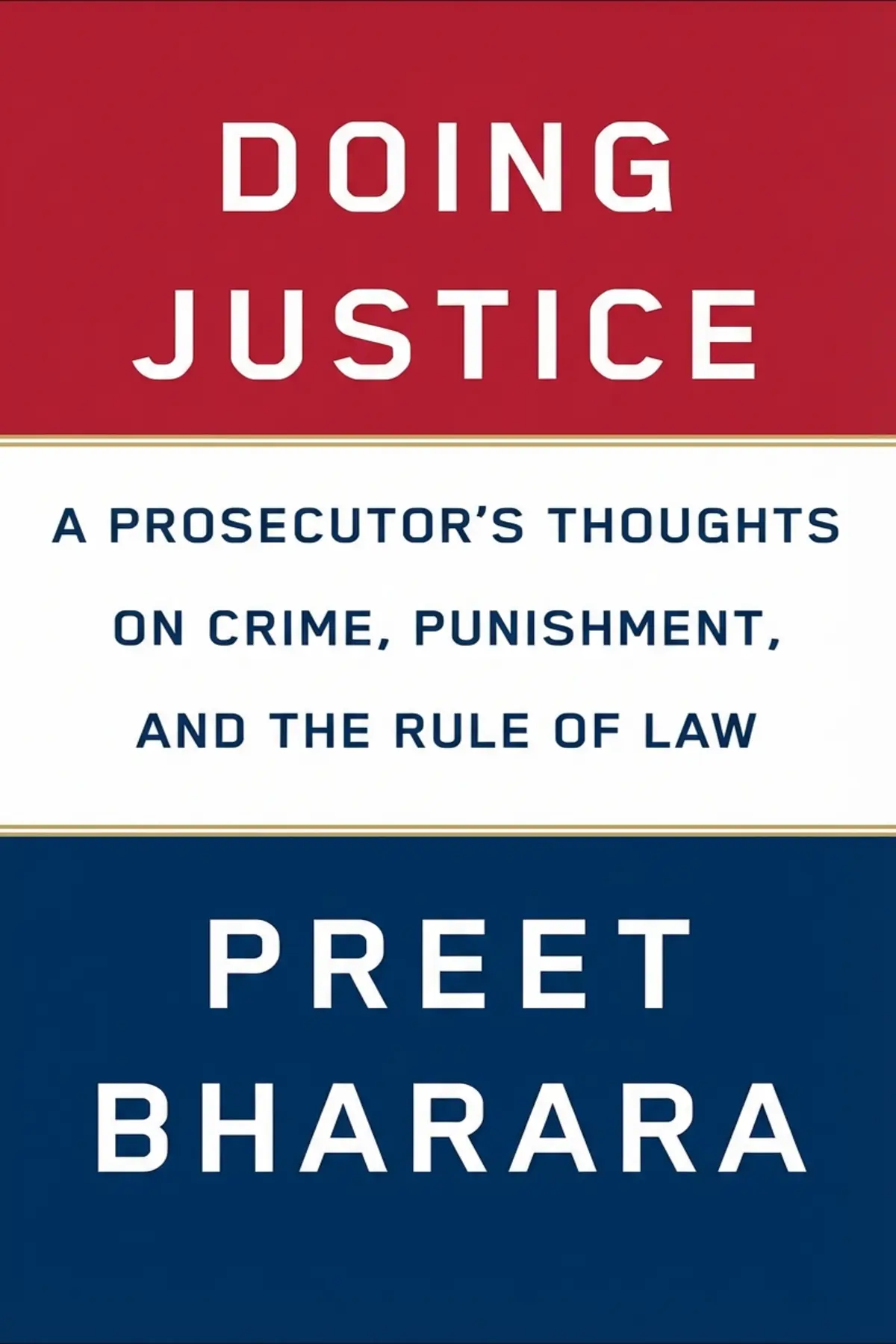
Former US Attorney Preet Bharara provides a masterclass in the principles of the American legal system. Through gripping real-life cases, he explores the delicate balance between truth, integrity, and the pursuit of justice.
1 min 57 sec
The concept of justice is often discussed as an abstract ideal, symbolized by a blindfolded woman holding a set of scales. But in the real world—specifically in the halls of the Southern District of New York—justice is a gritty, human process filled with doubt, difficult choices, and high-pressure stakes. We often think of the legal system as a mechanical engine that takes in evidence and spits out a verdict, but the reality is far more nuanced. It is a system run by people, and because people are involved, it is a system that demands a specific kind of character from those who uphold it.
In this exploration of the rule of law, we are guided by someone who spent years at the center of the American legal storm. Preet Bharara has navigated the complexities of taking down organized crime families, investigating corrupt political giants, and seeking truth in the wake of horrific violence. He understands that living in a democracy means adhering to a set of rules that apply to everyone equally, whether they are a powerful senator or a person living on the margins of society. But how do we ensure that those rules are applied fairly? How do we prevent the system from becoming a tool for the powerful or a source of unintended cruelty?
The journey we are about to take follows the structural path of a criminal case. We will look at the foundational importance of inquiry, the heavy responsibility that comes with making a formal accusation, the intricate dance of a courtroom trial, and the moral weight of punishment. Through these stages, a central throughline emerges: that doing justice is not just about following the letter of the law, but about honoring its spirit. It requires a commitment to truth that overrides the desire for a quick win, a willingness to admit mistakes when the evidence shifts, and a deep-seated empathy for the human lives impacted by every legal decision. As we walk through these stories, notice how the themes of integrity and humility serve as the necessary guardrails for a functioning society.
2 min 20 sec
Uncover why the first steps of an investigation are the most critical and how personal bias can blind even the most well-intentioned truth-seekers.
2 min 16 sec
Explore the high-stakes world of forensic evidence and why the willingness to reconsider the facts is the ultimate hallmark of a just investigator.
2 min 09 sec
Discover how changing ‘the way things have always been done’ and using empathy can unlock the most difficult criminal investigations.
2 min 01 sec
Learn why a prosecutor’s most powerful tool isn’t a conviction, but the decision of whether or not to bring charges at all.
2 min 06 sec
Delve into the disturbing ‘Cannibal Cop’ case to understand the delicate balance between protecting public safety and punishing thoughts alone.
2 min 08 sec
Understand why the best prosecutors know when to walk away and how cultural shifts like #MeToo can change the face of justice.
2 min 00 sec
See how a trial can be about more than just a verdict, as one woman’s courage highlights the system’s duty to take every victim seriously.
2 min 09 sec
Examine the dynamic between lawyers and judges, and learn why preparing for the other side’s argument is the key to courtroom success.
2 min 01 sec
Follow the heartbreaking case of a decades-old kidnapping to see why determining a ‘fair’ punishment is one of the law’s hardest tasks.
2 min 05 sec
Look inside the walls of Rikers Island to confront the dehumanizing reality of incarceration and why reform is a requirement for a just society.
2 min 07 sec
Discover why the ultimate goal of a civilized society lies beyond the courtroom and in the rare human ability to forgive the unforgivable.
1 min 45 sec
As we look back on the various stages of the legal process—from the first spark of an investigation to the finality of a prison sentence—it becomes clear that the rule of law is a fragile thing. It is not a self-sustaining machine; it is a garden that must be constantly tended by people of good character. The lessons from the Southern District of New York teach us that justice is a practice, not a destination. It requires the humility to admit when we are wrong, the courage to stand up for the marginalized, and the wisdom to know when to temper the law with mercy.
We live in a world where it is increasingly easy to retreat into our own biases and demand immediate results. But true justice is slow, careful, and often uncomfortable. It demands that we treat even the most accused with dignity and that we hold even the most powerful to account. It reminds us that every decision made by a prosecutor or a judge has a ripple effect on families, communities, and the very fabric of our democracy. When we do justice correctly, we aren’t just winning cases; we are strengthening the trust that holds our society together.
The challenge for each of us, whether we are in the legal profession or not, is to carry these principles into our daily lives. We can all be better ‘investigators’ by questioning our own assumptions. We can all be more ‘just’ by seeking the truth before we jump to judgment. And we can all be more humane by remembering that every person we encounter is a human being with their own complex story. In the end, the system is only as good as we are. By striving for integrity and empathy in our own circles, we contribute to a world where justice is not just a blindfolded statue, but a living reality for everyone. Let these stories serve as a guide to doing the right thing, in the right way, for the right reasons, every single day.
Doing Justice is an inside look at the high-stakes world of the Southern District of New York, one of the most influential prosecutor's offices in the United States. Preet Bharara, who led the office for nearly a decade, pulls back the curtain on how legal professionals actually navigate the murky waters of crime and punishment. Rather than focusing solely on courtroom drama, the book examines the philosophical and ethical foundations of the rule of law. It moves through the natural lifecycle of a case—from the initial inquiry and the weight of a formal accusation to the complexities of judgment and the somber reality of sentencing. Along the way, Bharara shares lessons learned from mob bosses, corrupt politicians, and tragic victims, illustrating that the law is not just a set of rules, but a human endeavor that requires constant vigilance, humility, and a relentless commitment to doing the right thing for the right reasons.
Preet Bharara served as the United States Attorney for the Southern District of New York from 2009 to 2017, overseeing more than 200 Assistant US Attorneys. His career includes managing landmark cases in cybercrime, corruption, and gang violence. Recognized by Time magazine as one of the 100 most influential people and featured on Vanity Fair’s New Establishment list, he currently teaches at NYU School of Law and hosts the popular podcast Stay Tuned with Preet.
Listeners find this work absorbing and skillfully composed, providing deep insights that aid in navigating the complexities of the justice system. The author draws on actual cases to share powerful narratives, and listeners value the frank look at institutional failings alongside a commitment to principles. They find the book’s ethical substance significant, as one listener points out how individual honor is felt in every chapter, and another notes the way it brings a human dimension to the legal world.
This book offers a compelling deep dive into the American legal system that feels both academic and deeply personal. Bharara manages to explain the complexities of the SDNY—the so-called Sovereign Court—without ever losing the human element of the cases he handled. I found the sections on the moral dilemmas of prosecution particularly gripping, especially when he discusses the burden of proof versus the desire for a win. While some might find his focus on integrity a bit heavy-handed, I felt it was a necessary reminder of what justice should look like in an era of political cynicism. The stories about insider trading and cyber-crime were paced like a legal thriller. He doesn't just list facts; he builds a narrative about truth and the pursuit of doing the right thing. It’s a masterclass in how the law works behind the scenes.
Show moreAfter listening to Preet's podcast for years, I had high expectations for his writing, and "Doing Justice" definitely delivers. He has this unique ability to take a dry legal concept like "proffering" and turn it into a high-stakes story about flipping witnesses and seeking the truth. I loved the personal touches, particularly the anecdote about his daughter calling him a "drama queen" after he showed her a glowing article about himself. It humanizes a man who is often seen as a stern, unyielding figure of the law. The book isn't just for lawyers; it’s for anyone who cares about the principles our democracy is supposed to stand on. It’s honest, articulate, and makes you believe that there are still people in the system trying to act with empathy.
Show moreFinally got around to reading this, and I’m struck by how much heart is in these pages. Preet Bharara shows us that the law isn't just a mechanical process; it's a series of human choices made by people who are often just as flawed as those they prosecute. The stories about organized crime and public corruption were incredibly well-written, but it was the focus on empathy that stayed with me. He makes a compelling case that justice isn't just about winning in court, but about ensuring the system remains fair for the powerless. I particularly liked his explanation of why prosecutors must think like the defense to truly be effective. It’s a captivating read that provides a much-needed look into the soul of the judiciary.
Show moreThe chapter on Officer McCabe was a highlight for me, even if some readers found it a bit hagiographic. It served as a vital anchor for the book's central theme: that the system relies on individual decency. Bharara writes with a clarity that makes complex legal procedures like "proffering" easy to understand for a layperson. I found his reflections on the Mafia cases especially interesting, even if he does lean into the "cheery nicknames" a bit much. The truth is, this book isn't just about the law; it's about the values that hold a society together. His personal integrity shines through every chapter, and his narration on the audiobook is excellent. He brings a sense of urgency to the concept of justice that is really inspiring.
Show moreAs a casual follower of legal news, I found this to be the most accessible and honest portrayal of the judicial system I’ve ever read. Bharara’s insights into the power dynamics of prisons and the often-ignored "Punishment" phase of the law were particularly moving. He doesn't pretend the system is perfect; in fact, he spends a lot of time highlighting where it fails. But his commitment to fairness—even when it meant losing a case or facing political backlash—is truly commendable. The book is filled with compelling stories that illustrate the weight of a prosecutor's responsibility. It’s a human look at a world that usually feels very distant and cold. Highly recommended for anyone who wants to understand the true meaning of "doing justice."
Show moreTo be fair, I went into this expecting a political tell-all about the Trump administration, but I was pleasantly surprised to find something much more substantive. Bharara focuses on the mechanics of the justice system—inquiry, investigation, trial, and punishment—and how a prosecutor chooses which cases to bring to light. My only real gripe is that it occasionally feels like a seminar where the speaker is a bit too enamored with his own moral compass. There were moments where the "preachy" tone mentioned by other readers crept in, slowing down the momentum of the otherwise fascinating anecdotes. However, the chapter on prison power dynamics and the role of guards was genuinely eye-opening and provided a perspective prosecutors usually ignore. It’s an insightful look at a flawed system that still strives for integrity.
Show moreLook, I really appreciated the way this book broke down the nuances of being a U.S. Attorney without turning into a dry textbook. Bharara explores the "Sovereign Court" with a level of detail that makes you realize just how much pressure these prosecutors are under. He doesn’t shy away from the sleazier aspects of the job, like dealing with "snitches" or the political games that happen behind closed doors. My main takeaway was the focus on the decision-making process—why some cases are pursued and others are dropped. I do think he spent a bit too much time on the "paean of praise" for certain officers, which felt a little unnecessary. Still, the overall message about maintaining personal integrity in a messy system is something we need to hear right now.
Show moreNot what I expected, but in a good way. I thought this would be a bitter reflection on his firing, but Bharara stays classy and focuses on the bigger picture of legal ethics. He uses real-life cases—from the Menendez brothers to insider trading—to illustrate the weight of the gavel. Frankly, some chapters felt a bit long-winded, and the pacing in the middle dragged a little. But when he’s talking about the "flipping" process or the intensity of a high-profile trial, you can’t put the book down. It gives you a real sense of the "drama queen" energy his daughter teased him about. It’s a solid, thoughtful book for anyone interested in how the American justice system actually functions when the cameras are off.
Show moreEver wonder what it’s like to be lectured by a very smart, very successful teacher for four hundred pages? That was my experience with the first half of this book. While Bharara is clearly brilliant and his career at the SDNY is legendary, the writing often felt like he was wielding a morality hammer. I wanted more of the gritty details of the Mafia cases and less of the "pearls of wisdom" about how to be a good person. That said, the final section on "Punishment" saved the experience for me. His insights into the incarceration system and the responsibilities of the state after a conviction are profound. If the whole book had the same gripping energy as the last hundred pages, it would be a five-star read. As it stands, it’s a bit of a slog to get to the good stuff.
Show moreWhy do public figures like Bharara feel the need to write like they’re our life coaches? I was genuinely excited to read about his time at the SDNY, but I couldn't get past the condescending tone. Instead of just telling the stories of these high-profile cases, he constantly interrupts the narrative to lecture the reader on morality. It felt like being trapped in a never-ending seminar where the speaker won't stop patting himself on the back for "doing the right thing." I'm a grown adult; I don't need a morality hammer banged against my head to understand that corruption is bad. I wanted a legal memoir, not a sermon. I ended up skimming the last half because the "holier-than-thou" attitude was just too much to handle. Disappointing.
Show moreYuval Noah Harari

Jacinda Ardern
Pankaj Mishra

Johny Pitts
James Comey
Anthony Pratkanis

AUDIO SUMMARY AVAILABLE
Get the key ideas from Doing Justice by Preet Bharara, plus 5,000+ more titles in English and Thai.







