
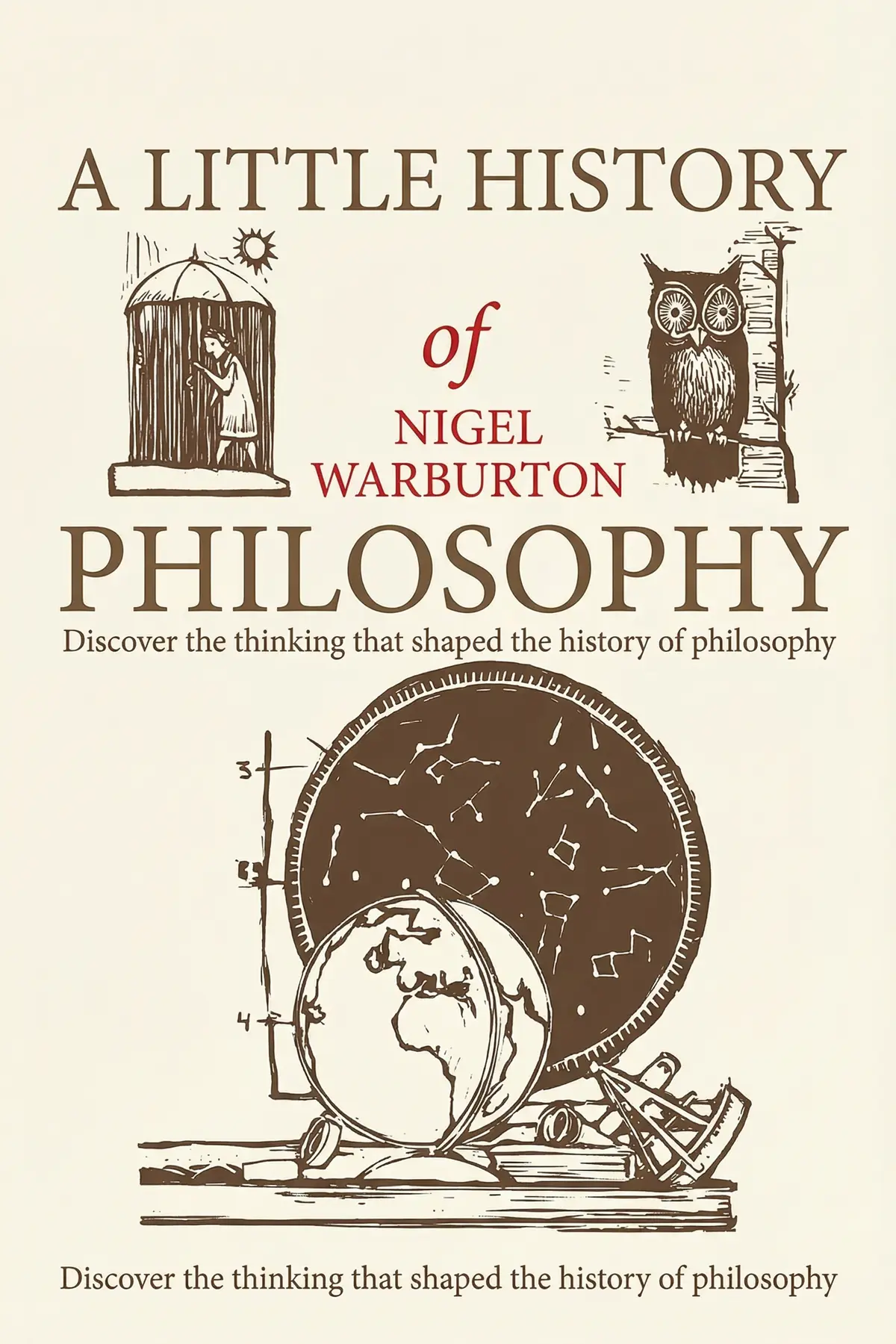
A Little History of Philosophy
Nigel Warburton
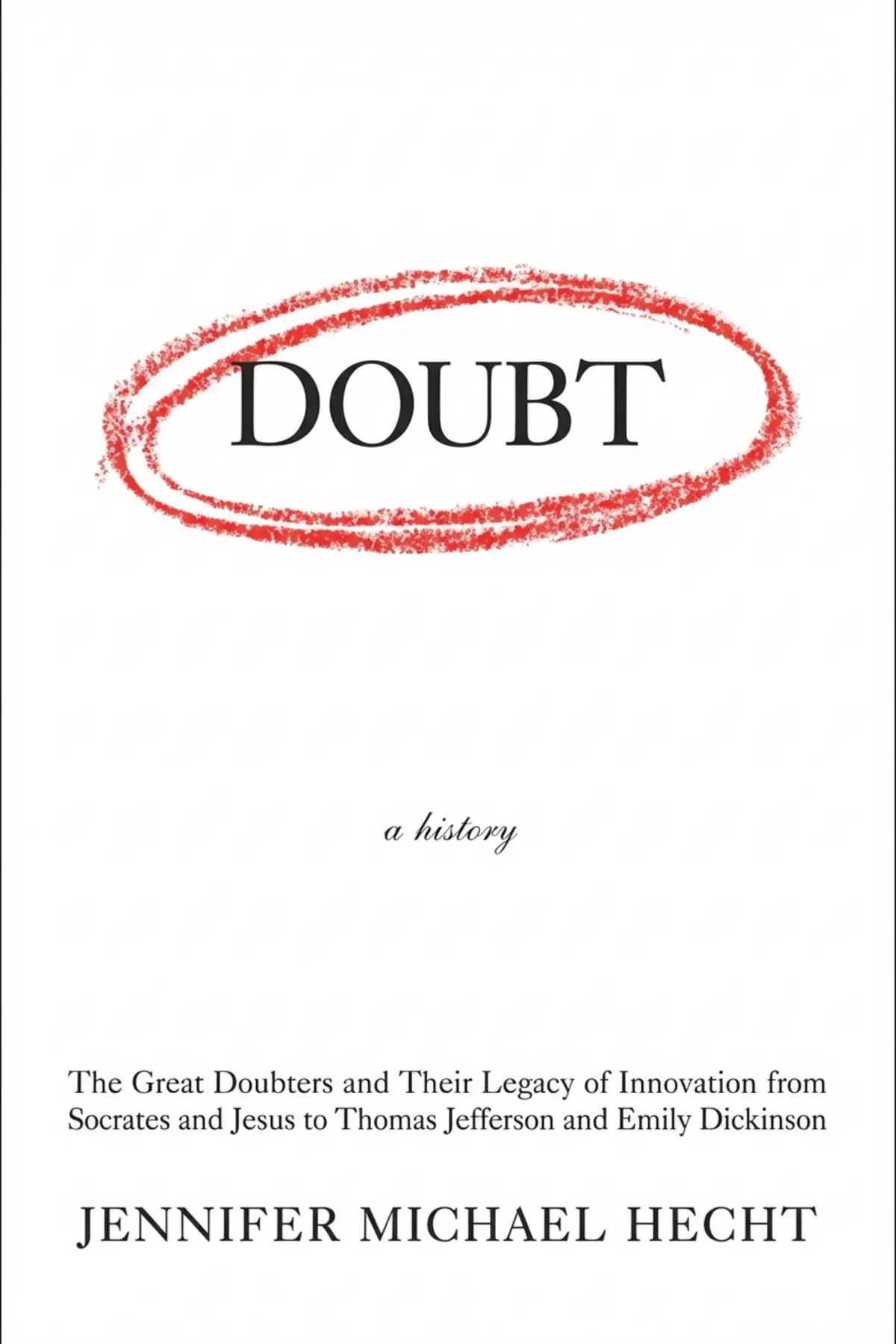
Doubt: A History reveals the hidden saga of skepticism, tracing how questioning established truths from ancient times to the modern era has fueled intellectual progress, scientific breakthroughs, and the evolution of human culture.
1 min 44 sec
When we look back at the grand tapestry of human history, we usually focus on the grand builders—the people who constructed massive empires, the prophets who founded enduring religions, and the leaders who forged unbreakable laws. We are taught to admire those with unshakeable convictions, those who stood firm in their beliefs and changed the world through the sheer force of their certainty. But there is another, much quieter narrative running alongside this history of belief. It is the story of the doubters.
What connects the ancient provocations of Socrates with the revolutionary physics of Albert Einstein? What do the philosophical traditions of China and the early foundations of American democracy share? The common thread is doubt. While history books often treat skepticism as a mere footnote or a hurdle to be overcome, it is actually a primary driver of human progress. It is the spark that ignites scientific discovery, the wedge that splits open corrupt institutions, and the very foundation of modern intellectual freedom.
In this exploration of Jennifer Michael Hecht’s research, we are going to look at the history that often gets omitted from the official record. We’ll see how doubt has been a global phenomenon, appearing in every era and every corner of the world. We will uncover how skepticism survived through the centuries, even when states and religions tried to burn it out of existence. From the biblical struggle of Job to the scientific breakthroughs of Marie Curie, you’ll discover that doubt is not a sign of weakness or a lack of direction. Instead, it is a potent, creative force that has shaped the modern world in ways we are only just beginning to acknowledge. By following this throughline of uncertainty, we gain a clearer picture of how humanity moves from dogma to discovery. Let’s begin by looking at why this powerful force has remained hidden for so long.
1 min 57 sec
Explore why official records often ignore the voices of doubters and how institutions throughout time have worked to silence those who question the status quo.
1 min 48 sec
Discover how skepticism is not a modern Western invention, but a universal human impulse found in ancient China, Rome, and early America.
1 min 38 sec
Uncover the often-overlooked role of female doubters who had to overcome significant social barriers to contribute to the history of human thought.
1 min 43 sec
Examine the dangerous consequences faced by those who challenged religious and political powers during periods like the Inquisition.
1 min 30 sec
Learn about the ancient philosophical movements, such as the Carvaka in India, whose works were systematically destroyed by their opponents.
1 min 31 sec
See how early thinkers like Xenophanes used logic to challenge mythological explanations and propose more rational views of the world.
1 min 27 sec
Understand how individuals like Martin Luther used doubt not to destroy their faith, but to challenge corruption and provoke change.
1 min 45 sec
Explore how religious traditions have actually embraced doubt through stories like the apostle Thomas and the Book of Job.
1 min 44 sec
See how the rejection of old doctrines led Siddhartha Gautama to create Buddhism and how skepticism has preserved ancient wisdom.
1 min 34 sec
Analyze why skepticism is the primary engine of the scientific method, from the predictions of Thales to the theories of Charles Darwin.
1 min 43 sec
Consider the psychological toll of deep skepticism, as seen in the philosophical crises of René Descartes and the ancient remedies for despair.
1 min 35 sec
Reflect on how accepting uncertainty can lead to a calmer, more authentic life, inspired by the examples of Socrates and Moses Mendelssohn.
1 min 55 sec
As we reach the end of this journey through the hidden history of doubt, it becomes clear that skepticism is far more than a lack of belief. It is a vibrant, courageous, and essential part of the human experience. We have seen how doubt has been airbrushed from our official histories to protect the certainty of institutions, yet it has consistently bubbled to the surface in every culture and every era. From the radical materialism of the Carvaka in India to the scientific breakthroughs of Darwin and Curie, the doubters have been the ones to push the boundaries of what we thought was possible.
We’ve also seen that doubt isn’t easy. It requires a willingness to face the unknown and to live with the discomfort of uncertainty. It can lead to the existential despair of a Descartes or the life-threatening persecution of a Bruno. But the rewards are immense. Doubt is what gave us the scientific method, the Protestant Reformation, and the very concept of individual intellectual freedom. It is the force that prevents our traditions from becoming stagnant and our societies from becoming oppressive.
The throughline of this history is that doubt is a creative act. When we question, we aren’t just tearing things down; we are making room for new, better, and more honest ways of living. So, what can we take away from the legacy of these great skeptics? Perhaps the most actionable advice is to embrace your own impulses of doubt. Don’t feel like you have to have all the answers, and don’t accept information just because it comes from an authority figure.
By maintaining a healthy sense of skepticism, you join a long and noble lineage of thinkers who have helped move humanity forward. Remember that doubt and community can go hand in hand; like Moses Mendelssohn and his circle of friends, we can use our shared uncertainty to build a world based on reason and mutual respect. In a world that often demands absolute certainty, the most revolutionary thing you can do is to keep asking questions. Doubt isn’t the enemy of truth—it is the very path we take to find it.
What if the most important ingredient in human progress wasn't what we believed, but what we refused to believe? This is the central premise of Doubt: A History. Jennifer Michael Hecht takes listeners on a sweeping journey through the annals of time, uncovering a lineage of thinkers who dared to say, "I’m not so sure." The book promises to reframe our understanding of the past by centering the stories of those who challenged religious dogma and political authority. From the sun-drenched squares of Ancient Greece to the enlightenment salons of Europe and the scientific laboratories of the modern age, Hecht shows that doubt isn't just a lack of faith—it's a creative, generative force. By the end of this summary, you’ll see how the great skeptics didn't just tear things down; they built the foundation for our modern, rational world. It is an exploration of the courage required to live without easy answers and the intellectual legacy left by those who embraced the unknown. It is a story of how the simple act of questioning became the engine of human innovation.
Jennifer Michael Hecht is an accomplished American philosopher, historian, and teacher. She is widely recognized for her insightful non-fiction works, including The Happiness Myth: Why What We Think Is Right Is Wrong and Stay: A History of Suicide and the Philosophies Against It. Beyond her philosophical and historical inquiries, Hecht is also a prolific and celebrated poet, bringing a unique, lyrical sensibility to her exploration of human thought and the history of ideas.
Listeners find this work to be a remarkable collection of philosophical viewpoints and a deeply researched chronicle of skepticism, with one listener highlighting the meaningful depth it offers. The prose is approachable, and listeners feel the content is rewarding, with one mentioning it is a title they will revisit repeatedly. They value the book's focus on how the vitality of faith depends on doubt, and one listener points out the thorough bibliography included. Reaction to the book's readability is varied; some listeners find the material captivating, whereas others find the experience of reading it to be monotonous.
Jennifer Michael Hecht has crafted an incredible compendium that reframes how we view the history of thought. To be fair, I was most impressed by her characterization of the ancient Cynics and Stoics as the original authors of self-help literature in the West. This perspective makes these lofty philosophies feel remarkably grounded and applicable to modern life. Her writing style is accessible yet deeply researched, providing a meaningful depth that most historical surveys lack. I found myself lingering on the sections regarding the Epicureans and their pursuit of tranquility through questioning. It is a masterful work that proves doubt is not a deficit but a profound human achievement. This is the kind of book you keep on your shelf and return to whenever you need to feel less alone in your uncertainty.
Show moreTruth is, I picked this up feeling quite alone in my skepticism, but I found myself in the best possible company. Reading about everyone from Emily Dickinson to Bertrand Russell made me realize that my own questioning is part of a rich, thousand-year-old tradition. Hecht writes with a poet’s sensibility, making the lives of these doubters feel immediate and urgent rather than like dusty historical footnotes. Not gonna lie, some of the sections on 20th-century state-sponsored doubt were chilling, but they served as a necessary reminder that doubt can be used for various ends. This book is a defense of the human mind’s refusal to be satisfied with easy answers. It’s an empowering read for anyone who has ever been told that their lack of certainty was a character flaw.
Show moreFew authors manage to juggle so many disparate philosophical threads without dropping the ball, but Hecht creates a cohesive narrative out of thousands of years of questioning. This book is an amazing compendium that shows how thinkers like Wang Ch’ung and Hypatia paved the way for the Enlightenment. I was fascinated by the way she threaded the 'doubting' elements of religion, like the writing of Ecclesiastes, into the broader history of skepticism. It makes for a much more interesting revealing of human history than a simple 'believers vs. non-believers' dichotomy. The writing is sophisticated yet clear, and the 24-hour audiobook version was a fantastic way to consume such a weighty subject. If you enjoy understanding the firm foundations of reason, this is essential reading. It’s a masterful work in both scope and execution.
Show moreFinally got around to finishing this massive tome on audio, and I must say, the commitment was well worth every second. Jennifer Michael Hecht is a poet and philosopher, and that dual identity shines through in how she treats her subjects with both analytical rigor and emotional resonance. The way she traces the influence of 'On the Nature of Things' through the ages was particularly enlightening. It’s a book that celebrates the courage it takes to say 'I don't know' in a world that demands certainty. I found her coverage of the 20th century to be a bit brief, but given the 500-page length, it’s understandable that some cuts had to be made. This is a work I will read over and over again for inspiration. Truly a magnificent achievement.
Show moreAfter hearing about this book for years, I was finally struck by the sheer diversity of the figures included in this massive narrative. Hecht doesn’t just stick to the usual suspects like Socrates or Jefferson; she dives into the Charvaka of ancient India and the often-ignored skeptics of the Golden Age of Islam. Frankly, the middle chapters on Maimonides and Spinoza can be a bit of a slog if you aren’t prepared for dense philosophical tracking. However, the payoff is worth the effort as she connects these disparate threads into a single, cohesive family tree of doubt. It’s a well-researched history that highlights how the vitality of faith depends on the very questions that threaten it. I did find her occasional poetic flourishes a bit much, but the scholarship is undeniable.
Show moreThe sheer scale of this project is mind-blowing, especially regarding how it bridges Eastern and Western traditions so seamlessly. I appreciated learning about Al-Razi and Al-Rawandi, thinkers who challenged Islamic orthodoxy centuries ago at great personal risk. Hecht is a lively writer who manages to keep the momentum going even through 500 densely-packed pages. Personally, I think the inclusion of the Book of Job and the teachings of Jesus as part of the framework of doubt was a brilliant move that prevented the book from feeling like a one-sided polemic. It is a huge commitment to read, but the extensive bibliography alone makes it a valuable reference tool. My only complaint is that the modern section felt slightly rushed compared to the meticulous detail given to the ancients.
Show moreIs it possible for a history book to be too readable? Hecht’s prose flows so effortlessly that I found myself flying through centuries of human questioning almost too fast. She gives equal weight to the East and the West, which is a refreshing change from the Eurocentric focus of most philosophy surveys. I particularly enjoyed the deep dives into Lucretius and Cicero, whose influences keep popping up throughout the later chapters like recurring characters in a long novel. While I found the section on the 'miraculous accident' of life a bit repetitive, the overall execution of the history is superb. It really highlights how doubt has been the engine of progress, sparking reflection when dogma tried to shut it down. This is a solid four-star read that I’ll likely revisit.
Show moreEver wonder why we treat 'faith' as the ultimate virtue while 'doubt' is a dirty word? This book flips that script by showcasing doubt as a vital engine for progress and intellectual honesty. Hecht provides a brilliant survey of thinkers from the Buddha to Susan B. Anthony, demonstrating that questioning the status quo is a deeply moral act. I particularly liked the contrast between the 'man of faith' and the 'man of doubt' in the context of contemporary issues. My only minor gripe is that the book is quite physically heavy and the font is small, which made the reading experience a bit tiring at times. Regardless, the content is top-tier and provides a necessary counter-narrative to the history of religion. It’s a well-researched, accessible, and ultimately very hopeful book.
Show moreWait, did she really just call the ancient Skeptics the first self-help gurus? While that framing is clever, I found some of the recurring rhetoric about our 'accidental' existence a bit grating after the third or fourth chapter. It feels like she subscribes heavily to a very specific brand of 1970s atheism that views life as a happy accident rather than exploring more modern scientific nuances. To be fair, the biographies of the individual thinkers are absolutely outstanding and kept me engaged. I just wish the authorial voice didn't interject quite so much with that specific 'miraculous accident' terminology. It’s a great survey of doubt, but you definitely have to take some of her personal philosophical biases with a grain of salt. It's a bit tedious in parts but historically informative.
Show moreLook, this is a hefty volume that requires some serious intellectual stamina, and frankly, I found the middle sections on medieval doubt a bit tedious. While the research is clearly top-notch, the sheer density of the names and dates can become overwhelming if you aren't a history buff. I did appreciate the focus on how doubt can lead to a more ethical way of living, especially in the sections regarding Thomas Jefferson and Thomas Paine. However, the prose occasionally veers into being 'almost too readable,' where the complexity of certain philosophies feels slightly smoothed over for the sake of the narrative. It’s a well-researched history of doubt, and the bibliography is a goldmine for future reading. It just didn't quite grab me as much as I hoped it would.
Show moreNigel Warburton
John Rawls
Eckhart Tolle
Marianne Williamson
Deepak Chopra
Pico Iyer
Alcoholics Anonymous World Services
AUDIO SUMMARY AVAILABLE
Get the key ideas from Doubt: A History by Jennifer Michael Hecht, plus 5,000+ more titles in English and Thai.







