

25 min 38 sec
Drawdown: The Most Comprehensive Plan Ever Proposed to Reverse Global Warming
By Paul Hawken
Drawdown presents a scientifically grounded, optimistic roadmap for reversing global warming. It explores one hundred diverse solutions, ranging from renewable energy to social shifts, that can pull carbon out of the atmosphere.
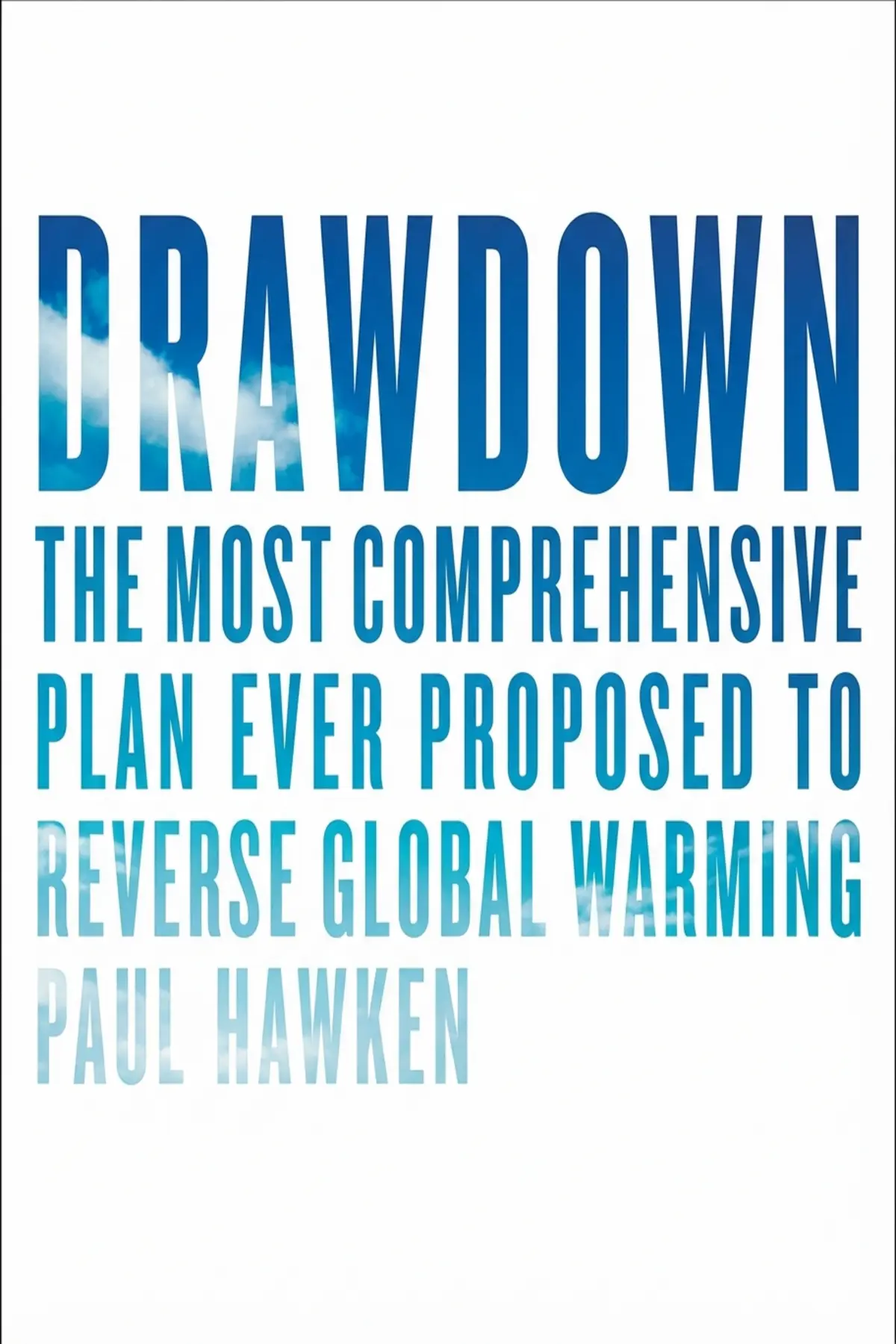
Table of Content
1. Introduction
2 min 38 sec
When we think about the current state of our planet, it is very easy to feel a sense of impending doom. We see the headlines every day: record-breaking heatwaves, massive wildfires, and the steady melting of polar ice. For many of us, the conversation around climate change has felt like a long, slow retreat—an attempt to perhaps do a little less damage or delay the inevitable for as long as possible. But what if we shifted our gaze toward a more ambitious goal? What if we stopped trying to simply slow the warming and started working toward actually reversing it?
This is the core premise of the work compiled by Paul Hawken and the researchers at Project Drawdown. They define “drawdown” as that critical turning point in time when the concentration of greenhouse gases in the atmosphere peaks and then begins to steadily decline. It is the moment when we stop adding to the problem and start actively healing the atmosphere. This shift in perspective is profound because it transforms us from passive observers of a catastrophe into active participants in a global restoration project.
To understand how we got here, we can look back nearly two centuries to the insights of Alexander von Humboldt. While traveling across the Russian landscape in the early nineteenth century, he noticed how human activities like intensive farming and deforestation were fundamentally altering the local environment. He was among the first to realize that our industrial processes and the gases they release could pose a threat to the entire world. Today, the science is clear: our carbon footprint is staggering, with tens of billions of tons of carbon dioxide being released annually through our use of fossil fuels and our management of the land.
However, the same ingenuity that led to the industrial age is now providing the tools for the restoration age. The solutions explored here are not just pipe dreams; they are practical, economically viable, and already in use. They represent a “no regrets” approach—strategies that would be worth pursuing for their benefits to health, the economy, and social equity even if global warming weren’t a factor. As we dive into these ideas, you will see how a combination of ancient wisdom, modern technology, and social empowerment can create a roadmap for a cooler, more vibrant world. We aren’t just looking for a way to survive; we are looking for a way to thrive while bringing our planet back into balance.
2. The Shift to Clean and Distributed Energy
2 min 33 sec
Moving away from fossil fuels is the most obvious step toward drawdown, but the real magic lies in how we capture and share renewable energy.
3. The Impact of Our Plates and Food Systems
2 min 17 sec
What we choose to eat and how much we throw away are surprisingly powerful levers for cooling the planet.
4. Restoring the Earth Through Regenerative Agriculture
2 min 15 sec
By changing how we farm, we can turn our fields from carbon sources into carbon sinks.
5. Redesigning the Urban Environment
2 min 25 sec
Cities are often seen as the problem, but their density makes them the perfect laboratory for energy-efficient living.
6. Revolutionizing Transportation and Mobility
2 min 13 sec
Our need for movement doesn’t have to come at the cost of the atmosphere if we focus on efficiency and electrification.
7. Safeguarding and Restoring Natural Carbon Sinks
2 min 17 sec
Nature has spent millions of years perfecting carbon capture; our job is to protect these systems and let them work.
8. Addressing Hidden Chemicals and Materials
2 min 17 sec
The substances we use every day, from the gas in our fridges to the cement in our roads, have a massive hidden climate impact.
9. Empowering People Through Education and Equity
2 min 18 sec
Social progress and environmental health are inextricably linked, particularly through the education of women and girls.
10. The Promise of Future Innovations
2 min 27 sec
While current solutions are enough to start the process, emerging technologies could provide the final push we need to reverse the damage.
11. Conclusion
1 min 58 sec
The journey through the solutions presented in Drawdown leads to one inescapable conclusion: it is not too late. The task before us is monumental, but it is not impossible. We have already developed the wind turbines, the solar panels, the farming techniques, and the social strategies needed to bring our planet back from the brink. The challenge we face now is not a lack of tools, but a lack of collective will and urgency.
It is easy to look at the scale of the climate crisis and feel small. You might wonder if your individual choices—choosing a plant-based meal, biking to work, or composting your scraps—really matter when compared to the vast global systems at play. But every major shift in human history has started with a change in individual consciousness that eventually reached a tipping point. When enough people begin to act, those actions create the cultural and political pressure needed to change the larger systems.
One of the most powerful ideas here is the concept of “no-regrets” solutions. These are actions that improve our lives right now, regardless of their impact on the climate. A city with more parks and fewer cars is a more pleasant place to live. A diet rich in plants is better for our health. A world where women are educated and empowered is a more just and prosperous world. By pursuing drawdown, we aren’t just saving the planet; we are building a better version of human civilization.
The split between what we know and what we do can be paralyzing, but action is the best antidote to despair. Whether it’s through your career, your community involvement, or your daily habits, you have a role to play in this global restoration. The goal is clear, the roadmap is ready, and the potential for a thriving, balanced future is within our reach. It is time to move past the fear and get to work on the most important project humanity has ever undertaken.
About this book
What is this book about?
Global warming often feels like an unstoppable force, leaving many people feeling overwhelmed and paralyzed by the scale of the crisis. Drawdown changes the narrative by moving beyond the goal of merely slowing down environmental damage. Instead, it proposes a comprehensive plan to reach the point where greenhouse gases in the atmosphere actually begin to decline year over year. This isn't just a list of theoretical ideas; it is a meticulously researched collection of existing technologies and practices that are already being implemented around the world. The book covers a vast range of sectors, including energy production, food systems, land management, and urban planning. By highlighting the economic and social benefits of these solutions—such as improved health, job creation, and cost savings—the book offers a vision of the future that is not only sustainable but also more prosperous and equitable for everyone on the planet.
Book Information
About the Author
Paul Hawken
Paul Hawken is a renowned environmentalist, journalist, and entrepreneur who served as the editor for this work and is the co-founder of Project Drawdown. Project Drawdown itself is a diverse community of scientists, activists, and politicians committed to researching and sharing viable paths to solve the global warming crisis. The organization benefits from the guidance and advocacy of notable figures such as environmentalist Bill McKibben, forester Peter Wohlleben, and high-profile activists including Tom Brady and Gisele Bündchen.
Ratings & Reviews
Ratings at a glance
What people think
Listeners describe this work as exceptionally thorough yet accessible, offering an all-encompassing examination of ways to address climate change. It gathers an extensive collection of realistic strategies, and one listener points out the helpful organization of these methods into specific categories. They value its utility as an essential handbook, with one listener characterizing the text as a blueprint for what lies ahead. Listeners consider the content both inspiring and mentally stimulating; one emphasizes its optimistic call to action, and others value how it assists in identifying individual goals for lowering carbon emissions.
Top reviews
Kob
This book is the ultimate roadmap for anyone feeling paralyzed by the current climate crisis. Instead of just listing what's wrong, Hawken and his team present a meticulously researched list of eighty solutions that can actually reverse global warming. I was particularly struck by the ranking system; who knew that managing refrigerants was the number one priority? The format is beautiful, almost like a coffee table book, which makes the heavy data much more digestible for a layperson. While some critics argue it lacks political depth, I find its focus on actionable, technical, and social shifts incredibly refreshing. It sets clear priorities for global action and personal lifestyle changes alike. Truly a must-have reference for the 21st century.
Show moreLuckana
Ever wonder if there’s a real, math-based plan to stop the world from burning? Drawdown is exactly that—a comprehensive, data-driven catalog of technologies and practices that are already working today. The research team synthesized thousands of studies to rank these solutions by their carbon-sequestering potential, which takes the guesswork out of environmental advocacy. I felt a huge weight lift off my shoulders reading about 'clean cookstoves' and 'peatland' conservation. It’s encouraging to see that many of these paths also save trillions of dollars in the long run. Truth is, we have the tools; we just need the collective will to implement them at scale. This is easily the most important book on my shelf right now.
Show moreOrm
Finally got around to finishing this massive project, and I’m blown away by the sheer scope of the research. The way the authors grouped the topics into areas like 'Women and Girls' and 'Buildings and Cities' makes it so much easier to navigate than a standard textbook. It’s rare to find a science-heavy book that remains so readable and visually engaging throughout. I especially appreciated the 'regrets' section, which acknowledges the controversies surrounding things like nuclear energy without being overly dismissive. It helped me set my own personal priorities for where to donate and how to change my diet. This isn't just a book; it’s a global strategy session packaged in a stunning, accessible format.
Show moreOrawan
Wow. I’ve spent years in a state of climate despair, but this book gave me a reason to breathe again. It’s a meticulously detailed look at the 'drawdown' point—the moment when greenhouse gases in the atmosphere actually begin to decline. Reading about the potential of bamboo cultivation and tropical forest restoration made me realize how much we can still accomplish. The writing style is clear and punchy, avoiding the dense jargon that usually makes environmental science so inaccessible. It’s an empowering road map that emphasizes what is possible right now rather than just mourning what we’ve lost. I’ve been recommending this to everyone I know who feels overwhelmed by the news cycle. We have a plan now.
Show moreSuthinee
Picked this up on a whim and I’ve been dipping in and out of it for weeks. It’s formatted perfectly for casual reading—you can just flip to a random page and learn something fascinating about wave energy or building automation. The photographs are stunning, which makes it feel much more inviting than your average dry environmental report. Personally, I think it’s the best way to get a quick, comprehensive overview of the climate landscape without getting bogged down in misery. It’s thought-provoking and stays positive, which is a rare feat for this subject matter. Whether you're a policy wonk or just someone who wants to know which lightbulbs to buy, there's something here for you.
Show moreJulian
As a gardener who cares deeply about soil health, I found the sections on regenerative agriculture and silvopasture to be absolutely eye-opening. The book does a fantastic job of grouping solutions into logical categories like food, energy, and land use, which helps you see the interconnectedness of everything. It’s not just about solar panels; it’s about how we manage our forests and empower women through education. My only real gripe is that the print is occasionally too small to read comfortably, and some of the 'coming attractions' feel a bit like science fiction. Still, the overall message is one of cautious optimism. It provides a tangible framework for what we need to do next if we want to save our planet.
Show moreElena
The brilliance of Drawdown lies in its rigorous attention to the financial side of climate change. Every solution is analyzed not just for its carbon impact, but for its net cost and long-term savings potential. This makes a compelling case for businesses and governments that might otherwise be hesitant to go green. Look, some of the solutions are definitely more 'pie in the sky' than others, and the reliance on future tech can be a bit concerning. However, the focus on things like educating girls and protecting indigenous land rights shows a holistic understanding of the problem. It’s a thought-provoking read that moves the needle from 'why' to 'how.' A solid 4-star reference for anyone in policy or activism.
Show moreNam
The chapter on refrigerant management was a total shocker for me. I always assumed coal and cars were the only major players, but seeing HFCs ranked as the number one solution changed my entire perspective. This book serves as a comprehensive reference guide that challenges your assumptions about what actually matters for carbon reduction. While the essays are short, they are packed with facts and figures that feel grounded in reality. Some might find the sheer volume of information a bit like an avalanche, but the short chapters help keep you from drowning in data. It’s an essential tool for setting priorities in a world that often feels like it's spinning out of control.
Show moreAudrey
Frankly, this is the most practical book on the environment I have ever read. Instead of vague promises, Hawken gives us hard numbers on everything from rice cultivation to electric bikes. The research team’s ability to synthesize thousands of studies into these digestible, one-to-two-page summaries is nothing short of incredible. I do think the book glosses over the massive political hurdles required to implement these changes, which might give some readers a false sense of security. Implementing these eighty solutions will require an unprecedented level of global cooperation and hard work. But as a starting point for a real 'how-to' guide, it is absolutely unmatched. It’s a meticulously detailed framework that we desperately needed.
Show moreKiattisak
Not what I expected, to be perfectly frank. While the research is undeniably impressive and the presentation is gorgeous, the book leans a bit too heavily on 'techno-fixes' for my taste. Solutions like vacuum tube trains and roads paved with solar panels feel like distractions from the deep, systemic economic changes we actually need. I was disappointed that there wasn't more discussion on degrowth or how to dismantle the political structures that keep us addicted to fossil fuels. It functions well as a reference guide for specific technologies, but it lacks a cohesive strategy for the hard political work ahead. It's a great starting point for ideas, but don't expect a complete manual for a revolution.
Show moreReaders also enjoyed


Beyond Words: What Animals Think and Feel
Carl Safina

Cod: A Biography of the Fish That Changed the World
Mark Kurlansky

Comfortably Unaware: What We Choose to Eat is Killing Us and Our
Richard A. Oppenlander

Cradle to Cradle: Remaking the Way We Make Things
William McDonough
Drinking Water: A History
James Salzman
Earth for All: A Survival Guide for Humanity
Sandrine Dixson-Decleve
AUDIO SUMMARY AVAILABLE
Listen to Drawdown in 15 minutes
Get the key ideas from Drawdown by Paul Hawken, plus 5,000+ more titles in English and Thai.
- 5,000+ titles
- Listen as much as you want
- 7-day free trial
- Cancel anytime







