
20 min 09 sec
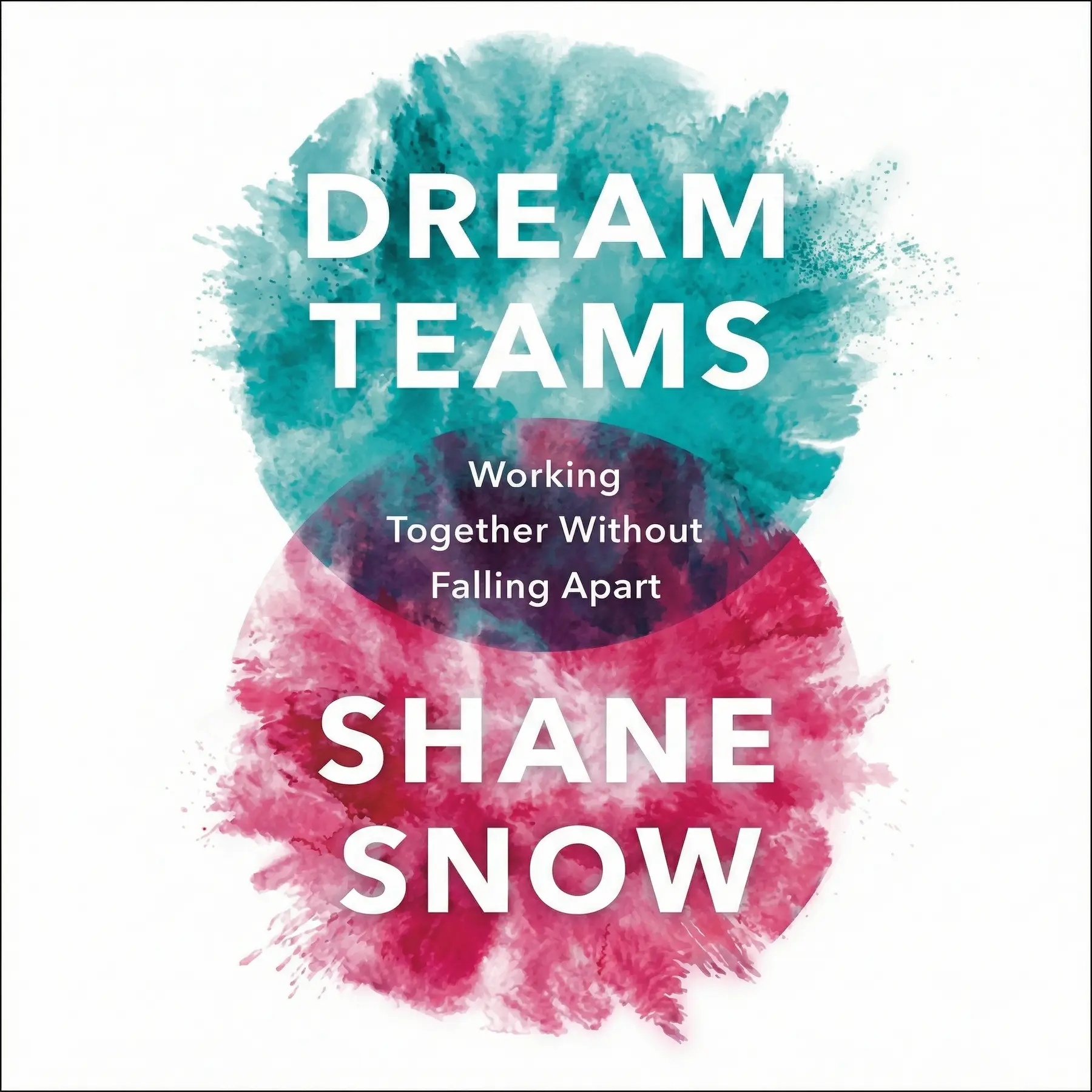
Dream Teams: Working Together Without Falling Apart
By Shane Snow
Dream Teams explores how diverse groups leverage productive conflict and intellectual humility to innovate. Shane Snow uses historical cases to show why the best teams embrace friction rather than avoiding it.
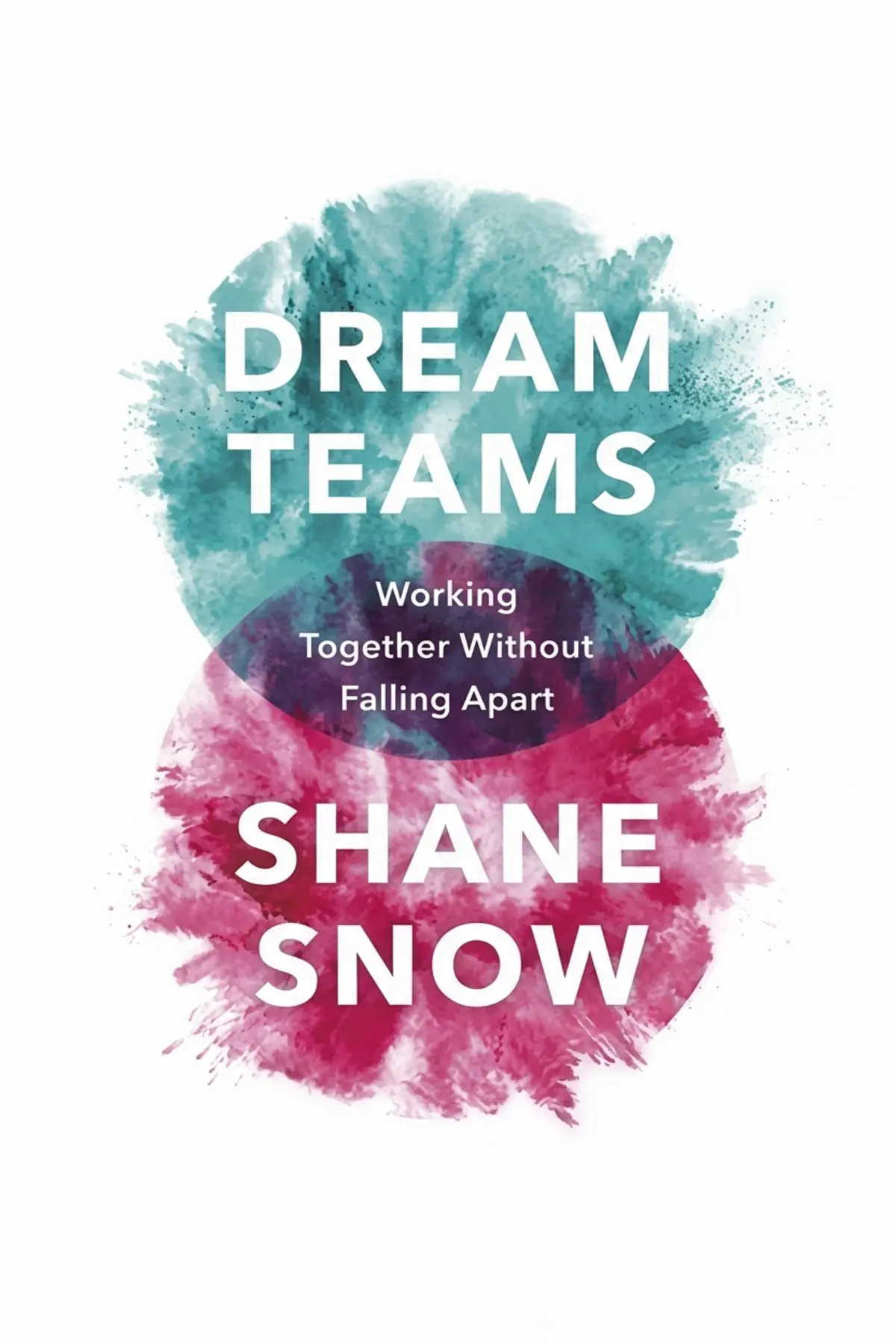
Table of Content
1. Introduction
1 min 48 sec
We have all heard the term ‘dream team.’ It’s a phrase that gets tossed around in sports, business, and even politics to describe a group of people so talented and so perfectly matched that success seems inevitable. But if we are honest with ourselves, the reality of working in teams is often far from a dream. More often than not, collaboration feels like a series of compromises, endless meetings, and the awkwardness of forced ‘team building’ exercises that everyone secretly dreads. We’ve all been there—the frustration of feeling like you could get the job done faster if you just did it yourself.
But there is a reason we keep trying. When a team actually ‘clicks,’ it achieves something that no lone genius ever could. The problem is that most of us are using the wrong blueprint for teamwork. We think a dream team is about finding people who get along perfectly and think the same way. According to Shane Snow, that is exactly what you want to avoid. In this summary, we are going to explore why the most successful teams in history weren’t built on harmony, but on diversity, productive tension, and the ability to argue without falling apart.
Snow doesn’t just give us dry management theories. He takes us on a journey through history, from the cockpit of the Wright brothers’ plane to the recording studios of the Wu-Tang Clan. We will look at how the FBI outsmarted the Mafia and how a frozen town in Vermont used a seemingly ridiculous idea to save its economy. Through these stories, we will uncover the core elements of a true dream team: cognitive friction, intellectual humility, and shared purpose. By the end of this journey, you’ll have the tools to transform your own groups from mere collections of individuals into a unified, innovative force. Let’s dive in and see how the best teams in the world really work.
2. The Power of Diverse Toolkits
2 min 12 sec
Discover how an FBI agent used her unique perspective to infiltrate the Mafia and why cognitive diversity is more than just a buzzword for high-performing teams.
3. Embracing Cognitive Friction
2 min 04 sec
Learn why the silence of a polite office can be more dangerous than a loud argument and how the world’s greatest hip-hop group turned conflict into art.
4. The Biology of Belonging
2 min 00 sec
Explore the neuroscience of trust and how playing together can actually rewire our brains to turn enemies into allies.
5. Escaping the Trap of Success
2 min 06 sec
Find out why a winning team can sometimes be the biggest obstacle to future progress and how a ‘devil’s advocate’ can double your chances of success.
6. The Strategic Value of Bad Ideas
2 min 07 sec
Uncover the surprising history of a black square and a giant dome to see how ‘bad’ ideas can pave the way for revolutionary results.
7. The Power of Superordinate Goals
2 min 12 sec
See how a shared threat can unite even the most bitter rivals and why mutual respect is the secret ingredient for long-term unity.
8. Cultivating Intellectual Humility
2 min 00 sec
Follow the transformation of Malcolm X to understand how stepping out of your comfort zone can open your mind to new perspectives.
9. The Empathy of Storytelling
2 min 09 sec
Learn how the science of oxytocin and the power of narrative can break down stereotypes and build deep emotional bonds within a team.
10. Conclusion
1 min 31 sec
Building a dream team is not about finding the perfect people; it is about building the perfect environment. As we have seen, the ingredients for success are often the very things we are taught to avoid. We need diversity, not just in appearance, but in thinking and experience. We need friction, because the heat of a good argument is where the best ideas are forged. We need bad ideas, because they lead us to the good ones. And we need play, because it turns strangers into allies.
But above all, a dream team requires a shift in mindset. It requires the intellectual humility to admit we don’t have all the answers and the empathy to listen to those who see the world differently. It requires a commitment to a goal that is bigger than any one person’s ego. Shane Snow’s journey through history shows us that when we embrace these principles, we can achieve the extraordinary. Whether you are leading a startup, a community group, or a family, the lessons are the same: don’t fear the differences—leverage them.
As a final piece of actionable advice, try the ‘Wright Brothers Strategy’ the next time your team hits a stalemate. If you are locked in an argument, stop and have everyone switch sides. Force the people who are ‘pro-idea’ to argue against it, and have the ‘anti-idea’ group argue for it. You will be amazed at how quickly the tension dissipates and how many new insights emerge when you are forced to look through someone else’s eyes. That is the secret of the dream team: the willingness to see the world from every possible angle until the best path forward becomes clear.
About this book
What is this book about?
Have you ever wondered why some groups of superstars fail miserably while unlikely motley crews change the world? Dream Teams dives deep into the science and history of breakthrough collaboration. It challenges the conventional wisdom that harmony is the goal of a great team, arguing instead that the most innovative solutions come from cognitive friction—the clashing of diverse perspectives. Through fascinating stories ranging from the Wright brothers to the Wu-Tang Clan, the book provides a roadmap for building teams that are more than the sum of their parts. You will learn how to foster a culture of intellectual humility, how to use ‘superordinate goals’ to unite rivals, and why ‘playing together’ is a biological necessity for trust. The promise of the book is a practical framework for turning potential conflict into a catalyst for progress, ensuring your team doesn't just work together, but actually evolves together.
Book Information
About the Author
Shane Snow
Shane Snow is an award-winning journalist and the cofounder of the content technology company Contently. He is the best-selling author of Smartcuts (2014) and the coauthor of The Storytelling Edge (2018).
Ratings & Reviews
Ratings at a glance
What people think
Listeners find this book compelling and articulately crafted, utilizing accounts based on psychology and neuroscience to impart useful team-building techniques. They like how it explores the factors that allow top teams to excel, and one listener mentions that it serves as a functional handbook for constructing effective teams.
Top reviews
Jin
Ever wonder why some 'supergroups' fail while underdog teams thrive? Snow suggests that it’s all about cognitive friction, and he uses everyone from Malcolm X to Andrew Jackson to prove his point. The book is highly engaging and manages to reconcile why diversity is essential yet often causes teams to clam up if not managed correctly. I especially appreciated the 'cheat sheet' at the end, which summarizes the main lessons into bullet points for quick reference later. In my experience, most business books are about 100 pages too long, and while this one meanders, the stories are so vivid that you don't really mind the extra length. It’s an emotional and intellectual journey that challenges you to be more open to perspectives that clash with your own. Highly recommended for any leader who wants to move beyond surface-level harmony.
Show moreMalee
Wow, I didn’t think a book on business psychology could be this gripping. Snow’s writing style is punchy and fast-paced, weaving together multiple threads that show how tension can be a creative force. The chapter on the Soviet Olympic hockey team was a masterclass in illustrating how rigid systems can crumble when they lack individual openness. I gotta say, the way he explains how to keep a team 'in the zone' by establishing rules for disagreement was eye-opening. While some readers might find the jumping back and forth between eras confusing, I thought it kept the energy high throughout the entire book. It’s rare to find a book that is both a serious work of sociology and a genuine page-turner. This is a must-read for anyone who works with humans.
Show moreClara
In my experience, building a team is more art than science, yet this book provides a solid bridge between the two. Shane Snow explains how to unify teams through play and shared goals, which makes the inevitable friction of diverse perspectives productive rather than destructive. I found the section on how travel and education can make a person more open-minded to be particularly moving. I'll admit, I almost stopped reading because of the jumping around in the first few chapters, but I’m glad I stuck with it. The payoff in the final sections, where all the stories converge, is well worth the initial confusion of the non-linear narrative. If you can handle a few excessive footnotes, there is a wealth of knowledge here that is both inspiring and practical for any group setting.
Show morePornthip
This book manages to make team dynamics actually interesting through some pretty wild historical anecdotes. Shane Snow explores why 'cognitive diversity' is the secret sauce that pushes a group into 'The Zone,' using the clever analogy of a rubber band that needs just the right amount of tension. If it's too loose, there is no power; if it's too tight, it snaps. In my view, the deep dives into the Soviet Union’s hockey team and the Pinkertons were highlights, though I’ll admit the narrative jumps around a bit too much for my liking. You might find yourself halfway through a story about Andrew Jackson before realizing how it connects back to the main thesis. Despite the occasional meandering, the insights into intellectual humility and cognitive friction are incredibly valuable for anyone leading a group. It’s a refreshing departure from the dry, data-heavy MBA case studies I usually slog through.
Show morePongpan
Finally got around to reading Shane Snow’s take on collaboration, and the depth of the research here is staggering. By grounding his lessons in neuroscience and sociology, he explains why simply putting 'talented' people together usually leads to disaster rather than dreams. I found the section on the Pinkerton Detectives particularly fascinating because it highlighted how different perspectives uncover truths that a homogeneous group would miss. Truth is, the book feels more like a collection of interlaced short stories than a traditional business guide, which kept me turning pages late into the night. Some critics might say the footnotes are a distraction, but I found them to be quirky asides that added extra flavor to the main text. If you want a practical guide to team building that doesn't put you to sleep, this is definitely the one to grab.
Show moreNarongrit
After hearing a lot about this title, I finally picked it up and was pleasantly surprised by how Snow links disparate fields like sociology and history. The book covers the necessary framework for why teams work by looking at various groups in history and extrapolating the lessons learned. One key takeaway for me was that including someone from the front lines is critical, even if they aren't senior. This book is certainly not your dry MBA case study, though it does meander around quite a bit before finally coming to a point. Personally, I loved the focus on 'intellectual humility'—it’s something we desperately need more of in today's polarized corporate world. It’s a solid, four-star effort that offers a lot of food for thought, even if the footnotes get a little excessive by the final chapters.
Show moreAlice
To be fair, I usually hate business books that rely too heavily on storytelling, but Snow makes it work because the stories are actually good. He uses the analogy of a rubber band to describe the sustainable tension required for a team to perform at its peak. This really resonated with me because it explains why 'peace and harmony' are often the enemies of true innovation and progress. The book is full of well-explained big ideas that feel achievable, rather than just abstract theories that look good on a whiteboard. I did feel that the author's personal anecdotes toward the end were a bit self-indulgent, but they did help illustrate the human element of collaboration. Overall, it’s an excellent, readable guide that will change how you view your coworkers and your own biases.
Show moreTakeshi
As someone who deals with team management daily, I found some of these lessons useful but buried under a bit too much fluff. The idea of switching sides during a heated argument to ease tension is a brilliant, actionable takeaway that I plan to implement immediately. However, the book has a habit of starting a new anecdote before finishing the previous one, which can be quite jarring for the reader. Look, the core premise—that we need friction and dissent to grow—is solid and well-argued through the lens of history. I just wish there was a bit more hard data and a few less footnotes about the author's personal travel experiences. It’s a solid three-star read that offers some 'aha' moments if you have the patience to navigate the non-linear storytelling style.
Show moreAkosua
The chapter on how humans respond to narratives was a highlight, though it felt like the author fell into his own trap of over-storytelling. At times, the book feels a bit lightweight on the actual science of team collaboration, favoring dramatic historical vignettes over rigorous data. I wanted more about the 'why' behind the psychology and a bit less about the specific traits of individuals like Andrew Jackson. That being said, the 'cheat sheet' at the end is a lifesaver for busy professionals who need to skim for the main points. Got to say, the concept of 'cognitive diversity' is handled well here, even if it's not a brand-new idea in the world of social psychology. It's a decent read for those new to the genre, but seasoned leaders might find it a bit too anecdotal.
Show moreTod
Not what I expected given the hype from the business crowd and the Adam Grant afterword. Frankly, the whole thing felt like a series of disjointed vignettes that lacked a cohesive thread or any real scientific rigor. I kept waiting for a breakthrough insight, but instead, I got a millennial-style surface-level treatment of complex psychological concepts. The stories are entertaining enough, I suppose, but they meander so much that the actual 'lesson' gets diluted by the sheer volume of verbiage. To be fair, there are a few decent points about cognitive biases, but if you’ve already read 'Thinking, Fast and Slow,' you won’t find anything novel here. It’s a lot of style over substance, and the juvenile illustrations didn't help matters much. I wouldn't recommend this if you're looking for a serious, scholarly look at team dynamics.
Show more


Readers also enjoyed
A Year with Peter Drucker: 52 Weeks of Coaching for Leadership Effectiveness
Joseph A. Maciariello



Acting with Power: Why We Are More Powerful Than We Believe
Deborah Gruenfeld
All In: How Great Leaders Build Unstoppable Teams
Mike Michalowicz


7 Powers: The Foundations of Business Strategy
Hamilton Helmer
AUDIO SUMMARY AVAILABLE
Listen to Dream Teams in 15 minutes
Get the key ideas from Dream Teams by Shane Snow, plus 5,000+ more titles in English and Thai.
- 5,000+ titles
- Listen as much as you want
- 7-day free trial
- Cancel anytime







