
21 min 06 sec
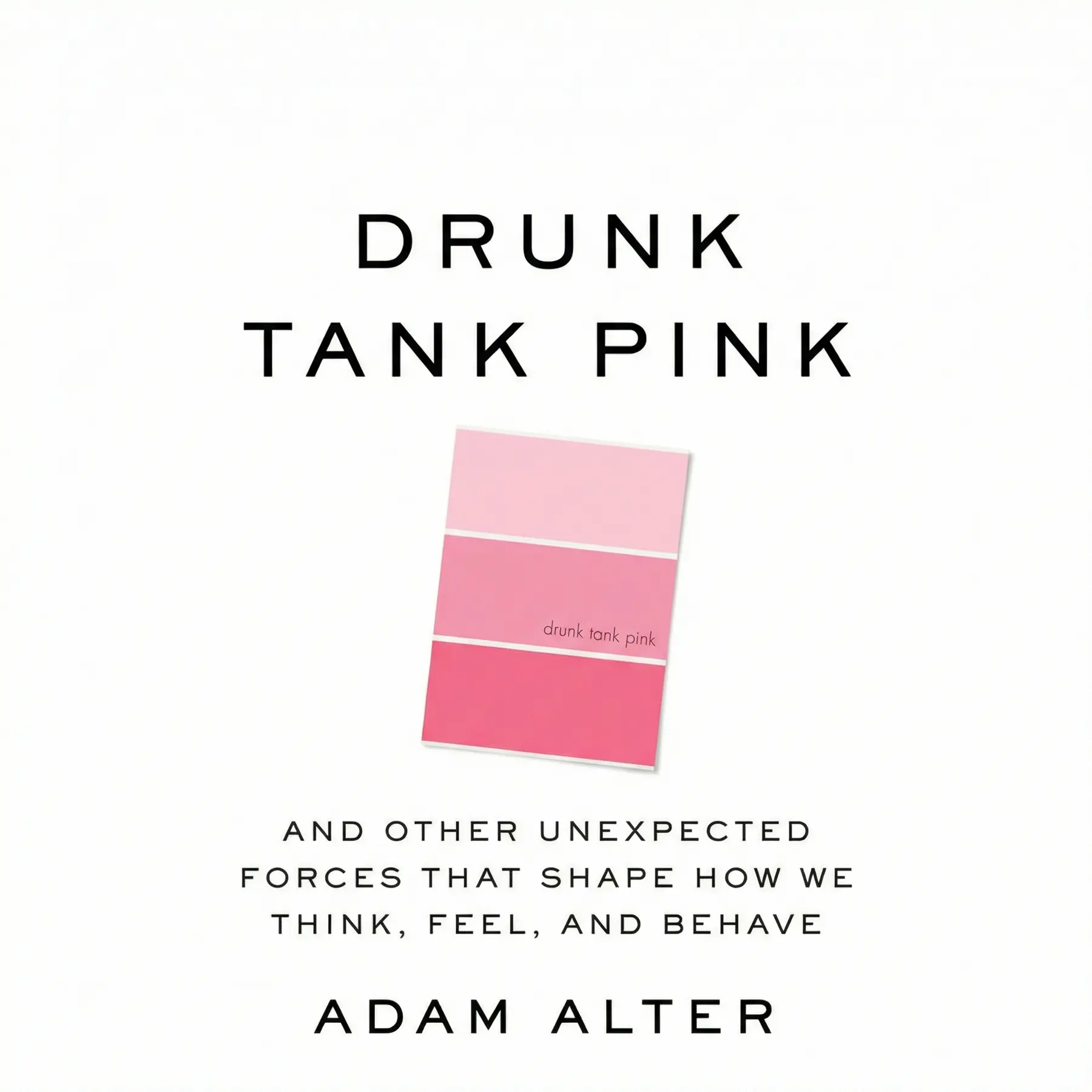
Drunk Tank Pink: And Other Unexpected Forces that Shape How We Think, Feel, and Behave
By Adam Alter
Adam Alter reveals the hidden environmental and psychological forces that dictate our choices. From the color of a room to the letters in a name, discover how subtle cues reshape our behavior.
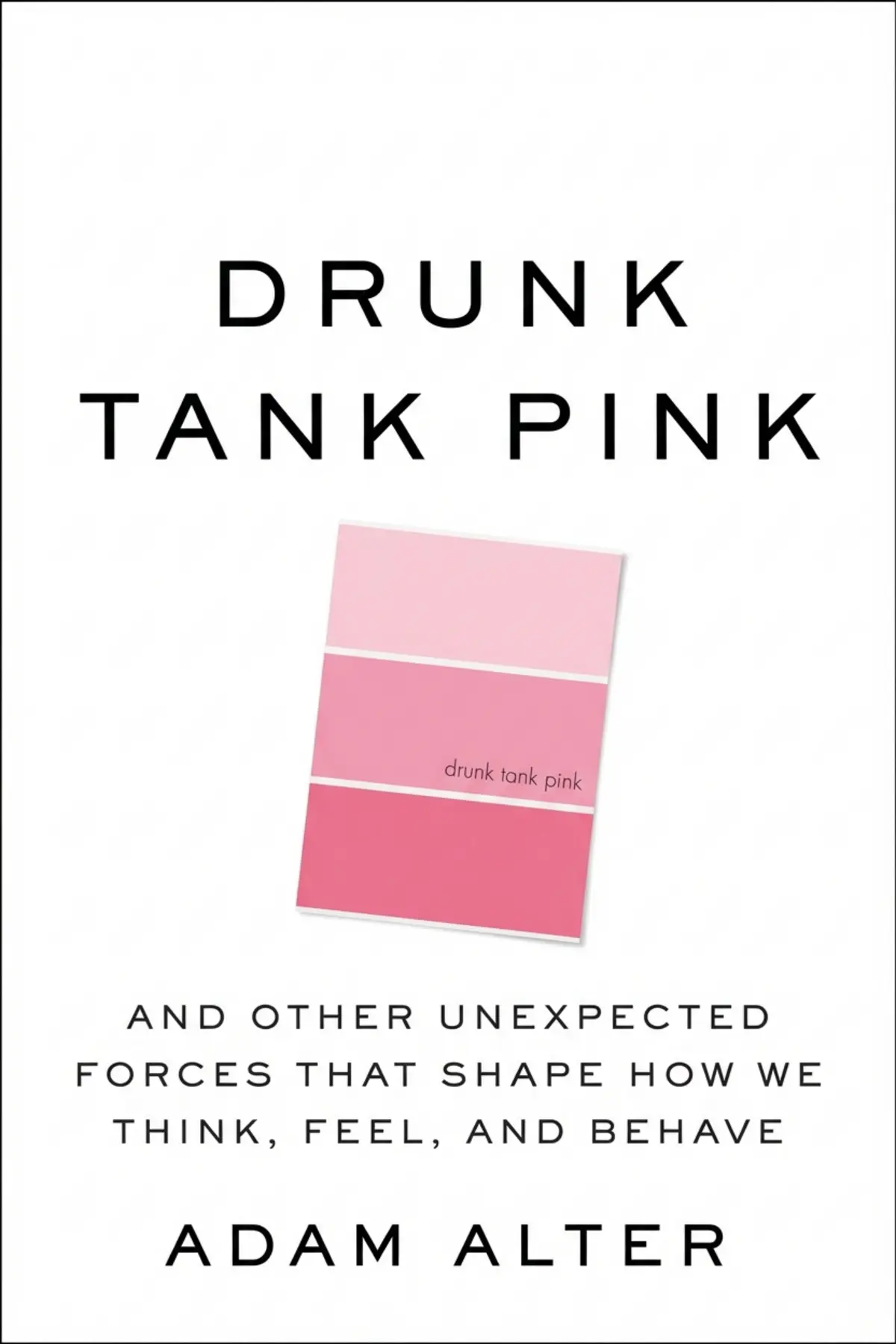
Table of Content
1. Introduction
1 min 41 sec
Most of us like to believe we are the captains of our own souls, making rational decisions based on our values, our preferences, and our logic. We assume that when we choose a career, buy a product, or react to a stranger, we are acting of our own free will. But what if that sense of control is largely an illusion? What if the world around you—the colors on the walls, the weather outside, and even the name your parents gave you—is actually pulling the strings of your behavior behind the scenes?
This is the fascinating world explored in Adam Alter’s work. The title itself refers to a specific, jarring shade of bright pink that was once used in jail cells to pacify aggressive inmates. This isn’t just a quirky anecdote; it’s a gateway into a deeper understanding of how our environment dictates our internal state. Throughout this summary, we are going to look at the ‘unseen’ forces that inhabit the background of our lives.
We will examine how labels function like a lens through which we view reality, often distorting the truth of what we see. We’ll explore the social dynamics that make us either more honest or strangely indifferent to the suffering of others. We’ll even look at the biological drives that simmer beneath the surface, influencing everything from who we trust to how we spend our money.
The goal here isn’t just to point out how easily we are manipulated, but to provide a clearer view of the human condition. When we recognize the throughline—that our internal world is a constant reflection of the external world—we gain a new kind of agency. By understanding these subtle cues, we can begin to shape our environments to better serve our goals, rather than simply reacting to the forces we don’t see. Let’s dive into the myriad ways your surroundings are shaping you right now.
2. The Hidden Weight of Names
2 min 02 sec
Could the letters in your name actually steer your career or your generosity? Explore how simple linguistic associations create profound ripples in our lives.
3. How Labels Distort Perception
2 min 01 sec
Language is more than a tool for communication; it’s a filter for reality. Discover how the words we use can actually change the colors we see and the memories we hold.
4. The Subconscious Power of Symbols
1 min 55 sec
A simple drawing of a lightbulb or a pile of play money can change your cognitive performance. Learn why symbols trigger such deep, automatic reactions.
5. The Impact of Social Presence
1 min 55 sec
The mere thought of being watched can make you more honest, but the presence of too many people can make you indifferent. Explore the double-edged sword of the social world.
6. Biological Drivers and Trust
1 min 53 sec
From the hormones in our blood to the cycles of reproduction, our ‘animal’ selves are often in the driver’s seat. See how biology quietly directs your social interactions.
7. Cultural Lenses and Context
1 min 55 sec
Does your culture make you focus on the individual or the environment? Discover how our upbringing changes the very way we scan a photograph.
8. The Physiological Power of Color
2 min 00 sec
Could the color of a wall actually drain your physical strength? Explore the science behind ‘Drunk Tank Pink’ and the aggressive energy of red.
9. The Geography of Behavior
2 min 05 sec
How does your physical environment change your willingness to help a stranger? Discover the psychological impact of cities, nature, and even litter.
10. Weather, Mood, and Aggression
1 min 55 sec
Is it possible that the temperature outside is the hidden cause of a rise in crime? Explore the surprising link between the climate and our social stability.
11. Conclusion
1 min 44 sec
As we wrap up our journey through the hidden forces described by Adam Alter, the central throughline becomes clear: our autonomy is a collaborative effort between our internal selves and the external world. We’ve seen how our names can act as a silent compass for our behavior, how language can create boundaries in our vision, and how the simple presence of others can shift our moral compass. We’ve explored the physiological impact of colors like ‘Drunk Tank Pink’ and the way the weather can turn a peaceful afternoon into a flashpoint for aggression.
The most important takeaway is not that we are helpless puppets of our environment, but that we can become ‘architects’ of our own experiences. Now that you know that a view of nature speeds up healing, you might choose to spend more time in the park when you’re feeling stressed. Now that you know the bystander effect exists, you can make a conscious effort to be the first one to act in an emergency. Now that you understand the name letter effect, you can watch for those subtle biases in your own decision-making.
The world is constantly sending you signals—about who to trust, how to feel, and how to act. Some of these signals are helpful, and some are artifacts of our evolutionary past that no longer serve us. By bringing these subconscious cues into the light of awareness, you gain the power to choose which ones you will follow and which ones you will ignore. You may not be able to change the weather or the name you were born with, but you can certainly change how you respond to the invisible forces they exert. The next time you find yourself making a sudden choice or feeling a strong emotion, take a look around. The reason might be simpler, and more colorful, than you ever imagined.
About this book
What is this book about?
Have you ever wondered why you made a specific choice, only to realize later that you couldn't quite put your finger on the reason? In Drunk Tank Pink, Adam Alter demonstrates that our decisions are rarely as autonomous as we believe. Instead, we are constantly being nudged by an invisible set of influences embedded in our names, our languages, our social circles, and even the physical world around us. This exploration into behavioral psychology and environmental triggers covers a vast array of surprising factors. You will learn how the labels we use can alter our memories and how the simple presence of others can either bring out our best behavior or lead to a dangerous diffusion of responsibility. The book promises to pull back the curtain on these subconscious forces, offering a toolkit for understanding why we think, feel, and act the way we do. By the end, you’ll see the world not just as a backdrop for your life, but as a complex web of cues that you can learn to navigate and, in some cases, master.
Book Information
About the Author
Adam Alter
Adam Alter is a prominent professor at New York University, specializing in both marketing and psychology. His academic research focuses on the intersection of behavioral economics and the complexities of human judgment. Beyond the classroom, Alter is a frequent contributor to major publications, including the New Yorker and the New York Times. His work has also been featured in Psychology Today and Popular Science, where he translates rigorous scientific findings into engaging insights for a general audience.
Ratings & Reviews
Ratings at a glance
What people think
Listeners find the book very accessible and enjoyable, offering strong perspectives on human psychology alongside captivating research. The prose is expertly written, and one listener mentions the detailed footnoting throughout. Reactions to the pacing are varied, with some considering it immersive while others think the progression is slow.
Top reviews
Pongpan
Picked this up on a whim and was immediately sucked in by the author's ability to turn dense academic research into something genuinely gripping. The way Alter explains how nature restores mental functioning compared to the draining effect of urban environments was particularly poignant. I loved the section on how cultural backgrounds—like being from a New York skyscraper versus an African tribe—dictate how we perceive optical illusions. It’s rare to find a non-fiction book that balances being informative with such a smooth, conversational tone. Some critics say it’s 'tabloid science,' but I found the thorough footnoting provided enough breadcrumbs for those who want to dig deeper. Not gonna lie, I started noticing these environmental 'cues' everywhere for weeks after finishing it. It is an eye-opening look at the hidden forces shaping our daily decisions.
Show moreCarlos
Not what I expected, but I mean that in the best way possible. I thought this would just be a series of anecdotes about interior design, but it’s a much broader exploration of the human psyche. The discussion on blue-green light waves and circadian rhythms was particularly relevant to my life as a frequent traveler. The book is well-crafted and the research is presented in a way that feels fresh and relevant. I appreciate how the author weaves in historical context with modern marketing studies from NYU's Stern School. It’s a fast-paced read that doesn't get bogged down in technical jargon, making it perfect for someone who wants to learn something new without feeling like they’re back in a university lecture hall. Highly recommended for fans of Gladwell or Ariely.
Show moreSienna
Ever wonder why some words just feel inherently 'better' than others? Adam Alter dives into the peculiar right-hand bias of the QWERTY keyboard, suggesting we prefer words like 'n00b' simply because of how we type them. It’s this kind of observational trivia that makes the book a highly readable and entertaining journey through the subconscious. While the writing is well-crafted and the research content is objectively fascinating, I did find myself questioning the statistical significance of some claims. To be fair, it’s pop-psychology, so you shouldn't expect a peer-reviewed journal experience. The pacing is mostly brisk, though it occasionally drags when the author leans too heavily on marketing metrics over neurological depth. Still, for a casual reader looking for good insight into human psychology, it's a solid pick. The footnoting is thorough, even if you have to flip to the back constantly to find what you're looking for.
Show moreAndrew
Finally got around to reading this and I was pleasantly surprised by how much I enjoyed the section on how labels frame our perception of time and space. The author has a real talent for taking complex ideas, like Maslow’s hierarchy or attention restoration theory, and making them accessible to the layperson. It’s highly readable, with a pacing that keeps the momentum going even through the more academic segments. I did notice some minor criticisms regarding how the data was presented, specifically with the skin-tone experiments, which seemed a bit selective. Regardless, the book is packed with fascinating research content that makes you rethink how your surroundings influence your mood and choices. It’s the kind of book that makes for great dinner party conversation, even if some of the theories require a small pinch of architectural salt.
Show moreJack
The chapter on names and how they subconsciously dictate our life paths was worth the price of the book alone. Adam Alter writes with a clarity that is often missing in this genre, avoiding the overly dry tone of a traditional white paper. To be fair, he does lean into the 'self-improvement' marketing a bit heavily in the conclusion, promising health and wealth that a book on colors probably can't deliver. But if you ignore the hyperbolic subtitle, the core content is genuinely intriguing. I found the footnoting to be helpful for cross-referencing, despite what some other reviewers have said. It’s a well-crafted piece of non-fiction that manages to be both educational and entertaining. It might not be the most 'academic' volume on your shelf, but it’s certainly one of the most engaging.
Show moreMind
Wow, I never realized how much the simple presence of a mirror could influence my moral behavior. This book is full of those 'aha' moments that make you look at your environment in a totally different way. While I agree with some that the pacing can feel a bit uneven—moving from fast-paced anecdotes to slower, detailed study results—the overall experience is very rewarding. The writing style is casual yet authoritative, which I appreciated. Some of the psychological experiments described are truly bizarre and keep the reader hooked from start to finish. I think the author does a great job of showing how many of our choices are actually made for us by invisible forces. It’s a fascinating, well-documented look into the subconscious that I’ve already recommended to several friends.
Show moreGin
This book acts as a light survey of various psychological effects, from how mirrors discourage cheating to how the color of a room influences behavior. Frankly, the title is a bit of a misnomer since the actual 'drunk tank pink' history is only a small slice of the narrative. The prose is engaging, but I struggled with the lack of in-text citations. Having to hunt through the endnotes to verify a claim about Spanish-speaking versus German-speaking perceptions of bridges was a hassle. It’s an enjoyable enough read if you haven't already consumed a dozen other books in this genre. However, for those well-versed in cognitive science, much of this will feel like a surface-level recap of decades-old studies. The truth is, it’s a bit of a mixed bag; great for a plane ride, but perhaps a bit thin for a serious student of the mind.
Show morePat
As someone who appreciates a well-structured argument, I found the lack of depth here a bit frustrating. The book covers a massive amount of ground—names, labels, colors, symbols—but it feels like we’re just skimming the surface of each topic. At times, the author draws conclusions that feel a bit too definitive for the evidence provided. For instance, treating inconclusive results about Baker-Miller pink as absolute fact felt a bit disingenuous. The writing itself is quite polished, which keeps you turning the pages, but the substance doesn't always live up to the prose. Personally, I would have preferred fewer anecdotes and more rigorous analysis of the 'why' behind these phenomena. It's a quick, fun read, but don't expect it to change your worldview or provide a masterclass in behavioral science.
Show moreLeila
After hearing so many people rave about this, I was ready for some groundbreaking insights, but it mostly felt like a collection of 'fun facts' from a marketing textbook. The thought experiment regarding husbands buying cosmetics for their wives felt incredibly dated and even a bit offensive. My biggest gripe is the way the author presents dubious studies as absolute certainties. He ignores the fact that many of these experiments, especially the ones involving the color pink, haven't been successfully replicated in recent years. It feels like a machine-translated textbook culled of any real human nuance, serving only to blast out citations without engaging with the underlying complexities. If you want a book that actually challenges your biases rather than just playing to 'common sense' tropes, look elsewhere. It’s more interested in being a 'popular culture sensation' than an accurate scientific text.
Show moreAdam
Look, the title is catchy, but the substance just isn't there for me. It feels like the author is trying to fit facts to a pre-determined premise rather than following where the science actually leads. The way he presents the Baker-Miller pink study as a 'solution' without mentioning that it failed replication in more rigorous, modern settings is a major red flag. Gotta say, it feels a bit like tabloid science where the goal is to entertain rather than to accurately inform. The circular logic and appeals to authority make it a frustrating read for anyone with a background in research. While the writing is undeniably well-crafted and easy to read, the lack of depth and the questionable accuracy of the 'evidence' left me feeling like I’d just eaten a meal of cotton candy—sweet at first, but ultimately empty.
Show moreReaders also enjoyed
A Liberated Mind: How to Pivot Toward What Matters
Steven C. Hayes

Acting with Power: Why We Are More Powerful Than We Believe
Deborah Gruenfeld
Age of Propaganda: The Everyday Use and Abuse of Persuasion
Anthony Pratkanis
AUDIO SUMMARY AVAILABLE
Listen to Drunk Tank Pink in 15 minutes
Get the key ideas from Drunk Tank Pink by Adam Alter, plus 5,000+ more titles in English and Thai.
- 5,000+ titles
- Listen as much as you want
- 7-day free trial
- Cancel anytime







