

15 min 53 sec
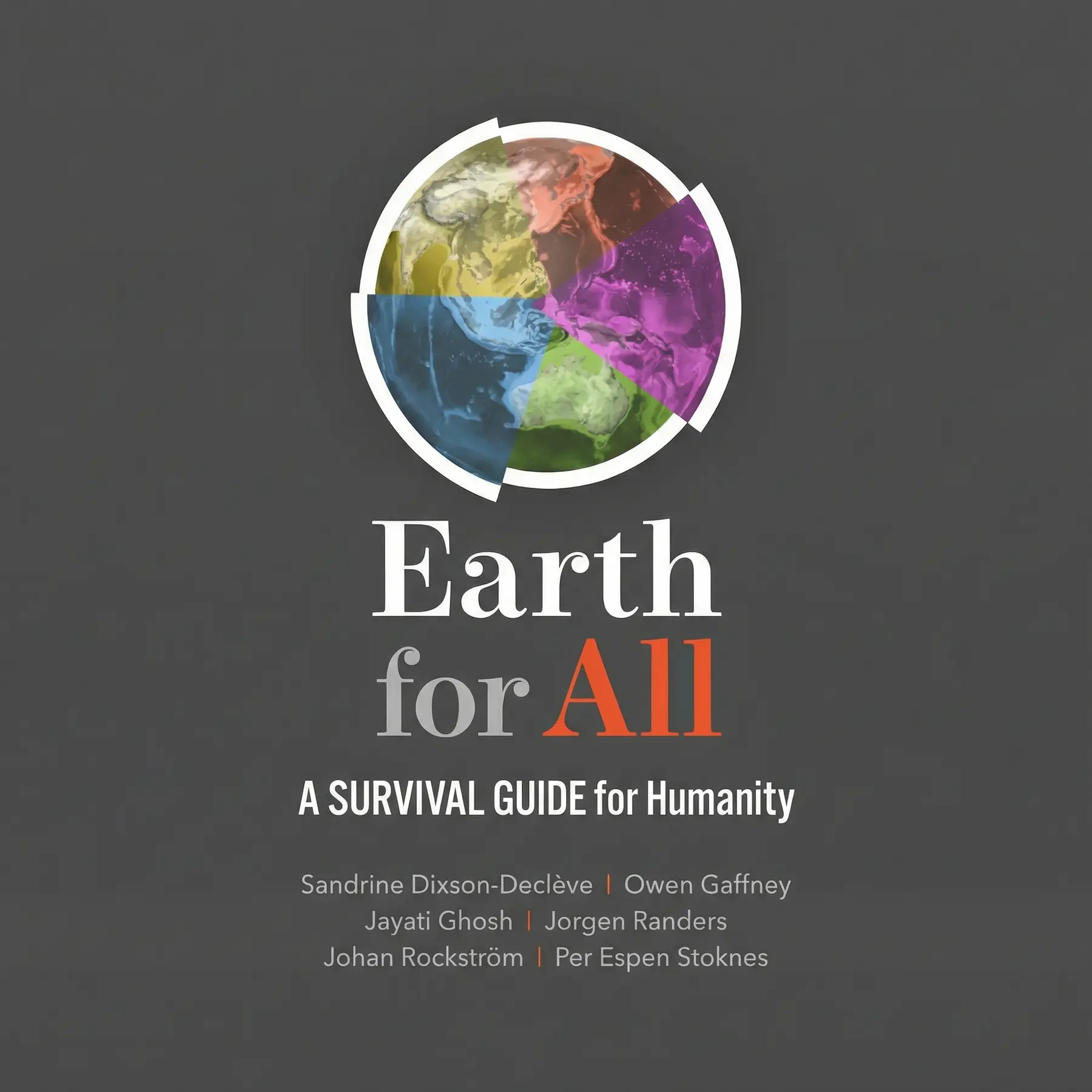
Earth for All: A Survival Guide for Humanity
By Sandrine Dixson-Decleve, Owen Gaffney, Jayati Ghosh, Jorgen Randers, Johan Rockstrom, Per Espen Stoknes
Earth for All presents a visionary roadmap for a sustainable future, outlining five transformative shifts in economics, energy, and food systems to overcome global inequality and prevent total ecological collapse.
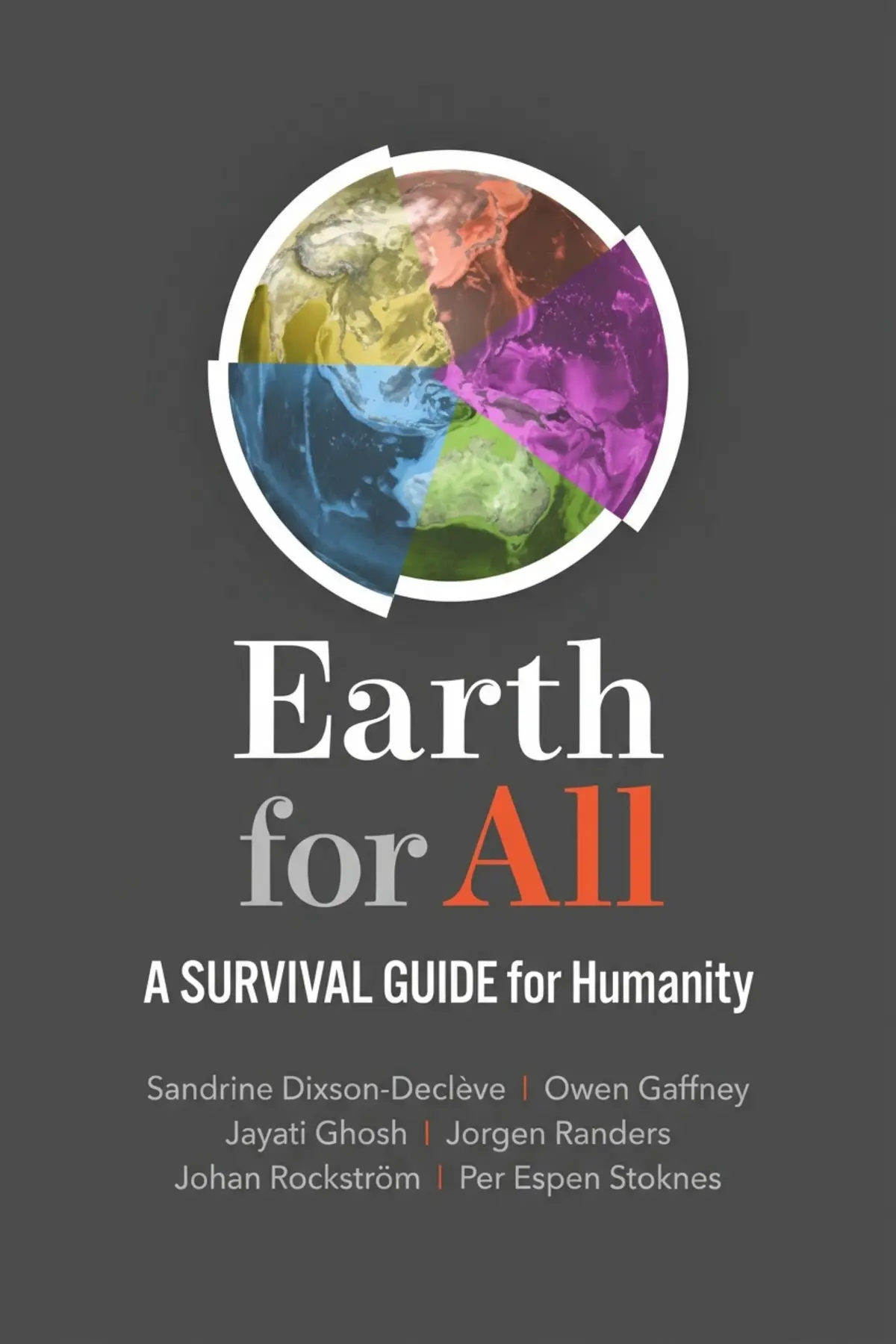
Table of Content
1. Introduction
2 min 11 sec
We are currently living through a pivotal moment in human history, standing at a crossroads where the decisions we make in the next decade will echo for centuries. Our planet is showing undeniable signs of strain, with ecological systems teetering on the edge of collapse and social structures fracturing under the weight of extreme inequality. It is a time defined by deep-seated anxieties about the future, yet it is also a time of unprecedented potential for transformation. The pain points of our modern world are impossible to ignore: a stubborn reliance on the very fossil fuels that warm our atmosphere, agricultural practices that deplete the soil they depend on, and a global economic model that allows wealth to accumulate at the top while billions struggle for basic dignity.
In this exploration of the path forward, we are presented with two distinct trajectories for our civilization. The first is a scenario often referred to as ‘Too Little Too Late.’ This is the path of least resistance, where we continue with incremental changes while maintaining the status quo of industrial growth at any cost. In this future, inequality continues to widen, and global temperatures climb far beyond the limits set by international agreements. We see a world of megadroughts, widespread famine, and mass migrations as large swaths of the planet become uninhabitable. It is a bleak outlook, but it is not the only option.
The alternative is the ‘Giant Leap.’ This is a vision of a rapid, large-scale systemic overhaul of how we live, trade, and interact with the natural world. It is a daunting prospect, requiring us to rethink everything from the way we generate power to the way we distribute wealth. However, it is also a path of immense hope. By addressing the root causes of poverty, population growth, and resource insecurity, we can create a world that is not just sustainable, but truly equitable. This throughline—that planetary health and human prosperity are inseparable—is the foundation of the ‘Giant Leap.’ Over the next segments, we will dive into the specific turnarounds necessary to make this leap a reality, moving from the systemic flaws of today to the solutions of tomorrow.
2. The Economic Barrier of Inequality
2 min 44 sec
Explore why the current distribution of global wealth is a primary obstacle to saving the environment and how debt prevents progress.
3. Empowerment as a Demographic Solution
2 min 45 sec
Discover how investing in women’s education and universal basic income can stabilize global population and drive economic growth.
4. A New Paradigm for Food and Farming
2 min 32 sec
Learn how shifting from industrial monocultures to regenerative agriculture can heal the soil and feed the world sustainably.
5. The End of the Carbon Age
2 min 14 sec
Understand the necessary transition from fossil fuels to an electrified world and the role of systemic efficiency.
6. Mobilizing for a Giant Leap
2 min 12 sec
Discover why collective action and radical political shifts are the final keys to securing a livable future.
7. Conclusion
1 min 15 sec
As we conclude this journey through the vision of Earth for All, the message is clear: the status quo is no longer an option. We are at a moment of profound choice between a future of mounting crises and a future of shared prosperity. The path of the ‘Giant Leap’ is a call to move beyond the outdated economic and industrial models that have brought us to this brink. By focusing on the five essential turnarounds—addressing poverty, inequality, empowerment, food, and energy—we can build a resilient foundation for the generations to come.
This is not a utopian dream, but a practical survival guide. The transition to a circular, equitable, and green economy is already beginning in corners of the world, driven by both technological innovation and grassroots social pressure. What matters now is speed and scale. We must move from awareness to action, advocating for the systemic changes that treat the Earth’s resources as a common good and human well-being as the ultimate goal of our economic systems. The future is not yet written, and by embracing the radical shifts outlined here, we can ensure that the story of the twenty-first century is one of an extraordinary turnaround and a flourishing Earth for all.
About this book
What is this book about?
Earth for All is a definitive survival guide for the twenty-first century, born from the collaboration of world-leading economists and scientists. It addresses the intersecting crises of climate change, extreme wealth inequality, and social instability. The book contrasts two futures: a path of continued neglect leading to societal breakdown, and a 'Giant Leap' that prioritizes human well-being and planetary health. By examining the structural flaws in our current global system—such as the burden of debt on low-income nations and the destructive nature of industrial agriculture—the authors propose five radical 'turnarounds.' These include ending poverty, addressing gross inequality, empowering women, transforming food systems, and transitioning to clean energy. It is a call to action for systemic change, offering a pragmatic yet hopeful vision of a world where both humanity and nature can flourish together.
Book Information
About the Author
Sandrine Dixson-Decleve
The Earth4All collective brings together leading economists, scientists, and ecological advocates to secure a flourishing future for humanity. In Earth for All, authors Sandrine Dixson-Declève, Owen Gaffney, Jayati Ghosh, Jørgen Randers, Johan Rockström, and Per Espen Stoknes challenge us to rethink our relationship with capitalism and industry, with an objective of securing the sweeping systemic change necessary to save the planet.
Ratings & Reviews
Ratings at a glance
What people think
Listeners find *Earth for All* to be a persuasive and data-backed exploration of how planetary health and social disparity are linked. The audience enjoys the optimistic perspective offered by the book’s thorough projections, and one listener highlights how well it bridges the gap between environmental viability and the quality of human life. Furthermore, listeners respect the writers’ pressing demand for an economic transformation focused on people; they also observe that the text offers a crucial structure for seeing why fairness is essential for long-term ecology. However, perspectives differ regarding the real-world utility of the concepts, with some listeners suggesting the proposed solutions are either overly complex or missing the concrete political strategies required for immediate use.
Top reviews
Muk
After years of doom-scrolling through climate reports, this feels like a much-needed breath of fresh air. The authors don't just point out the cracks in our foundation; they provide a structural blueprint for a 'Giant Leap' that actually feels achievable. By grounding their arguments in rigorous scientific modeling, they demonstrate that equity isn't just a moral goal—it's a survival mechanism. I was particularly struck by how they link universal education and gender equality directly to environmental stability. It’s a dense read at times, but the vision of a world that prioritizes human well-being over raw GDP is incredibly moving. If we want a livable future by 2100, this is the manual we need to start following today. It’s time we stop settling for minor policy tweaks and start demanding the systemic shift this book so eloquently describes.
Show moreKai
Finally, someone is saying out loud that the economic status quo is the real extinction event. This book is essentially the updated version of the 'Limits to Growth' report, but with a much more hopeful, solution-oriented spin. I loved how it connects the dots between human-centered economies and planetary boundaries, proving that we can't have one without the other. The two scenarios presented—'Too Little Too Late' versus 'The Giant Leap'—provide a stark and necessary contrast for our future. In my experience, most climate books ignore the social tension caused by the 1% consuming the lion's share of resources. This book puts that tension front and center. It is an urgent call for a radical shift that prioritizes the global majority over corporate interests. Truly a must-read for anyone who cares about democracy and the environment.
Show moreManop
The connection between domestic political stability and global species loss was a total lightbulb moment for me. We often think of conservation as a separate issue from economics, but this book proves they are inextricably linked. If a nation is crippled by inequality, it lacks the representative government necessary to tackle long-term problems like biodiversity loss. Look, the list of things we need to fix is getting longer, but the authors show how these problems all stem from the same extractive systems. By fixing the economy, we essentially fix the climate and our social fabric simultaneously. It’s a dense, overwhelming read at times, but it’s ultimately an empowering one. This book isn't just about surviving; it's about thriving in a way that respects the Earth's limits. I feel more equipped to talk about systemic change after finishing this.
Show moreRatchada
Ever wonder why the top 1% continues to pollute while the rest of us are told to recycle our toothbrushes? This book dives deep into that hypocrisy and offers a scientifically valid approach to fixing it. The Earth4All project is an ambitious attempt to model a future where humanity gets it right, and it’s surprisingly hopeful. I appreciated the emphasis on how equity drives sustainability; it’s a perspective that is often missing from more mainstream environmental literature. The writing is urgent and clear, making complex systemic problems feel understandable. Truth is, we are at a crossroads, and the 'Too Little Too Late' scenario is already starting to play out in real-time. This book provides the alternate path we desperately need. It’s a powerful, human-centered vision for the 21st century that everyone should engage with.
Show moreUbolwan
While the scientific modeling presented by the Club of Rome is undeniably impressive, the real heart of this book is its radical empathy. It suggests that the only way to save the planet is to ensure that everyone on it has enough to live a dignified life. This intersection of human rights and environmentalism is exactly what the climate movement has been missing. The authors don't just ask for policy tweaks; they demand a whole new human-centered economy that works for the 99%. I was fascinated by the discussion on how the Global North’s responsibility is tied to the debt and development of the Global South. It’s a complex, multi-layered argument that feels both realistic and revolutionary. If you're tired of gloom and doom and want a roadmap for real change, this is it.
Show moreYuwadee
Can we actually solve poverty and save the planet at the same time? This book argues a resounding 'yes,' but only if we are willing to upend the current economic status quo. The research into how inequality drives political instability was a huge eye-opener for me. When people are forced into short-term survival mode, long-term environmental health always takes a backseat. The authors provide a compelling investigation into these connections, showing that a fairer distribution of wealth is the only way to ensure climate cooperation. To be fair, some of the economic transitions they propose seem a bit optimistic given the current political climate. However, the data is hard to argue with. It’s a vital framework for anyone trying to understand why our current efforts aren't moving the needle fast enough.
Show morePenelope
Picked this up because I wanted to see if the authors could back up their optimistic claims with actual data, and they definitely delivered. The scientific grounding of the five turnarounds—poverty, inequality, empowerment, food, and energy—makes for a very compelling argument. It’s similar to 'Drawdown' in its solution-based approach, but with a much sharper focus on the underlying economic drivers. I did find the writing style to be a bit dry in the middle chapters, as it leans heavily into technical modeling. Not gonna lie, I wished there was more discussion on how to handle the inevitable pushback from arms manufacturers and fossil fuel giants. Despite those minor gripes, the book effectively connects the dots between our well-being and a livable environmental future. It’s a hopeful, data-driven look at how we might actually make it through this century.
Show morePan
Look, the 'Giant Leap' path outlined in these pages is daunting, but it’s the only map we have that actually leads somewhere livable. The way the authors connect the dots between education, sexism, and fossil fuel dependency creates a dense web of solutions where one win helps achieve the others. I’ve always suspected that inequality was the hidden hand behind our climate failures, and seeing the scientific grounding for that theory was incredibly validating. Personally, I found the section on how political instability prevents long-term environmental planning to be the most salient part of the whole investigation. We have the solutions right in front of us, and this book proves it’s strictly a matter of collective will now. It’s a bit technical for the casual reader, but the message is too important to ignore.
Show moreSupaporn
Techno-utopianism seems to be the underlying vibe here, but the recipes for success feel like they are missing several essential ingredients. While I appreciate the scientific rigor behind the Earth4All modeling, the transition from theory to actual political will feels like a bridge too far. The authors propose a massive systemic shift that assumes the global elite will simply allow their wealth to be redistributed for the common good. Frankly, for a climate nerd looking for deep dives into IMF debt structures or specific legislative frameworks, this stays a bit too surface-level. It’s an important framework for understanding the mess we are in, but it lacks the specific, actionable grit needed to actually dismantle the neoliberal status quo. It’s a nice vision, but the 'how-to' part of the equation remains frustratingly vague.
Show moreWatchara
This book prescribes a mere bandage for what is clearly a festering, systemic wound in our global architecture. The writers seem hesitant to truly speak truth to power, opting instead for anodyne UN aesthetics that won't ruffle any feathers in the boardroom. It’s an open secret that neoliberal capitalism is the engine of our destruction, yet the solutions here feel like 'drink more water' as a cure for a terminal illness. I found the scenarios interesting as a technical exercise, but the actual political actionability is virtually zero. Truth is, we don't need more clever modeling; we need a radical, ecosocialist shift that the authors are too afraid to advocate for. Fifty years from now, people will look at this pathetic attempt at reform and laugh at our lack of courage.
Show moreReaders also enjoyed

Adults in The Room: My Battle With Europe’s Deep Establishment
Yanis Varoufakis

1929: Inside the Greatest Crash in Wall Street History--and How It
Andrew Ross Sorkin
23 Things They Don’t Tell You About Capitalism
Ha-Joon Chang
A Little History of Economics
Niall Kishtainy
A Splendid Exchange: How Trade Shaped the World
William J. Bernstein
AUDIO SUMMARY AVAILABLE
Listen to Earth for All in 15 minutes
Get the key ideas from Earth for All by Sandrine Dixson-Decleve, plus 5,000+ more titles in English and Thai.
- 5,000+ titles
- Listen as much as you want
- 7-day free trial
- Cancel anytime







