
16 min 57 sec
Either/Or: A Fragment of Life
Either/Or explores the profound tension between a life of pleasure and a life of duty. Søren Kierkegaard presents a radical choice between the aesthetic and ethical paths, defining modern existentialism.
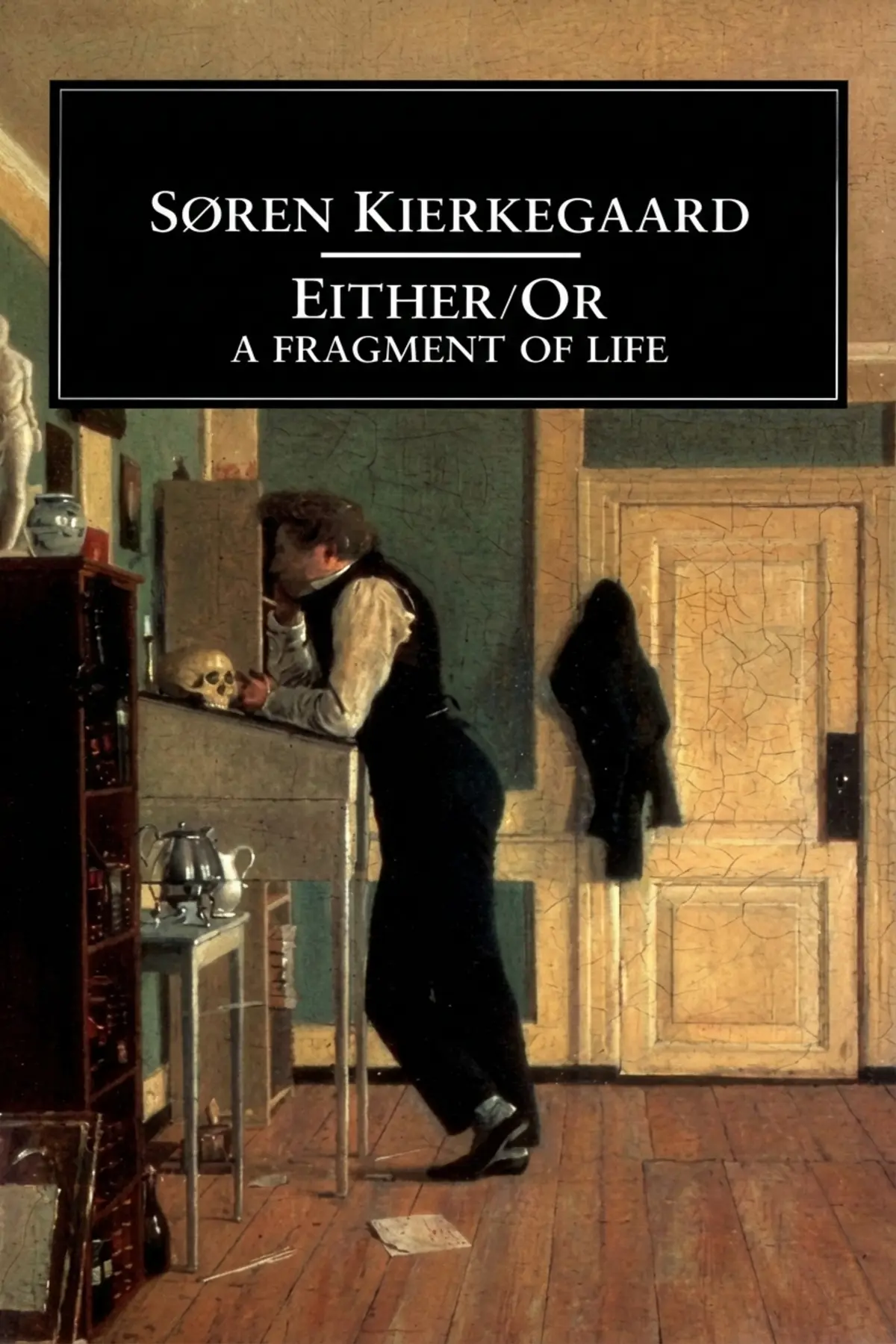
Table of Content
1. Introduction
1 min 31 sec
When we think of philosophy, we often imagine cold, abstract logic or dusty systems of thought that have little to do with our daily struggles. But when we step into the world of Søren Kierkegaard, we find something entirely different. He wasn’t interested in building a grand, universal theory of everything. Instead, he was interested in you—the individual. He wanted to know how a person decides to wake up in the morning and face the crushing weight of existence. His landmark work, Either/Or, serves as a startling mirror for the human soul, reflecting the two primary ways we attempt to find meaning in a world that often feels chaotic and indifferent.
The throughline of this exploration is the concept of radical choice. Kierkegaard suggests that we aren’t just born into a pre-packaged meaning; we have to choose it. But that choice isn’t easy. It involves a constant struggle between our desire for immediate, sparkling pleasure and our pull toward deep, lasting responsibility. As we move through this summary, we will see how Kierkegaard uses fictional voices to illustrate these paths, how he defines the peculiar anxiety that comes with being free, and why he ultimately believes that the only way to survive the absurdity of life is to embrace it with a sense of humor and a leap of faith. This isn’t just a book about ideas; it’s a fragment of life itself, inviting us to stop drifting and start choosing.
2. A Foundation Built on Early Sorrow
2 min 01 sec
How did a life marked by profound personal loss lead to one of the most significant philosophical shifts in Western history?
3. The Aesthetic Path and the Fear of Boredom
1 min 57 sec
What happens when we live solely for the moment, chasing beauty and pleasure to escape the dullness of the everyday?
4. The Ethical Path and the Weight of Duty
1 min 55 sec
Is a life of social responsibility and moral commitment the true answer to the emptiness of pleasure-seeking?
5. The Radical Choice and the Problem of Either/Or
1 min 48 sec
Why can’t we simply balance pleasure and duty, and what does the title of the book reveal about our deepest struggles?
6. Anxiety as the Dizziness of Freedom
1 min 54 sec
Why does the ability to choose our own path often feel more like a burden than a gift?
7. The Supremacy of Subjective Truth
2 min 00 sec
If universal laws and logic can’t explain the meaning of life, where should we look for the truth?
8. Embracing the Absurd with a Laugh
1 min 58 sec
When faced with a universe that offers no clear answers, is laughter the most rational response?
9. Conclusion
1 min 53 sec
The journey through Søren Kierkegaard’s Either/Or is not one that ends with a neat set of instructions. Instead, it leaves us exactly where we started: in the driver’s seat of our own lives, facing a road with no clear signs. We have explored the seductive, shimmering world of the aesthete, who lives for the moment but risks drowning in the emptiness of the next. We have considered the stable, dutiful world of the ethical judge, who finds meaning in commitment but risks losing his individual soul to social conformity. We have seen how the ‘dizziness’ of our own freedom is both our greatest burden and our highest dignity.
Kierkegaard’s ultimate message is that there is no escaping the choice. You are currently living out an ‘either’ or an ‘or,’ whether you realize it or not. The tragedy of many lives is not that people choose the ‘wrong’ path, but that they never choose at all—they simply drift, letting circumstances and social pressures decide for them. Kierkegaard calls us to wake up. He asks us to take ownership of our subjectivity and to realize that the truth of our lives is something we create through our actions and our passions.
As you move forward, remember the ‘melancholy Dane’ who found a way to laugh at the absurdity of it all. Life may be a fragment, it may be uncertain, and it may be heavy with anxiety, but it is also an opportunity for a radical, wonderful leap of faith. Don’t wait for a grand system to tell you how to live. Look at the choices before you, acknowledge the dizziness, and then, with all the passion you can muster, make your move. In the end, the meaning of your life is not something you find; it is something you choose.
About this book
What is this book about?
What does it mean to truly live? This is the central question of Søren Kierkegaard’s foundational work. Written through a series of fictional letters and papers discovered in a desk, the text presents a vibrant dialogue between two opposing worldviews. On one side, we find the aesthetic approach, which prioritizes personal enjoyment, artistic spark, and the desperate flight from boredom. On the other side, we encounter the ethical approach, which champions commitment, social responsibility, and the stability of moral character. Kierkegaard does not simply offer a dry academic comparison. Instead, he invites the listener to experience the internal reality of these lifestyles. He explores the deep-seated anxiety that comes with human freedom, the subjective nature of truth, and the eventual realization that human existence is inherently absurd. By refusing to provide a tidy middle ground, the book promises to challenge your assumptions about happiness and duty, forcing you to confront the weight of your own choices. It is a guide to navigating the 'dizziness' of being free in an uncertain world.
Book Information
About the Author
Soren Kierkegaard
Søren Kierkegaard was a highly influential Danish philosopher and religious thinker who lived from 1813 to 1855. He is widely recognized as a founder of existentialism. Throughout his prolific career, he produced major works including Either/Or, Fear and Trembling, and Philosophical Fragments. Other significant titles include Stages on Life’s Way, The Concept of Anxiety, and The Sickness Unto Death. His writing often utilized pseudonyms and literary structures to explore the complexities of faith, subjectivity, and individual choice.
Ratings & Reviews
Ratings at a glance
What people think
Listeners find the text accessible and value its existential concepts, with one listener characterizing it as a magnificent study of the human condition. Opinions regarding the work's pacing are divided.
Top reviews
Manee
This work is a profound architecture of the soul that demands your absolute attention. Kierkegaard uses his pseudonyms, A and B, to create a dialectic that feels more like a living conversation than a dry philosophical treatise. The aesthetic sections are hauntingly beautiful, especially the chillingly calculated 'Seducer’s Diary' which explores the limits of sensory pleasure. However, the letters from the Judge in the second half provide a sobering, necessary counterweight to that frantic search for novelty. Truthfully, the transition from the fragmented aphorisms of 'Either' to the structured ethical defense of 'Or' is a stroke of pure genius. It forces you to confront the reality of your own choices and the weight of your commitments. While the prose can be dense and heavy with 19th-century references, the emotional payoff is unmatched. This is a rare book that actually succeeds in changing how you view the progression of your own life.
Show moreAubrey
Picked this up during a personal crisis and found it to be exactly the intellectual medicine I needed. Kierkegaard doesn't give you easy answers or a step-by-step guide to happiness. Instead, he presents two incompatible ways of living and leaves the terrifying burden of choice entirely on your shoulders. The section on Mozart’s Don Giovanni is one of the most brilliant pieces of music criticism I have ever encountered. It perfectly illustrates the raw, immediate power of the aesthetic life before it collapses into despair. Then comes the Judge, who argues that the only way to truly find yourself is through ethical commitment. This tension between the moment and the eternal is something I think about every single day now. The prose is lyrical and often surprisingly funny, despite the heavy subject matter. It is a masterpiece that demands to be wrestled with, not just read once and shelved.
Show moreThawee
Rarely does a philosopher manage to be so poetic while also being so utterly clinical about the human condition. This book is a labyrinth of pseudonyms and conflicting viewpoints that forces the reader to become an active participant. I found 'The Unhappiest One' to be one of the most moving essays I have ever read. It perfectly captures the specific kind of pain that comes from being unable to live in the present moment. Kierkegaard’s ability to jump between different writing styles is a testament to his sheer literary genius. He can be bitingly sarcastic in one paragraph and deeply devout in the next without it feeling forced. The ethical defense of marriage in the second volume provides a fascinating contrast to the hollow seductions of the first part. It’s a demanding text, but it offers a level of insight that few other books can match. This is truly a cornerstone of Western philosophy.
Show moreAna
Kierkegaard is a genius who knows exactly how to make you feel like an idiot while simultaneously expanding your mind. This book is basically the ultimate 'choose your own adventure' for people who are having an existential crisis. You are presented with the life of the aesthete—all music, pleasure, and fleeting moments—and the life of the ethical man. Both sides are argued with such conviction that it is hard to know where the author actually stands. Personally, I found the analysis of ancient vs. modern tragedy to be absolutely fascinating and totally unique. The writing is incredibly dense, but it has a rhythm to it that becomes quite addictive once you get used to it. It tackles the big questions about God, love, and purpose without ever becoming overly sentimental or simplistic. If you are willing to put in the time, this book will reward you with a completely new perspective on life.
Show moreYongyut
After hearing the Elliott Smith album for years, I finally decided to dive into the source material. It is a massive, sprawling journey that definitely requires some serious mental stamina to finish. The first volume is incredibly captivating, filled with sharp observations on boredom and the tragic nature of modern existence. I found the 'Crop Rotation' essay to be particularly relevant to our current age of constant digital distraction. To be fair, the second volume featuring Judge Wilhelm’s long-winded letters on marriage and duty can feel a bit repetitive. He drones on quite a bit, making it hard to stay engaged during the middle sections. Yet, the contrast between the two lifestyles is exactly what makes the book work so well. It captures that universal tension between wanting total freedom and needing a stable sense of self. It is a magnificent study of the human condition that remains surprisingly relatable today.
Show moreMaksim
Ever wonder why staying busy feels like a trap? Kierkegaard explores this beautifully through his 'Either' persona, arguing that boredom is the root of all evil. The psychological depth of the 'Seducer’s Diary' is both impressive and deeply unsettling to read. He captures the nuances of human manipulation with a precision that feels almost surgical. Transitioning into the 'Or' section was a bit of a culture shock, as the tone shifts from poetic irony to stern morality. The Judge’s defense of marriage as a synthesis of the aesthetic and the ethical is actually quite moving. Look, the writing is undeniably verbose and requires you to re-read sentences multiple times to catch the subtext. It isn't a book you just breeze through over a weekend. However, the golden nuggets of wisdom buried in the dense paragraphs make the effort worthwhile. It’s a challenging but ultimately rewarding exploration of what it means to be a person.
Show moreSoontorn
The chapter on Mozart’s Don Giovanni is arguably the highlight of this entire massive collection. Kierkegaard, writing as 'A,' captures the essence of desire and musical expression with an intensity that is truly rare. I was completely swept up in the aesthetic arguments, which made the sudden shift to Judge Wilhelm’s letters quite jarring. The Judge can be incredibly patronizing and his views on women are definitely products of the 19th century. That being said, his insights into the nature of choice and self-actualization are genuinely profound. He argues that even if you choose wrongly, the act of choosing itself is what makes you an individual. This perspective is a powerful antidote to the indecisiveness that plagues so many of us in the modern world. While the book is undeniably long and occasionally tiresome, its brilliance is impossible to deny. It remains a foundational text for anyone interested in the origins of existential thought.
Show moreSamart
Look, I’ll be the first to admit that Judge Wilhelm can be a real drag in the second half. His letters are dense, preachy, and they seem to go on for an eternity without any breaks. But maybe that’s the point Kierkegaard was trying to make about the stability of the ethical life. The first half is so full of fire, passion, and artistic despair that you almost need the Judge’s boredom to ground you. The 'Shadowgraphs' essay was a personal favorite, offering a deep psychological dive into the nature of hidden sorrow. You can see how this book paved the way for thinkers like Nietzsche and Sartre. It deals with the anxiety of freedom in a way that feels incredibly modern and urgent. Even if you don’t agree with the religious conclusion, the journey through these different perspectives is fascinating. It’s a dense read, but one that stays with you long after the final page.
Show moreSupaporn
Not what I expected, to be perfectly frank. I came for the existentialism but found myself drowning in pages of Hegelian jargon and obscure references to old Danish theater plays. The structure of 'papers found in an old desk' is a cool framing device, but it gets lost in the sheer volume of text. I loved the short, punchy aphorisms at the beginning of the first part. They feel modern and cynical in a way that really resonates with the frustrations of living. Unfortunately, the pacing slows to a crawl once you reach the ethical section. The Judge is an exhausting character who seems to enjoy the sound of his own voice far too much. While I appreciate the intellectual depth, the book could have been half as long without losing its primary message. It is certainly a landmark in philosophy, but I wouldn't call it an easy or particularly enjoyable read for everyone.
Show moreChamp
Frankly, the pseudonymous structure felt more like a barrier than a clever literary device to me. I understand that Kierkegaard wanted to distance himself from the arguments, but it just made the reading experience confusing. The book is incredibly repetitive, especially in the second half where the Judge repeats the same ethical points ad nauseam. I found it very difficult to stay focused through the endless paragraphs of dense, 19th-century prose. To be fair, there are some brilliant aphorisms scattered throughout the first section that I really enjoyed. However, those few gems don't justify sloging through nearly a thousand pages of what often feels like filler. The pacing is all over the place and the lack of a clear conclusion is frustrating for someone looking for actual answers. It might be historically important, but as a reading experience, it was largely a disappointment for me.
Show moreFeatured in
Readers also enjoyed
A Guide to the Good Life: The Ancient Art of Stoic Joy
William B. Irvine
A Little History of Philosophy
Nigel Warburton
A Theory of Justice
John Rawls
Anarchism: A Very Short Introduction
Colin Ward
Anarchy, State, and Utopia
Robert Nozick
Antifragile: Things That Gain from Disorder
Nassim Nicholas Taleb
AUDIO SUMMARY AVAILABLE
Listen to Either/Or in 15 minutes
Get the key ideas from Either/Or by Soren Kierkegaard, plus 5,000+ more titles in English and Thai.
- 5,000+ titles
- Listen as much as you want
- 7-day free trial
- Cancel anytime







