

18 min 28 sec
Emotional Blackmail: When the People in Your Life Use Fear, Obligation, and Guilt to Manipulate You
Discover how to identify and dismantle the hidden manipulation in your closest relationships. This guide exposes the tactics of emotional blackmailers and provides clear strategies to regain your autonomy and self-respect.
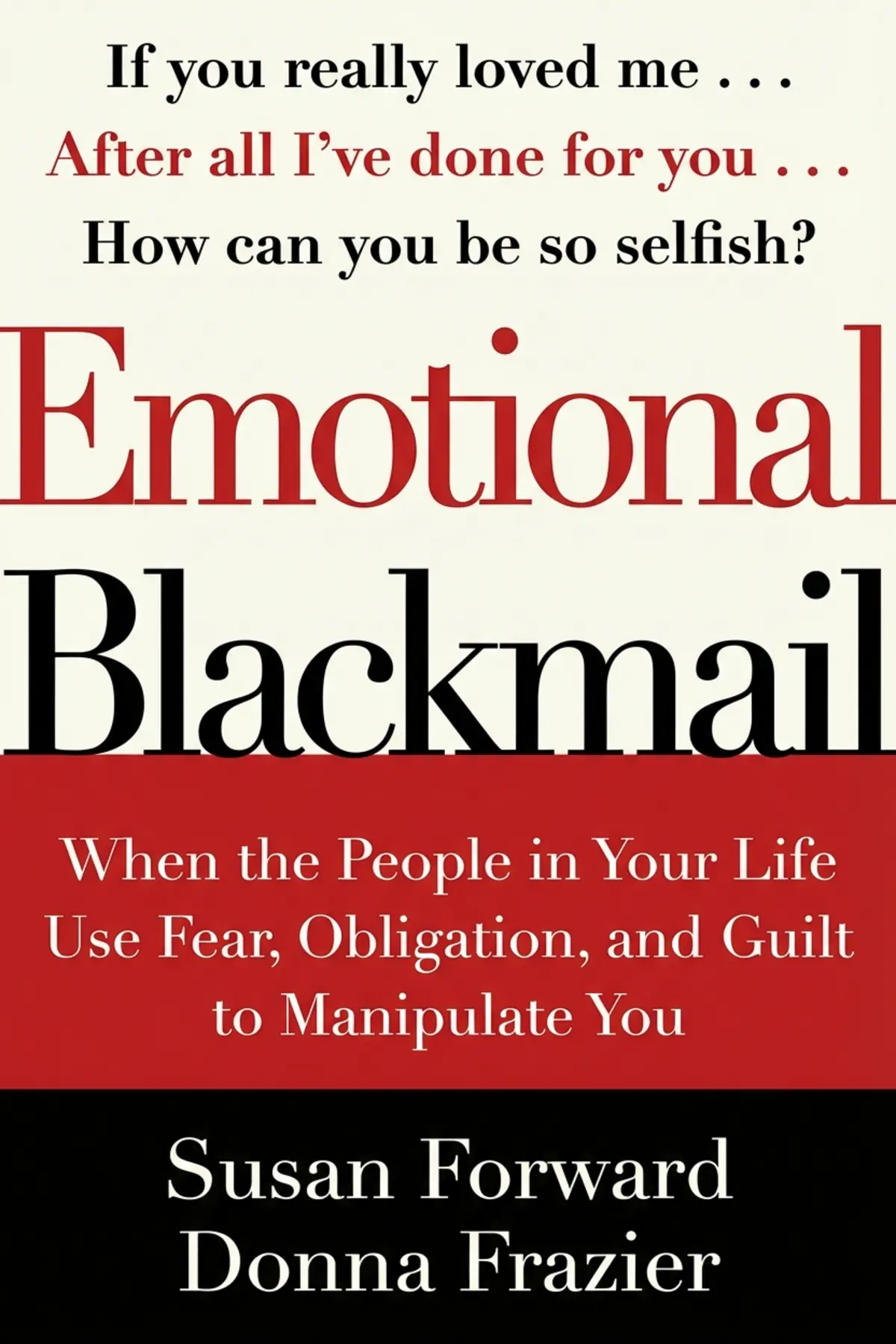
Table of Content
1. Introduction
1 min 52 sec
Imagine the people you love most in the world—your partner, your parents, your closest friends. These are the individuals who know you better than anyone else. They know your dreams, your history, and perhaps most importantly, your deepest insecurities. Because of this intimacy, they hold a unique kind of power. Usually, that power is used to support and uplift you. But sometimes, it can be used as a tool for control. This is the realm of emotional blackmail.
It’s a heavy term, isn’t it? We usually associate blackmail with shadowy figures, secret documents, and criminal intent. But emotional blackmail is far more common and occurs right in the heart of our private lives. It is a subtle, often invisible form of manipulation where someone close to you uses your own feelings of fear, obligation, and guilt to ensure you do exactly what they want. It’s a form of extortion where the currency is your emotional well-being.
In this guide, we are going to explore how these dynamics take root. We will look at why it’s so easy to fall into these traps and why we often choose to look the other way even when we know something is wrong. We’ll examine the specific psychological mechanics that allow blackmailers to operate and, more importantly, the vulnerabilities within ourselves that might make us susceptible to their tactics.
By the end of this journey, the goal is to lift the haze of confusion. You will learn to identify the warning signs, understand the cycle of manipulation, and acquire the practical tools needed to stand your ground. You don’t have to live in a state of constant appeasement. It is possible to restore balance, set healthy boundaries, and ensure that your relationships are built on a foundation of genuine respect rather than emotional coercion. Let’s begin by uncovering the hidden nature of these everyday manipulations.
2. The Nature of Emotional Extortion
2 min 05 sec
Explore why emotional blackmail is often invisible in our most intimate circles and how it operates through a fundamental threat to our emotional security and happiness.
3. The Six Stages of the Blackmail Cycle
2 min 15 sec
Learn to identify the recurring patterns of manipulation by examining the six distinct symptoms that escalate from a simple disagreement to a repeated cycle of control.
4. Living in the FOG
2 min 08 sec
Understand the three powerful tools—Fear, Obligation, and Guilt—that blackmailers use to cloud your judgment and keep you from seeing the true state of your relationship.
5. The Divide Between Conflict and Control
2 min 00 sec
Discover the crucial difference between a partner who wants to solve a problem and one who simply wants to win at your expense.
6. Susceptibility and the Role of the Enabler
2 min 08 sec
Examine the personality traits that might make you more vulnerable to manipulation and understand how giving in can accidentally reinforce the cycle.
7. Strategies for Immediate Resistance
1 min 57 sec
Discover how to break the momentum of a blackmailer by buying yourself time and observing the situation with a detached, objective perspective.
8. Establishing Boundaries and Assertive Communication
2 min 11 sec
Learn how to effectively communicate your limits and transform your interactions through calm, firm, and non-combative boundary setting.
9. Conclusion
1 min 52 sec
We have traveled through the difficult terrain of emotional blackmail, from its subtle beginnings to the complex cycles of fear, obligation, and guilt that can keep us trapped. The journey toward freedom starts with the simple act of noticing. When you begin to recognize the symptoms—the pressure, the threats, and the hollow feeling of compliance—you are already breaking the spell. You are no longer a passive participant in the manipulation; you are an observer starting to reclaim your power.
The throughline of our exploration is that you are not responsible for another person’s happiness at the expense of your own integrity. While it feels virtuous to be a ‘giver’ or a ‘saver,’ when these traits are weaponized against you, they become chains. By learning to buy yourself time, detaching from the emotional crisis, and speaking your truth with calm assertion, you begin to dismantle those chains piece by piece. You are teaching the people in your life that your needs are valid and that your boundaries are not negotiable.
As you move forward, keep a close watch on your inner voice. If you feel a surge of guilt or a flash of fear when you consider saying ‘no,’ stop and look at the FOG. Ask yourself if those feelings are a response to a real mistake or a reaction to a manipulative tactic. The more you practice standing your ground, the stronger you will become. Some relationships will grow and adapt to these new boundaries, becoming healthier and more respectful. Others may not survive the shift. Regardless of the outcome for the relationship, the outcome for you is the same: the return of your self-respect and the ability to live a life free from emotional extortion. You deserve to be in relationships where love is a gift, not a demand, and where your ‘yes’ and your ‘no’ are both treated with equal value.
About this book
What is this book about?
Have you ever felt trapped by the demands of a loved one, finding yourself complying just to avoid a fight or a wave of guilt? This is the core of emotional blackmail, a powerful form of manipulation where the people closest to us use fear, obligation, and guilt to get their way. It’s a dynamic that can erode your self-esteem and leave you feeling helpless, but it doesn’t have to stay that way. This summary provides a deep dive into the mechanics of emotional manipulation. You will learn to recognize the subtle symptoms of a blackmailing cycle—from initial resistance to the eventual, repeated compliance that keeps you stuck. By understanding the 'FOG'—fear, obligation, and guilt—you can begin to see through the confusion and reclaim your voice. The promise of this work is not just about identifying the problem, but providing a roadmap for resolution. You’ll explore practical communication shifts, methods for setting firm boundaries, and ways to distinguish healthy conflict resolution from toxic control. Whether you are dealing with a partner, parent, or friend, you will find the tools necessary to end the cycle of extortion and build relationships based on mutual respect and honesty.
Book Information
About the Author
Susan Forward
Susan Forward, PhD, is a highly respected therapist and an internationally recognized authority on relationship and familial conflicts. Her work has guided countless individuals through the complexities of difficult dynamics. She is the author of several influential books, including the number one New York Times bestsellers Men Who Hate Women and the Women Who Love Them and Toxic Parents.
Ratings & Reviews
Ratings at a glance
What people think
Listeners describe this work as clear and accessible, offering valuable insights that help them contextualize and process their own life events. They also value the actionable methods and clinical guidance provided, highlighting its potential to transform lives and help individuals reclaim their independence. Furthermore, the guide clearly explains the concept of emotional manipulation within interpersonal bonds, and one listener pointed out how well it covers the complexities of family and social circles.
Top reviews
Leila
This book changed how I view every difficult conversation in my life. Frankly, I never had a word for that heavy feeling of dread when dealing with my parents, but Forward defines it perfectly as the 'FOG'—fear, obligation, and guilt. The way she breaks down how manipulators use our own conscience against us was a massive eye-opener for me. It isn't just a list of complaints; it’s a manual for regaining control. I appreciated the practical strategies for setting boundaries without being unnecessarily cruel. For the first time, I feel like I have the tools to negotiate instead of just caving in to keep the peace. If you’ve ever felt like you were being held hostage by someone else's emotions, you need to read this immediately. It is life-saving advice wrapped in a very easy-to-understand package.
Show morePongpan
After hearing about Susan Forward's work for years, I finally dove into this, and it felt like she was reading my mind. This isn't just some dry psychology text; it’s a powerful guide for anyone who feels trapped in a toxic cycle. Truth is, I was a chronic people-pleaser until I read the sections on 'Fear of Abandonment' and 'Fear of Change.' The book gives you actual scripts to use when someone tries to guilt-trip you. I’ve recommended this to over a dozen people because everyone has someone in their life who uses emotional tactics to get what they want. It really helps you distinguish between making someone suffer and simply letting them face the consequences of their own actions. Truly amazing and highly recommended for your mental health.
Show moreYulia
As a mental health professional, I find this remains one of the most accessible resources for patients trapped in high-conflict cycles. Forward and Frazier have a way of simplifying complex psychological defense mechanisms into something the average person can use. The concept of 'Fear, Obligation, and Guilt' is a cornerstone of forensic psychology, and seeing it explained so clearly here is wonderful. It teaches readers that disapproval is merely a weapon used to coerce compliance. Rescuing people from themselves harms everyone involved. This book provides a clear path toward standing up for oneself without losing one's empathy. It is absolutely one of my favorite books on the subject. If you want to understand how manipulation tactics actually work in real-time, buy this book today.
Show moreNoo
Wow. Just wow. Picked this up on a whim and it was exactly what I needed. I’ve spent years feeling like I had to comply with outrageous demands just to keep the 'peace' at home. This book taught me that peace at the cost of your own integrity isn't peace at all. The 'Just Say No' philosophy sounds simple, but this book gives you the actual emotional backbone to do it. It’s amazing how your life changes once you understand the mechanics of manipulation. I’ve already recommended it to several friends who are in similar positions with their in-laws or partners. It is a powerful tool for anyone ready to expand their emotional intelligence and stop being a victim. Simply fantastic writing and very high-impact advice.
Show moreWeera
Look, we all have that one family member who makes us feel like we're constantly walking on eggshells. For me, it was my aunt, and this book helped me realize that her 'episodes' were actually calculated moves to get her way. The writing is very direct and clear. I especially liked the sections on the different types of blackmailers, from the 'Sufferers' to the 'Tantalizers.' It really puts your personal relationships into perspective. My only gripe is that it feels a bit repetitive in the middle chapters. However, the therapeutic advice is solid, and the examples of marital and parent-child dynamics were spot on. It’s a great life investment for anyone struggling to be more assertive and diplomatic. You'll finally understand why you've been saying yes when you really wanted to say no.
Show moreSkylar
Does anyone else feel like these cases are just textbook narcissism? Personally, I think calling it just 'emotional blackmail' is like calling an alcoholic someone who just likes a drink—it downplays the severity of the personality disorders involved. That said, the information provided is incredibly useful for everyday life. The book is well-written and does a great job of describing the variations of behavior involved in manipulative relationships. I found the examples of work and friendship blackmailers particularly relevant to my own situation. It gives you a way to stop the 'dance' and set healthy boundaries. I’m giving it 4 stars instead of 5 only because I think it misses the mark on the narcissism aspect, which is often the root cause of these behaviors.
Show moreMontri
In my experience, the term 'blackmail' can feel a bit harsh, but the behaviors described here are undeniably real. I bought this because a close friend was making me feel responsible for her happiness, and it was draining my soul. This book gave me the courage to stop taking her 'bs' and start being good to myself. The author provides great examples of situations and conversations that illustrate exactly how we get sucked into these dynamics. It isn't necessarily about cutting people out of your life, but about changing the rules of engagement. I feel much more assertive and diplomatic now. You have to stick with it through all the example stories, because the 'why' behind the behavior doesn't always click until the very end.
Show moreAlejandra
Finally got around to reading this and I’m glad I did. Not gonna lie, some of the stories were hard to read because they hit so close to home. The book is very effective at defining what emotional blackmail is and helping readers understand their personal relationships more deeply. I appreciated that it included both male and female blackmailers and covered work dynamics as well as family ones. It really helps you see when your emotions are yours and when they were instilled by someone else just to get their way. It’s a solid 4-star read—informative, practical, and very supportive. It might just save your sanity if you're dealing with a toxic person who knows exactly which buttons to push.
Show moreNook
The chapter on the 'tools of the trade' was enlightening, but I struggled with how much the book focuses on the blackmailer's actions over our own internal triggers. To be fair, Forward does mention that certain people are more susceptible to these tactics. However, I think the book would have been far more helpful if it spent more time helping me adjust my own views and perceptions. Sometimes we are the ones getting in our own way by trying to control the other person's emotional state to avoid a conflict. If you find yourself obsessed with how others react, you might want to supplement this with a book on codependency. It's a good start for identifying manipulation, but it misses the mark by not diving deeper into why we allow it in the first place.
Show morePairot
Wait, why does every book in this genre eventually push a 12-step program? I found the first few chapters of Emotional Blackmail quite helpful for identifying toxic patterns, but then it took a turn that I didn't care for. The author suggests attending programs that, in my experience, are often based on religious guilt and self-deprecation. If I'm already struggling with a mother who cuts me off whenever I don't comply, the last thing I need is a program telling me my 'sensors' are faulty. The book is a bit too focused on the other person as the 'blackmailer' without giving enough credit to the reader's ability to just walk away. It was way too repetitive for me and felt a bit dated in its approach to recovery.
Show moreFeatured in
Readers also enjoyed


AUDIO SUMMARY AVAILABLE
Listen to Emotional Blackmail in 15 minutes
Get the key ideas from Emotional Blackmail by Susan Forward, plus 5,000+ more titles in English and Thai.
- 5,000+ titles
- Listen as much as you want
- 7-day free trial
- Cancel anytime







