
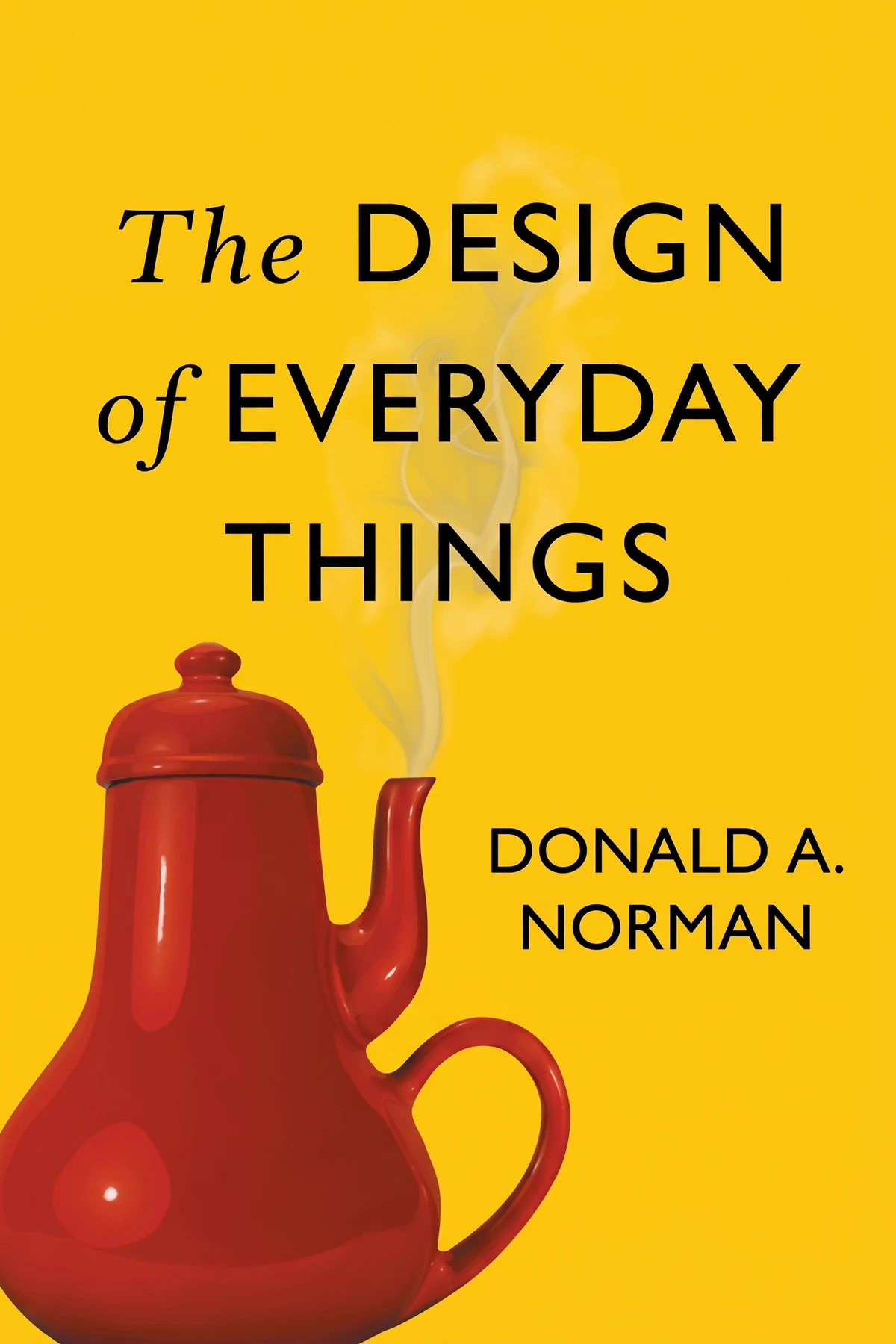
The Design of Everyday Things
Donald A. Norman
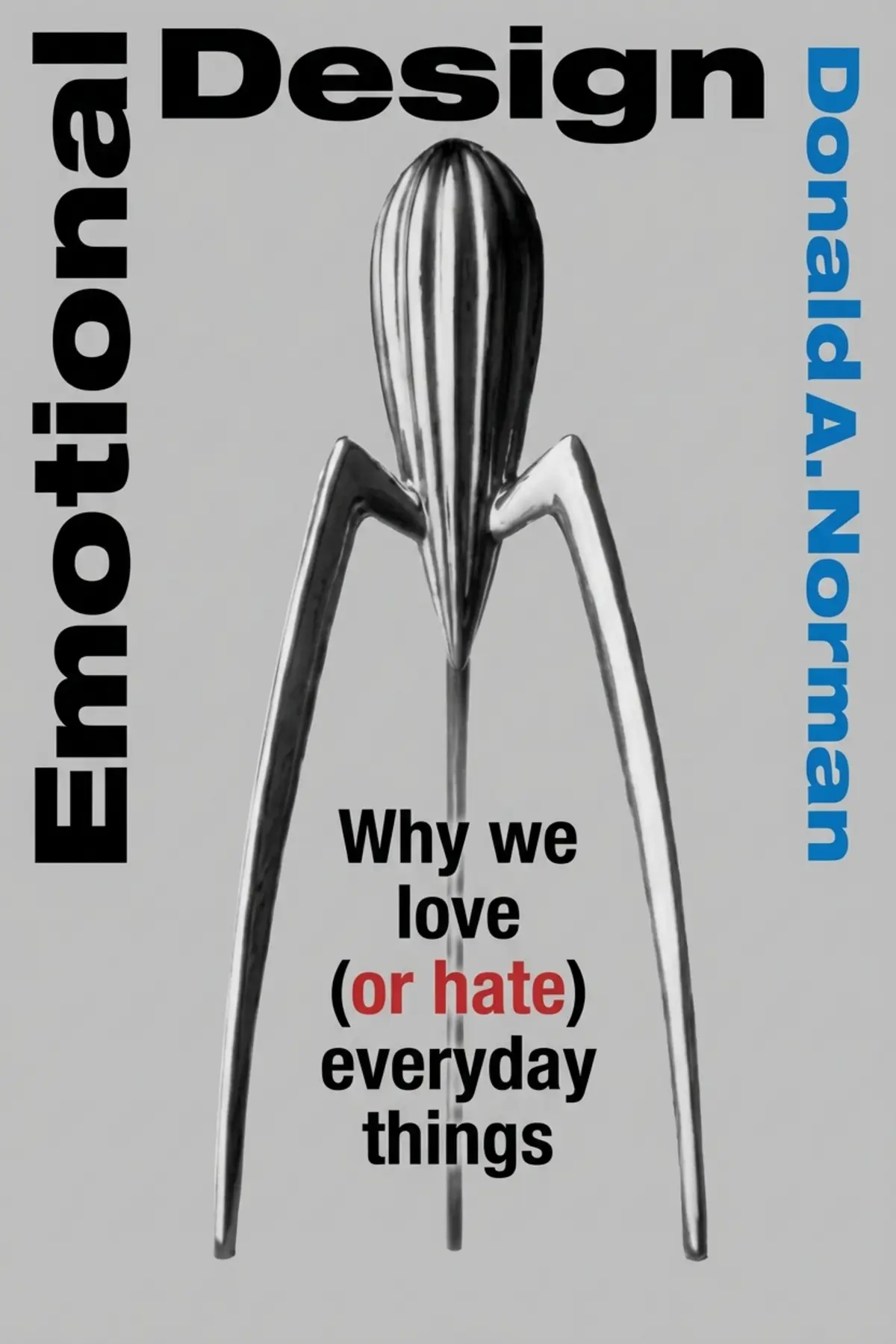
Donald A. Norman explores how design influences human emotion through three distinct levels: visceral, behavioral, and reflective. This summary explains why we form deep attachments to certain products and how aesthetics and usability intersect.
39 sec
Have you ever wondered why you choose one brand of bottled water over another? It seems like a simple, logic-based decision, but there is actually a deep psychological layer at play. In Emotional Design, we explore the idea that our relationship with the objects around us is far from accidental. Design isn’t just a skin applied to a product; it’s a language that speaks to our emotions and dictates our behavior. By understanding how we perceive and interact with everything from computers to kitchen tools, we can see how designers craft experiences that resonate on three distinct levels of human consciousness.
52 sec
Learn why your first impression of a product is often an instinctive, physical response that happens before you even start thinking about its features or its practical purpose.
55 sec
Discover why a product’s beauty is meaningless if it doesn’t work well, and how the physical sensation of using an object defines its ultimate success in our lives.
52 sec
Explore how products become symbols of our identity and why the long-term stories we tell about our belongings matter more than their immediate aesthetic or functional value.
28 sec
To create something truly iconic, a designer must master all three of these domains. Great design is a delicate balance: it must be visually arresting at the visceral level, functionally seamless at the behavioral level, and personally meaningful at the reflective level. When these elements align, products become more than just tools; they become a memorable and essential part of our daily lives.
Emotional Design delves into the psychological relationship between humans and the objects they use every day. While many assume that design is simply about how something looks, Donald A. Norman argues that it is much more profound. He identifies three key layers that dictate our experience: the visceral, which covers our immediate aesthetic reactions; the behavioral, which focuses on function and ease of use; and the reflective, which involves the meaning and personal identity we attach to our possessions. The book promises to change the way you look at everything from a simple bottle of water to high-end electronics. It illustrates how successful products aren't just useful; they are emotionally resonant. By understanding these levels, readers gain insight into why some products become beloved classics while others are quickly forgotten. It’s a journey into the intersection of cognitive science and product creation, showing that the most effective designs are those that satisfy our instincts, our needs, and our sense of self.
Donald A. Norman is a renowned author and cognitive scientist, particularly noted for his work in user-centered design. His significant contributions to the field include the book The Design of Everyday Things. Norman’s expertise lies in bridging the gap between people and the complexity of technology, making everyday interactions more intuitive and effective.
Donald A. Norman
Listeners find the book refreshing and engagingly written, with one noting it avoids the boredom typically associated with textbooks. Additionally, the design content earns praise as a worthy follow-up to "Design of Everyday Things," and listeners find it beneficial for their professional work. The quality of information is rated highly, with one listener describing the book as very detailed in its dissection. However, reactions to the insights and illustrations are mixed; while some value the perspectives, others find them limited and repetitive, and one listener mentions the author's large ego.
Don Norman really shifted the needle with this one by moving beyond mere functionality to explore the soul of objects. While his previous work was all about usability, this book introduces the fascinating framework of visceral, behavioral, and reflective design layers. I finally understand why I’m obsessed with my sleek but slightly impractical espresso machine—it’s a visceral win that hits the reflective layer of my identity. The writing is surprisingly fluid and avoids the typical dryness of a technical textbook. Norman argues that 'attractive things work better' because they put us in a positive emotional state, making us more creative problem solvers. It’s a profound realization that has completely changed how I approach my own creative projects. Even the more speculative sections about the future of intelligent machines felt like a necessary expansion of his thesis. If you care about why humans bond with inanimate objects, this is essential reading.
Show moreThe Nanna teapot alone is worth the price of admission here. Norman uses such simple, elegant examples to show how beauty and function dance together in our daily lives. I loved the emotional tone of the writing; you can tell he truly cares about how we feel when we use our things. The idea that 'emotion makes you smart' is a total game-changer for how I think about my workspace. It’s not just about organization; it’s about the amber hues of the tea and the sensory experience of the tools we touch. This book isn't just for designers; it’s for anyone who has ever felt a strange pang of sadness when a favorite mug breaks. It validates our attachment to the material world in a way that feels both scientific and deeply human. I found the ending about robot tutors and the future of learning to be particularly inspiring and forward-thinking.
Show moreEver wonder why you're irrationally attached to a chipped mug or a specific brand of car? Norman explains that our most beloved objects are symbols of our memories and identities, not just tools. This book is a beautiful exploration of the human-object relationship. I was fascinated by the discussion on how 'plosive' sounds like 'p' and 'k' affect our perception of words and products. It’s that level of detail that makes this book stand out. The author admits he ignored emotion in his earlier work, and this feels like a sincere apology and a brilliant course correction. He successfully argues that 'delight' is a functional requirement, not a luxury. I found the section on how attractive tools actually improve our performance to be particularly empowering. It's a well-written, deeply insightful book that makes you look at every item in your house with new eyes. Truly a must-read for the curious mind.
Show moreIt is rare to find a design book that captures the soul of why we create. Norman's exploration of how emotion impacts learning was the standout section for me, especially the part about how struggle makes the process more enjoyable when we actually care. He argues that education shouldn't be a dull, lecture-based exercise but rather an apprenticeship that excites the student. This perspective on 'emotional involvement' changed how I view not just product design, but pedagogy as a whole. Robots and simulated worlds are presented not just as gadgets, but as tools to facilitate inquiry-based learning. While some critics find the second half of the book a bit tangential, I found the discussion on the future of autonomous machines to be visionary. It challenges the reader to think about design at a systemic, societal level. This is a profound, well-written exploration of the human experience through the lens of the objects that surround us. I loved every page.
Show moreAfter finishing The Design of Everyday Things, I felt like I needed the rest of the story, and this sequel delivered. It’s a refreshing take that admits utility isn't the only thing that matters in the real world. We are emotional creatures, not robots, and our tools should reflect that. The surgical analysis of how we interact with products—from the 'coffeepot for masochists' to high-end teapots—is both entertaining and enlightening. Norman’s style is accessible, though I'll admit some of his insights felt a bit repetitive by the time I hit chapter six. I particularly appreciated the discussion on how positive affect allows users to overlook minor glitches. It’s a great resource for my professional work, providing a vocabulary for things I previously only understood instinctively. Despite some dated references to early 2000s tech, the psychological foundations remain incredibly relevant today.
Show moreAs a product designer, I found the breakdown of visceral, behavioral, and reflective responses to be incredibly practical for my day-to-day work. Norman moves past simple utility to explain why aesthetics actually make products easier to use. When we are in a positive state of mind, we become more creative and flexible problem solvers. The book offers a systematic dissection of how objects influence our moods and self-image, which is a refreshing change from the dry manuals I usually have to slog through. That being said, I did find some of the points to be a bit repetitive toward the middle. There’s only so much you can say about a teapot before the point is well and truly made. Even with the occasional repetition, the core insights are worth the effort for anyone interested in the psychological side of human-computer interaction. It’s a solid, thoughtful follow-up.
Show moreFinally got around to this classic, and it’s surprisingly not the dry textbook I was expecting. The author has a way of making complex cognitive science feel like a casual conversation over coffee. I was especially drawn to the idea that we have 'multiple personalities' depending on our social context and the objects we use. It’s a bit dated in its tech examples—mentioning Instant Messaging as a 'new' power is funny now—but the core message about human impulse doesn't age. My only real gripe is that the middle section drags a bit when he starts talking about the legalities of robot behavior. It felt like he was reaching for word count. Still, the first four chapters and the epilogue are gold. If you work in UX or any user-facing field, you need this on your shelf. It’s a well-written, insightful look at the 'why' behind our consumer choices.
Show moreWhy are there so many chapters about robots in a book that is supposed to be about everyday things? To be fair, the first half of this text is a brilliant extension of Norman's previous work on usability. I loved the distinction between visceral, behavioral, and reflective design because it explains why we forgive flaws in things that look beautiful. However, the second half feels like a completely different book that was stapled on at the last minute. The author spends way too much time speculating on robot athletes and whether a robot pet might bite its owner. It’s all a bit too much conjecture for my taste. I came for the design of teapots and left with a confusing manifesto on machine autonomy. It's a decent read if you stop halfway through, but otherwise, it's just okay.
Show moreLook, the first four chapters are absolute gold for anyone in the creative industry, but the rest is hit or miss. I bought this because I wanted to understand the psychological pull of great design. For a while, Norman delivers exactly that, explaining how our 'affective system' makes snap judgments before we even think. But then the book takes a hard turn into 'Robot Land.' I didn't sign up for a debate on whether robot athletes should have their own leagues or who is responsible if a mechanical dog bites someone. It felt like his personal hobby horse rather than a cohesive part of the design theory. To be fair, his writing is clear and the 'teapots' section is iconic for a reason. I just wish he had stayed focused on the 'everyday things' promised in the subtitle. It’s a decent 150-page book trapped inside a 300-page one.
Show moreFrankly, this felt like a massive step down from his previous work. While his earlier books are masterpieces of usability, this sequel feels like a collection of disjointed thoughts and outdated conjectures. I struggled with some of the body-focused comments which felt entirely unnecessary and frankly a bit triggering for a design book. Norman's ego occasionally overshadows the actual insights, making the reading experience more of a chore than a learning opportunity. The chapters on robots and the future of AI were particularly grating because they felt so speculative and disconnected from the core premise of why we love certain objects. I wanted a deep dive into human psychology and aesthetic preference, but instead, I got a robot manifesto. If you've read his other books, you might find a few nuggets of wisdom here, but they are buried under layers of filler. It's a disappointment.
Show more

Richard Wiseman
Steven C. Hayes
AUDIO SUMMARY AVAILABLE
Get the key ideas from Emotional Design by Donald A. Norman, plus 5,000+ more titles in English and Thai.







