
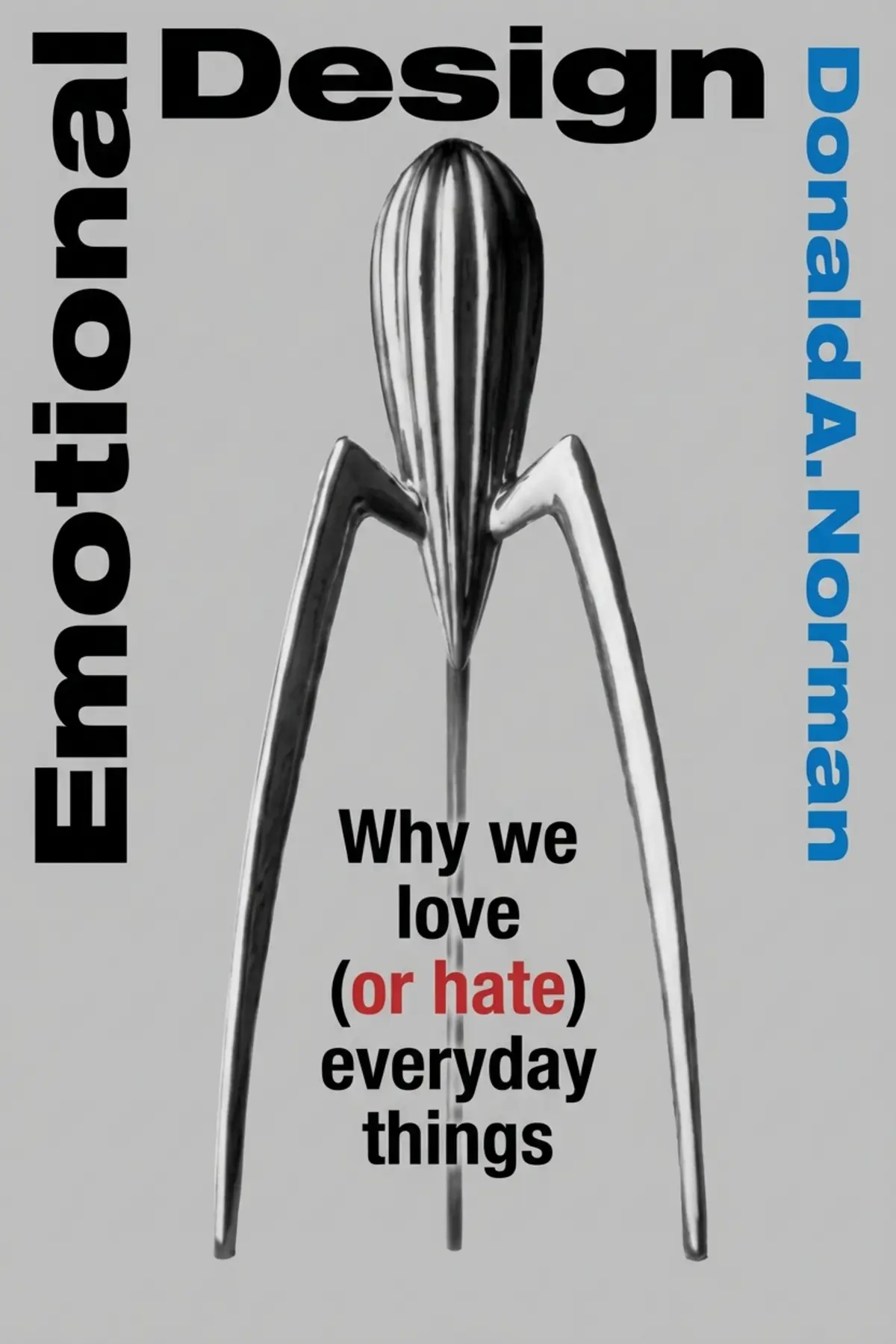
Emotional Design: Why We Love (or Hate) Everyday Things
Donald A. Norman
Explore the intersection of psychology and product design. This summary reveals why confusing technology is a failure of design, not the user, and how intuitive objects can simplify our complex daily lives.
1 min 28 sec
Have you ever walked up to a glass door in a public building, pushed with all your might, and realized—only after a moment of embarrassment—that you were supposed to pull? Or perhaps you’ve sat down in front of a modern television, surrounded by three different remote controls covered in hundreds of tiny buttons, and felt a sudden wave of incompetence because you couldn’t figure out how to simply change the channel.
When these moments happen, our first instinct is usually to blame ourselves. We assume we are out of touch with technology, that we aren’t paying enough attention, or that we are simply not as smart as the people who built the devices. But there is a different perspective to consider. What if the problem isn’t you? What if the frustration you feel is actually a signal that the object in your hand was poorly conceived?
In this summary of Donald Norman’s foundational work, we are going to explore the throughline that connects human psychology to the physical world. We’ll see how great design acts as a silent teacher, guiding us through complex tasks without the need for a manual. We’ll uncover why ‘human error’ is often a misnomer for ‘design failure,’ and we’ll look at the specific steps creators take to ensure their products are actually usable. By the end of this journey, you’ll never look at a light switch, a teapot, or a computer program the same way again. You’ll stop blaming yourself for your frustrations and start recognizing the invisible structures that make our world work—or fail to.
1 min 52 sec
Discover why the frustration you feel with complex devices is rarely your fault and why designers must bridge the gap between human capability and modern technology.
2 min 02 sec
Explore how successful designs guide users through subtle clues, making thick manuals unnecessary for everyday tasks.
2 min 09 sec
Learn how our minds interact with objects on visceral, behavioral, and reflective levels, and why designers must satisfy all three.
2 min 04 sec
Shift your perspective from blaming human error to uncovering the underlying design flaws that lead to mistakes.
1 min 54 sec
Discover how setting limits and using shared cultural knowledge can actually make a product much easier to use.
2 min 07 sec
Learn why constant communication between a device and its user is the key to preventing confusion and anxiety.
1 min 52 sec
Uncover the iterative process designers use to ensure that the final product truly serves the needs of the people using it.
1 min 52 sec
See how the tension between designers, marketers, and production schedules can make or break a product’s success.
1 min 33 sec
As we wrap up our look at the hidden world of design, the most important takeaway is a sense of empowerment. The next time you struggle with a complicated gadget or a confusing piece of software, remember the fundamental truth: it’s not you, it’s the design. By understanding the psychology behind the things we use—from the visceral beauty that draws us in to the behavioral habits that guide our hands—we can become more informed consumers and more empathetic creators.
Good design is more than just making things look pretty; it is a way of respecting the user. It uses constraints to prevent mistakes, provides feedback to maintain a conversation, and uses clear signifiers to show the way. It is a process of constant questioning, where we don’t settle for the first answer but keep asking ‘why’ until we reach the root of the problem.
So, what can you do with this knowledge today? First, stop blaming yourself. Give yourself permission to be frustrated by bad design. Second, become an advocate. If a manufacturer’s product is difficult to use, let them know. Your feedback is the essential data they need to enter the human-centered design loop. And finally, in your own work—whether you are designing an app, writing a report, or organizing a kitchen—always keep the end user in mind. Ask yourself: am I providing enough clues? Is the feedback clear? Am I making this as simple as it can possibly be? When we design for people, we create a world that is not just more functional, but more human.
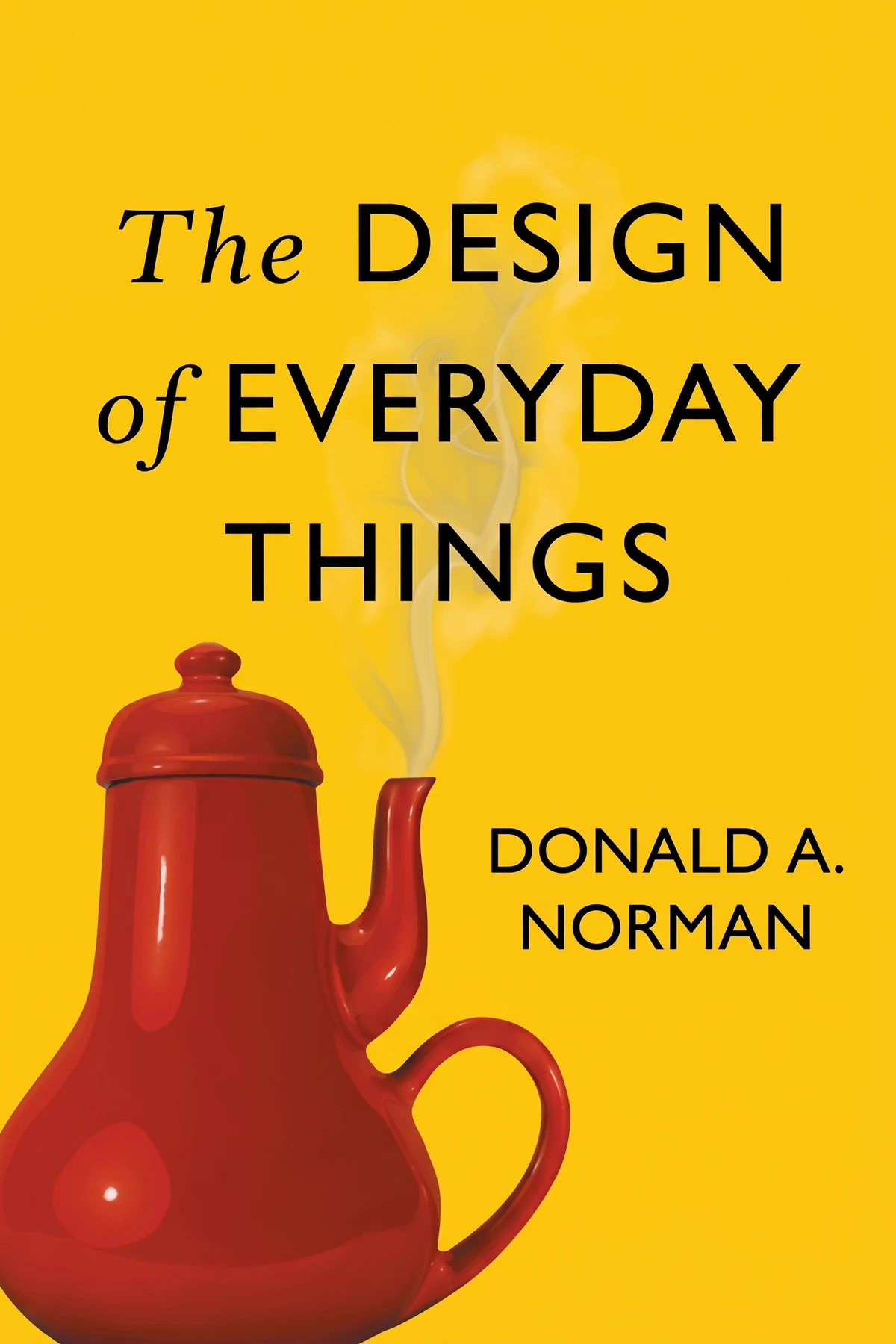
Have you ever felt frustrated by a simple door or a confusing TV remote? This exploration into the cognitive psychology of objects explains that these frustrations are rarely the fault of the person using them. Instead, they are the result of poor design that ignores how the human mind actually functions. The book serves as a foundational guide for anyone who creates, uses, or struggles with the tools of the modern world. You will learn the essential principles that make products easy and enjoyable to use. By diving into concepts like affordances, signifiers, and the iterative process of human-centered design, you will discover the 'promise' of a world where technology works with us rather than against us. It provides a toolkit for identifying the root causes of errors and explains how designers can bridge the gap between complex functionality and simple, intuitive user experiences. Ultimately, it is a call for more empathy in the creation of everyday things.
Donald Norman is Professor Emeritus of Cognitive Science at the University of California, San Diego. A leading voice in the field of user experience, his influential work has shaped how we interact with technology. In addition to this classic text, he has written several other highly regarded books, including the best-selling Emotional Design and Living with Complexity.
Donald A. Norman
Listeners find the content highly accessible and value the book's rhythm, with one listener specifically praising its clear explanation of foundational principles.
Donald Norman beckons you to look at the world differently, and frankly, I’ll never see a double-sided door handle the same way again. This book isn't just for people in the tech industry; it’s a foundational text for anyone who interacts with physical objects. The way he breaks down the psychology of 'affordances' and 'signifiers' makes the invisible mechanics of our daily lives visible. To be fair, some of the technology references—like the heavy focus on VCRs—show the book's age, but the underlying principles remain incredibly sound. I appreciated how he shifts the blame from 'human error' to poor design. It makes you feel a lot less stupid when you can't figure out a hotel shower. The pacing is surprisingly good for a book that is essentially a textbook on cognitive psychology.
Show moreEver wonder why you can never figure out which knob controls which burner on a kitchen stove? This book explains exactly why that is a failure of mapping and not a failure of your brain. Personally, I found the chapter on the evolution of designs to be the most enlightening part of the entire experience. Norman argues that function should always supersede features, a lesson many software companies still need to learn. While it focuses heavily on industrial design, the logic applies perfectly to building backends or libraries too. The book is very readable and provides a great vocabulary for describing why certain objects are just plain frustrating. It’s an eye-opening read that turns mundane chores into fascinating case studies in human interaction.
Show moreThe chapter on the 'Gulf of Execution' and 'Gulf of Evaluation' changed my entire approach to problem-solving at my day job. I love how Norman emphasizes that there are no failures, only learning experiences, and that systems should be designed to catch errors before they become catastrophes. In my experience, this is the only design book that successfully unifies the theory of human cognition with the practical reality of industrial manufacturing. The examples might be from the 80s, but the human brain hasn't changed its architecture in the last thirty years, so the lessons still land. It is an essential read for anyone who wants to create things that people actually enjoy using. The way it explains basic concepts makes it a must-have for every engineer's shelf.
Show moreAs someone who isn't a professional designer, I found the breakdown of signifiers and constraints to be surprisingly intuitive and applicable to my daily life. The book explains basic concepts so well that you start seeing 'design' in everything from your resume layout to the way you arrange your furniture. Norman’s pro-humanity outlook is refreshing; he constantly reminds us that we shouldn't feel inadequate when technology fails us. Not gonna lie, some of the talk about 'mental models' got a bit academic, but the real-world stories kept me turning the pages. It's a rare book that manages to be both informative and deeply philosophical about our relationship with objects. I highly recommend it for the curious-minded reader who wants to understand the 'why' behind the world.
Show moreWow, it is rare to find a book that manages to be this informative while staying accessible to the average person just trying to navigate a world of confusing gadgets. The focus on iterative design and finding the root cause of problems is a lesson that transcends the field of industrial design. I particularly enjoyed the sections on how we use 'knowledge in the world' to supplement our limited memories. While some reviewers call it dry, I found the methodical approach to be exactly what was needed to explain such a broad subject. It’s a classic for a reason, and the pacing feels just right for a deep dive into the human mind. Every creator should have a copy of this on their desk.
Show moreAfter hearing so much hype about this being the 'usability bible,' I finally dove in and found a mixed bag of timeless wisdom and slightly dusty examples. The core message is powerful: if you can't figure out a gadget, it probably isn't your fault. However, the writing style is quite dry and frequently feels like a 1980s textbook rather than a stimulating piece of non-fiction. I found the sections on 'knowledge in the head' versus 'knowledge in the world' fascinating, even if the awkward typesetting made it a chore to flip back and forth to the diagrams. It is definitely a slow read, but the insights into human-centered design are worth the effort for anyone building products today. It explains basic concepts with a level of clarity that most modern authors fail to achieve.
Show morePicked this up on a whim and was immediately struck by how much thought goes into the objects we use without thinking. The breakdown of sink faucets and how they communicate their use was particularly mind-blowing. Norman has a real passion for the subject that shines through when he isn't getting bogged down in list-like definitions. I did find the typesetting a bit ironic; for a book about great design, having images on different pages than the text is a bit of a localized failure. Still, it’s a very accessible read that bridges the gap between theory and practice. It changed my perspective on everything from Legos to the way I organize my own kitchen.
Show moreLook, the core philosophy here is brilliant even if the pacing occasionally drags during the more technical psychological breakdowns. I love how Norman uses mundane items like Legos and faucets to illustrate complex ideas about how we perceive function. The 'Norman Door' has become a staple of my vocabulary now, and I find myself judging every building entrance I pass. My only real gripe is that the book can be a bit scatterbrained, repeating the same points about constraints and feedback more than necessary. Still, the readability is high for such an influential text, and it's a great starting point for beginners. It makes you realize that the world is designed, and usually, it's designed by people who aren't thinking about you.
Show moreThis book is clearly more for knowledge than for pure enjoyment, as the writing leans heavily into the dry, textbook-like territory of cognitive psychology. While I appreciated the famous examples of the 'Norman Door' and the confusing office phone systems, the middle sections felt quite repetitive. The truth is, I was expecting more 'smart' and inspiring stories, but Norman is here to educate rather than entertain. There is a lot of psychological vocabulary like 'semantic constraints' and 'conceptual models' that can feel a bit arcane if you aren't in the right headspace. It’s a valuable resource, but the pacing is uneven and the dated examples make it harder to stay engaged than I expected.
Show moreNot what I expected given the rave reviews from the tech community; it felt like an industrial design text masquerading as a guide for software developers. The truth is, the book is incredibly repetitive and often goes off on tangents about things like office phone systems that just don't feel relevant anymore. I was hoping for usable, general principles for modern UI, but instead, I got a lot of arcane psychological vocabulary that felt unnecessarily vague. The typesetting is ironic for a design book, with pictures rarely appearing on the same page as the text referencing them. It might be a classic, but I’d argue there are better UX books out there now that are much more engaging and less dry.
Show more
Steven C. Hayes
Deborah Gruenfeld


Yuval Noah Harari
AUDIO SUMMARY AVAILABLE
Get the key ideas from The Design of Everyday Things by Donald A. Norman, plus 5,000+ more titles in English and Thai.







