
18 min 03 sec
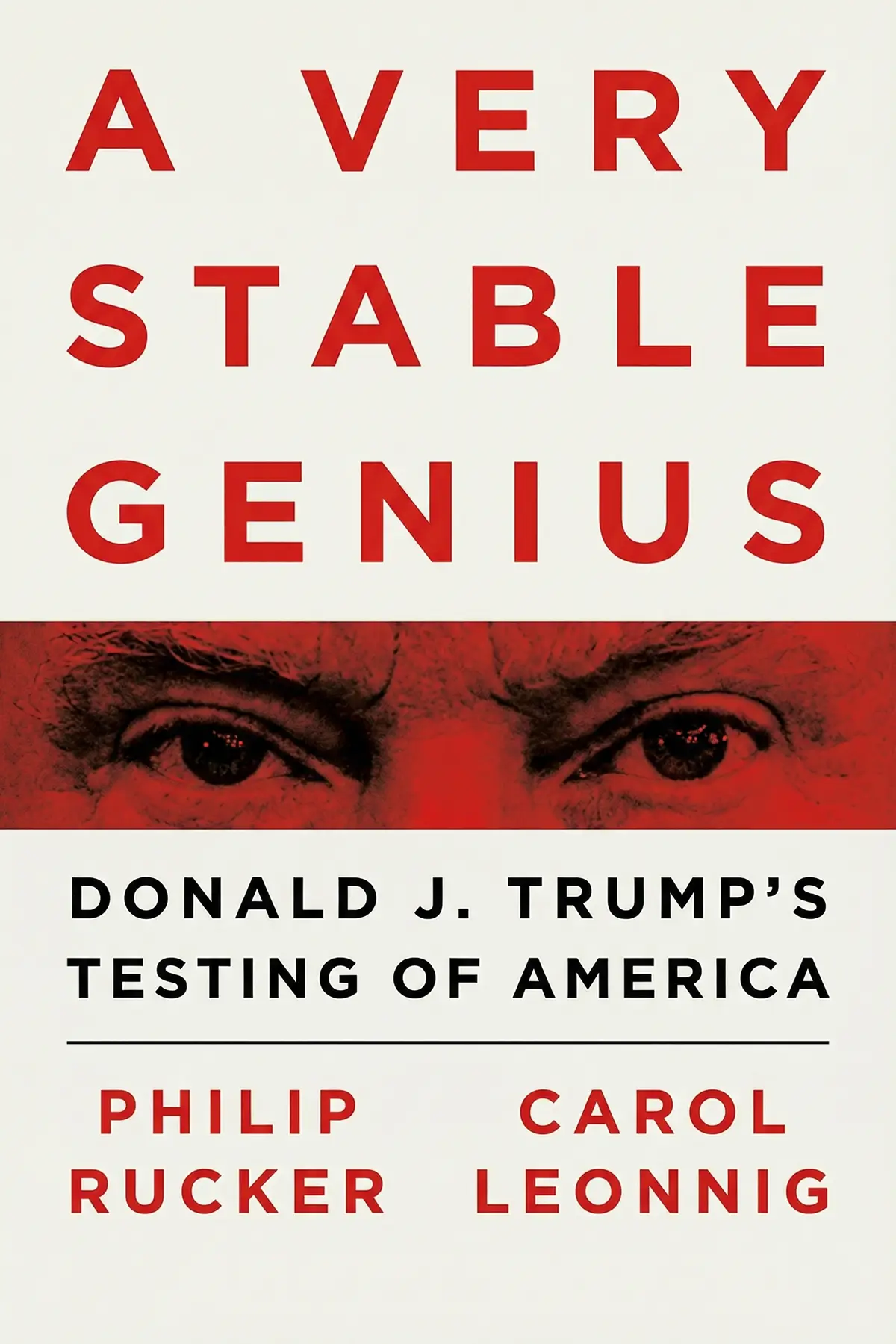
Engines of Liberty: How Citizen Movements Succeed
By David Cole
Engines of Liberty examines how grassroots organizations and everyday citizens, rather than just politicians, drive fundamental changes in American constitutional law, from marriage equality to firearm rights and government transparency.
Table of Content
1. Introduction
1 min 43 sec
When we think about the great turning points in history, our minds often jump to the larger-than-life figures who occupied the Oval Office or sat on the highest benches of the judiciary. We think of the towering presence of Abraham Lincoln or the transformative policies of the Roosevelts. It is a comforting narrative: the idea that a single great leader can, through sheer force of will, steer the ship of state toward a more just future. But if we pull back the curtain on the most significant legal and social shifts in American life, we find a different story entirely. We find that the true ‘engines of liberty’ are not the elites in power, but the organized citizens working tirelessly in the background to make those changes possible.
Even the founding of the United States wasn’t the work of one man; it was a collaborative effort by a group of activists who believed they could birth a new nation. That tradition of civil activism remains the heartbeat of American constitutional law today. In this exploration, we are going to look at how groups of dedicated individuals—whether they are fighting for the right to marry, the right to bear arms, or the right to be free from government overreach—are the ones who actually write the rules we live by.
Through the lens of David Cole’s research, we will see how a local custody battle in Vermont paved the way for a national revolution in gay rights. We will examine how a strategic, state-by-state approach turned the tide for gun ownership advocates. We will also delve into darker chapters of history, seeing how activists eventually forced the government to reckon with the internment of Japanese Americans and the mistreatment of prisoners in the War on Terror. By the end of this journey, you’ll see the Constitution not as a static piece of parchment, but as a dynamic field of play where the most persistent voices can achieve the impossible.
2. The Grassroots Foundation of Marriage Equality
2 min 10 sec
Explore how a local custody dispute in the quiet state of Vermont set the stage for a nationwide revolution in civil rights and marriage equality.
3. The California Pendulum and the Power of Public Sentiment
2 min 06 sec
Understand the high-stakes legal tug-of-war in California, where activism met fierce opposition in a battle for the heart of the state’s constitution.
4. The Climax of a National Constitutional Shift
2 min 02 sec
Delve into the final legal hurdles that led the Supreme Court to recognize marriage as a fundamental right for all American citizens.
5. Strategic Influence and the Second Amendment
2 min 08 sec
See how the NRA and pro-gun activists utilized state-level lobbying and judicial appointments to fundamentally reshape firearm legislation.
6. Correcting History Through Persistent Advocacy
2 min 10 sec
Witness how decades of activism eventually forced the United States government to admit to and repent for the injustice of Japanese internment.
7. Transparency as a Tool for Human Rights
1 min 59 sec
Learn how dedicated lawyers used the power of information to expose the hidden realities of detention and torture during the War on Terror.
8. Holding the Executive Accountable in the Age of Drones
2 min 00 sec
Discover how civilian pressure and the testimony of victims forced a shift in the secret drone programs of the 21st century.
9. Conclusion
1 min 45 sec
As we reach the end of this exploration into the ‘engines of liberty,’ the message is clear and powerful: the law of the land is not something that is simply handed down to us from on high. It is something that is forged in the fires of civil society. Whether we are looking at the decades-long struggle for marriage equality, the strategic victories of the gun rights movement, or the harrowing fight to expose government torture, the common denominator is always the same—dedicated groups of citizens who refuse to take ‘no’ for an answer.
David Cole’s work challenges us to rethink our role in a democracy. It’s easy to feel cynical or small in the face of massive institutions like the Supreme Court or the military-industrial complex. But as we’ve seen, those institutions are deeply responsive to the culture around them. When activists change the hearts and minds of their neighbors, when they organize and lobby at the local level, and when they use the tools of transparency to hold the powerful accountable, they are the ones who ultimately move the needle of justice.
The most important takeaway is that change is possible, but it requires a ‘long game’ mentality. None of the victories we discussed happened overnight. They were the result of incremental wins, strategic losses, and a relentless commitment to a cause. The Constitution is a living document because people like you choose to live out its principles and demand that the government do the same. So, the next time you feel that a law is unjust or a right is being ignored, remember the Susan Bellemares, the Fred Korematsus, and the anonymous activists who refused to stay silent. They are the true authors of the American story, and they prove that in a free society, the power to change the world is always within our reach.
About this book
What is this book about?
Have you ever wondered how the law actually changes? While we often credit the Supreme Court or the President for landmark shifts in justice, Engines of Liberty reveals that the real power resides within civil society. This exploration takes you behind the scenes of the most significant legal battles of the modern era, showing how dedicated activists use the tools of democracy to reshape the Constitution from the ground up. You will learn about the strategic long games played by organizations like the ACLU and the NRA, and how they successfully moved the needle on issues once considered settled. From the fight for same-sex marriage to the defense of the Second Amendment and the exposure of human rights abuses, the book promises to show you that constitutional law is not a static document kept in a vault, but a living project driven by the persistence and passion of organized citizens.
Book Information
About the Author
David Cole
David Cole is a distinguished professor of Law and Public Policy at Georgetown University Law Center and a dedicated champion of civil liberties. He has authored several influential books, including No Equal Justice and Enemy Aliens. A respected voice in legal discourse, his writing frequently appears in major publications such as the New York Times, the Washington Post, and the Wall Street Journal.
Ratings & Reviews
Ratings at a glance
What people think
Listeners value the perceptive look at how local activism propels constitutional shifts through in-depth examples of civil liberties, gun rights, and marriage equality. Although views on the author’s prose differ—with one listener describing the presentation as a bit redundant—the majority of listeners consider the examination of legal tactics very informative. Furthermore, they prize the work's distinct viewpoint regarding the influence of social pressure beyond the legal system on Supreme Court rulings. They also suggest it is essential reading for attorneys and activists, with one listener highlighting the portion about the NRA's legal transformation as especially intriguing.
Top reviews
Wichai
David Cole presents a compelling argument that transforms how we view the United States Constitution. Instead of seeing it as a stagnant document interpreted solely by nine people in robes, he illustrates how it is a living thing fueled by the sweat of activists. The three main case studies—marriage equality, firearm rights, and the defense of human rights during the War on Terror—provide a brilliant roadmap of constitutional change. I was particularly fascinated by how the NRA shifted legal scholarship decades before the Heller decision even reached the Supreme Court. It proves that the law often follows the culture, not the other way around. If you want to understand how bottom-up movements actually succeed in changing federal policy, this is the book for you. It is a dense but incredibly rewarding read for anyone who cares about the future of our democracy.
Show moreLek
Ever wonder how monumental legal shifts actually happen in this country? Engines of Liberty answers that question by pulling back the curtain on the decades of work that precede every 'overnight' Supreme Court success. I found the section on the defense of Guantanamo detainees particularly powerful. It shows that even in the face of national panic, small groups of dedicated lawyers and citizens can hold the government accountable by leveraging international opinion. Cole writes with a sense of hope that is sorely needed right now. He reminds us that the Constitution lives in our actions, not just in a glass case in D.C. This is an essential guide for any activist who feels discouraged by the current political climate. It proves that change is slow and incremental, but ultimately possible through dedication.
Show moreOoi
The chapter on the NRA was a total eye-opener for me and worth the read by itself. I’ve always been on the other side of that issue, but understanding their legal strategy gave me a new perspective on how they won the long game. David Cole manages to be both a scholar and a storyteller here. He traces the shift from the Second Amendment being a 'collective' right to an 'individual' one through years of lobbying and academic debate. It’s fascinating to see how they essentially 'stole the thunder' of more moderate groups to reshape the law. This book is a masterclass in how social momentum is built outside the courtroom. If you are passionate about civil liberties, you need to see how the sausage is actually made.
Show moreGor
Picked this up after hearing Cole speak on a podcast, and it didn't disappoint. The book is an inspiring look at how individuals can resist and eventually change massive political institutions. It’s not just about winning in court; it’s about changing the hearts and minds of the general population first. I was especially moved by the stories of the early gay rights activists who faced police mistreatment but kept pushing for decades. Their persistence eventually led to the 2015 marriage equality ruling, proving that social change is a marathon, not a sprint. This book gave me a lot of food for thought regarding how we approach activism today. It’s a brilliant, detailed, and ultimately optimistic look at the power of the American people.
Show moreEthan
As someone who follows constitutional law fairly closely, I found this analysis of 'civil society' groups to be quite refreshing. Cole, who works with the ACLU, offers an insider’s look at how litigation strategy combines with public messaging to create lasting change. Truth is, we often ignore the years of grueling work that happens in state courts and legislative halls before a big national victory. The book does a great job showing how the gay rights movement learned to frame their struggle around 'family' and 'empathy' rather than just abstract legalities. My only minor gripe is that the prose can occasionally feel a bit dry, almost like a series of law review articles stitched together. However, the insights into how the Bush administration’s policies were challenged by international pressure are worth the price of admission alone. It’s a necessary addition to any legal library.
Show moreRatchada
Finally got around to reading this for my public policy seminar, and I have to say, it was surprisingly engaging for a required text. Most textbooks make the legal process sound like a boring machine, but Cole treats it like a battlefield where ordinary people actually have a say. I loved the breakdown of the 'Cincinnati Revolt' within the NRA; it shows that even organizations we might disagree with have a lot to teach us about persistent activism and community building. The chapter on marriage equality was also deeply moving, tracing the long road from the 1950s to Obergefell. Personally, I think every law student should read this to understand that their future career isn't just about filing motions in a vacuum. It’s about building a movement that makes those motions possible.
Show moreParichat
Look, this isn't light beach reading, but it is deeply informative for anyone interested in the mechanics of power. The book focuses on three main case studies: gun rights, marriage equality, and human rights. What makes it unique is that Cole doesn't just stick to liberal causes; he treats the NRA’s rise with a surprising amount of respect and analytical rigor. He demonstrates that their success wasn't an accident but the result of disciplined, multi-level strategy. I appreciate that he highlights the importance of 'framing'—showing how the gay marriage movement succeeded once they shifted the conversation from 'rights' to 'love and family.' It’s a bit academic in parts, and the sentence structure can be quite dense, but the overarching message is vital for anyone who wants to be an effective citizen.
Show moreNoi
Frankly, I have mixed feelings about this one. On one hand, David Cole is an incredible legal mind and his breakdown of the Second Amendment’s evolution is absolutely top-notch. Seeing how the NRA used legal scholarship to change the judiciary’s mind was an eye-opener. On the other hand, the book feels a bit lopsided in its tone. Cole tries to be objective, but his background as a liberal activist occasionally seeps through, making some sections feel more like a manual for his side than a neutral observation of the process. I also found the introduction to be quite slow and repetitive. It’s a good book if you’re a lawyer or a serious history buff, but the average reader might find themselves skimming through the more academic passages to get to the actual stories.
Show moreWipada
In my experience, books by legal scholars tend to go one of two ways: either they are brilliant or they are repetitive. This one falls somewhere in the middle. The core idea is that the Supreme Court is reactive, not proactive, and Cole proves this well through his examples of state-level activism. However, I gotta say, the writing style felt a little dry for my taste. I kept waiting for more personal anecdotes from his time at the ACLU, but it stayed mostly at the policy level. It’s a solid 3-star read—great information if you can get past the somewhat academic delivery. It’s definitely educational, but it didn't exactly keep me on the edge of my seat.
Show moreKet
Not what I expected based on the glowing blurbs I had seen online. While the central thesis that grassroots movements drive legal change is interesting, the author repeats it way too many times in every single chapter. I found the style to be somewhat boringly didactic, as if the reader won't get the point unless it's hammered home every ten pages. To be fair, the research is solid, but the pacing is just off. I struggled to stay focused during the long sections on the War on Terror, which felt a bit like a rehash of news stories I’ve already read a dozen times. If you're looking for a quick summary of legal history, you're better off reading a long-form article. It’s a bit too repetitive for a full-length book.
Show moreReaders also enjoyed
A Warning
Miles Taylor



A Biography of Loneliness: The History of an Emotion
Fay Bound Alberti

A Force for Good: The Dalai Lama's Vision for Our World
Daniel Goleman
Abolish Rent: How Tenants Can End the Housing Crisis
Tracy Rosenthal
Abortion: Our Bodies, Their Lies, and the Truths We Use to
Jessica Valenti
AUDIO SUMMARY AVAILABLE
Listen to Engines of Liberty in 15 minutes
Get the key ideas from Engines of Liberty by David Cole, plus 5,000+ more titles in English and Thai.
- 5,000+ titles
- Listen as much as you want
- 7-day free trial
- Cancel anytime







