
18 min 23 sec
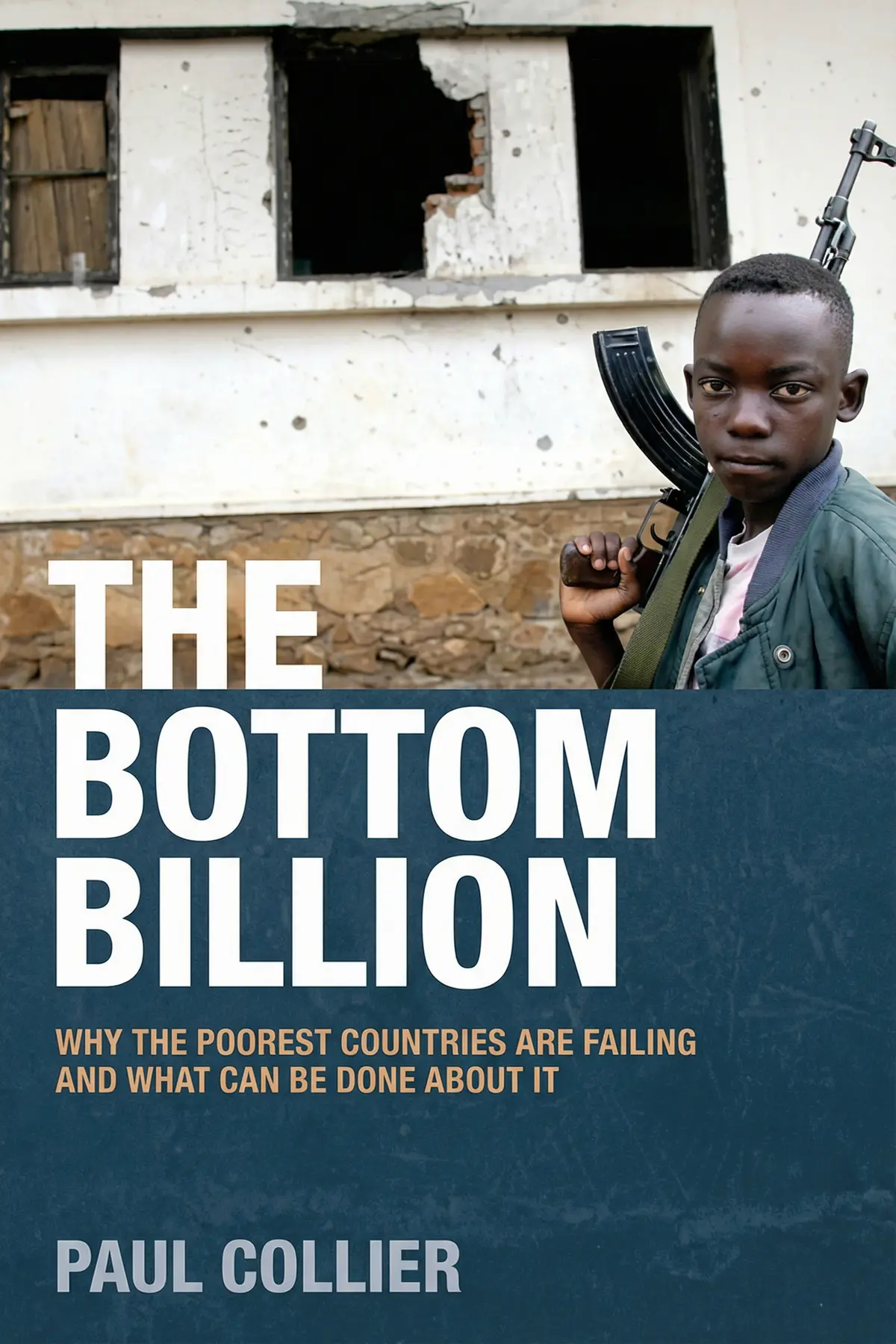
Exodus: How Migration is Changing Our World
By Paul Collier
Exodus by Paul Collier examines the complex realities of global migration, analyzing its social and economic effects on host nations, origin countries, and the migrants themselves to propose more pragmatic and balanced policy solutions.
Table of Content
1. Introduction
1 min 37 sec
Migration is perhaps the most visible and emotionally charged issue of our era. We see it reflected in election results, hear it debated on every news channel, and witness its effects in the changing demographics of our neighborhoods. Yet, for all the noise, the actual mechanics of migration—how it works, why it happens at certain speeds, and what it truly does to a society—often remain obscured by political rhetoric. This is where we begin our journey into the work of Paul Collier, who seeks to move past the shouting matches to find a pragmatic middle ground.
Human movement is not a modern invention; it is as old as our species. However, the current era of globalization has fundamentally altered the scales. Today, the gap between the richest and poorest nations creates a magnetic pull that is stronger than ever before. But this isn’t just a story of individuals seeking a better paycheck. It is a complex narrative involving the social fabric of host nations, the political stability of countries of origin, and the deeply personal struggles of the people caught in between.
In this summary, we are going to look at the forces driving this exodus. We will explore why the speed of migration matters more than the total number of people, how a country’s institutions act as a hidden engine for productivity, and why the migrants themselves often face a paradox of higher income but lower happiness. By the end, you’ll have a clearer understanding of the delicate balance required to ensure that migration serves as a tool for global progress rather than a source of social fracture. This isn’t about being for or against migration; it’s about understanding the reality of it so we can navigate the future more wisely.
2. The Rising Tide of Global Movement
2 min 01 sec
Discover the powerful economic and social factors driving modern migration and why politicians often find it so difficult to discuss the topic openly.
3. Social Cohesion and the Importance of Pace
1 min 55 sec
Learn how the speed of migration affects the social fabric of a host nation and the critical role that mutual trust plays in a functional society.
4. Economic Trade-offs in the Host Country
1 min 52 sec
Explore the complex economic consequences of migration, from rising housing costs to the long-term benefits of a more diverse and skilled workforce.
5. The Power of Institutions as Productivity Engines
1 min 43 sec
Discover why moving to a rich country dramatically boosts a migrant’s productivity, regardless of their personal skills or work ethic.
6. The Hidden Costs for the Migrants Themselves
1 min 55 sec
Uncover the psychological and economic paradoxes faced by migrants, including the surprising data on happiness and internal job competition.
7. Political Repercussions in the Country of Origin
1 min 52 sec
Examine how migration can both challenge and unintentionally support authoritarian regimes in the countries that people leave behind.
8. The Dual Edge of Brain Drain and Remittances
1 min 58 sec
Learn about the high cost of losing an educated class versus the massive financial boost provided by money sent back home.
9. Toward a Pragmatic Future for Migration Policy
1 min 57 sec
Explore the potential for a more balanced approach to migration that prioritizes integration and accounts for the changing global landscape.
10. Conclusion
1 min 33 sec
As we wrap up our exploration of the ideas in Paul Collier’s work, the primary takeaway is that migration is far too complex to be reduced to simple slogans. It is a phenomenon that touches every aspect of human life, from the macroeconomic growth of nations to the deeply personal happiness of a single family. We’ve seen that while migration offers a vital escape route for people living under failing institutions, it also places a unique strain on the social trust of the countries they enter.
The throughline of this analysis is the importance of balance. When migration is managed well—at a pace that allows for integration and in a way that respects the needs of both the host and the origin country—it can be a powerful force for good. However, when it is left to the extremes of either completely open borders or total isolationism, everyone loses. The native population feels insecure, the migrants face increased competition and social isolation, and the home countries suffer a devastating loss of their best and brightest.
The challenge for the 21st century is to develop policies that are as sophisticated as the global economy itself. This means recognizing the value of institutions, the necessity of social cohesion, and the reality of human capital. By moving toward a more pragmatic, data-driven approach, we can ensure that the movement of people across the globe is a source of shared prosperity rather than a cause for division. The goal is a world where people move by choice, not by desperation, and where every nation has the stability and the people it needs to thrive.
About this book
What is this book about?
This summary explores the multifaceted world of human movement, moving beyond the polarized debates that often dominate the news. It examines why people leave their homelands, the impact of these shifts on the social cohesion and economies of wealthy host nations, and the often-overlooked consequences for the developing countries left behind. By looking at the role of institutions, the psychological well-being of migrants, and the financial lifelines known as remittances, the book provides a holistic view of a defining global issue. It promises to move the conversation away from moral posturing and toward a data-driven, practical approach to managing migration in a way that benefits the global community.
Book Information
About the Author
Paul Collier
Paul Collier is a renowned economist and professor who serves as the director of the Center for the Study of African Economies at Oxford University. He is the author of the influential book The Bottom Billion and has been recognized as a leading global thinker by Forbes Magazine.
Ratings & Reviews
Ratings at a glance
What people think
Listeners commend the work's thoroughly documented information and its elegant, clear prose. Furthermore, they value the expert way it maps out the different consequences of migration, as one listener points out its significance for policy-makers. On the other hand, the book’s stance on immigration strategies draws varied feedback from listeners.
Top reviews
Isabella
Exodus provides a remarkably lucid framework for a conversation that is usually dominated by shouting matches and empty slogans. Collier avoids the usual political traps by focusing on the actual economic and social evidence regarding how migration impacts the three major parties: the host community, the origin country, and the migrants themselves. His writing is graceful and easy to follow, even when he dives into complex theories about social trust and national identity. I particularly appreciated the nuanced discussion on how high levels of migration can sometimes inadvertently erode the mutual regard that sustains Western welfare states. While some of his policy recommendations might seem a bit dated in the post-2015 era, the core logic remains incredibly sound. This is a must-read for policy-makers who want to move past the binary 'open or closed' debate. It is a brave attempt to find a middle ground that respects everyone involved.
Show moreChamp
Few scholars have the courage to address the delicate interplay between national identity and social trust like Paul Collier does in this masterfully written volume. He approaches the taboo subject of migration with a cool head and a heart for the 'left behind' in the world's poorest countries. I was particularly struck by his argument that the biggest losers of unmanaged migration are often the poorest members of the host society and the countries of origin that lose their most talented citizens. The writing is incredibly lucid, making complex economic trade-offs accessible to the average reader. Look, you don't have to agree with every policy suggestion he makes to see the value in his three-pronged analytical approach. It is a refreshing departure from the emotional rhetoric that usually clogs the news cycle. This book should be mandatory reading for anyone who cares about international development.
Show moreGun
What an eye-opener for anyone interested in the long-term sustainability of the welfare state. Collier explains with great clarity how a sense of shared identity is actually the engine behind redistributive taxation and public trust. If that identity is stretched too thin by rapid, unmanaged migration, the whole system could theoretically collapse. This isn't xenophobia; it's a cold, hard look at social incentives. The way he breaks down the costs to the 'bottom billion'—the ones who can't afford to leave—was particularly enlightening for me. We often think of migration as a pure win-win, but Collier shows the hidden costs that are often borne by the most vulnerable people in the world. The writing style is lucid and engaging, making it a very quick read despite the heavy subject matter. It's a brave and necessary contribution to the field.
Show moreCameron
Is it possible to talk about immigration without being labeled a bigot or a naive globalist? Paul Collier certainly tries to navigate that minefield with a high degree of intellectual honesty. His central argument focuses on the 'diaspora effect' and how it influences the rate of absorption into host societies, which I found to be a fascinating metric. The book is well-researched, though it leans heavily on social capital models that some might find overly theoretical. Truth is, his observations about the importance of social glue and trust in high-functioning societies are hard to dismiss. I did find some of the sections regarding the 'dysfunctional' nature of certain cultures to be a bit generalized, which might rub some readers the wrong way. However, if you can look past the occasionally blunt tone, there is a wealth of analytical depth here. It really forced me to reconsider the trade-offs of rapid demographic change.
Show moreEmily
After hearing several interviews with Collier, I finally dove into the text to see the evidence for myself. The book is an impressive attempt to quantify the social consequences of migration beyond just the immediate GDP impact. His focus on the 'social capital' of the host nation—the trust that allows for public services to thrive—is a perspective that is often ignored in mainstream debates. Personally, I found the chapter on the impact on those remaining in the home countries to be the most moving part of the book. He highlights how the mass exodus of the middle class can destabilize developing nations, which is a tragedy often ignored by Western activists. The only downside is that the book was written before the 2015 crisis, so some of the asylum discussions feel incomplete. Still, the analytical foundation he builds is incredibly useful for understanding today's world.
Show moreLincoln
Collier’s tripartite analysis—looking at the effects on the migrants, the host nations, and those left behind—is the most logical approach to this topic I’ve encountered. Instead of starting with an ethical stance and working backward, he looks at the mechanics of how societies actually function. His points about social trust being a fragile resource are particularly well-made. In my experience, these are the types of hard truths that politicians are too afraid to discuss for fear of being called names. The book is well-researched, though some of his models for the 'diaspora effect' feel a bit speculative at times. I appreciate that he remains polite and respectful throughout, even when proposing very controversial limits on family reunification. It’s a sober, analytical look at one of the most pressing issues of our time. Highly recommended for those tired of partisan bickering.
Show moreLek
The chapter on the 'diaspora effect' alone makes this worth reading, even if you find some of the conclusions hard to swallow. Collier tackles the taboos of migration head-on, arguing that the rate of immigration matters much more than the total number. He treats the host society's culture not as a static thing, but as a set of functional narratives that enable cooperation. Gotta say, his logic about how immigrants can be the biggest victims of uncontrolled migration—due to increased competition and slower integration—was a perspective I hadn't fully considered before. The book is elegantly written and manages to stay respectful, which is a feat given the subject matter. It’s not a perfect book, and some of the data feels a bit cherry-picked to support his 'middle-way' thesis, but it’s still a vital piece of the puzzle. Definitely worth a look for the analytical framework alone.
Show moreDivya
While the prose is undeniably graceful and the economic arguments are mostly sound, I found Collier's policy suggestions somewhat dated and occasionally contradictory. He spends a lot of time discussing the benefits of assimilation over multiculturalism, but his definition of these terms feels a bit loose. To be fair, he does a great job of explaining why migration isn't a simple 'good or bad' binary, but a matter of finding the right equilibrium. The middle-ground outcomes he predicts for host countries—small economic gains offset by social friction—seem realistic based on current events. However, his tone can occasionally feel condescending toward those who hold more liberal views on border policy. It's an intellectually stimulating read, but it lacks the cohesive 'wow factor' of his previous works. It is a good starting point for debate, but definitely not the final word on the subject.
Show moreSomsak
Frankly, this felt like a collection of rambling assertions disguised as social science. Having enjoyed 'The Bottom Billion,' I expected a rigorous, data-driven analysis, but instead found a series of pseudo-scientific models that lack robust evidence. Collier makes sweeping claims about how immigrants from 'dysfunctional societies' might degrade the trust levels of host nations without providing sufficient empirical backing. It felt like he was aiming to be an 'equal opportunity offender' just to generate buzz rather than to foster a genuine academic discussion. The prose is clear enough, but the content itself is frequently frustrating and relies on stereotypical observations. To be fair, he does raise interesting points about the 'brain drain' effect on developing nations, but these are buried under a mountain of questionable assumptions. Not a pleasant reading experience for someone looking for hard facts.
Show moreNoppadol
To be fair, the author claims he wants to anger everyone equally, and in my case, he certainly succeeded. This book feels like a step backward from his previous work, relying on outdated tropes about 'dysfunctional cultures' to justify restrictive immigration policies. Collier’s insinuations that immigrants might damage the 'trust' of Western nations felt more like thinly veiled prejudice than actual economic science. I found the lack of concrete research to back up his more extreme claims about social degradation quite frustrating. The truth is, the human element of migration is almost entirely lost in his cold, pseudo-scientific models. While he is a talented writer who can turn a phrase, the underlying arguments are often insulting to the reader's intelligence. There are much better, more balanced books out there that don't resort to these kinds of stereotypical observations.
Show moreReaders also enjoyed

23 Things They Don’t Tell You About Capitalism
Ha-Joon Chang

A Little History of Economics
Niall Kishtainy
A Promised Land
Barack Obama


A River in Darkness: One Man’s Escape from North Korea
Masaji Ishikawa
A Splendid Exchange: How Trade Shaped the World
William J. Bernstein
A Theory of Justice
John Rawls
AUDIO SUMMARY AVAILABLE
Listen to Exodus in 15 minutes
Get the key ideas from Exodus by Paul Collier, plus 5,000+ more titles in English and Thai.
- 5,000+ titles
- Listen as much as you want
- 7-day free trial
- Cancel anytime







