
1929: Inside the Greatest Crash in Wall Street History--and How It
Andrew Ross Sorkin
Factfulness reveals why our perceptions of global progress are often inaccurate and provides a data-driven framework to help us understand the world as it truly is, rather than how we fear it to be.
1 min 31 sec
Imagine for a moment that you were asked to take a multiple-choice test about the current state of the world. You might be asked whether global poverty has doubled or halved in the last twenty years, or what percentage of girls finish school in low-income nations. If you are like most people—including world-renowned experts, Nobel laureates, and high-level politicians—you would likely perform worse than a chimpanzee picking answers at random. This isn’t because you lack intelligence; it’s because your brain is hardwired with specific instincts that prioritize drama over data.
In this exploration of our collective worldview, we are going to look at why our perception of the planet is so often disconnected from reality. We live in an era where information is more accessible than ever, yet our understanding of global health, wealth, and safety remains stuck in a past that no longer exists. We tend to believe the world is falling apart, while the data suggests a story of unprecedented human progress.
The goal of this summary is not just to provide a few uplifting facts, but to equip you with a new way of thinking called factfulness. This is the habit of only carrying opinions for which you have strong supporting facts. By the end of this journey, you will see that while serious challenges remain, the world is in a much better state than the news leads us to believe, and the tools of logic and evidence are our best defense against the stress of a dramatic worldview.
2 min 03 sec
Discover why the traditional labels of ‘developed’ and ‘developing’ nations are no longer relevant in a world where most people live in the middle.
2 min 08 sec
Learn why our brains are naturally attracted to bad news and how this bias obscures the massive strides we’ve made in reducing poverty.
1 min 39 sec
Explore why the fear of runaway population growth is based on a misunderstanding of how social trends actually evolve.
1 min 57 sec
Discover how fear and size instincts lead us to overestimate rare dangers while ignoring the statistics that show a safer world.
2 min 03 sec
Break down the unhelpful generalizations about culture and religion by looking at how income levels actually dictate human behavior.
1 min 49 sec
Uncover why our desire to find someone to blame prevents us from understanding the complex systems that drive global issues.
2 min 04 sec
Learn how the ‘now or never’ mentality can lead to bad policy and why sticking to the facts is essential even for the best causes.
1 min 47 sec
As we conclude this exploration of factfulness, the most important takeaway is that while the world is far from perfect, it is significantly better than most of us believe. By learning to recognize and control our ten dramatic instincts, we can move away from a worldview based on fear and toward one based on evidence. We have seen that the gap between rich and poor is closing, that extreme poverty is at an all-time low, and that the vast majority of people live in the middle. We have also learned that progress is often quiet and slow, while disaster is loud and sudden.
The implications of this shift in perspective are profound. When we realize that the world is improving, we gain the energy and optimism needed to tackle the problems that remain. We no longer feel paralyzed by a sense of hopeless decline. Instead, we see that the methods we’ve used to improve health, education, and safety over the last century actually work, and we can apply them to the challenges of the future.
One practical way to bring factfulness into your life is to change how you consume information. Be wary of dramatic headlines, look for the data behind the claims, and always seek out multiple perspectives. More importantly, pass this mindset on to the next generation. Teach your children that the world is a complex place where things can be both bad and getting better at the same time. Help them understand that while there is still suffering to be addressed, humanity has a remarkable track record of solving problems. By fostering a fact-based worldview, we ensure that we are making decisions for our future—and the future of our planet—based on reality rather than drama.
Most people hold a worldview that is significantly more pessimistic than reality. This book explores why we consistently fail basic tests about global trends—such as poverty levels, education for girls, and life expectancy—and identifies the ten mental instincts that distort our perspective. By examining hard data rather than dramatic headlines, the authors demonstrate that the world has improved dramatically over the last few centuries. From health and income to safety and equality, the majority of humanity now lives in the middle ground rather than extreme poverty. The book provides a practical guide for overcoming cognitive biases, allowing us to recognize progress and make better-informed decisions for the future.
Hans Rosling was a renowned public educator, medical doctor, and professor of international health who dedicated his career to solving global challenges, particularly in low-income regions. Recognized by Time magazine as one of the world's most influential figures, he became famous for his engaging TED Talks before passing away in 2017. Ola Rosling and Anna Rosling Rönnlund are his son and daughter-in-law. They co-founded the Gapminder Foundation, where they develop innovative tools and graphics to make complex global statistics accessible and easy for everyone to understand.
Listeners find this work to be a swift and accessible listen that is packed with valuable insights and fact-based practical advice. They also appreciate the stimulating content that clears the mind and offers a restorative viewpoint while remaining both informative and engaging. Furthermore, the book successfully dismantles myths and provides a fresh look at global circumstances, with one listener highlighting how it improves their grasp of human advancement. The writing style earns high marks for being both intelligent and entertaining.
This book completely recalibrated my internal compass regarding global affairs, moving me away from the binary 'us vs them' mentality. Rosling’s introduction of the four income levels is a stroke of genius that replaces the outdated and frankly lazy labels of 'developing' and 'developed' nations. The truth is, most of the world lives in the middle, and seeing those statistics laid out so clearly was a massive eye-opener for me. While the writing is incredibly accessible and even entertaining, the underlying message about human progress is profound. It’s a thought-provoking read that manages to be both educational and deeply hopeful without feeling like empty propaganda. I finally understand that the world can be both 'bad' and 'getting better' at the very same time.
Show moreWow, talk about a reality check for my pessimistic brain! Picked this up during a period of intense doom-scrolling and it really helped clarify my mind regarding the actual state of human progress. The 'Gap Instinct' chapter was particularly enlightening because it shows how we instinctively create divisions where there is actually a smooth continuum of development. I found the personal anecdotes about Rosling’s time as a doctor in Africa to be moving and they gave the data a much-needed human face. It’s rare to find a book about statistics that is also a page-turner, yet the authors managed to make the data feel urgent and exciting. This should be mandatory reading in every high school and newsroom across the country.
Show moreEver wonder why the news always feels like the world is ending? This book explains exactly why our brains are wired to pay attention to the negative and how the media exploits those instincts for clicks. Rosling doesn't argue that the world is perfect—far from it—but he proves with undeniable data that it is getting significantly better. I was shocked at how many questions I got wrong on the initial quiz, which really humbled me and made me realize how outdated my information was. The book is full of good information that provides a much-needed boost of hope. It’s educational, entertaining, and honestly, it’s one of the few books that has fundamentally changed the way I consume daily news.
Show moreFactfulness is the ultimate antidote to the cynical culture we live in today. Rather than relying on gut feelings or emotional rhetoric, the Rosling family uses rigorous data to show that we have made more progress in the last fifty years than in the previous five hundred. Not gonna lie, I was skeptical at first, thinking this would be some neoliberal puff piece, but the logic is sound and the sources are reputable. The chapters are short and punchy, making it perfect for busy readers who want to learn something meaningful in small doses. It provides a sense of peace that is hard to find elsewhere. I left this book feeling more empowered to contribute to the world rather than just worrying about it.
Show moreNot what I expected from a book about global statistics, as it was actually quite moving and even funny in parts. Rosling’s storytelling ability is top-notch, and he uses his own past mistakes to teach the reader how to be more humble with their conclusions. The book effectively debunks misconceptions that I didn't even know I held, particularly regarding global birth rates and education for girls. It’s a thought-provoking read that leaves you feeling smarter and more optimistic about our collective future. The truth is, we are making progress, and knowing that makes me want to work even harder to solve the problems that remain. This is truly a masterpiece of science communication that everyone should experience.
Show moreFinally got around to reading this after seeing several of Hans Rosling’s famous TED talks online. The book essentially functions as an extended version of those presentations, offering practical guidance on how to avoid falling for dramatic, fear-driven headlines. I loved the breakdown of our ten 'dramatic instincts,' especially the size instinct which explains how standalone numbers can be so misleading without context. To be fair, the tone can occasionally feel a bit condescending, as if Rosling is patting the reader on the head for being so 'ignorant' of basic facts. Despite that slight irritation, the core information is vital for anyone who wants a more accurate worldview. It’s an intelligently written guide that simplifies complex data without stripping away all of its nuance.
Show moreAs someone who works with data daily, I found the breakdown of how we misinterpret numbers to be incredibly sharp and helpful. Rosling does an excellent job debunking misconceptions about population growth and religion, using hard facts to dismantle common Western biases. The writing style is refreshingly direct, making it a quick and easy read even if you aren't a 'math person.' I did feel that he occasionally oversimplified the systemic reasons why certain regions struggle, focusing perhaps too much on the upward trend of the graph while ignoring the human cost of the struggle. Still, the way it challenges the 'negativity instinct' is powerful. It provides a refreshing perspective that makes the future seem less like a looming catastrophe and more like a solvable challenge.
Show morePicked this up on a whim and was surprised by how much I actually learned about Level 2 and Level 3 lifestyles. We often lump everyone who isn't 'rich' into a single category of poverty, but the nuances Rosling highlights are crucial for understanding global markets and human rights. The book is intelligently and entertainingly written, keeping a fast pace throughout its ten main chapters. My only real critique is that the 'blame instinct' chapter felt a little light on the political complexities of why progress is stalled in some areas. Nevertheless, the overarching message that 'things are better than you think' is backed up by solid charts and graphs. It’s a refreshing perspective that I’ve already recommended to several skeptical friends.
Show moreThe late Hans Rosling has a way of making complex global trends feel personal and understandable. This book is his final legacy, and you can feel the passion he had for educating the public on every page. To be fair, some of the charts are a bit repetitive if you’ve followed his work at Gapminder, but they serve as important anchors for his arguments. I particularly appreciated the advice on how to handle the 'fear instinct' by calculating actual risks instead of reacting to scary images. It’s a very practical book that gives you a new set of mental tools for evaluating the information you encounter online. While it might lean a bit too much into techno-optimism for some, it’s a vital counterweight to modern doomerism.
Show moreLook, I appreciate the optimism, but the 'everything is fine' tone felt a bit like an extended Davos recruitment brochure at times. To be fair, Rosling’s data on health and extreme poverty is undeniably impressive and provides a much-needed reality check for those of us stuck in a pessimistic bubble. However, I found the book’s dismissal of environmental indicators to be a significant blind spot that weakened the overall argument. It feels like we’re being told to look through rose-colored lenses at a world that is still very much facing a climate crisis. Frankly, the condescending way he talks about how 'smart people' get his quiz wrong started to grate on me after the fourth chapter. It’s a useful tool for understanding statistical progress, but it shouldn't be your only source of truth.
Show moreAndrew Ross Sorkin
Ha-Joon Chang
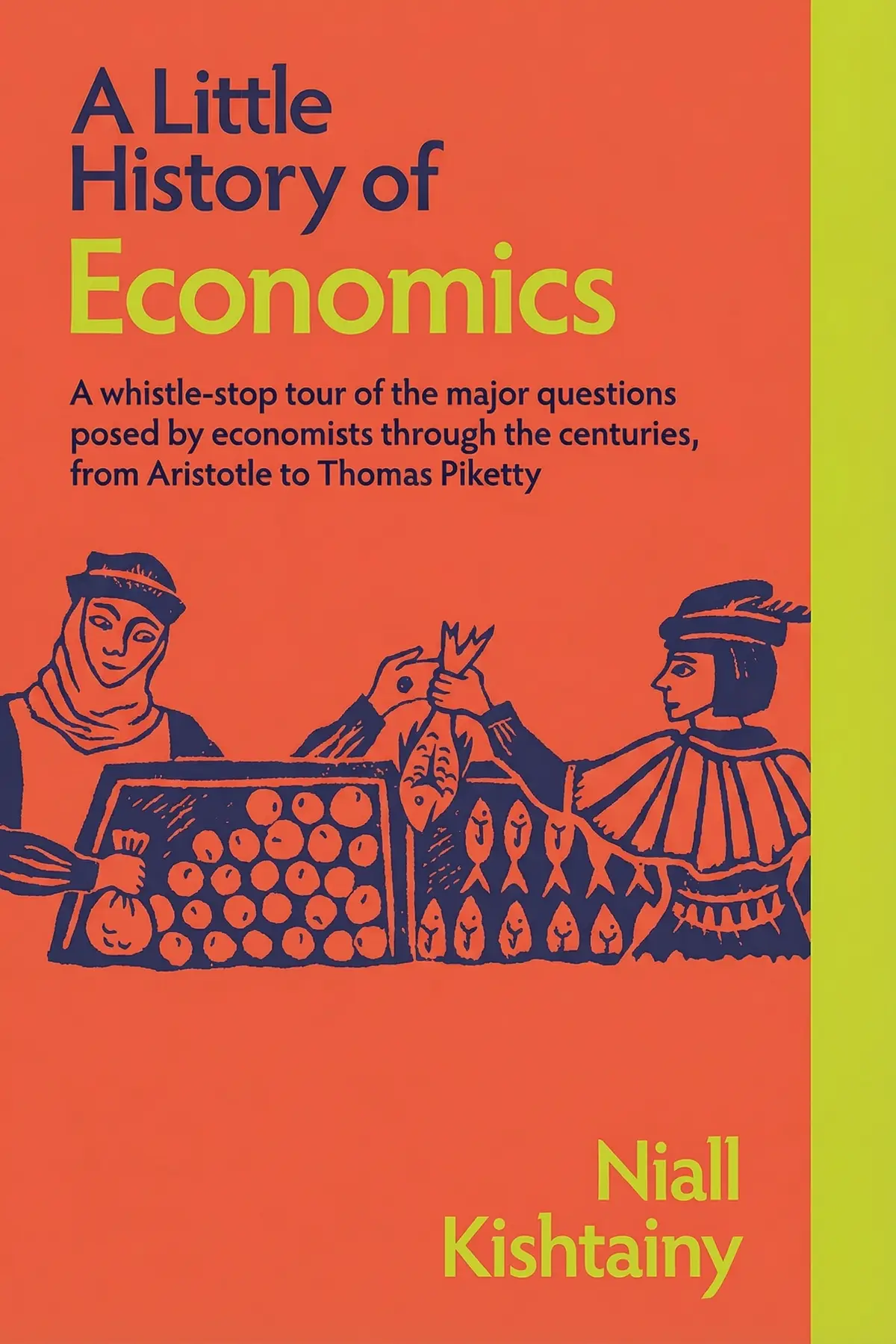
Niall Kishtainy
Steven C. Hayes
AUDIO SUMMARY AVAILABLE
Get the key ideas from Factfulness by Hans Rosling, plus 5,000+ more titles in English and Thai.







