
20 min 33 sec
False Economy: A Surprising Economic History of the World
By Alan Beattie
Explore how deliberate policy choices, rather than geographical destiny or cultural fate, determine the wealth of nations through a fascinating journey across global economic history, from ancient Rome to modern China.
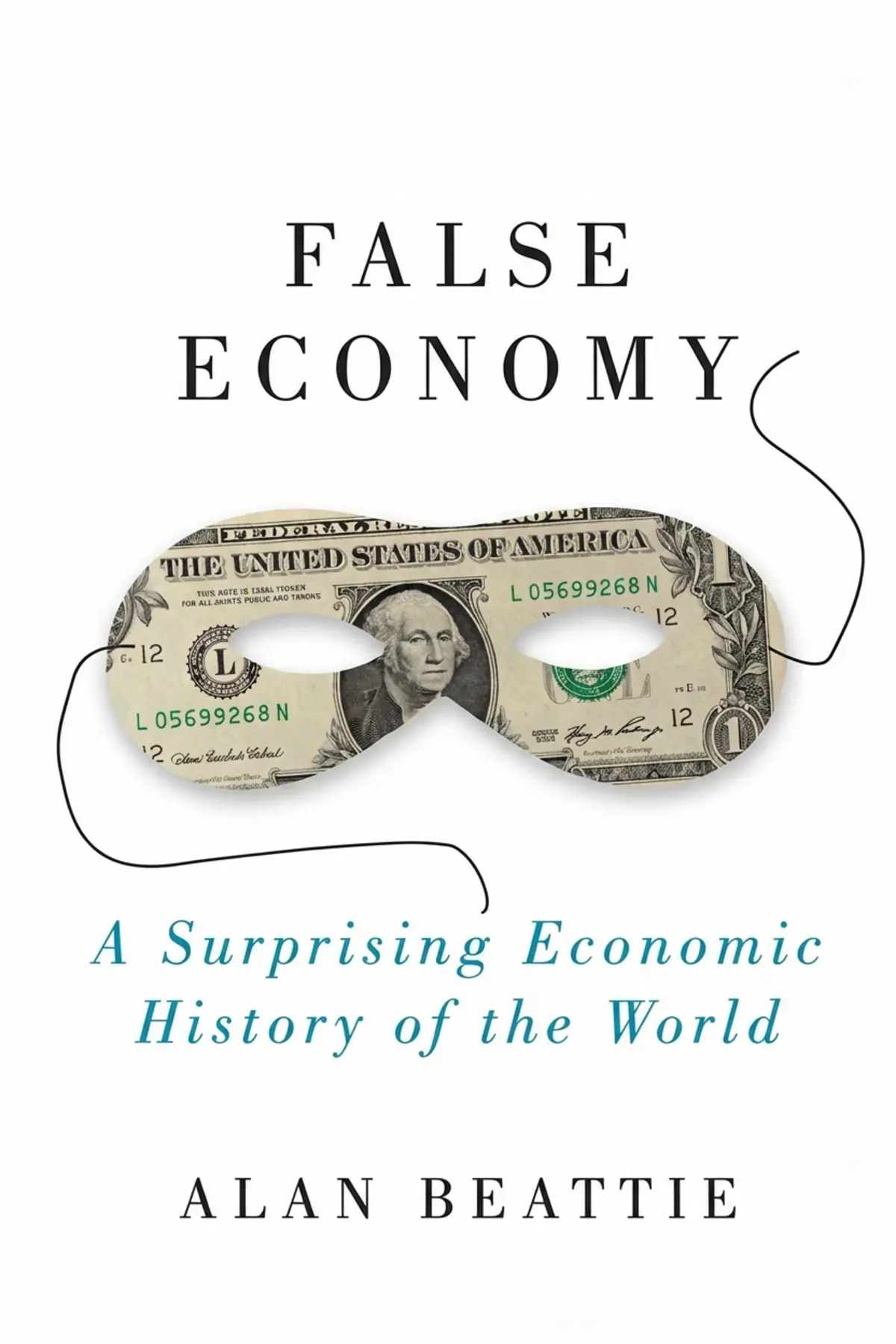
Table of Content
1. Introduction
1 min 44 sec
Why do some parts of the world seem to flourish effortlessly while others remain trapped in cycles of poverty and instability? For a long time, we’ve leaned on comfortable explanations to answer this question. We tell ourselves it’s about the weather—that tropical heat makes people less productive while temperate climates encourage industry. We point to religion, suggesting that certain belief systems are naturally better at fostering capitalism. Or we look at the map and assume that having vast stores of gold, oil, or diamonds is a guaranteed ticket to wealth.
But if you look closer at the actual flow of history, these explanations start to crumble. In this exploration of global economic development, we are going to challenge those easy assumptions. We will see that geography and culture aren’t nearly as powerful as the specific decisions made by governments and the institutions they build. Economic history isn’t a pre-written script dictated by fate; it’s a series of active choices, some of which lead to long-term prosperity and others that lead to spectacular collapse.
Through the lens of Alan Beattie’s work, we will trace the diverging paths of nations that once looked remarkably similar. We’ll examine why the way a country divides its land in the 1800s can still dictate its stability today, and why having too many natural resources can sometimes be more dangerous than having none at all. The central throughline here is agency. By the end of this journey, you’ll understand that the world’s economic map wasn’t drawn by nature, but by human hands, and that understanding these past choices is the only way to navigate a better future in our globalized world.
2. The Fork in the Road for the Americas
2 min 38 sec
Discover how two nations with nearly identical starting points—the United States and Argentina—ended up on opposite ends of the global economic spectrum because of how they chose to distribute their land.
3. The Role of Urbanization and Parasitic Cities
2 min 45 sec
Not all cities are engines of growth; learn why some urban centers act as drains on a nation’s resources while others drive diverse economic success.
4. Trade Routes and the Logic of the Soil
2 min 38 sec
From Egyptian wheat to Peruvian asparagus, explore how the combination of shipping logistics and agricultural choices defines a nation’s place in the world market.
5. The Paradox of the Resource Curse
2 min 16 sec
Discover why stumbling upon a fortune in oil or diamonds can actually be the worst thing to happen to a country’s economy.
6. Debunking the Myth of Religious Fate
2 min 20 sec
Does a country’s faith determine its bank account? We look at why religious explanations for economic success don’t hold up under historical scrutiny.
7. Why Good Policies Outweigh Good Intentions
2 min 19 sec
Explore the surprising reality that a corrupt leader with sound economic policies can sometimes achieve more for a nation than an honest leader with flawed ones.
8. The Power of Adaptation: Russia vs. China
2 min 33 sec
Analyze why China succeeded in transitioning its economy while Russia struggled, and what this tells us about a nation’s ability to change its destiny.
9. Conclusion
1 min 20 sec
As we look back at the diverse histories of the nations we’ve discussed, one truth stands out above all others: geography is not destiny, and culture is not a cage. The divide between the world’s richest and poorest nations isn’t a result of the stars or the soil, but of the choices made at the crossroads of history. We’ve seen how land policies in the 19th century can create a thriving middle class or a stagnant elite, how natural resources can be a blessing or a curse depending on the institutions that manage them, and how even the best intentions can be derailed by poor economic logic.
The most important takeaway is a sense of possibility. If economic success is a result of choices, then it is always within reach for those willing to change their policies. Whether it’s a nation deciding to invest in its rural infrastructure, a government choosing to create a transparent rainy-day fund for its resource wealth, or a society deciding to open its borders to new ideas and trade—these are the levers of progress. We should never resign ourselves to the idea that some places are just ‘meant’ to be poor. History shows us that with the right choices, any nation can rewrite its story and claim its place in a prosperous global future.
About this book
What is this book about?
False Economy challenges the fatalistic view that a country’s economic success is predestined by its climate, natural resources, or religious traditions. Instead, Alan Beattie argues that the prosperity or poverty of a nation is almost always the result of specific, often difficult choices made by its leaders and citizens at critical historical junctures. By comparing nations that started with similar advantages but ended up with vastly different outcomes—such as the United States and Argentina—the book illustrates how land distribution, trade policies, and urban development shape the long-term trajectory of a society. The narrative takes listeners from the coffee fields of Africa to the oil fields of the Middle East, revealing why some resources become a curse while others build a future. Ultimately, the promise of this exploration is to show that economic failure is not a permanent sentence and that any nation can chart a new course by learning from the successes and blunders of the past.
Book Information
About the Author
Alan Beattie
Alan Beattie has a master’s degree in economics from Cambridge University. After working as an economist for the Bank of England, he joined the Financial Times in 1998, and became the newspaper’s world trade editor in 2004.
Ratings & Reviews
Ratings at a glance
What people think
Listeners consider this work to be fascinating and stimulating, calling it an enlightening read that offers top-tier analysis of diverse economic subjects.
Top reviews
Manika
As someone who usually struggles with dry economics, I found these historical vignettes surprisingly accessible and quite thought-provoking. Beattie has a gift for taking complex theories—like Mancur Olson’s interest group theory—and explaining them through Peruvian asparagus exports. It’s the kind of book that makes you look at the grocery store or a gas station in a completely different way. He challenges the lazy assumption that some countries are just naturally 'better' than others. Instead, he shows how specific moments in history, like the repeal of the Corn Laws, set off chain reactions that we are still feeling today. The writing is incredibly smooth, and the way he weaves together history, sociology, and trade policy is impressive. Even when I didn't agree with his conclusions, I appreciated the way he presented the analysis. This is a must-read for anyone wanting to see the 'big picture' of global economic history.
Show moreDuang
Truth is, we often blame 'culture' or 'religion' for poverty when the reality is actually just a series of terrible policy choices. Beattie does a fantastic job of proving that Argentina isn't poor because of its Spanish heritage, but because of how it managed its land and trade. It’s a powerful argument for human agency in a world that often feels like it's governed by forces beyond our control. The book is definitely pro-globalization, but it’s not blind to the failures of the current system. I especially liked the comparison between 'honest' Tanzania and 'corrupt' Indonesia. It challenges your preconceptions about what actually drives growth in the developing world. It’s easily one of the most interesting books I’ve read this year.
Show moreOn
The chapter on the divergent paths of Argentina and the United States alone makes this worth the cover price. Beattie argues convincingly that economic success isn't just about what you have, but what you choose to do with it. While the comparison of landowners versus smallholders in the 18th century is fascinating, the book occasionally feels like it’s skimming the surface of complex issues. It’s written in that crisp, authoritative Financial Times style that makes everything sound like common sense, even when the data is a bit thin. I appreciated the move away from geographic determinism, though some chapters feel like they are oversimplifying the impact of colonial history. It’s a great pick for fans of pop-economics who want more historical context than your average Gladwell book.
Show moreNadia
Picked this up because I enjoy Freakonomics, but Beattie’s tone feels a bit more like a dry lecture. The premise is solid: countries aren't doomed by fate, but by their own policy decisions. I found the section on 'Dutch disease' and the resource curse to be the strongest part. However, the author’s tendency to breeze past counterarguments can be frustrating. To be fair, it’s intended for a general audience, so the lack of heavy statistics is probably fine for most readers.
Show morePannipa
Finally got around to reading this and I’m genuinely impressed by how Beattie dismantles the idea of geographic predestination. The comparison between the US and Argentina is a masterclass in explaining how land distribution shapes a nation's future. It’s refreshing to see an economist acknowledge that 'fate' is often just a collection of bad decisions made by elites. My only gripe is that the chapter on Islam felt a bit underdeveloped compared to the others. He rejects the 'Protestant work ethic' idea, which is great, but his alternative explanation feels a bit rushed. Still, the writing is engaging and keeps you moving through topics that could easily become mind-numbingly boring in other hands.
Show moreSuthinee
Ever wonder why Africa doesn't have a massive cocaine trade while South America is riddled with it? Beattie uses this bizarre question to dive into a deep analysis of transaction costs and infrastructure. He explains that even illegal industries need a certain level of political and physical stability to thrive. It’s these kinds of counterintuitive examples that make the book such an eye-opening experience for the casual reader. Look, the book isn't perfect, and the author definitely has a specific pro-market agenda that peeks through occasionally. But for anyone trying to understand the 'why' behind global inequality, this offers a much more nuanced perspective than the usual 'they're just poor' tropes. He makes a compelling case that even the most successful entrepreneurs, whether they're selling beef or narcotics, are dependent on the underlying systems their governments build. It’s a fascinating, multifarious look at why some places flourish while others seem to stagnate indefinitely despite having resources.
Show moreMethinee
By focusing on the 'embedded water' in Egypt’s grain imports, the author highlights how trade is often about invisible resources. This was probably the most insightful chapter for me, as it changed how I think about food security and national policy. Beattie is at his best when he is using specific, odd examples to illustrate broad economic trends. He manages to make topics like refrigerated railcars and the telegraph feel exciting because of how they revolutionized the beef industry. To be fair, the book can be a bit chaotic at times, jumping from one continent to another with very little transition. But if you enjoy learning about the minutiae of history, you’ll find plenty to like here.
Show moreMarco
Beattie’s writing is crisp and professional, yet I found his dismissive take on pandas as 'incompetent, inefficient buffoons' to be a bit jarring. He uses the panda as a metaphor for countries that are stuck on a path toward extinction without external help. While his logic about economic efficiency makes sense, the cold lens he applies to every living thing feels a little heartless. The book is essentially a collection of nine comparative scenarios that are hit-or-miss depending on your interests. The stuff on 'embedded water' in Egypt was brilliant, but the section on corruption in Indonesia felt a little repetitive. It's a decent read for a history buff, but it lacks a strong, cohesive emotional core that would make it truly memorable.
Show moreIngrid
This book feels like the peak of neoliberal arrogance, wrapping personal opinions in a 'matter-of-fact' style that often lacks supporting evidence. Beattie spends a lot of time complimenting the IMF and defending free trade while completely ignoring the human cost of these policies. His thesis—that economic destiny is a choice—is constantly undermined by his own examples of geographic and historical 'accidents.' One minute he’s saying it’s all about choices, and the next he’s citing Guns, Germs, and Steel to explain Africa's struggles. It’s a confusing, contradictory mess that tries to be subversive but ends up sounding like a defense of the status quo. If you want a well-argued leftist perspective, stick to something with more substance.
Show moreMai
Not what I expected from a 'surprising economic history' because many of the arguments felt incredibly middle-of-the-road and safe. Beattie writes like he’s trying to emulate Malcolm Gladwell but he lacks the narrative flair to really pull off the 'big idea' format. He makes broad, sweeping assertions about literacy in India or the 'uselessness' of certain species without providing the citations I’d expect from a work of non-fiction. Frankly, the book feels like a collection of Financial Times op-eds that have been stretched out into chapters. It’s not that the writing is bad—it’s actually quite professional—it’s just that the arguments lack the bite and the data required to be truly convincing.
Show moreReaders also enjoyed
1929: Inside the Greatest Crash in Wall Street History--and How It
Andrew Ross Sorkin
23 Things They Don’t Tell You About Capitalism
Ha-Joon Chang
A Little History of Economics
Niall Kishtainy
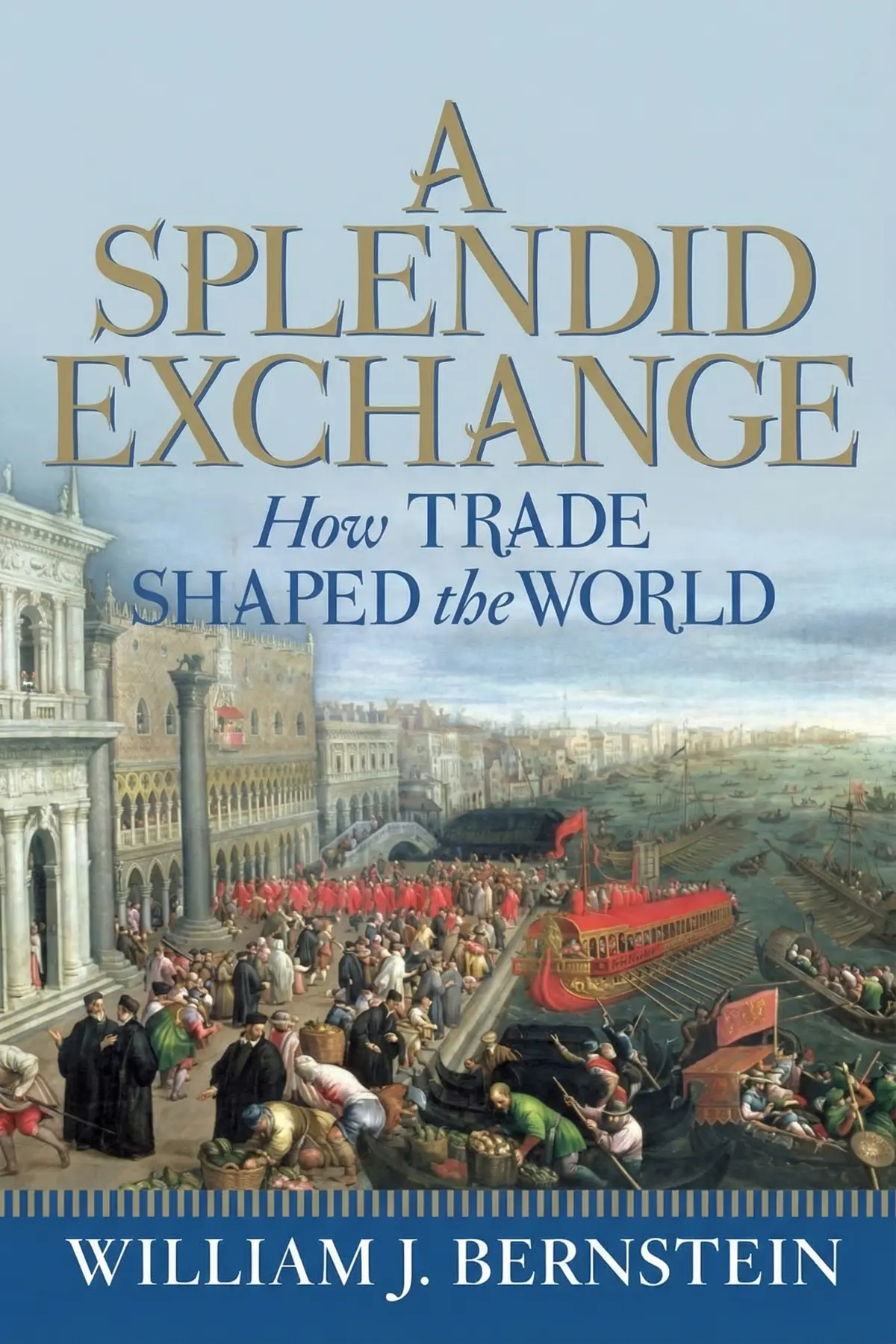
A Splendid Exchange: How Trade Shaped the World
William J. Bernstein
AUDIO SUMMARY AVAILABLE
Listen to False Economy in 15 minutes
Get the key ideas from False Economy by Alan Beattie, plus 5,000+ more titles in English and Thai.
- 5,000+ titles
- Listen as much as you want
- 7-day free trial
- Cancel anytime







