
17 min 41 sec
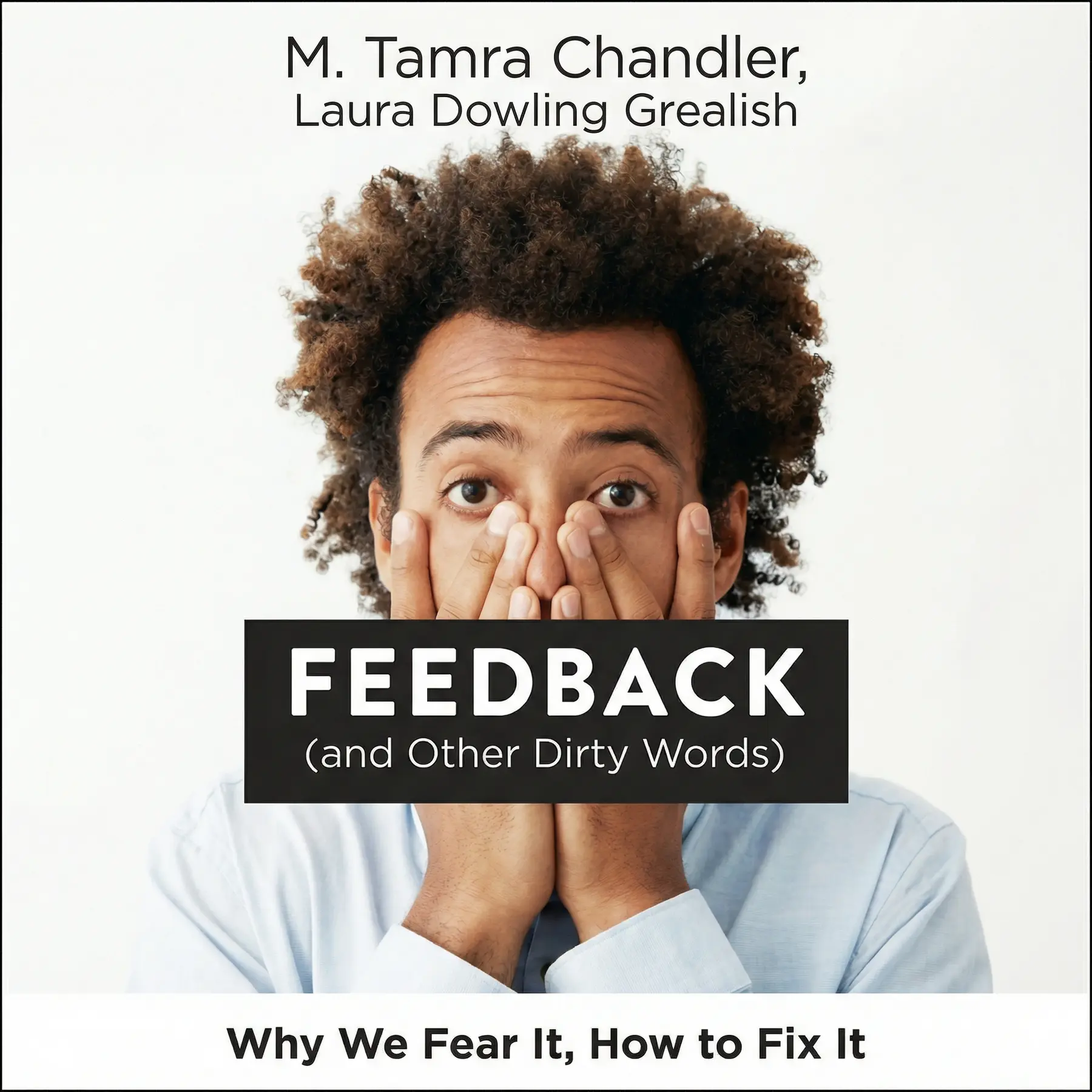
Feedback (and Other Dirty Words): Why We Fear It, How to Fix It
Feedback (and Other Dirty Words) explores why we dread performance critiques and offers a practical roadmap to transform feedback from a source of workplace anxiety into a powerful catalyst for professional growth.
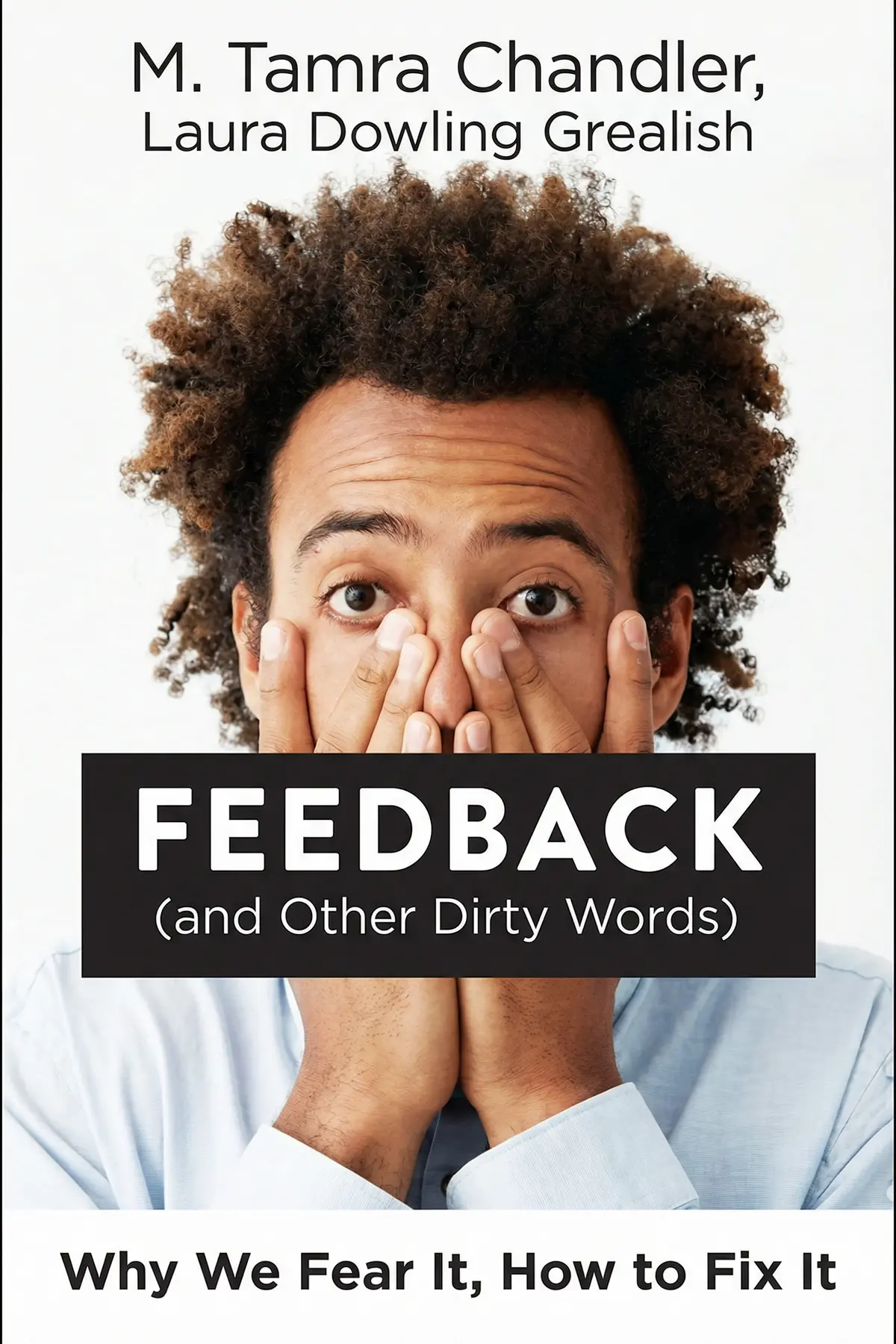
Table of Content
1. Introduction
2 min 03 sec
Imagine you are sitting at your desk, focused on your tasks, when your supervisor walks by and says those five dreaded words: ‘Come see me for feedback.’ For most of us, this isn’t an invitation to grow; it’s a trigger for immediate anxiety. Your heart rate climbs, your palms start to sweat, and your mind immediately begins cataloging every mistake you might have made over the last six months. In modern professional life, ‘feedback’ has become a dirty word—something we associate with judgment, power plays, and the clinical coldness of annual reviews.
But what if we could reclaim this word? What if feedback wasn’t a weapon, but a gift? In Feedback (and Other Dirty Words), authors M. Tamra Chandler and Laura Dowling Grealish argue that our collective fear of feedback is holding back both our personal potential and our organizations’ bottom lines. They suggest that the problem isn’t the concept of feedback itself, but the way it’s been branded and delivered for decades. We’ve been trained to see it as a post-mortem on our failures rather than a roadmap for our future.
This summary will guide you through a total reimagining of how we share information. We’ll look at the biological reasons why our brains treat a performance review like a physical attack, and more importantly, how we can override those instincts. We will explore the essential foundations of trust and ‘noticing’ that make growth possible. You’ll learn how to stop being a passive recipient of criticism and become a proactive seeker of insights that actually matter.
By the end of this journey, the goal is to shift your perspective entirely. We want to move from a world where feedback is a source of dread to one where it is a regular, low-stakes, and highly valuable part of your daily routine. This isn’t just about making the office a nicer place to work; it’s about unlocking a level of performance that is only possible when people feel safe enough to learn, fail, and improve together. Let’s dive into how we can clean up the ‘dirty’ reputation of feedback and turn it into a force for good.
2. The Biological Roots of Feedback Fear
2 min 32 sec
Discover why your brain treats a simple performance review like a life-threatening encounter with a predator and learn how to regain control of your emotions.
3. Redefining Feedback for a Growth Mindset
2 min 13 sec
Learn how a shift in definition and mindset can transform criticism from a painful judgment into a vital fuel for long-term professional success.
4. The Pillars of Trust and Noticing
2 min 10 sec
Explore why the relationship between people matters more than the words they say and how neutral observation can replace judgmental critiques.
5. Becoming a Proactive Seeker of Insights
2 min 11 sec
Stop waiting for the ‘dreaded talk’ and start taking charge of your own growth by asking for specific, targeted feedback from diverse sources.
6. The Art of Receiving with Curiosity
2 min 21 sec
Learn to navigate the emotional minefield of hearing tough news by assuming positive intent and using strategic questions to uncover the truth.
7. Giving Feedback That Actually Sticks
2 min 24 sec
Shift your approach from infrequent ‘performance dumps’ to frequent, bite-sized insights that empower others to improve in real-time.
8. Conclusion
1 min 47 sec
We have spent so much of our professional lives treating feedback like a dirty word—a necessary evil that we have to endure once a year. But as we’ve seen, this doesn’t have to be the reality. By understanding the biological roots of our fear, we can learn to calm our ‘primitive’ brains and engage our ‘wise’ brains. We can shift from a fixed mindset to a growth mindset, seeing every critique not as a judgment of our character, but as an opportunity to sharpen our skills.
The throughline of a healthy culture is trust, and that trust is built through the daily practice of noticing and the 5:1 ratio of positive interactions. We’ve learned that being a seeker of feedback is a power move that puts us in control of our own development. We’ve discovered that receiving feedback with curiosity and giving it in frequent, bite-sized pieces transforms the process from a source of anxiety into a source of constant, incremental improvement.
So, where do you start? The most immediate action you can take is to change the way you ‘notice’ the world around you. Today, try to find one specific thing a colleague did well and share that observation with them. Don’t make it a big production; just a quick, factual note of appreciation. This small act begins the process of building trust and normalizing the flow of information.
If you’re feeling brave, ask a peer for one specific insight on a project you’re currently working on. By taking these small steps, you are doing more than just improving your own performance; you are helping to clean up the ‘dirty’ reputation of feedback for everyone around you. When we stop fearing feedback and start embracing it as the fuel for our growth, there is no limit to what we can achieve. Let’s turn feedback into the most valuable word in our professional vocabulary.
About this book
What is this book about?
Most professionals experience a physical sense of dread when they hear the phrase, We need to talk about your performance. This book addresses the fundamental breakdown in how we communicate at work, explaining that our biological fear of feedback is a relic of evolution that no longer serves us. Authors M. Tamra Chandler and Laura Dowling Grealish argue that feedback has become a dirty word because it is often misused as a tool for punishment or delivered in vague, unhelpful bursts. The promise of this guide is a complete cultural overhaul. By shifting from a fixed mindset to a growth mindset and establishing foundations of trust, the book demonstrates how frequent, bite-sized, and specific communication can double financial gains and boost employee motivation. It provides actionable strategies for seekers, receivers, and givers of feedback, ensuring that every interaction becomes an opportunity for improvement rather than a cause for stress.
Book Information
About the Author
M. Tamra Chandler
Tamra Chandler is the CEO and Founder of PeopleFirm, recognized by Forbes as one of the premier management consultancies in America. Her firm partners with major global brands like Nike, Nordstrom, and T-Mobile to revolutionize internal culture and leadership. Laura Dowling Grealish serves as a senior consultant at PeopleFirm, specializing in helping organizations rethink performance management and professional development.
Ratings & Reviews
Ratings at a glance
What people think
Listeners find the strategies for converting feedback into a professional advancement tool to be exceptionally practical and easy to implement. While perspectives differ on the uniqueness of the fundamental principles, listeners value the authors’ dedication to fostering trust through consistent, equitable, and targeted interactions. Moreover, they highlight the benefit of the evidence-based case studies, with one listener remarking that the guide offers superb advice for cultivating both collective teams and individual workers.
Top reviews
Pranee
This book completely flipped my perspective on those dreaded annual reviews. Instead of treating feedback like a surgical strike, Chandler and Grealish argue for making it a "frequent, fair, and focused" part of daily life. The writing is engaging and surprisingly funny, which helps when you're tackling such a heavy subject. I particularly appreciated the emphasis on trust; without it, even the best advice falls flat. My only minor gripe is that some of the workplace scenarios felt a bit idealized for a high-stress corporate environment, but the core principles are undeniably solid. If you want to stop cringing when your boss says "can we talk?", this is a must-read for your professional development.
Show moreRiley
Finally got around to reading this, and the timing couldn't have been better for my team. We’ve been struggling with communication silos, and the "frequent, fair, and focused" pillars gave us a common language to start repairing that. It’s not just for the office, though; I found myself applying the "seeking" feedback tips in my personal life with great results. The authors come across as very impressive and knowledgeable individuals who truly care about the human element of business. It’s refreshing to read a leadership book that doesn't feel like it was written by an AI. This is a powerful resource for anyone interested in personal growth and creating meaningful connections.
Show moreJong
After hearing about Chandler's work on leadership, I jumped into this expecting a dry HR manual, but I was pleasantly surprised by the warmth and practicality. The authors do an incredible job showing how we constantly bungle our communications. They offer specific examples that make the "frequent and focused" framework easy to visualize in a real office setting. Truth is, we all have blind spots, and the research-backed approach here helps bridge that gap between intention and impact. I did think the middle section dragged a bit with repetitive points, yet the overall message remains vital. It’s a great tool for anyone looking to build a more transparent culture within their team.
Show moreKob
The chapter on rewriting the "feedback" script is worth the price of admission alone. Most of us are conditioned to fear the "sandwich method" or vague critiques, but this book provides a much-needed alternative. By focusing on growth and connection rather than just "fixing" people, the authors provide a pathway to genuine improvement. I loved the specific prompts for seeking feedback, like asking "what is the one thing I should do more of?" instead of a general "how am I doing?". It’s a very practical guide. I'm taking off one star because the layout was a bit cluttered, making it hard to find specific tips later on. Still, it's a solid addition to any manager's library.
Show moreKet
As someone who has always avoided giving negative critiques, I found the 'fair and focused' framework incredibly practical. It takes the "gruesome" element out of the conversation. The book is packed with research-backed examples that explain why our brains go into lockdown during reviews. I especially liked the actionable advice on taking the Implicit Association Test to check our own biases before judging others. My only criticism is that the authors are very anti-360 survey, which doesn't quite align with my own positive experiences using those tools for leadership development. Despite that disagreement, the core message about building trust and frequent communication is absolutely spot on.
Show moreJoseph
Ever wonder why feedback feels like such a punch to the gut? This book explains the neuroscience behind that "fight or flight" response and offers a roadmap to fix it. While the concepts are helpful, I found myself comparing it to "Thanks for the Feedback" or "Let's Talk," and it didn't quite reach those heights for me. The advice is actionable, sure, but a lot of it feels like common sense packaged in new terminology. I enjoyed the section on the Implicit Association Test from Harvard—it’s a wake-up call regarding our hidden biases. It’s a decent introductory text for new managers, but seasoned leaders might find it a bit elementary and repetitive.
Show moreHazel
To be fair, the authors do a great job highlighting how poorly we usually handle these conversations, but I didn't find much here that felt truly revolutionary. If you are familiar with the FUKO method or basic radical candor, this will feel like a retread of familiar ground. The focus on trust and building a "growth-ready" culture is important, but the execution felt a bit "Blinkist-lite" in parts. I appreciate the emphasis on reducing the fear factor associated with critiques. It’s a quick read, and the tone is very accessible, which is a plus. If you're new to the workforce, grab it. If you've been leading teams for a decade, you can probably just skim the summaries.
Show moreSomboon
Look, the advice here is definitely sound, but it lacks a bit of the punch I was hoping for. The authors argue that feedback should be a positive force for improvement, which is a sentiment I totally get behind. However, the book spends a lot of time on the "why" and not quite enough on the difficult "how" when dealing with truly toxic employees. It’s a very "sunny" approach to a topic that is often quite messy. The tips on asking for specific examples to clarify vague feedback were the highlight for me. It’s a decent read for a plane ride, but it didn't change my life. I’d give it a 3.5 if I could.
Show moreGrace
Frankly, I have mixed feelings about the authors' stance on traditional feedback tools like the 360 survey. While they make some valid points about how these systems can be manipulated or biased, I think they throw the baby out with the bathwater. That said, the emphasis on creating "frequent" touchpoints rather than waiting for annual reviews is a game-changer. The tone is casual and conversational, making it an easy read. If you’re looking for a way to make your workplace less anxiety-ridden, there is definitely value here. It’s a solid 3-star book—useful for the basics, but perhaps a bit dogmatic in its dismissal of certain industry standards.
Show moreNoo
Not what I expected, unfortunately. While I agree that feedback is often "dirty" and poorly handled, the solution presented here felt a bit thin. My biggest issue was the authors' suggestion to ditch traditional tools like 360-degree surveys. I’ve seen those surveys work wonders when paired with the Zenger-Folkman research, so dismissing them entirely felt shortsighted. The writing style is energetic, but it often prioritizes buzzwords over deep, nuanced strategy. If you’ve never read a book on management before, you might find some gems, but for me, it lacked the "aha!" moments I was looking for. It felt more like a long-form blog post than a groundbreaking business book.
Show moreFeatured in
Readers also enjoyed

AUDIO SUMMARY AVAILABLE
Listen to Feedback (and Other Dirty Words) in 15 minutes
Get the key ideas from Feedback (and Other Dirty Words) by M. Tamra Chandler, plus 5,000+ more titles in English and Thai.
- 5,000+ titles
- Listen as much as you want
- 7-day free trial
- Cancel anytime







