
16 min 05 sec
Felt Time: The Psychology of How We Perceive Time
Felt Time explores the psychology behind how we experience duration, explaining why time flies or drags and how memory, biology, and mindfulness shape our perception of the passing moments.
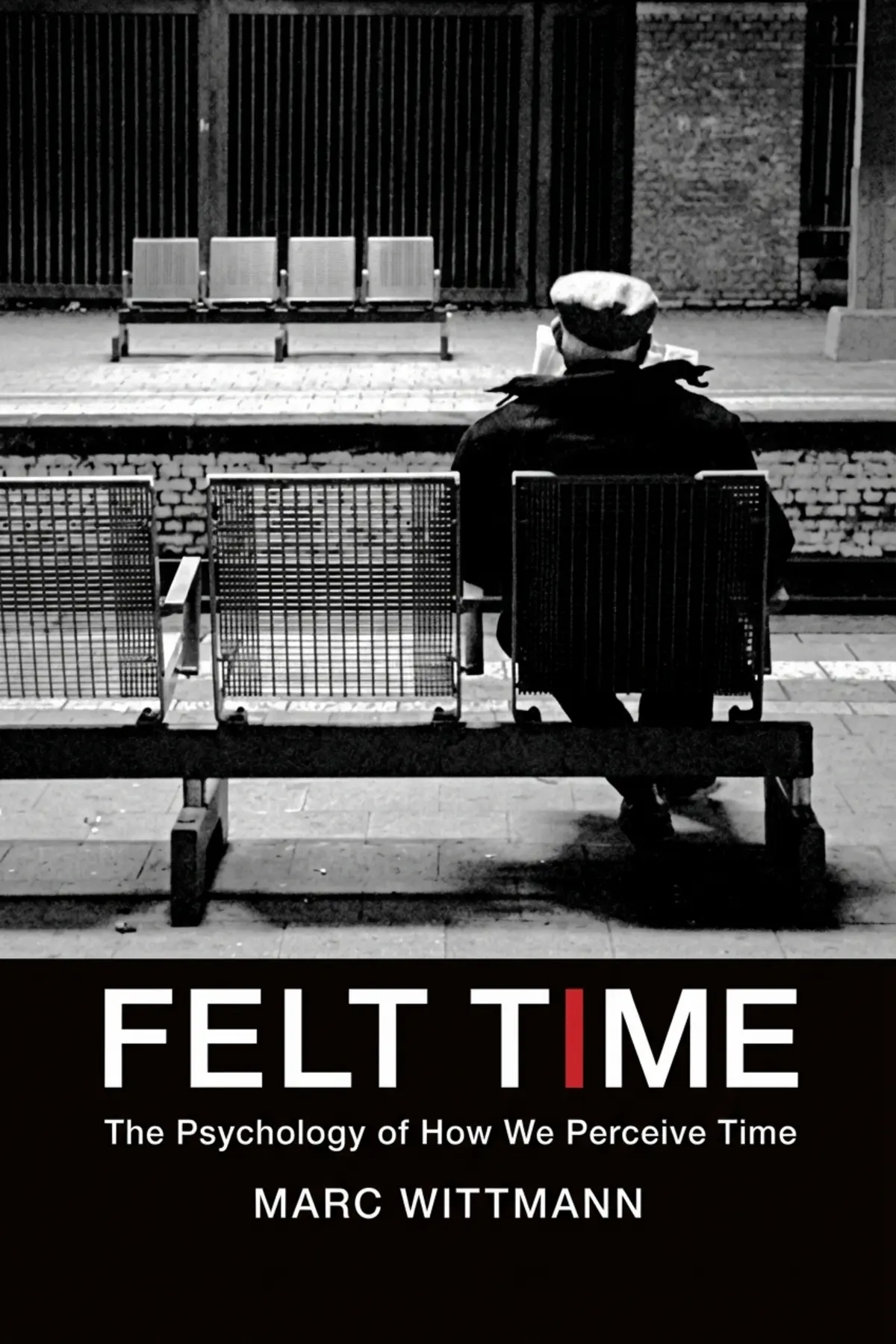
Table of Content
1. Introduction
1 min 40 sec
Have you ever looked at a clock during a long, tedious meeting and felt certain that at least twenty minutes had passed, only to realize it had been a mere sixty seconds? Or perhaps you’ve spent a wonderful evening with friends where hours disappeared in what felt like the blink of an eye. This strange, elastic quality of our lives is what we call felt time. It is the persistent, often invisible force that governs how we perceive our existence, yet it rarely aligns perfectly with the mechanical ticking on our wrists.
In this exploration of the psychology of time, we are going to dive deep into the mechanisms that make our days feel either cramped and frantic or vast and endless. We aren’t just talking about clocks and calendars; we are talking about the way your brain and body actually register the flow of existence. We possess an internal metronome that is constantly running in the background, influencing our moods, our decisions, and even our sense of self.
Over the course of this summary, we will uncover the throughline of the human experience: that time is not just a measurement of the external world, but a fundamental part of our internal biology. We will look at how our ancestors evolved to wait for rewards, how our brains define the concept of now, and why our memories can play tricks on us when we look back at the past. By understanding these psychological and physiological clocks, we can start to see why our lives feel the way they do and, perhaps more importantly, how we can take back the reins when the world feels like it’s moving too fast. Let’s begin by looking at the very gearwork of our internal timing systems.
2. Internal Timing Systems
2 min 15 sec
Explore the fascinating internal mechanisms that allow us to track the minutes without a watch, from mental pulse-counters to the biological rhythms that run deep within our cells.
3. The Power of Delay
2 min 10 sec
Why do humans have a unique ability to wait for long-term rewards, and how does this skill of delaying gratification determine our success and satisfaction in life?
4. The Three-Second Now
2 min 05 sec
Discover why our brains perceive the world in tiny, distinct chunks and how our short-term memory acts as the glue that binds these fleeting moments into a story.
5. Variation in Perception
2 min 09 sec
Investigate why no two people experience the same minute exactly the same way, and uncover the surprising truth behind why time seems to slow down during an accident.
6. The Memory Paradox
2 min 07 sec
Unravel the paradox of why a routine day feels endless while you live it but vanishes in memory, while a thrilling vacation feels fast but lasts forever in retrospect.
7. Taking Control of Time
2 min 06 sec
Learn how to reclaim your life from the frantic pace of the modern world using mindfulness and organizational strategies to find peace in the present moment.
8. Conclusion
1 min 33 sec
As we have seen, time is far more than just a series of numbers on a digital display. It is a deeply personal, biological, and psychological experience that shifts and bends based on our attention, our emotions, and our memories. We have learned that we carry an internal metronome within us, a system of pulses and biological rhythms that keep us in sync with the world around us. We’ve discovered that our unique human ability to value the future allows us to build meaningful lives, even if it requires the difficult work of delaying gratification.
Perhaps most importantly, we have uncovered the secret to why life seems to accelerate as we age and how we can use the memory paradox to our advantage. By seeking out novelty and breaking the chains of routine, we can expand our subjective experience of life. We don’t have to be passive passengers on a fast-moving train. Through mindfulness and a better understanding of our internal clocks, we can learn to appreciate the three-second window of the present, making each moment count for more.
In the end, the goal isn’t to find more time, but to find more life in the time we have. By being more conscious of our internal rhythms and the way we store our experiences, we can turn the frantic ticking of the clock into a steady, peaceful rhythm that supports our well-being rather than causing us stress. Take a moment today to step out of your routine, focus on the here and now, and truly feel the time that is yours to keep.
About this book
What is this book about?
Felt Time investigates the fascinating gap between objective clock time and the subjective experience of our lives. It delves into the internal clocks—both psychological and biological—that dictate our pace of life and shape our reality. By looking at evolutionary traits like delayed gratification and neurological phenomena like the three-second window of consciousness, the book reveals how our brains stitch fleeting moments together into a coherent narrative. The text also addresses the holiday paradox, explaining why exciting times feel fast in the moment but long in memory, while routine periods vanish into nothingness. Ultimately, it offers a scientific look at how we can use mindfulness to regain control over our hectic modern schedules. Readers will discover the secrets of their own internal metronome and learn why their sense of time is so deeply tied to their emotions and attention.
Book Information
About the Author
Marc Wittmann
Marc Wittmann is a German psychologist conducting research at the Institute for Frontier Areas of Psychology and Mental Health. He is a leading expert on how the human mind interprets duration and temporal sequence. His research bridges the gap between neuroscience and the subjective experience of mental health.
Ratings & Reviews
Ratings at a glance
What people think
Listeners find the work captivating and a swift read, offering detailed insights across a broad spectrum of subjects. They value the book's pacing, with one listener observing that it blends the philosophy of mindfulness with neuroanatomy, and another pointing out its emphasis on the human perception of time.
Top reviews
Boy
Finally got around to reading this, and I am genuinely impressed by how Wittmann handles such a complex topic. The book is a quick read that packs a punch, particularly in how it links our sense of self to our perception of duration. I loved the blend of neuroanatomy and philosophy; it’s rare to find a scientist who is willing to engage with the 'felt' experience of life so directly. The explanation of why time seems to expand during moments of fear was a total 'aha' moment for me. It’s a thorough overview that provides a lot of food for thought regarding how we choose to spend our days. Highly recommended for anyone who feels like life is moving too fast and wants to understand the machinery behind that feeling.
Show moreEleni
Truth is, I've been noticing my perception of time shifting lately, and this book provided the exact answers I was looking for. The way Wittmann explains the paradox of time speeding up as we age—while certain moments of intensity seem to last forever—is brilliant. I was particularly fascinated by the idea that our brains might actually be speeding up during crises, making the world seem slower. It’s a very engaging read that manages to be both informative and deeply relatable. The inclusion of brain research alongside philosophical questions about the self creates a very holistic view of human experience. If you've ever felt like your life is a blur of routine, this book will help you understand why and how to fix it.
Show moreCarter
Wittmann offers a compelling dive into the biological mechanisms that dictate our internal clock. I found the sections on the anterior insular cortex particularly enlightening, as they bridge the gap between physical sensation and the abstract feeling of time passing. The pacing of the book is swift, making it an engaging read for anyone curious about neuroanatomy without wanting to drown in overly dense jargon. It successfully combines mindfulness philosophy with hard science in a way that feels mostly cohesive. However, I did feel the author leaned a bit too heavily on certain theories without offering enough critical pushback. Despite that minor gripe, the exploration of how our biological systems 'speed up' during life-threatening events like car accidents provides a fascinating perspective on human survival.
Show moreCholada
As someone who struggles with 'time flying' as I get older, I found this enlightening and quite practical. Wittmann’s focus on mindfulness as a tool to slow down our subjective experience of time is a great takeaway, though he does have a bit of a blind spot regarding class. Not everyone has the luxury of time to practice mindfulness or seek out constant novel experiences to 'expand' their days. That said, the neuroscientific explanations for why routine kills our sense of time were very convicting. The book is paced well and doesn't overstay its welcome. It gave me a lot to think about regarding my own habits and how I perceive my history. A solid four-star read for its accessibility and thoroughness.
Show moreViolet
Frankly, it's a solid primer. If you know absolutely nothing about the psychology of time, this will be an eye-opening experience. The author breaks down complex brain scans into digestible bits of information. I found the sections on how we 'savor' time particularly useful for my daily life. The book is short, which I appreciated, as it doesn't get bogged down in unnecessary filler. It’s an engaging and quick read that covers a wide range of topics from memory to biological clocks. While it might be a bit basic for experts, it serves as a great entry point for the curious layperson. I’ll definitely be looking at my watch—and my life—a little differently from now on.
Show moreKae
Ever wonder why summer vacations felt like an eternity when you were seven, yet now a whole year disappears in a blink? This book tackles that exact phenomenon by looking at how routine and novelty affect our temporal consciousness. I appreciated the mathematical breakdown of how 1/10th of a life feels different than 1/80th, though the book doesn't quite explain why some people experience this more intensely than others. The chapters on delayed gratification and memory were the highlights for me. Truth is, while the material is fascinating, the structure felt a bit disjointed at times. It is a decent introduction to the psychology of time, but if you already have a background in the subject, you might find yourself skimming through the basics.
Show moreAir
The chapter on the anterior insular cortex was a standout for me, but the rest of the book was hit or miss. As a fan of science writing, I enjoyed learning about how our brains speed up to process trauma, creating that 'slow motion' effect during accidents. However, I was disappointed that the author didn't venture into the intersection of psychology and physics. Why mention temporal consciousness without at least a nod to relativity or the possibility of wormholes? It feels like psychologists and physicists are living on two different planets. Look, it’s a fine book for a casual weekend read if you want a basic introduction to the topic. Just don't expect a deep philosophical breakthrough or a bridge between different scientific disciplines.
Show moreAlejandra
Look, I enjoyed the information, but the structure felt disjointed. One minute we are talking about brain anatomy, and the next we are diving into old philosophical theories without much transition. It felt like the editor just let the author stop writing mid-thought because the ending was incredibly abrupt. I did learn a few new things about how the body’s internal systems speed up during moments of intense emotion, which was cool. But the lack of personal narratives made it feel a bit 'cold' compared to other popular science books. It’s a good book, not a great one. It provides a decent overview but fails to generate the kind of deep insight that makes a book stay with you for years.
Show moreDaranee
Not what I expected based on the title, unfortunately. While the research presented is clearly thorough, the writing style itself is incredibly dry and academic, making it difficult to stay focused for long stretches. I was really hoping for some personal stories or a narrative touch similar to the works of Oliver Sacks, but instead, it felt like reading a series of interconnected research papers. The book ends so abruptly that I actually checked to see if pages were missing from my copy. To be fair, there is good information here for a student, but for the general public looking for an engaging narrative, it misses the mark. It lacks the warmth and insight needed to make the data truly resonate.
Show moreMatteo
To be fair, the research is solid, but the execution left me wanting much more. The author presents concepts like Freud’s psychoanalysis and terror management theory without any real critical analysis, which felt a bit dated and intellectually lazy. It felt less like a book with a central thesis and more like a collection of vaguely interconnected studies that never quite reach a satisfying conclusion. There is also a strange claim about animal consciousness that is presented as fact despite being impossible to prove. Frankly, I found the lack of a cohesive argument frustrating. By the time I reached the final chapter, I realized I hadn't gained many new insights beyond what a basic Wikipedia search on time perception would provide.
Show moreReaders also enjoyed
59 Seconds: Change Your Life in Under a Minute
Richard Wiseman
A Liberated Mind: How to Pivot Toward What Matters
Steven C. Hayes
Acting with Power: Why We Are More Powerful Than We Believe
Deborah Gruenfeld
Age of Propaganda: The Everyday Use and Abuse of Persuasion
Anthony Pratkanis
AUDIO SUMMARY AVAILABLE
Listen to Felt Time in 15 minutes
Get the key ideas from Felt Time by Marc Wittmann, plus 5,000+ more titles in English and Thai.
- 5,000+ titles
- Listen as much as you want
- 7-day free trial
- Cancel anytime







