

20 min 06 sec
Fourteen Talks by Age Fourteen: The Essential Conversations You Need to Have with Your Kids Before They Start High School
Fourteen Talks by Age Fourteen provides parents with a strategic roadmap for navigating the critical transition into adolescence through fourteen essential, connection-building conversations on independence, technology, and character.
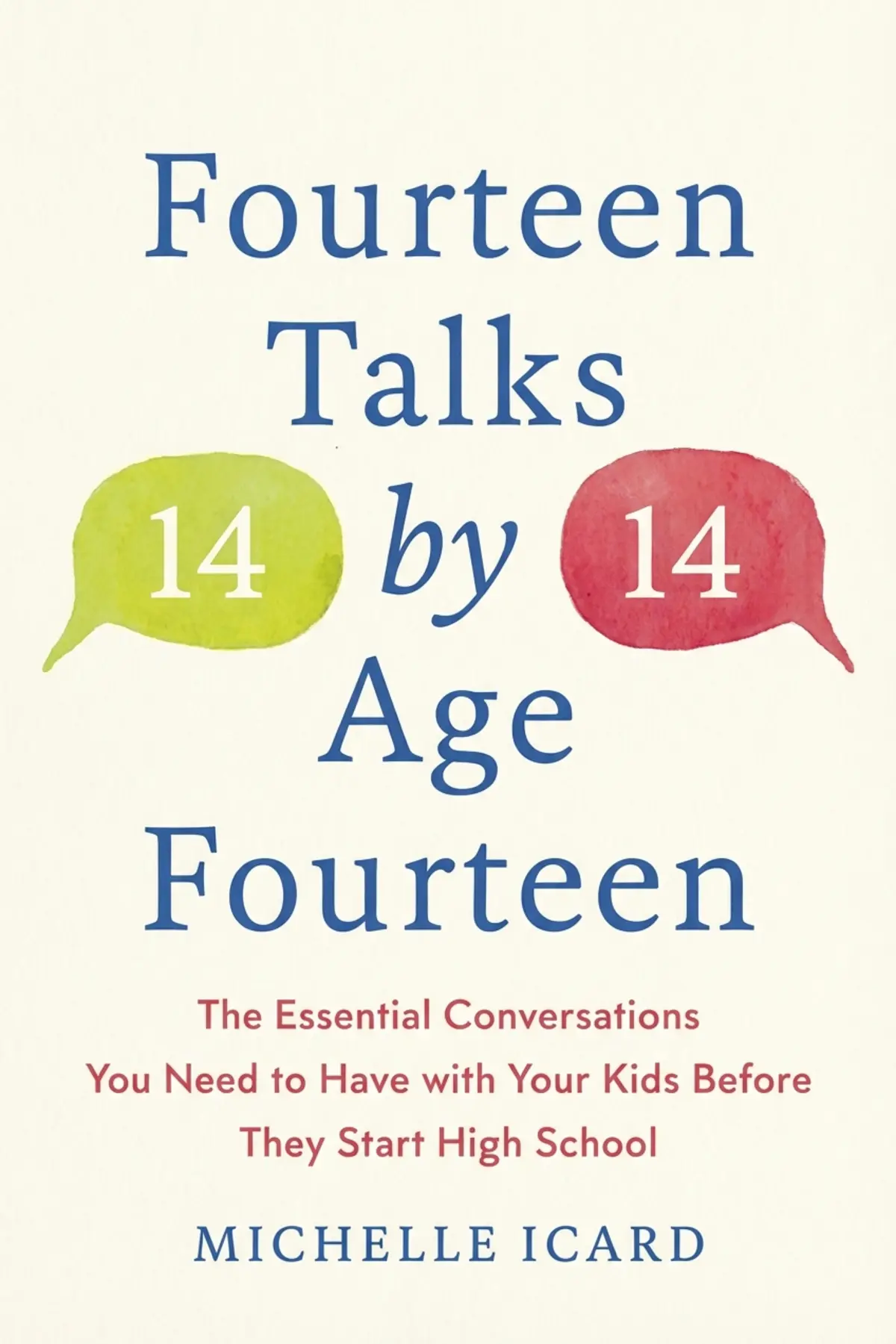
Table of Content
1. Introduction
2 min 19 sec
In generations past, many parents believed that they only had to endure one truly difficult conversation with their children. This was the infamous lecture about the birds and the bees, usually delivered in a single, agonizing sitting that left both the adult and the child looking for the nearest exit. We often thought of this as the big milestone—once you checked that box, your job of explaining the world was largely done. But as anyone living in the modern world knows, that approach is no longer sufficient. Our children are entering a landscape that is far more complex than the one we grew up in, and preparing them for the jump into adulthood requires a much more nuanced strategy. It isn’t about one talk; it’s about a continuous stream of hundreds of small, intentional conversations that happen over the course of years.
The most critical window for these conversations is the period leading up to age fourteen. This is the bridge between the relative simplicity of childhood and the high-stakes environment of high school. During these middle school years, something profound happens to the way children communicate. If you are a parent of a tween, you have likely noticed that the old ways of connecting—the ways that worked when they were eight or nine—suddenly seem to fall flat. You might find yourself met with eye-rolls, silence, or defensive posturing. It can feel like you and your child are suddenly speaking two different languages.
This is where the work of Michelle Icard becomes essential. In Fourteen Talks by Age Fourteen, she provides a roadmap for parents to navigate this transition without losing their minds or their relationship with their kids. The throughline here is a shift from being a manager who controls a child’s life to becoming a consultant who guides them. This involves tackling big, scary topics like money, technology, sex, and independence with a sense of curiosity rather than fear. Over the next few sections, we are going to explore how to update your communication style, how to give feedback that actually sticks, and how to help your child navigate the biological urges that drive their sometimes-baffling behavior. By the time we finish, you’ll see that these years aren’t just a phase to survive, but a vital opportunity to build a foundation of trust that will last a lifetime.
2. Adopting a New Communication Style
2 min 38 sec
Discover why the language that worked in early childhood fails during the tween years and how to develop a new dialect for adolescence.
3. Using the 'Yes, And' Approach to Independence
2 min 16 sec
Learn how to borrow a technique from improvisational theater to turn a flat ‘no’ into a roadmap for your child’s autonomy.
4. The Power of Financial Translucency
2 min 06 sec
Move beyond the mystery of money by using ‘translucency’ to explain the context of family spending and personal value.
5. Creating a Shared Digital Framework
2 min 01 sec
Stop the tech battles by establishing household ground rules that apply to everyone—including the adults.
6. The Biological Reality of Criticism
2 min 04 sec
Understand how the tween brain reacts to feedback and why traditional criticism might be shutting down your child’s ability to learn.
7. Reimagining Impulsivity as Data Gathering
2 min 16 sec
Discover why your tween’s most frustrating impulsive behaviors are actually essential for their brain development.
8. Consent and the Foundation of Boundaries
2 min 22 sec
Learn why talking about consent in non-sexual ways today is the best way to prepare your child for healthy relationships tomorrow.
9. Conclusion
2 min 04 sec
As we wrap up this exploration of Fourteen Talks by Age Fourteen, the most important takeaway is that your relationship with your child is currently evolving from a hierarchy into a partnership. This transition can feel like a loss—you are no longer the center of their universe, and you no longer have the final word on every detail of their lives. But as Michelle Icard points out, this is exactly what is supposed to happen. If you can learn to speak this new language of adolescence, you aren’t just surviving the ‘tween’ years; you are building a bridge that will carry your relationship into their adulthood.
We’ve looked at how to turn a ‘no’ into a roadmap for independence and why providing translucency around money helps your child understand the true meaning of value. We’ve explored the importance of shared digital rules and the neurological power of positive feedback. We’ve even seen how their most frustrating impulsive moments are actually the building blocks of their adult brain. Throughout all of this, the underlying theme is communication. By having these fourteen essential conversations—and the hundreds of smaller ones that surround them—you are telling your child that you are a safe harbor. You are proving to them that no topic is too big, too scary, or too awkward to discuss together.
As a final piece of actionable advice, don’t forget to pay attention to your own needs during this time. It is emotionally taxing to watch your child pull away and build their own life. It is okay to feel a sense of grief for the ‘little kid’ stage that is ending. Use this shift as an opportunity to rediscover your own hobbies, your own friendships, and your own identity outside of being a parent. When you take care of your own emotional well-being, you become a steadier, more patient guide for your child. The road to fourteen is full of bumps and surprises, but if you keep the lines of communication open, it’s a journey that will lead to a deeper, more mature connection than you ever thought possible. Strap in, stay curious, and keep talking.
About this book
What is this book about?
The years leading up to high school represent a massive shift in a child's development, moving from the dependent stage of childhood into the burgeoning autonomy of the teenage years. This period can often feel like a breakdown in communication, where parents find themselves met with silence or pushback. Fourteen Talks by Age Fourteen serves as a guide to bridge this gap, offering a framework for having deep, meaningful discussions before the high-stakes environment of high school begins. Michelle Icard explains that parenting through this phase requires more than just one-off lectures. It requires a series of ongoing dialogues that cover everything from financial responsibility and digital citizenship to the neurological roots of impulsivity. By moving away from a command-and-control style of parenting and toward a collaborative approach, parents can help their children build the skills they need for adulthood while maintaining a strong, trusting bond. The book promises to provide the tools necessary to turn potentially explosive topics into opportunities for growth, ensuring that by age fourteen, the foundation for a healthy adult relationship is firmly in place.
Book Information
About the Author
Michelle Icard
Michelle Icard is a prominent voice in the world of modern parenting and a member of the parenting team for both NBC New Learn and the Today show. Beyond her media work, she is the author of Middle School Makeover and a frequent contributor to major publications like the Washington Post, Time magazine, the Chicago Tribune, and the Christian Science Monitor. Icard is also the creator of a specialized leadership curriculum for middle schoolers, featuring the programs Athena's Path and Hero's Pursuit, which have been integrated into schools across the United States to help students navigate social and emotional challenges.
Ratings & Reviews
Ratings at a glance
What people think
Listeners describe this guide as accessible and functional, packed with helpful guidance on delicate matters. They value the reflective material, with one listener highlighting the way it simplifies crucial subjects for communicating with young teens. The quality of the prose is highly regarded, and listeners appreciate the focus on age-relevance, with one stating it works well for children between 10 and 15 years old.
Top reviews
Weera
Michelle Icard provides a much-needed lifeline for parents navigating the turbulent middle school years. Transitioning from being the 'manager' to the 'assistant manager' was a total paradigm shift for me, but it makes so much sense given how their brains are developing. The BRIEF model—Begin peaceably, Relate, Interview, Echo, Feedback—feels intuitive, though it takes practice to get the 'Echo' part right without sounding like a robot. I especially appreciated the chapter on reputation; it helped me talk to my daughter about social media without just sounding like I was lecturing her. It’s practical, grounded in science, and remarkably easy to digest during a busy week. If you have a child between the ages of 10 and 14, just buy it now. This is the manual we've been waiting for.
Show moreJune
This book is essentially a manual for surviving the 'amygdala years' without losing your mind or your relationship with your child. Icard’s insight that kids only read facial expressions with 50% accuracy was a total 'aha' moment for me. It explains why my 'concerned face' is often interpreted as 'angry face' by my son. The BRIEF model is a fantastic mnemonic for high-stress moments when you just want to yell. It’s compassionate, science-based, and focuses on the long-term goal of raising a functional adult. Personally, I found the chapter on helping others to be very moving. It’s the kind of book you don’t just read once; you keep it handy to re-read specific chapters as your child grows and new challenges arise.
Show moreSaranya
Wow, I wish I’d had this book three years ago before the middle school drama started in earnest. Icard has a way of normalizing all those terrifying tween behaviors that make you think you’re failing as a parent. The chapter on sexuality was handled with such grace and practicality, focusing on the future rather than just fear-based rules. I loved the racquetball metaphor for boundaries—it gave me a visual for what I will and won't tolerate while still giving my son room to move and grow. It’s an easy read that doesn’t make you feel guilty, which is a rare feat in the parenting book world. Truly a must-read for the 10-15 age gap, especially for those of us struggling with the independence shift.
Show moreKomsan
Look, I’ve read a lot of parenting books, but this one actually felt actionable. Icard understands that middle school is a different beast entirely. Her advice to avoid 'fixing' things and instead help your child navigate criticism is exactly what my middle schooler needed. The book covers everything from hygiene to impulsivity, and it does so without being condescending to the kid or the parent. I found the 'conversation crashers' section particularly humbling—it turns out I've been crashing conversations for years! Not gonna lie, the transition from manager to assistant manager is hard for my ego, but this book makes the benefits so clear. It’s a great guide for staying connected during the years when kids naturally want to pull away.
Show moreChloe
After hearing so many parents rave about this, I finally dived in and it lived up to the hype. The distinction between being a manager and an assistant manager is exactly the shift I needed to make as my daughter enters seventh grade. Icard’s writing is engaging and she makes complex brain science feel accessible and relevant to everyday life. The chapter on helping others was a standout for me, reminding me to nurture empathy even when my kid is in her most egocentric phase. It’s a relief to have a guide that feels modern and understands the unique challenges of raising kids in the digital age. I've already recommended it to three other moms in my daughter's friend group. Essential reading!
Show moreNarong
Finally got around to reading this, and while I’m not usually a fan of parenting 'scripts,' Icard’s approach is surprisingly useful. The 'Botox Brow' concept—keeping your face neutral so your kid doesn't shut down—is something I’ve already started using, and it’s a game-changer for my 12-year-old. My only real gripe is that some of the fictional dialogues felt a bit staged and 'cringey.' Real kids don't always wait for you to 'Echo' their feelings before they stomp off to their rooms or roll their eyes. Still, the core framework is excellent for staying connected when they start to pull away. It's a solid 4-star guide that focuses on the relationship over the rules, which I find very refreshing in this stage of parenting.
Show moreWatcharaporn
Ever wonder why your sweet child suddenly turned into a moody stranger at age eleven? This book explains the biological 'why' while giving you a roadmap to keep the relationship intact. The chapters on hard work and creativity were particularly insightful, offering ways to encourage independence without hovering. I did feel the technology section was a bit too permissive, as most research suggests more caution with social media for young tweens. However, the overarching goal of becoming a 'communication yogi'—flexible and present—is a beautiful target to aim for. It’s a helpful resource to keep on the shelf for when those 'hard' topics inevitably pop up. It helps you stay calm when the pre-frontal cortex goes on a ten-year break!
Show moreSupachai
I picked this up because the 'fourteen talks' list seemed like a great checklist for the things I knew I needed to cover but didn't know how to start. Truth is, some of these conversations are awkward no matter how you frame them, but the BRIEF method gives you a safety net to fall back on. I especially liked the 'Interview' phase because it forced me to stop lecturing and actually listen to what my son thought about fairness and money. Some of the advice feels a bit like a city library presentation—very polished and almost too perfect—but the heart of it is spot on. It's a very useful tool for parents of kids who are starting to crave autonomy and pushing those boundaries.
Show moreHazel
The structure is solid, and I appreciate the science behind the prefrontal cortex development, but the execution left me wanting more. To be fair, the BRIEF model starts to feel repetitive by the time you reach the later chapters. While the 'Begin Peaceably' advice is golden, I found the sample conversations incredibly unrealistic for a typical household. My kids would laugh me out of the room if I spoke to them using those exact prompts; they're just a bit too 'staged.' I also found the 'Feedback' sections often ran way too long, which is ironic given the title. It’s worth a skim for the general concepts and the 'Botox Brow' tip, but I didn't find all fourteen talks equally applicable or helpful.
Show moreElla
As a parent who values teaching a strong moral compass, I found this book deeply disappointing once it moved past basic communication tips. Icard emphasizes being an 'assistant manager,' which sounds great in theory, but her refusal to label anything as 'right' or 'wrong' is problematic for my family. Whether it’s lying, dressing provocatively, or viewing pornography, the advice is always framed around 'utility' rather than ethics. Telling a thirteen-year-old that lying is just 'bad for their reputation' rather than a violation of trust felt empty and secular. Plus, her stance that social media use is totally fine for 11-year-olds as long as they do their chores is naive at best. Frankly, this perspective didn't align with my worldview at all.
Show moreFeatured in
Readers also enjoyed



AUDIO SUMMARY AVAILABLE
Listen to Fourteen Talks by Age Fourteen in 15 minutes
Get the key ideas from Fourteen Talks by Age Fourteen by Michelle Icard, plus 5,000+ more titles in English and Thai.
- 5,000+ titles
- Listen as much as you want
- 7-day free trial
- Cancel anytime







