
16 min 18 sec
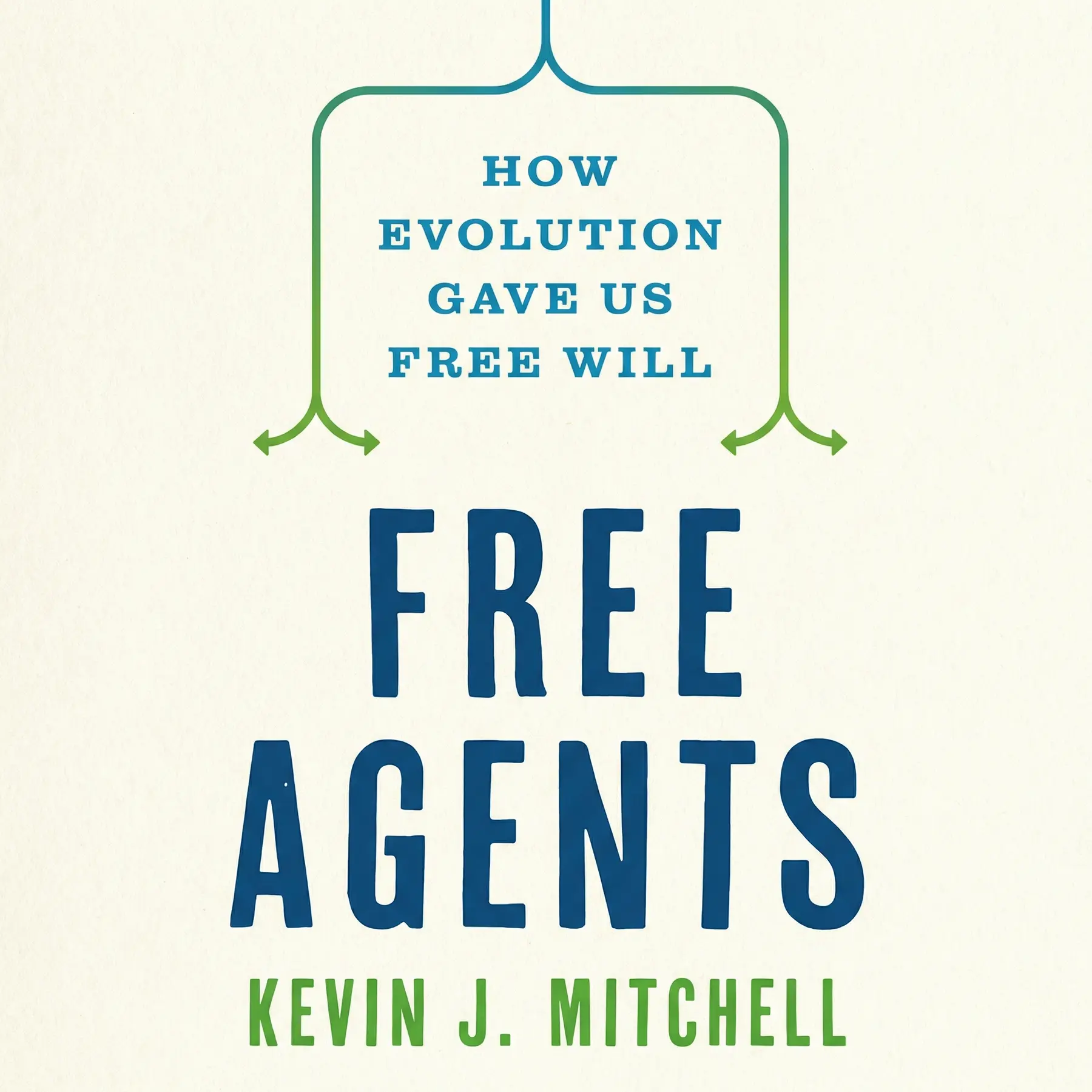
Free Agents: How Evolution Gave Us Free Will
Explore the biological and evolutionary foundations of human autonomy. This summary reveals how living organisms transitioned from simple reactive cells to conscious agents capable of making genuine, self-directed choices in an uncertain world.
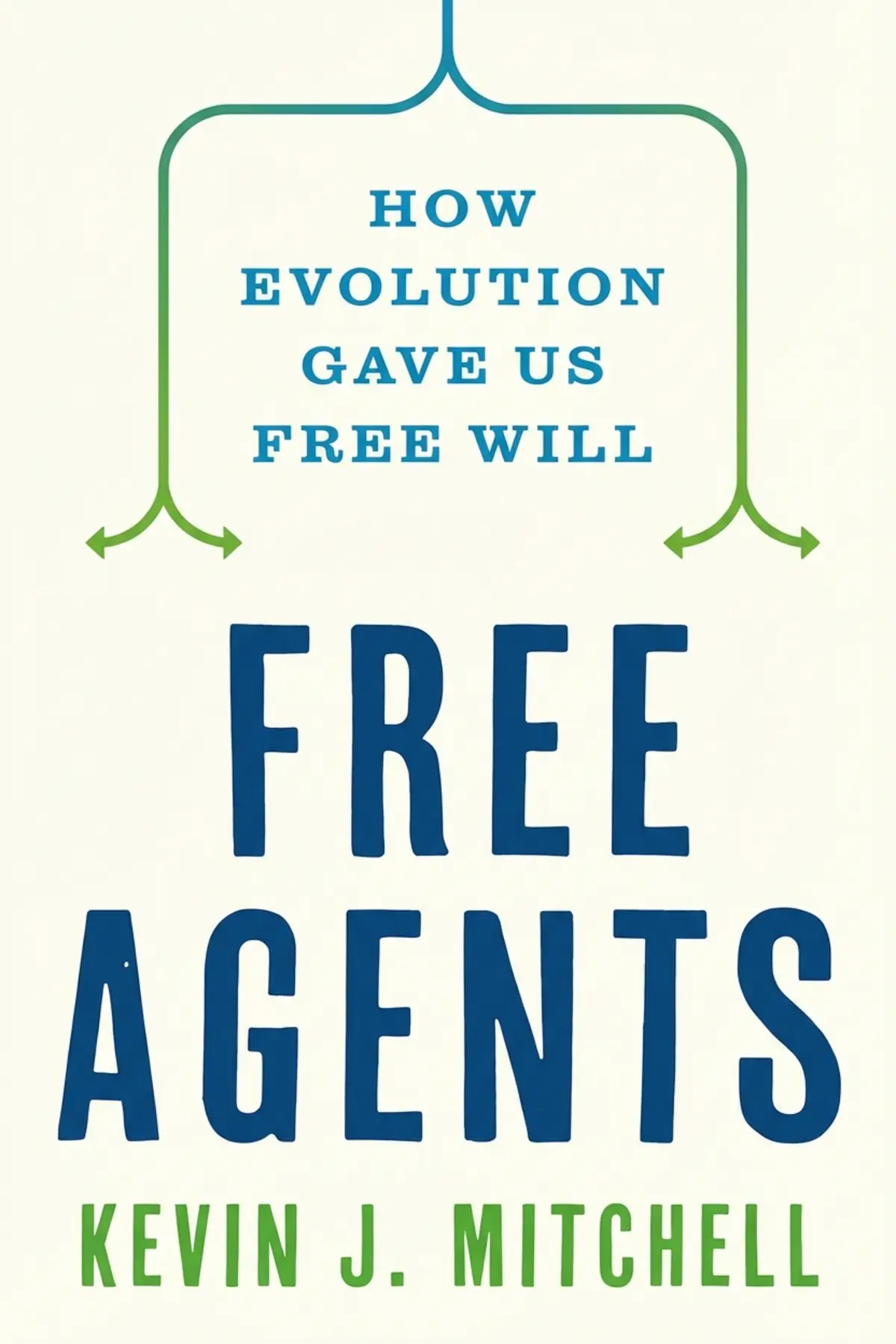
Table of Content
1. Introduction
1 min 25 sec
Have you ever wondered if your choices are truly yours? Think about the last time you made a big decision—perhaps choosing a career path or even something as simple as what to have for dinner. It feels like you are the author of that choice. But some thinkers argue that if we look closely at the particles making up our brains, we’re just following the laws of physics, like a series of dominoes falling in a line that was set at the beginning of time.
In this journey through the concepts of Free Agents, we are going to challenge that idea. We aren’t just looking at philosophy; we’re looking at biology. We will explore how the very nature of life itself—the way it resists decay and seeks out energy—laid the groundwork for what we call free will. We’ll see how evolution didn’t just give us the ability to react to the world, but the power to act upon it with intention.
This isn’t a story of magic; it’s a story of how agency emerged from the bottom up. We will look at how simple organisms developed the first hints of ‘purpose’ and how, over millions of years, those small steps led to the sophisticated human ability to simulate the future, reflect on the past, and choose a course of action based on our own internal reasons. By the throughline of evolution, we can see that free will isn’t an illusion; it’s a hard-won biological capability that defines what it means to be human.
2. The Conflict Between Physics and Personal Agency
1 min 57 sec
Are we the masters of our fates, or are we merely non-player characters in a universe governed by unyielding laws? Let’s explore the tension between the physical world and our sense of choice.
3. Life as a Defiant Act Against Disorder
1 min 56 sec
Life isn’t just a collection of chemicals; it’s a persistent struggle to maintain order in a chaotic universe. Discover how the basic metabolic process created the first spark of biological purpose.
4. The Emergence of Meaningful Perception
1 min 48 sec
Even the simplest organisms aren’t just passive observers. They actively interpret their surroundings to make choices that favor survival. Let’s look at how sensing the world became the foundation for awareness.
5. How Neurons Created the Thoughtful Pause
2 min 00 sec
The evolution of the nervous system changed everything by allowing organisms to slow down and think. Discover how mediating neurons moved us from instinctual reflexes to deliberate actions.
6. The Neocortex and the Power of Simulation
1 min 50 sec
Our brains do more than just record reality; they actively interpret it and imagine what’s next. Explore how the ‘map-making’ mind allows us to plan for a future that doesn’t yet exist.
7. Randomness and the Collapse of Predeterminism
2 min 02 sec
Does physics really dictate every move? By looking at quantum uncertainty and the way we make arbitrary choices, we can see how the future remains an open book until we act.
8. Character as a Self-Directed Trajectory
1 min 54 sec
We don’t start with full free will, but we can grow into it. Discover how our choices, habits, and the stories we tell ourselves slowly sculpt our unique character over time.
9. Conclusion
1 min 26 sec
The journey from the first metabolic cells to the heights of human consciousness reveals that free will is not a scientific impossibility, but an evolutionary achievement. We have seen that life, by its very nature, is an active force that resists the chaos of the universe. From the simple sensing of bacteria to the complex simulations of the human neocortex, the history of life is a story of increasing agency and the expansion of choice.
While the laws of physics provide the stage upon which we act, they do not write the script. Our brains have evolved the specialized capacity to pause, to reflect, and to weigh multiple futures against our own internal values. We have moved from being reactive organisms to being self-authored individuals who can shape our own characters and, in doing so, shape the world around us.
The throughline is clear: you are not a passive observer of your life. You are a free agent. This doesn’t mean you have unlimited power, but it does mean you have real responsibility. By understanding the biological roots of your autonomy, you can better appreciate the importance of your choices. Every time you overrule a habit or act on a principle, you are exercising a power that took billions of years to evolve. The future is not yet written—and that is because you are here to help write it.
About this book
What is this book about?
What does it mean to be the master of your own destiny? This exploration tackles one of the deepest questions in science and philosophy: do we truly have free will, or are we just biological machines following the rigid laws of physics? By tracing the history of life from its simplest forms to the complexity of the human brain, we see how evolution didn't just build smarter animals—it created agents with the capacity for purpose and choice. You will discover how the battle against entropy forced early life to develop 'goals,' how the emergence of neurons allowed for a 'thoughtful pause' between stimulus and response, and how our brains simulate the future to weigh potential outcomes. By the end, you'll see why the strict view of a predetermined universe falls short and how our ability to shape our own characters gives us a unique form of freedom that grows as we mature.
Book Information
About the Author
Kevin J. Mitchell
Kevin Mitchell is a neurogeneticist and faculty member at Trinity College Dublin. He is dedicated to investigating the intricate links between genetics, neuroscience, and psychology. Beyond his academic research, he shares his insights through his writing for the Wiring the Brain blog.
Ratings & Reviews
Ratings at a glance
What people think
Listeners find the writing both perceptive and skillfully composed, with one note emphasizing how the author integrates consciousness as a first-class entity. The strength of the reasoning earns praise as well; specifically, one listener calls it an excellent biological argument for free will. Furthermore, the value of the information is well-received, as one listener remarks that the inclusion of excellent charts helps make the material more accessible.
Top reviews
Aiden
After hearing Kevin Mitchell debate Robert Sapolsky on a podcast, I knew I had to pick up "Free Agents" to see the other side of the coin. Mitchell builds a meticulous case for how agency isn't just a trick of the mind but a core biological property that evolved over eons. He treats consciousness as a primary force rather than a mere byproduct of neural firing. The charts provided are incredibly helpful for visualizing the transition from simple sensors to complex decision-making systems. While some philosophers might find the "top-down" causation argument a bit of a stretch, as a biology enthusiast, I found it refreshing. Frankly, it is one of the most coherent scientific defenses of human agency I have encountered in years. It provides a much-needed counterweight to the hard determinism currently dominating the field. This book is a special contribution to the discourse on free will.
Show moreNora
Wow—it’s not often that a science book feels like a balm for the human soul while remaining grounded in hard data. Mitchell manages to rescue human dignity from the cold clutches of determinism without resorting to any mystical nonsense. He explains how agency emerged as a survival strategy, giving us the power to act for our own reasons. The writing is punchy and clear, making it easy to follow the transition from simple chemical signals to complex metacognition. Not many scientists can handle millennia of evolution and the physiology of the brain with this level of grace. Frankly, seeing the diagrams of how our control systems are layered really helped me visualize what "self-control" actually means in a physical sense. It’s an essential read for anyone who wants to believe that their choices actually matter in the grand scheme of things.
Show moreWanida
This book is a provocative and special contribution to the discourse on free will that every student of the mind should read. Mitchell’s erudition shines through as he handles complex concepts like metacognition and chaotic dynamics with effortless clarity. He presents a model of "interlocking dynamical processes" that is far more persuasive than the reductive views we usually see. By highlighting the indeterminacy of the universe, he shows there is "causal slack" that organisms can actually exploit for their own purposes. It’s an incredibly insightful look at how meaning becomes the driving force behind action in the animal kingdom. Even when the theory feels a bit incomplete, the sheer ambition of the project is worthy of five stars. It is an excellent biological argument for free will that will be discussed for a long time to come.
Show moreSaowalak
Picked this up because I was tired of hearing that humans are just "meat computers" with no real say in their lives. Mitchell does a fantastic job showing how life isn't just pushed around by physics but actually pulls itself together to make choices. He starts with the very first cells and walks you through how we got the ability to think about our own reasons. The information quality is top-tier, and he makes very complex neuroscience feel accessible to a regular reader. Truth is, I actually understood the parts about "top-down causation" because of the way he illustrates the systems-level logic. I do wish he had addressed the "illusion of will" experiments like those by Daniel Wegner more directly to strengthen his case. However, it’s still a powerful and deeply insightful book that made me feel more human and less like a machine.
Show moreTaw
The central tension of modern neuroscience is the conflict between our subjective experience of choice and the objective laws of physics. In "Free Agents," Mitchell argues that the way a system is configured determines its behavior just as much as the individual parts do. This perspective treats consciousness as a first-class entity rather than an accidental byproduct of biological complexity. By mapping out the millenniums of evolution that led to agency, he provides a sturdy biological argument that avoids the pitfalls of old-school dualism. Some of the chapters on neural noise and chaotic dynamics are dense, but they provide the necessary framework for his theory of "causal slack." Personally, I found the discussion on how organisms move from simple reflexes to abstract reasoning to be the highlight of the text. It isn’t a perfect proof, but it's a sophisticated step forward for the "pro-will" camp.
Show moreYaowaluk
Finally got around to reading Mitchell's response to the growing "determinism" trend in science media. This is an excellent biological argument for free will that avoids the usual philosophical fluff. He focuses on how organisms act as unified wholes rather than just collections of firing neurons. The charts and illustrations are particularly helpful in clarifying how information flow works in complex systems. My only complaint is that he sometimes ignores the role of the environment in favor of internal agency. But in my experience, this is the most convincing case for "top-down" causation currently on the market. It’s a solid addition to the library of anyone interested in consciousness. The way he integrates millennia of evolutionary history into a coherent narrative is truly praise worthy, even if a few questions about quantum mechanics remain unanswered.
Show moreWanphen
"Free Agents" arrives at a pivotal moment when AI and neuroscience are making us question if we are just sophisticated machines. Mitchell provides a naturalistic framework for thinking about agency that feels both modern and scientifically rigorous. He avoids the "God of the Gaps" problem by rooting his claims in the messy reality of biological evolution and noisy neural transmission. The way he treats consciousness as a first-class entity with real causal power is a bold and necessary move. While the sections on quantum physics might be polarizing for some, the overall narrative flow of the book is superb. It’s a concise and clear exploration of why we aren't just passive observers of our own lives. Most readers will walk away with a much richer understanding of what it means to be an agent and why our decisions are real.
Show moreMattanee
As someone who enjoys a good philosophical scrap, I appreciated Mitchell’s attempt to reframe the free will debate through a naturalistic lens. The book is essentially an introductory course on evolutionary biology with a few chapters on agency tacked onto the end. Mitchell is a clear writer, and his description of how sensory systems evolved is genuinely masterclass stuff. However, when it comes to the actual "free will" part, the argument feels somewhat incomplete and vulnerable to future scientific discovery. He suggests that meaning can constrain physical parts, but the specific mechanism of how that happens remains elusive. Not gonna lie, I was hoping for more engagement with the work of thinkers like Erik Hoel or more on Integrated Information Theory. It’s a decent read for the biology alone, even if the philosophical payoff doesn't quite hit the mark for everyone.
Show moreSofia
Ever wonder how a bunch of unconscious atoms can suddenly start making plans for the future? Mitchell tries to answer that by tracing the history of life from the bottom up. The information quality is high, especially the parts about how cells developed valence to distinguish "good" from "bad." However, the jump from "complex biology" to "free will" still feels like a leap of faith rather than a proven fact. The writing is very accessible, though I think it lacks the depth of Sapolsky’s "Determined" even if I prefer Mitchell’s conclusion. To be honest, it’s a good starting point for the conversation but doesn't quite close the deal for me. It feels like he gathers the pieces but doesn't quite put them all together in a way that defeats the determinist argument once and for all.
Show moreMay
Mitchell's writing is undoubtedly elegant, but the core logic of his argument feels like a "free will of the gaps" strategy. He spends a vast amount of time detailing evolutionary history, which is fascinating but doesn't actually bridge the gap to true free will. The reliance on quantum indeterminacy to provide "causal slack" feels more like a philosophical sleight of hand than a rigorous biological proof. I was particularly disappointed by the omission of the Active Inference framework, which seems central to his descriptions of prediction and action. Look, the book is a great introduction to how brains process information, but it fails to deliver on its primary promise of proving we "could have done otherwise." To be fair, the diagrams are excellent, but pretty pictures cannot fix a fundamentally flawed causal model. It's a frustrating read for anyone looking for hard evidence over metaphors.
Show moreReaders also enjoyed
A Guide to the Good Life: The Ancient Art of Stoic Joy
William B. Irvine
A Life Decoded: My Genome: My Life
J. Craig Venter
A Planet of Viruses
Carl Zimmer
A Little History of Philosophy
Nigel Warburton
AUDIO SUMMARY AVAILABLE
Listen to Free Agents in 15 minutes
Get the key ideas from Free Agents by Kevin J. Mitchell, plus 5,000+ more titles in English and Thai.
- 5,000+ titles
- Listen as much as you want
- 7-day free trial
- Cancel anytime







