

A Biography of Loneliness: The History of an Emotion
Fay Bound Alberti
Discover how Genghis Khan moved beyond his reputation as a brutal conqueror to become a visionary leader who laid the foundations for international trade, religious freedom, and modern global connectivity.
2 min 01 sec
When we look back at the origins of modern civilization, our eyes usually turn toward the marble columns of Rome or the philosophical schools of Athens. We are taught that the West inherited its progress from the Mediterranean, while the rest of the world remained in a state of primitive chaos. In this traditional narrative, the name Genghis Khan is often synonymous with destruction—a dark cloud of horsemen sweeping across the plains to tear down everything in their path. But what if that story is not just incomplete, but fundamentally wrong? What if the very foundations of the world we live in today—our systems of trade, our concepts of religious tolerance, and even our global communication networks—were actually birthed in the saddle of a Mongol pony?
To understand the modern world, we have to look past the myths of brutality and explore the actual legacy of the Mongol Empire. This journey takes us from the frozen reaches of the Siberian border to the heart of the Silk Road. It is a story of a man who started with nothing—not even the support of his own family—and ended up creating a society that was, in many ways, more progressive than the European kingdoms of his time. The throughline of this narrative is one of connection. Genghis Khan didn’t just conquer territory; he demolished the barriers that kept the East and the West apart.
In the following segments, we will peel back the layers of historical bias to see the true face of the Great Khan. We will see how a childhood defined by abandonment and survival forged a leader who valued competence over bloodlines. We will examine the revolutionary legal codes he established and the surprising ways he protected the rights of his subjects. Most importantly, we will see how the Mongol Empire acted as a massive conductor for ideas, allowing technology and culture to flow across continents, effectively setting the stage for the Renaissance and the age of globalization. It is time to revisit the Mongol story, not as a tale of ruin, but as the fascinating blueprint for our globalized reality.
2 min 10 sec
Explore the grueling early years of Temujin, a boy abandoned by his tribe and forced to navigate a world of kidnapping and betrayal long before he became the Great Khan.
2 min 31 sec
Discover how Temujin transformed himself into Genghis Khan by shattering ancient tribal traditions and replacing them with a revolutionary system based on personal merit and loyalty.
2 min 11 sec
Step back and view the staggering dimensions of the Mongol territories, which expanded faster and further than any other empire in the history of the world.
2 min 12 sec
Go beyond the battlefield to examine the ‘Great Law,’ a sophisticated code of conduct designed to end tribal strife and create a stable, unified society.
2 min 12 sec
Discover the surprisingly progressive side of Mongol rule, from the world’s first laws on religious freedom to the active promotion of education and the arts.
2 min 10 sec
Examine how Genghis Khan abolished aristocratic privilege to build a society where a common shepherd could rise to lead an army based on his skills alone.
2 min 14 sec
Trace the lasting impact of the ‘Pax Mongolica’ and see how the Mongol Empire effectively bridged the gap between East and West to spark the global age.
1 min 22 sec
In the end, Genghis Khan and his descendants did much more than redraw the maps of the thirteenth century; they redesigned the very nature of human interaction. We have long lived with a version of history that paints the Mongols as the ultimate ‘others’—the barbarian outsiders who nearly destroyed civilization. But when we look at the evidence, a different picture emerges. We see a society that championed merit over birthright, religious freedom over dogma, and the free flow of information over isolation. The Mongol Empire was the great connector, a bridge across which the technology of the East traveled to ignite the progress of the West.
The legacy of Genghis Khan is not found in ruins and bones, but in the systems we still use today. Every time we send a letter, engage in international trade, or benefit from a merit-based promotion, we are experiencing the echoes of the Mongol state. They proved that a diverse, multi-ethnic empire could be governed by a single, fair legal code and that the exchange of ideas is the most powerful force for change in history. As you reflect on this story, consider how often our understanding of the past is clouded by our own cultural biases. By reclaiming the true story of Genghis Khan, we don’t just learn about a conqueror; we gain a deeper understanding of how our own modern, interconnected world was made possible.
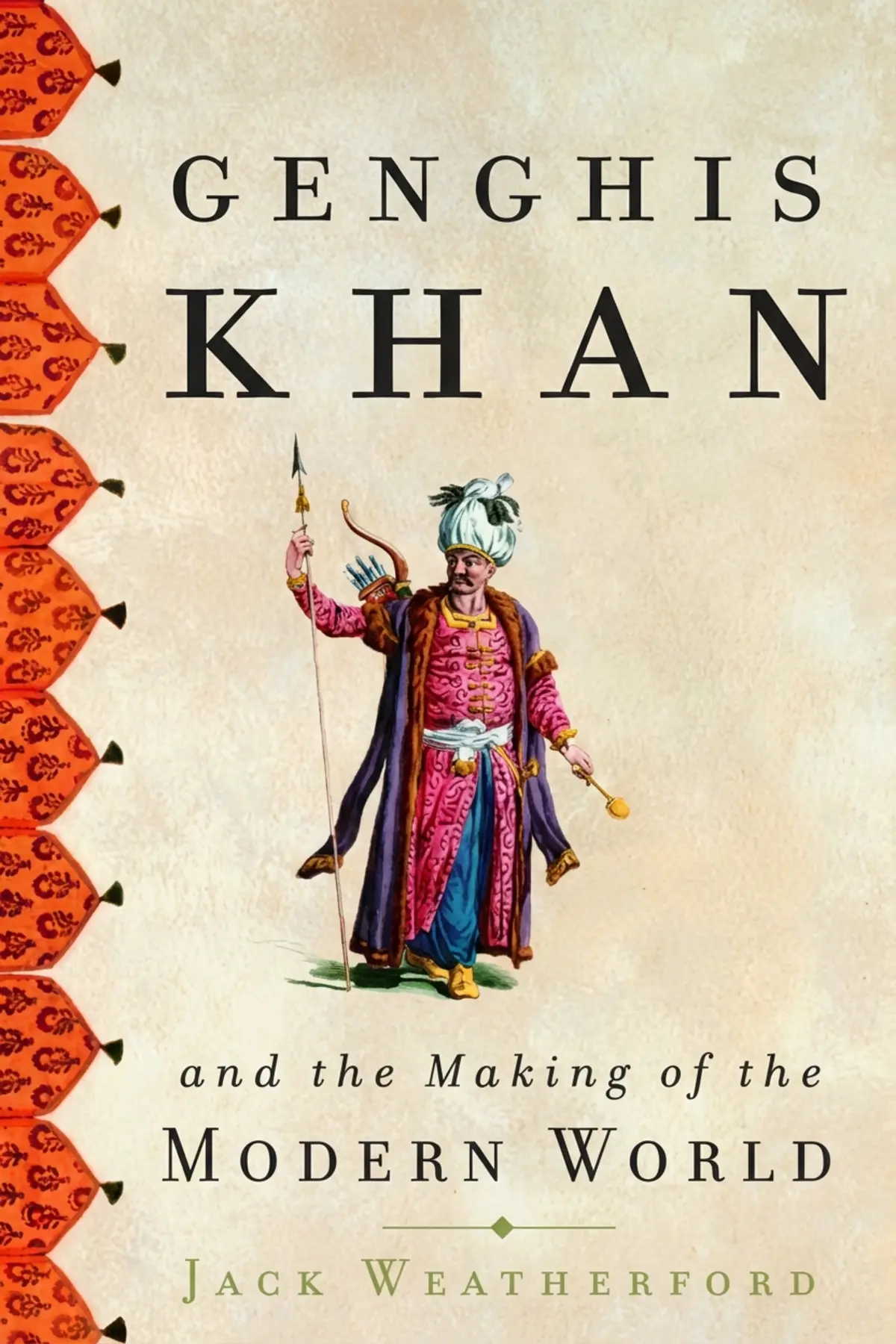
For centuries, the Western perspective on history has centered on the achievements of Greece and Rome, often relegating the Mongol Empire to the margins as a footnote of senseless violence. This summary challenges that narrative, presenting Genghis Khan not as a mere barbarian, but as a sophisticated architect of the modern world. It traces his journey from a discarded child on the Siberian steppes to the ruler of the largest contiguous land empire in human history. Readers will explore the revolutionary systems the Mongols introduced, including a merit-based social structure, the first international postal service, and a legal code that protected religious freedom and women's rights. By examining the massive transfer of technology and ideas—from gunpowder to printing—this account promises to reveal how the 'Pax Mongolica' essentially bridged the gap between East and West, sparking the Renaissance and setting the stage for the interconnected world we live in today.
Jack Weatherford is an acclaimed author and a former professor of anthropology at Macalester College in Minnesota. Throughout his distinguished career, he has explored the intersections of history and culture in books like Indian Givers, Native Roots, Savages and Civilization, and The History of Money. Deeply committed to the history he chronicles, Weatherford has retired to Mongolia, where his work continues to be highly regarded for providing a more nuanced view of the Mongol legacy.
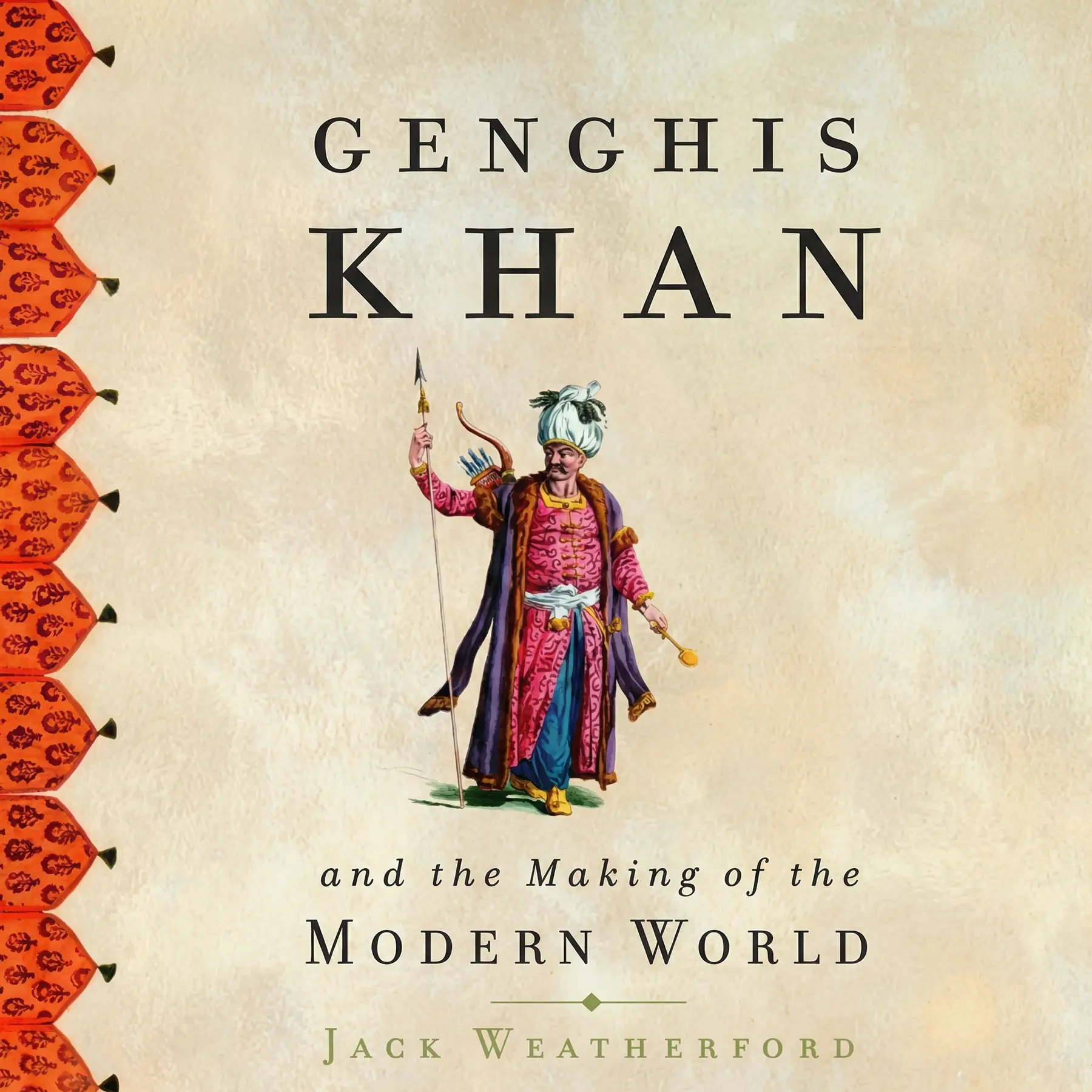
Listeners find this historical work to be deeply researched and captivating, with one review highlighting the way it bridges the histories of the East and West. Furthermore, the prose is superb and accessible, with one listener comparing it to an Indiana Jones thriller. Additionally, the narrative shares a compelling tale that unfolds like an adventure novel, and listeners value the educational insights it offers, providing lessons about life and leadership.
Wow. I wasn’t prepared for a history book to grip me like an Indiana Jones script, but Weatherford pulls it off with incredible style. This isn't just a list of battles and dates; it’s a narrative that reframes Genghis Khan from a savage caricature into a complex, visionary architect of the modern world. The pacing is relentless, moving from the brutal internal politics of the steppe to the grand expansion that bridged the East and West. I was particularly struck by the descriptions of the postal systems and the sheer speed of communication across the empire. It reads like a high-stakes adventure novel rather than a dry academic text. While it leans heavily into the positive contributions of the Mongols, the storytelling is so masterful that you can’t help but be swept away. If you want to understand how our globalized world actually started, this is essential reading.
Show moreNever would I have expected to learn leadership lessons from a 13th-century conqueror, yet here we are. This book is a masterpiece of historical storytelling that highlights Genghis Khan’s meritocratic approach to governance. Weatherford shows how the Khan dismantled the old aristocratic systems and replaced them with a structure based on loyalty and skill. It’s a fascinating case study in organizational management that feels surprisingly relevant to today’s world. The way the Mongols integrated the technologies of every culture they touched—from Chinese gunpowder to Persian medicine—is a testament to their pragmatism. I loved how the author highlighted their policy of religious tolerance, which was light years ahead of anything happening in Europe at the time. It’s educational, inspiring, and hard to put down. Every page offers a new perspective on how a nomadic tribe could reshape the entire globe.
Show moreFinally got around to reading this, and I am particularly impressed by the space given to the Mongol women. Weatherford doesn’t just focus on the men on horses; he gives a brilliant account of the queens who managed the empire while the men were away at war. These women were the actual administrative backbone of the Mongol state, and seeing their influence highlighted was a highlight of the book. The narrative moves with the speed of a cavalry charge, taking the reader from the freezing steppes to the lush courts of Persia and China. It’s richly researched and offers a much-needed non-Western viewpoint on the formation of the modern world. I particularly enjoyed the sections on how the Black Death eventually fractured the empire's trade networks. This isn’t just a book about war; it’s a book about culture, technology, and the collision of civilizations. Absolutely fantastic.
Show moreJack Weatherford has done something remarkable here by stitching together Eastern and Western history into a single, cohesive story. The truth is, I knew next to nothing about the Mongols beyond the stereotypes before picking this up. Now, I see their fingerprints on everything from the layout of modern cities to the way we conduct international diplomacy. The book is incredibly easy to read and provides valuable lessons about adaptability and leadership. It’s not just a history lesson; it’s a story about how ideas travel and how cultures evolve through contact. The descriptions of the Silk Road at its peak are vibrant and atmospheric. I especially appreciated the inclusion of the 'Secret History' elements, which gave a human face to a man who has been a monster in our collective imagination for centuries. A must-read for anyone curious about the roots of our global society.
Show moreAs a history buff, I went into this expecting the usual 'bloodthirsty barbarian' tropes, but I came away with a completely different perspective. Weatherford argues that the Mongols essentially laid the groundwork for modern trade, religious freedom, and diplomatic immunity. It’s a fascinating, if somewhat revisionist, look at how the silk road flourished under the Pax Mongolica. The author’s research into the 'Secret History of the Mongols' adds a layer of authenticity that is often missing from Western-centric accounts. However, I do feel that he occasionally overcorrects, glossing over the darker aspects of the conquests to support his thesis about their civilizing influence. Some of the claims about the Renaissance being a direct Mongol byproduct felt a bit like a reach to me. Still, the prose is brilliant and remarkably easy to digest. It’s a great entry point for anyone wanting to look beyond European history.
Show moreThe chapter on Khublai Khan was a standout for me, specifically how it detailed the shift from nomadic conquest to settled administration. Weatherford’s writing is undeniably vibrant; he has a knack for making 800-year-old politics feel urgent and alive. I appreciated the focus on the Mongol legal code and the creation of paper currency, which were elements I never associated with Genghis Khan before. Frankly, it’s refreshing to see an author challenge the 'civilized vs. barbarian' binary that has dominated the field for so long. My only niggle is that the book can be a bit repetitive when emphasizing how 'modern' the Mongols were. Sometimes it felt like Weatherford was trying too hard to sell me on a concept rather than letting the facts speak for themselves. Despite that, the educational value here is immense. It’s a brisk, fascinating journey through a part of history we often ignore.
Show moreIt’s rare to find a history book that flows like an epic novel, but this one definitely fits the bill. Weatherford manages to connect the dots between the Mongol Empire and the European Renaissance in a way that is both surprising and convincing. The way he describes the exchange of ideas—art, printing, and science—across the vast Mongol trade routes is eye-opening. You really start to see how interconnected the world became long before we had the internet. The sentence structure is punchy and direct, which keeps the momentum going even during the more dense political sections. I do think he overstates Genghis’s role as a 'human rights activist' a bit, but I can overlook the hyperbole for the sheer quality of the research. This is a brilliant piece of historical synthesis. It’s educational without ever being boring.
Show moreHow much of our modern era do we actually owe to the Steppe? According to Weatherford, almost everything from our legal systems to our maps. This book is a fascinating deep dive into the 'universal culture' the Mongols attempted to build. I found the sections on the creation of a universal alphabet and the standardization of weights and measures to be incredibly insightful. It’s a perspective-shifting read that forces you to question everything you learned in school about the 'Middle Ages.' While the author’s passion for his subject is infectious, it does lead to some questionable claims that seem to lack solid evidentiary support. The transition from the collapse of the empire to the rise of modern Europe felt a bit rushed in the final act. Nevertheless, it’s a thought-provoking and highly readable account of a truly transformative era.
Show morePicked this up after hearing a podcast on the Khans, and while it’s a decent read, it didn't quite deliver on its title. The book is an excellent biography of Temujin and his early life, providing deep insight into the traumas that shaped his leadership. That part was gripping. However, the 'Making of the Modern World' part felt tacked on and underdeveloped in the later chapters. Weatherford spends so much time rehabilitating the Mongol image that he forgets to bridge the gap between their 13th-century innovations and our current era in a concrete way. To be fair, his writing is fluid and the political intrigue is top-tier, but I wanted more academic rigor regarding the actual long-term impacts. It’s a bit too much 'pop history' for my taste, though it certainly makes for an entertaining weekend read. If you’re looking for a deep dive into historical causality, you might be disappointed.
Show moreTo be frank, I struggled with the ethics of this narrative and found it to be little more than a long-form apologia for mass murder. Weatherford is a gifted writer, certainly, but his bias is so overwhelming that it borders on the absurd. He consistently downplays the staggering loss of life—upwards of 30 million people—to focus on 'free trade' and 'religious tolerance.' It’s hard to celebrate the foundation of the modern world when it was built upon a mountain of severed heads and scorched cities. When Europeans commit atrocities, the author is quick to condemn them, but when the Mongols do it, there’s always a strategic rationalization or a cultural excuse. The book feels more like a defense attorney’s closing argument than a balanced historical inquiry. If you want a fun adventure story, go ahead, but don't mistake this for an objective or factually reliable account of Mongolian history.
Show moreFay Bound Alberti

James Shapiro
Michael Axworthy

Ben Macintyre
AUDIO SUMMARY AVAILABLE
Get the key ideas from Genghis Khan and the Making of the Modern World by Jack Weatherford, plus 5,000+ more titles in English and Thai.







