
18 min 48 sec
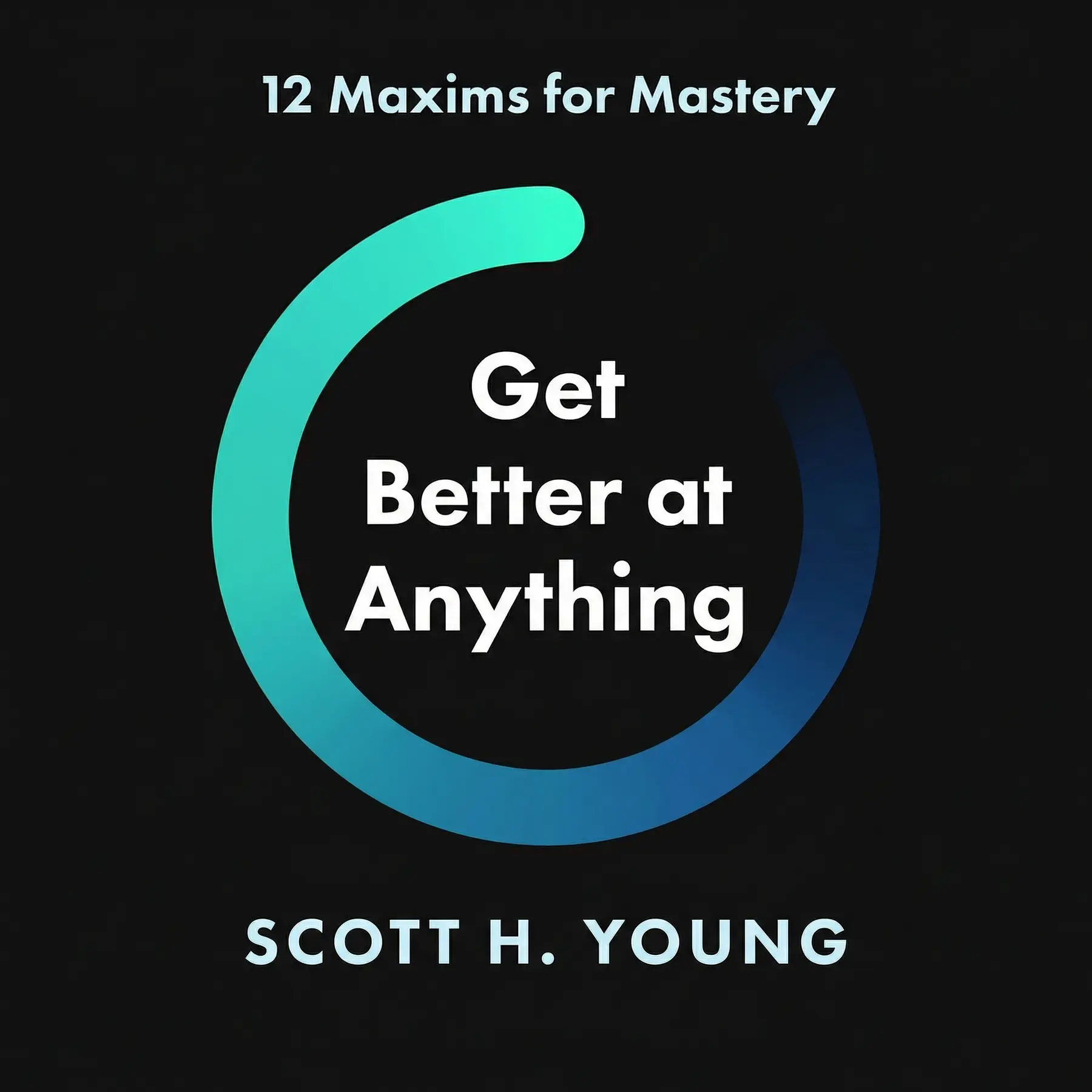
Get Better at Anything: 12 Maxims for Mastery
Discover the science of skill acquisition. Scott H. Young breaks down the three essential pillars of improvement—seeing, doing, and feedback—to help you master any discipline, from creative arts to complex technical fields.
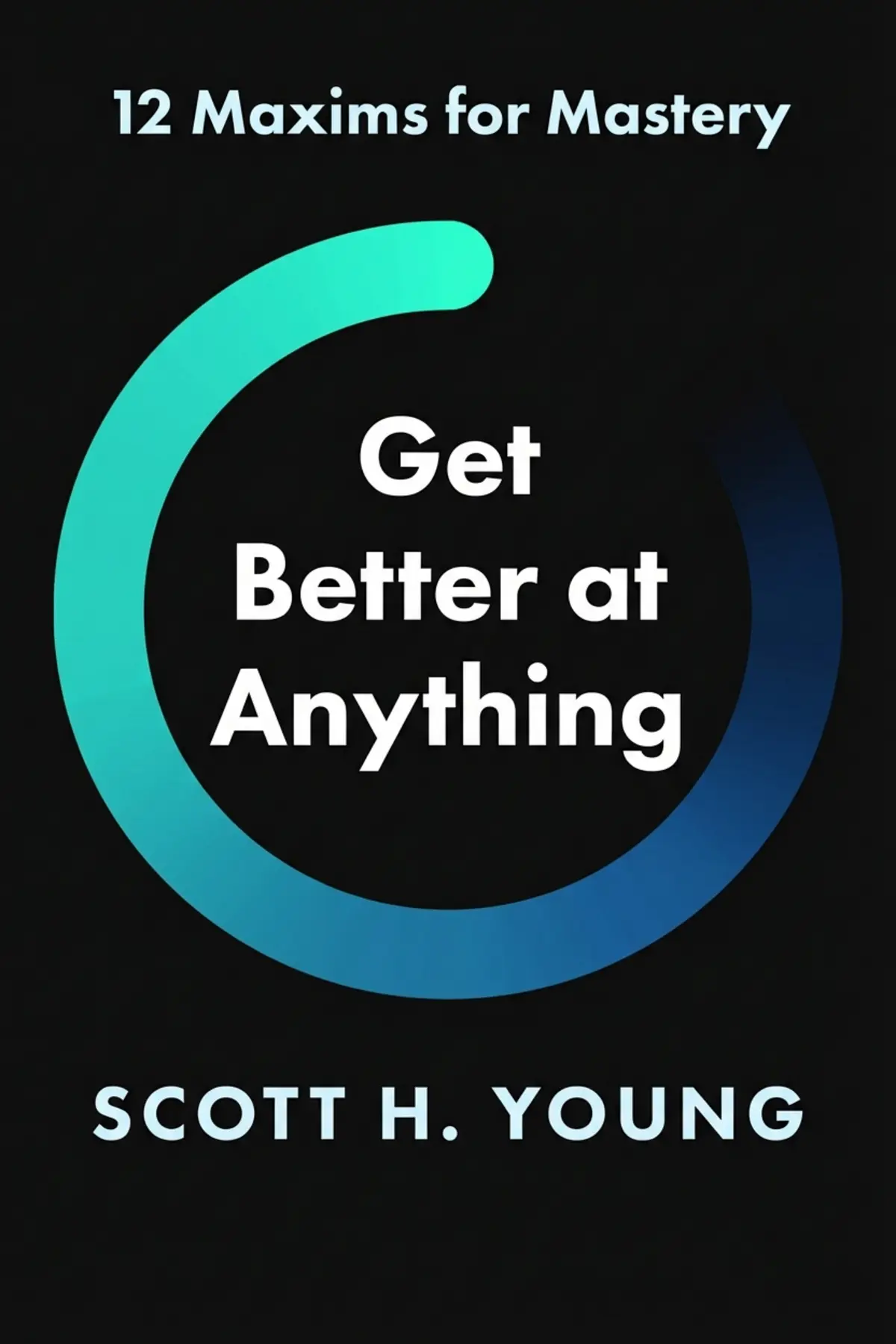
Table of Content
1. Introduction
1 min 52 sec
Imagine you have a blank slate in front of you—a completely new field of study, a complex musical instrument, or a high-stakes professional craft. The distance between where you are now and where an expert stands can feel like an unbridgeable chasm. We often tell ourselves that the difference is raw talent or some mystical ‘spark’ that the masters possess and we don’t. But what if the path to mastery wasn’t a mystery at all? What if it was a structured process that anyone could follow, provided they understood the mechanics of how the human brain actually absorbs and refines information?
In this exploration of Scott H. Young’s insights, we are going to look at the architecture of improvement. The core throughline here is that getting better isn’t just about working harder; it’s about working in alignment with three fundamental pillars: seeing, doing, and seeking feedback. We start by observing how those who have already climbed the mountain did it—this is the ‘seeing’ phase. Then, we move into the ‘doing’ phase, where we focus on volume and productivity to turn conscious effort into subconscious skill. Finally, we refine our performance through ‘feedback,’ which often requires the counterintuitive act of unlearning what we think we know.
Throughout this summary, we’ll see these principles in action, from the competitive world of Tetris to the high-pressure greens of professional golf. By the end, you’ll have a clear framework for dismantling the barriers to your own growth. You’ll understand why your working memory is like a crowded desk that needs organization, and why producing 13,000 pieces of art might be the only way to create one masterpiece. If you’ve ever felt stuck or wondered why your progress has stalled, it’s time to rethink the way you learn. Let’s dive into the first pillar of peak performance.
2. The Evolution of Mastery Through Shared Knowledge
2 min 37 sec
How did the world’s best Tetris players suddenly shatter decades-old records? Discover why seeing the process, not just the result, is the first step toward excellence.
3. Optimizing the Cognitive Workspace
2 min 40 sec
Your brain has a limited capacity for new information. Learn the ‘filing cabinet’ secret to organizing your thoughts and accelerating your learning speed.
4. The Strategic Use of Imitation
2 min 17 sec
Don’t reinvent the wheel when you can follow a blueprint. Explore four specific methods to use expert examples to build your own expertise.
5. Why Quantity Leads to Quality
2 min 34 sec
Is it better to be a Da Vinci or a Picasso? Learn why producing a massive volume of work is the fastest route to a masterpiece.
6. The Assembly Line of Innovation
2 min 18 sec
Don’t wait for inspiration—build a system. Discover how to protect your creative time and let your ideas reach full maturity.
7. The Courage to Unlearn
2 min 49 sec
Sometimes, the biggest obstacle to growth is your own success. Learn why Tiger Woods chose to destroy his perfect swing to become a legend.
8. Conclusion
1 min 41 sec
As we wrap up this journey through the science of getting better at anything, it’s clear that mastery is not a destination you reach by accident. It is a deliberate cycle of observing the masters, putting in the high-volume work, and having the courage to refine your approach based on feedback. We’ve seen how the simple act of making expert tactics visible can transform an entire community, as it did with Tetris. We’ve explored why your brain’s ‘mental desk’ needs the help of worked examples and chunking to manage the heavy lifting of new information.
We’ve also challenged the myth of the perfectionist by looking at the prolific output of artists like Picasso, proving that quality is a ghost that only appears after you’ve chased quantity. And perhaps most importantly, we’ve learned from Tiger Woods that the highest level of skill requires the willingness to break your own successful habits in order to build something even better. This is the ‘unlearning’ that separates the good from the truly great.
So, what is the one skill you’ve been putting off because it felt too daunting? Or where have you hit a plateau in your current career? The next step isn’t to just ‘try harder.’ Instead, look for a worked example you can copy. Commit to a high volume of ‘unripe’ attempts. And seek out a constraint or a coach that will force you to see your work with fresh eyes. Improvement is a process of seeing, doing, and adjusting. If you follow those three pillars, there is truly no limit to what you can learn. Now, it’s time to stop thinking about getting better and start doing the work. Thanks for listening.
About this book
What is this book about?
Have you ever wondered why some people seem to master new skills with ease while others struggle for years? Get Better at Anything explores the underlying mechanics of human learning, moving beyond the simple idea of 'practice makes perfect.' Author Scott H. Young argues that true mastery is built on a foundation of three critical components: social learning, high-volume output, and the willingness to adjust based on feedback. This summary provides a roadmap for anyone looking to sharpen their expertise. You will learn why copying the experts is often more effective than trying to innovate from scratch, how the sheer quantity of your work determines its ultimate quality, and why the most elite performers—like Tiger Woods—are those willing to 'unlearn' their own successful habits to reach the next level. Whether you are a student, a professional, or a hobbyist, this guide offers the tools to accelerate your progress and overcome plateaus.
Book Information
About the Author
Scott H. Young
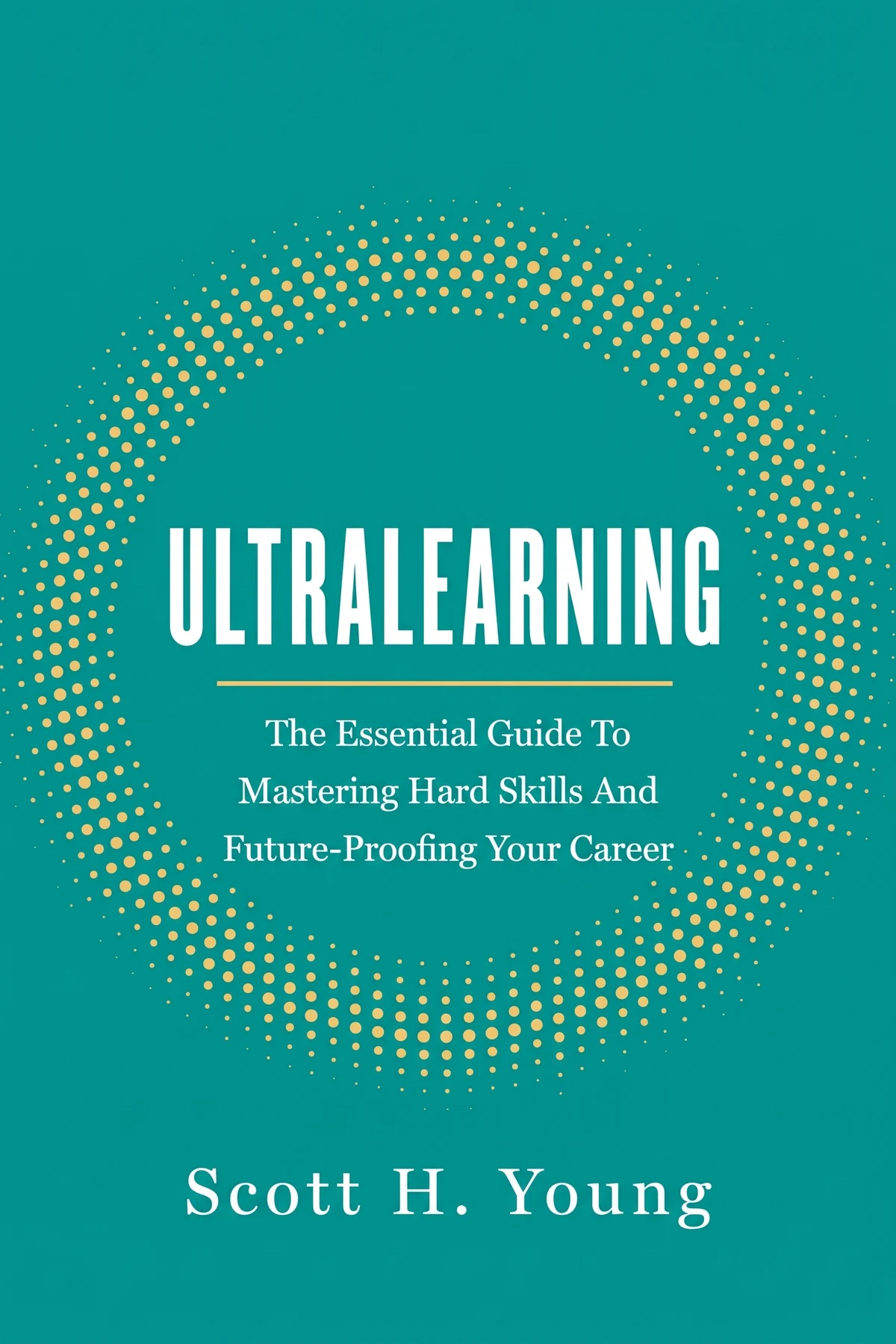
Scott Young is an entrepreneur, podcast host, and author known for the best selling title Ultralearning, which explores strategies for self-directed learning and personal development.
Ratings & Reviews
Ratings at a glance
What people think
Listeners value the extensive research provided on diverse learning topics and the structured approach for gaining technical proficiency. The book’s flow earns favorable remarks, with one listener highlighting the thoroughness of its analysis. On the other hand, the prose gets varied reviews, as one listener felt it wasn’t particularly simple to digest.
Top reviews
Javier
The chapter on the evolution of Tetris players was genuinely eye-opening. It perfectly illustrated the book’s central thesis: that progress isn't just about individual talent, but about the systems of observation and feedback we inhabit. In my experience, many people get stuck because they try to 'rebuild' their skills from scratch instead of 'renovating' them through small, targeted adjustments, and Young nails that distinction here. The book is dense with research, yet it remains engaging because the author ties every theory to a real-world application. I particularly liked the advice on introducing complexity slowly to avoid overwhelming the brain. This isn't just a book about learning; it's a manual for anyone who wants to approach their craft with more intentionality. It requires effort to read, but the payoff is massive if you actually apply the 12 maxims.
Show moreMason
This isn't your typical fluffy self-help guide. Scott H. Young has written a rigorous, deeply researched manual on the mechanics of human performance. I loved how he dismantled the idea of 'natural talent' by showing how experts use specific patterns and strategies that can be imitated by anyone. The 'assembly line' approach to productivity was particularly useful for my creative projects. By automating the routine parts of my work, I’ve found much more mental space for the difficult, high-level tasks. Got to say, the book is quite detailed, but the pacing kept me interested throughout. It provides a clear, actionable framework for anyone tired of 'quick fixes' and ready to put in the work required for true excellence.
Show moreThanakorn
Scott Young has done it again. This book isn't a collection of easy shortcuts; it's a rigorous exploration of what it actually takes to achieve technical mastery in any domain. I particularly appreciated the focus on 'pretraining' and managing cognitive load, which are often overlooked in mainstream success books. The structure is incredibly logical, guiding you from simple imitation to the complexities of unlearning old patterns. Personally, I found the breakdown of how experts and beginners require different materials to be the most useful takeaway for my own professional development. It’s well-paced, deeply researched, and provides a much-needed reality check for anyone looking for 'hacks' instead of deliberate practice. This is a must-read for serious students and professionals alike.
Show moreSavannah
As someone who loves the science of learning, I found this to be an incredibly thorough resource. Young moves away from the 'hacks' and 'shortcuts' found in typical productivity books and instead leans into the gritty reality of mastery. The breakdown of the 12 maxims provides a clear roadmap, even if some of the concepts—like the power of imitation—feel a bit obvious at first glance. To be fair, the section on 'unlearning' was where the book really shined for me, as it’s a topic rarely covered in this much detail. My only gripe is that the pacing can be a bit uneven; some sections fly by while others feel like a lecture. Still, the emphasis on feedback loops and the importance of seeing how experts work is invaluable for anyone trying to level up their career.
Show moreFort
Picked this up because I wanted a structured framework for my career, and it delivered exactly that. The way Young explains 'cognitive load' and how to manage it by breaking down complex skills into components was a lightbulb moment for me. Truth is, most of us try to learn too much at once, and this book serves as a much-needed reminder to slow down and focus on 'pretraining.' The writing is a bit more academic than Ultralearning, which might put some people off, but I found the detailed breakdown of the 12 maxims to be very helpful for long-term planning. I especially liked the focus on finding a coach to provide real-time feedback. It’s a solid, evidence-based guide that demands you take your learning seriously.
Show moreDarawan
Truth is, I struggled with the first few chapters because they felt a bit slow, but the 'unlearning' section completely saved it for me. We often talk about how to gain new skills, but rarely do we discuss how to break the bad habits that hold us back from mastery. Young’s suggestion to impose new constraints to force innovative thinking is brilliant and something I've already started using in my own work. While I agree with other reviewers that the writing isn't always the most fluid, the depth of the research makes it worth the effort. It’s a comprehensive look at the mechanics of improvement. If you’re willing to put in the time to parse the data, there is a lot of wisdom here about how to actually get better at your craft.
Show moreEleanor
Finally got around to reading this, and I have mixed feelings. On one hand, the exhaustive research into how we acquire technical skills is impressive and clearly presented. On the other hand, the writing style isn't the easiest to digest. Some chapters felt like they were trying to be too academic, which hindered the pacing for me. Look, the 'See, Do, Feedback' framework is solid, but it isn't exactly a revelation if you’ve spent any time in the self-improvement space. I appreciated the specific strategies like 'worked examples' to reduce cognitive load, yet I found myself skimming the long biographical stories. It’s a decent follow-up, but it lacks the visceral, experimental energy of his previous book. If you like dense, evidence-based books, you’ll enjoy it more than those looking for a quick 'how-to' guide.
Show moreThitima
To be fair, the research here is exhaustive, but the execution left me wanting more. The book emphasizes that there are no shortcuts to mastery, which is an honest take, but the delivery is often dry. I found the 'See, Do, Feedback' loop to be a useful simplification, yet the author spends hundreds of pages justifying things that most people already intuitively understand about practice. Personally, I struggled with the writing style; it felt a bit disjointed in places, jumping between historical anecdotes and cognitive science without a smooth transition. There are definitely gems hidden in the text—especially the bit about how beginners and experts need different types of training materials—but you have to dig for them. It’s a fine book for a rainy weekend, though not quite the game-changer I was hoping for after his last release.
Show morePreeda
Not what I expected from the author of Ultralearning. While Young attempts to synthesize a massive amount of research into 12 maxims, much of it feels repetitive or even contradictory to established concepts regarding neuroplasticity. Frankly, the claim that 'brain training' is a myth seems to ignore significant studies on how neural networks expand through focused use. It’s a dense read, and not always in a good way. The prose often gets bogged down in academic jargon that makes the core message—observe, practice, feedback—feel unnecessarily complex. If you’ve followed his blog for years, you have likely seen most of these ideas already. It felt like a bit of a slog to get through the middle sections where the stories of famous figures felt like filler rather than actionable evidence. I wanted a practical toolkit, but I mostly got a history lesson.
Show moreNaomi
Ever wonder if a 300-page book could have been a simple PDF? That’s how I felt finishing this one. The core loop of 'See, Do, Feedback' is essentially what every school system already uses, making the 'groundbreaking' claims feel a bit hollow. Not gonna lie, I enjoyed the Tetris anecdotes, but do they justify an entire book? Not really. The pacing is odd, dragging through historical tangents while rushing the actual application of the maxims. To me, it lacked the punch and innovative spark that made Young’s previous work so compelling to the self-education community. It’s a fine summary of learning science if you've never read a book on the topic, but for anyone else, it will feel like a long walk to a very familiar destination.
Show moreFeatured in
Readers also enjoyed
AUDIO SUMMARY AVAILABLE
Listen to Get Better at Anything in 15 minutes
Get the key ideas from Get Better at Anything by Scott H. Young, plus 5,000+ more titles in English and Thai.
- 5,000+ titles
- Listen as much as you want
- 7-day free trial
- Cancel anytime







