
16 min 36 sec
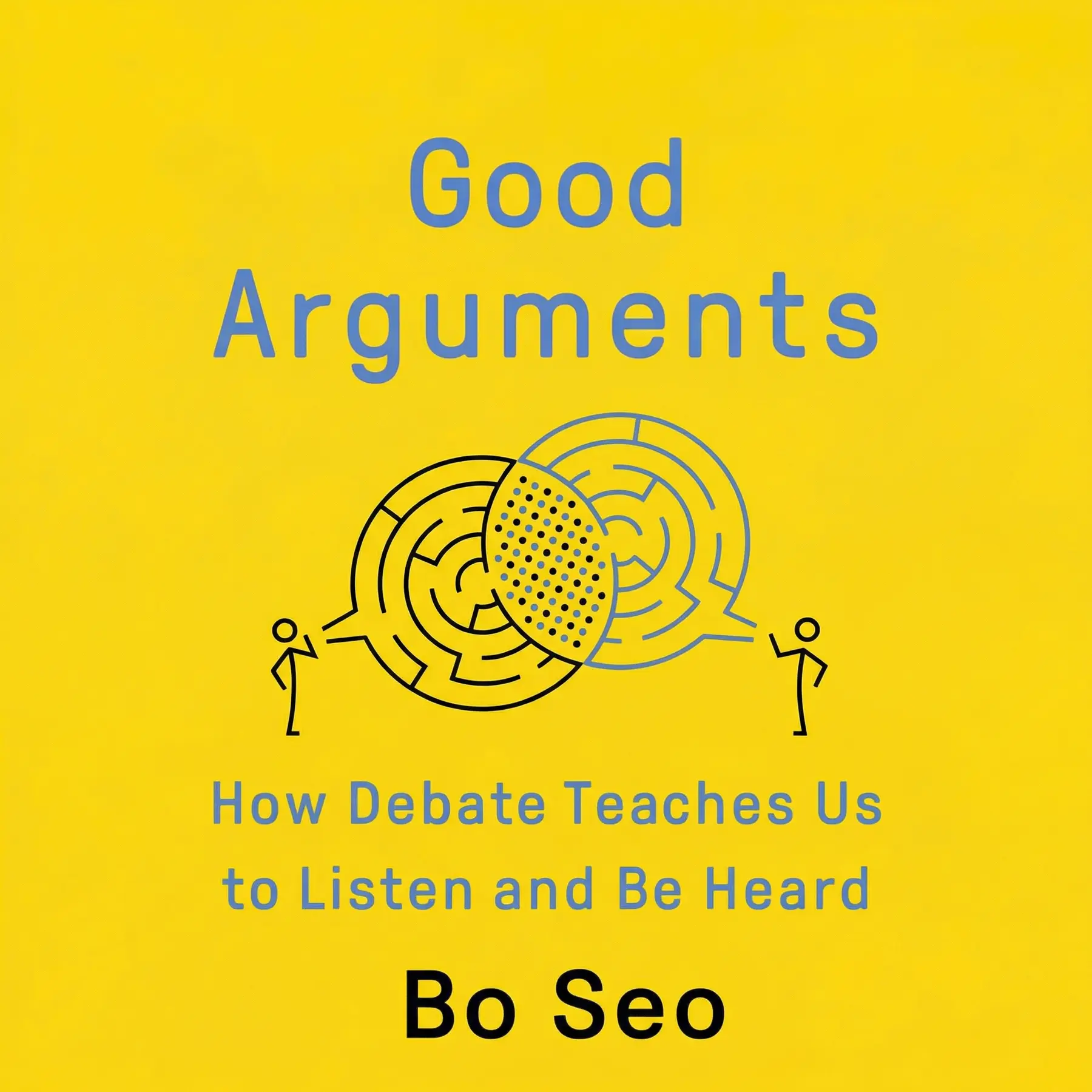
Good Arguments: How Debate Teaches Us to Listen and Be Heard
By Bo Seo
Explore how the structured world of competitive debate can transform your daily disagreements into opportunities for connection and clarity, moving beyond toxic shouting matches to reach a higher level of mutual understanding.
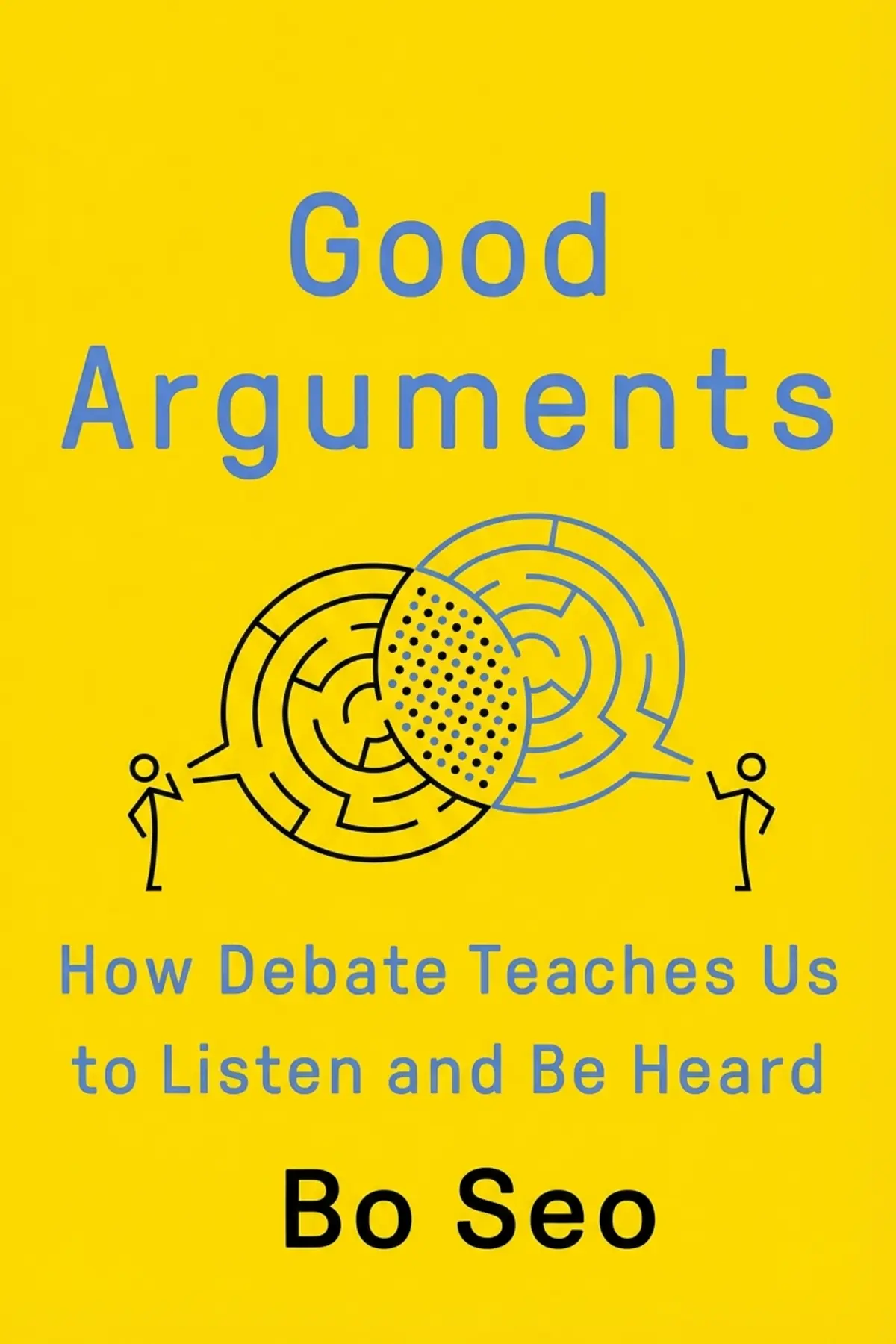
Table of Content
1. Introduction
1 min 51 sec
In our modern era, it often feels as though the very foundation of open, honest discussion is crumbling. We find ourselves living in a time of unprecedented polarization, where every disagreement feels like a battle and every difference of opinion is treated as a personal attack. Whether it is the volatile environment of social media or a tense holiday dinner with family, the art of the productive argument seems to have vanished, replaced by a culture of shouting or, perhaps worse, a culture of silence where people avoid conflict altogether because they fear the social cost. But what if the problem isn’t that we are disagreeing too much, but that we have forgotten how to disagree correctly?
This is the central question explored by Bo Seo, a man who has spent much of his life in the highly structured, intellectually rigorous world of competitive debate. Seo argues that we should not run away from conflict. Instead, we should embrace it, provided we have the right tools to navigate it. He suggests that the skills honed on the debate stage—logic, empathy, and clarity—are exactly what we need to repair our personal relationships and our broader social fabric. This journey is about moving from a state of hostility to a state of productive exchange. It is about learning that a good argument isn’t about winning at all costs; it’s about a shared search for the truth. Over the course of this summary, we will look at how Seo found his own voice through debate and how you can use the principles of this sport to become a more persuasive, respectful, and effective communicator. We will explore how to strip away the noise to find the real heart of a dispute, how to build a case that stands up to scrutiny, and how to listen to your opponents with a level of focus that might actually change your own mind.
2. The Journey from Silence to Voice
2 min 15 sec
Discover how a young immigrant found his place in a new world not by blending in, but by stepping onto a stage where disagreement was a formal game.
3. Identifying the Real Heart of a Dispute
2 min 32 sec
Most arguments fail because we don’t actually know what we are fighting about. Learn how to pinpoint the exact nature of a disagreement before you start speaking.
4. The Anatomy of a Valid Argument
2 min 09 sec
An argument is more than just a loud opinion. It’s a logical journey that requires evidence and a clear explanation of why it matters.
5. Mastering the Rebuttal
1 min 40 sec
Winning an argument isn’t just about what you say; it’s about how you dismantle your opponent’s logic without becoming hostile.
6. The Power of Switching Sides
1 min 53 sec
Empathy is a debater’s secret weapon. Learn why the best way to strengthen your own position is to spend time defending the other side.
7. The Art of Persuasive Delivery
2 min 25 sec
Even the best logic can fail if it isn’t delivered well. Discover the rules of rhetoric that make people stop and listen.
8. Conclusion
1 min 51 sec
As we reach the end of this exploration into the world of ‘Good Arguments,’ it is clear that the skills of a world-champion debater are not just for the stage; they are for life. We have seen how Bo Seo moved from a silent, hesitant immigrant child to a powerful voice on the world stage, not by shouting over others, but by mastering the structure of disagreement. We have learned that a productive argument requires us to pinpoint exactly what we are fighting about, to build our cases with logic and evidence, and to listen with the intent to truly understand the opposing view.
The implications of these skills go far beyond winning an argument with a friend or colleague. In a world that feels increasingly divided, the ability to disagree well is a vital civic duty. When we approach our disputes with respect and a commitment to the truth, we aren’t just solving a problem; we are reinforcing the bonds of our society. Whether it is a business leader like Warren Buffett using debate to make better acquisitions, or a local community using citizen assemblies to settle disputes, the power of reasoned argument is our best tool for collective progress.
So, the next time you find yourself in a heated moment, don’t walk away and don’t lash out. Instead, take a breath and remember the principles we’ve discussed. Ask yourself: What is the core disagreement here? Is this a matter of fact, judgment, or prescription? How can I structure my point so it’s logical and clear? And most importantly, what would I say if I had to defend the other person’s side? By treating disagreement as a skill to be practiced rather than a conflict to be avoided, you can turn every argument into an opportunity for growth. Debate is the soul of a healthy society, and by learning to argue well, you are playing your part in keeping that soul alive. It is time to stop fearing the conflict and start finding our voices.
About this book
What is this book about?
This summary delves into the life and lessons of world-champion debater Bo Seo, offering a blueprint for navigating conflict in a polarized world. It explains that the breakdown of public discourse isn't due to our differences, but rather our loss of the skills required to disagree well. By repurposing the tools of the competitive debate stage, Seo provides listeners with a structured approach to identifying the heart of an argument, constructing logical defenses, and listening with intent. Listeners will learn the critical distinction between facts, judgments, and prescriptions, and discover how to dismantle weak arguments through strategic rebuttal. The promise of the book is that conflict doesn't have to be destructive; when approached with respect and preparation, a good argument can actually strengthen relationships and improve democratic participation. From personal anecdotes to practical exercises, this guide turns the intimidating art of debate into an accessible tool for everyday life.
Book Information
About the Author
Bo Seo
Bo Seo is a prominent figure in the global competitive debate scene, having secured the title of world champion twice. He previously served as the coach for the Australian national debating team. Beyond the podium, Seo is a respected writer whose work has been featured in major outlets like the New York Times and the Atlantic. He also shares his expertise as a frequent contributor to the Australian television program The Drum.
Ratings & Reviews
Ratings at a glance
What people think
Listeners value the book's observations, with one listener highlighting how it clarifies the forgotten craft of debate. The prose earns favorable remarks; one listener even characterizes the author as a virtuoso in his field. There are varied perspectives regarding the storytelling approach, as some listeners enjoy the compelling narrative while others feel it dwells excessively on individual anecdotes. The choice of words draws differing views, including one listener who considers the phrasing overly wordy.
Top reviews
Alejandra
Few books manage to bridge the gap between competitive sport and daily survival as effectively as this one. Bo Seo uses his journey from a quiet immigrant student to a world-class debater to illustrate how structured disagreement can actually foster intimacy. Truth is, we usually view conflict as a sign of failure, but Seo reframes it as a necessary tool for discovery. I particularly appreciated the RISA framework—checking if a fight is Real, Important, Specific, and Aligned. It has already saved me from three pointless Twitter arguments this week alone. While the prose is occasionally quite elevated, the intellectual payoff is worth the extra effort. This isn't just a manual for winning; it’s a guide for connecting in an increasingly polarized world.
Show moreSuphan
Wow, I think I’m actually smarter after finishing these pages. The author’s ability to explain the intricate craft of persuasion in an approachable manner is truly impressive. In my experience, most 'communication' books are full of fluff, but Seo gives you actual tools like the 'pivot' and the 'counterclaim.' I loved the idea that a good argument should end with a positive claim rather than just an attack. It’s a shift from being 'against' something to being 'for' something else. The story of his childhood and how debate gave him a sense of belonging was genuinely moving. It’s a rare book that provides both a mental workout and an emotional journey. Every parent should read the chapter on how debate increases graduation rates for at-risk youth.
Show moreOlivia
After hearing Bo Seo speak on a podcast, I wanted to see if his written logic was as sharp as his verbal rebuttals. It is. In my view, the most powerful part of the book is the argument that we have a 'responsibility to disagree well.' We live in a world of monologues, and Seo makes a compelling case for the return of the dialogue. The 4W structure is something I’ve already started using to prep for my weekly presentations. Even the sections on AI like AlphaGo were fascinating, showing how technology is changing the way we think about strategy. It’s an important book that challenges you to be a better listener. I’ll definitely be recommending this to my colleagues.
Show moreLaddawan
Finally got around to reading this and I am kicking myself for not joining a debate club in high school! I’ll be honest, I used to be someone who avoided conflict at all costs, but Seo shows that avoiding an argument is often worse than having a 'good' one. The book teaches you how to stand your ground while still respecting the 'equal moral standing' of the person you’re talking to. I loved the specific details about the 1960 Nixon-Kennedy debates and how television changed the game of persuasion. It’s well-structured, introspective, and even has some sparks of humor that keep it from feeling too heavy. This might be the best book I’ve read all year. It really makes a sport out of the impulse to be heard.
Show moreWararat
Picked this up thinking it would be a dry instructional manual, but it is actually more of a memoir about finding your voice. Bo Seo is clearly a master of his art, and his writing reflects a deep, almost poetic appreciation for the spoken word. Not gonna lie, I had to keep a dictionary handy because his vocabulary is incredibly dense at times. Some might find that pretentious, but I thought it added to the weight of the subject matter. The breakdown of the 'four W’s'—What is the point? Why is it true? When has it happened? Who cares?—is a simple yet brilliant way to structure any thought. I wish I had been introduced to these concepts as a teenager. It's a solid four stars for the insights alone.
Show moreSebastian
Ever wonder why we have lost the ability to disagree without hating each other? This book attempts to answer that by looking at the rules of formal debate. Look, Seo is a very talented writer, though he does have a tendency to be a bit verbose when simplicity would do. I found the RISA checklist to be a game-changer for my professional life. Knowing when to engage and when to walk away is a skill most of us never learn. My only real gripe is that the book leans a bit too heavily on his own competition stories. While they are interesting, I wanted more focus on applying these rules to everyday social media interactions. Still, it’s a very timely read for anyone exhausted by modern discourse.
Show morePear
As a debate coach, I had high hopes for this as a curriculum staple, but the reception from my students was lukewarm. To be fair, Seo provides a fascinating history of the craft, including the iconic Nixon and Kennedy televised debates. But the book suffers from an identity crisis, oscillating wildly between a personal memoir and a self-help guide. Personally, I found the sections on the 'five personas' of bullies—like the wrangler and the brawler—to be the most practical part of the text. The later chapters regarding AI and IBM’s Project Debater felt a bit tacked on and disconnected from the earlier narrative. It’s a decent read for fans of the genre, but it drags in the middle. I’m giving it three stars for the historical context.
Show moreViroj
Bo Seo is clearly a master of his craft, but the prose often prioritizes elegance over efficiency. The truth is, I struggled to stay engaged during the long sections on the history of international debate leagues. It felt a bit dry and academic for a book marketed toward a general audience. To be fair, the tips on handling 'twisters' and 'liars' in a conversation were brilliant and very applicable to my current workplace. I just wish the whole book had been as punchy as the chapters on technique. It’s a bit of a mixed bag that functions better as a memoir than a 'how-to' guide. If you enjoy linguistic flourishes and deep-dives into niche history, you’ll love it more than I did.
Show moreKae
The chapter on personal relationships felt incredibly out of touch with modern reality and research. Seo mentions that the average household has over 200 arguments a year about dishwashing and calls it 'strange' that we fight over trivial matters. Frankly, this dismisses the entire concept of the invisible load and emotional labor that many people, especially women, carry daily. If you are looking for techniques to use in a professional setting or a formal debate, his advice is top-tier. However, when he tries to apply the rigidity of competitive debating to the messy dynamics of a home, the lack of depth in his personal experience becomes glaring. It felt like he was trying to solve a human heart with a calculator. I expected more nuance from a world champion.
Show moreWan
Gotta say, this was a massive disappointment that felt more like an ego trip than a teaching tool. The author spends so much time talking about his own trophies and prestigious education that the actual 'advice' gets lost in the noise. He seems to think that every argument can be solved with a formal structure, which is just not how the real world works. His advice on household arguments was particularly tone-deaf and ignored the power imbalances that define most domestic conflicts. I found the writing style to be incredibly dense and unnecessarily flowery. It felt like he was writing to impress his professors rather than to help the average reader. Save your money and just watch a YouTube video on basic logic instead.
Show moreFeatured in
Readers also enjoyed
AUDIO SUMMARY AVAILABLE
Listen to Good Arguments in 15 minutes
Get the key ideas from Good Arguments by Bo Seo, plus 5,000+ more titles in English and Thai.
- 5,000+ titles
- Listen as much as you want
- 7-day free trial
- Cancel anytime







