

A Bigger Prize: How We Can Do Better Than the Competition
Margaret Heffernan
Explore how to transform group friction into collaborative success. This guide reveals how cognitive diversity, shared purpose, and deep trust turn a disjointed group into a high-performing team capable of solving complex problems.
1 min 36 sec
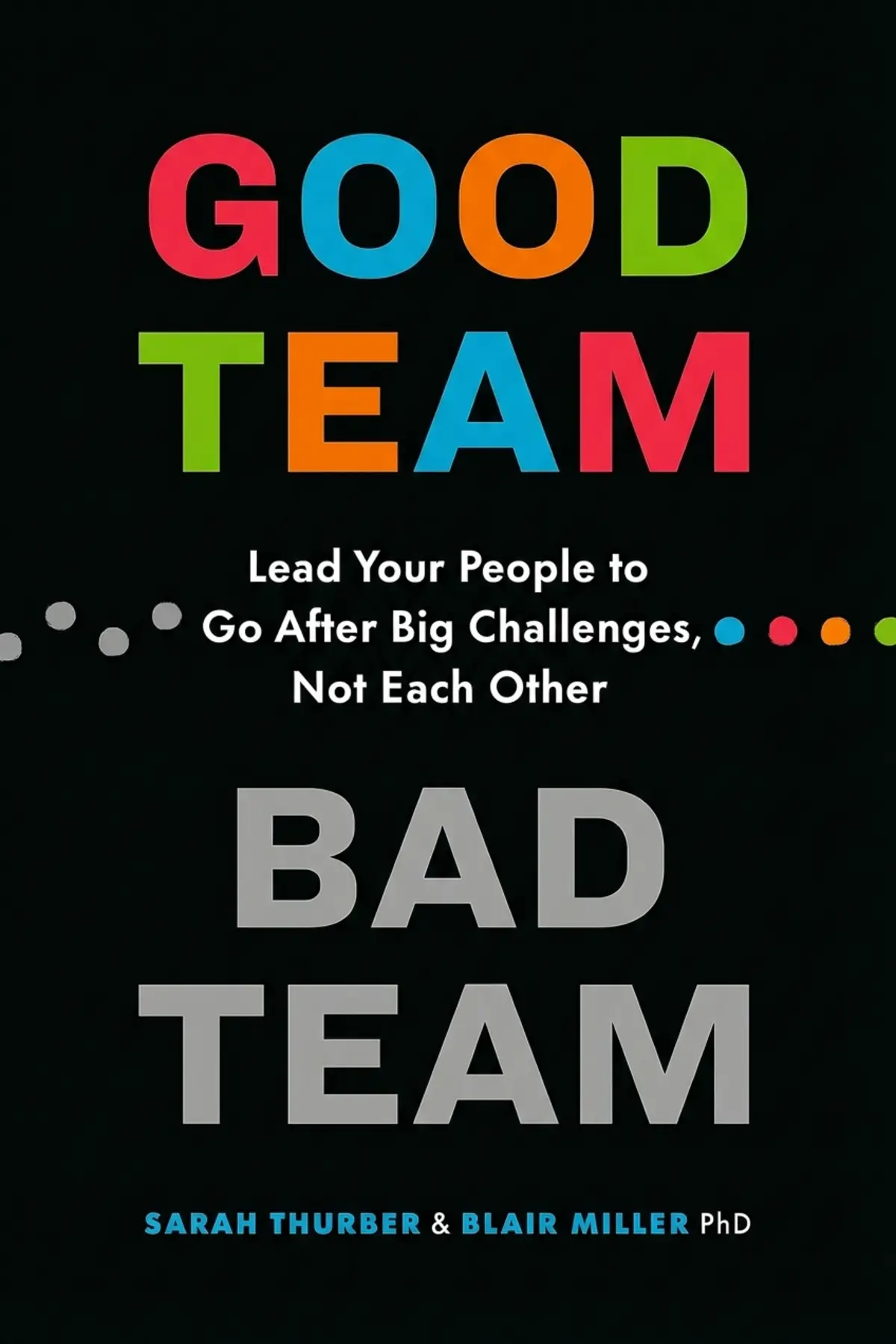
We have all experienced the two extremes of group work. On one side, there is the frustration of the “bad team.” This is the kind of group where every meeting feels like a circular argument, where misunderstandings lead to resentment, and where the collective output is somehow less than the sum of its parts. It is exhausting, demoralizing, and, unfortunately, far too common. On the other side, there is the exhilaration of the “good team.” In these rare groups, everything seems to click. Diverse voices harmonize, challenges are met with collective energy, and the results are often nothing short of extraordinary.
But what exactly creates that divide? Is it just luck, or is there a repeatable science to group success? In this summary of Good Team, Bad Team, we are going to look at the specific levers you can pull to shift a group from friction to flow. We will explore how our brains are wired to solve problems in different ways and why those differences are actually your greatest asset. We will see how a clearly defined purpose acts as a North Star, keeping everyone moving in the same direction, and why trust is the invisible currency that allows a team to move at high speed.
Throughline: High-performing teams are not born; they are built by intentionally leveraging cognitive diversity, establishing a deep sense of shared purpose, fostering a high-trust environment, and following a disciplined approach to problem-solving. By the end of this journey, you will have a clear framework for turning any group of talented individuals into a cohesive, unstoppable unit.
2 min 43 sec
What if the colleague who frustrates you most is actually your most valuable asset? Discover how different cognitive styles can either cause friction or drive innovation.
2 min 29 sec
Individual talent is not enough if everyone is pulling in different directions. Learn how to create a shared purpose that turns a crowd into a team.
2 min 39 sec
Trust isn’t just a soft skill; it’s a neurological necessity for high-speed collaboration. Discover the science behind why trust makes teams faster and smarter.
2 min 35 sec
High-performing teams don’t just work harder; they work smarter by using a shared framework for tackling the world’s most complex challenges.
1 min 36 sec
Building a high-performing team is not a matter of gathering the most talented people and hoping for the best. It is an intentional act of design. As we have seen in this exploration of Good Team, Bad Team, success rests on four critical pillars. First, you must recognize and honor cognitive diversity. Stop trying to make everyone think like you and start leveraging the unique clarifying, ideating, developing, and implementing strengths of every member. Second, you must establish a shared purpose that serves as a North Star, ensuring that all that diverse energy is focused on a single, meaningful goal.
Third, you must build a culture of trust. By being transparent, showing vulnerability, and encouraging autonomy, you create the psychological safety necessary for people to take risks and speak their minds. And finally, you must adopt a structured problem-solving process that allows the team to navigate complexity with discipline and grace.
What this really means is that the friction we often feel in teams isn’t a sign that something is wrong—it’s often just a sign that we haven’t yet learned how to harness our differences. When you apply these tools, you transform that friction into the heat that fuels innovation. You stop being a group of individuals struggling against one another and start being a true team, capable of achieving things that no single person could ever do alone. Start today by looking at your team through the lens of thinking preferences. Ask yourself: do we have a shared purpose? Is there trust in our communication? Once you answer those questions honestly, you are on the path to greatness.
Have you ever wondered why some teams thrive while others crumble under pressure? Good Team, Bad Team identifies the hidden dynamics that determine a group’s ultimate fate. It moves beyond the surface level of teamwork to examine the underlying cognitive preferences that shape how individuals approach challenges. By understanding the four distinct thinking styles—clarifying, ideating, developing, and implementing—leaders can stop viewing differences as obstacles and start seeing them as the fuel for innovation. The book promises a practical roadmap for anyone looking to enhance group performance. It covers the psychological foundations of trust, the strategic necessity of a shared purpose, and a structured framework for problem-solving that works across various industries. Through real-world examples and research-backed insights, the authors illustrate how to navigate the inevitable stages of team development, especially the difficult "storming" phase. Ultimately, the book provides the tools needed to align diverse talents toward a common mission, ensuring that every member’s unique contribution is maximized for the benefit of the whole.
Sarah Thurber is an author, speaker, and the managing partner at FourSight. She is a specialist in cognitive diversity and has co-authored The Secret of the Highly Creative Thinker. Blair Miller, PhD, is the co-founder of FourSight and president of Blair Miller Innovation. An adjunct professor at SUNY Buffalo, Miller has spent three decades facilitating problem-solving for global organizations like Mars and Kraft, helping generate over $1.8 billion in savings.
Listeners find this book an essential read for those in leadership roles, offering an actionable manual filled with research-driven perspectives and stimulating ideas that explain various cognitive styles. The writing is clear and accessible, with one listener highlighting that it incorporates six million data points of research. They value how effectively it fosters unified teams and appreciate the compelling narrative approach used throughout the text.
This book is a game-changer for anyone tired of the usual corporate fluff that populates the leadership genre. Thurber and Miller move beyond vague platitudes to explain the science of thinking preferences—clarifying, ideating, developing, and implementing. Truth is, I finally understand why my 'ideator' colleagues used to drive me crazy during the 'clarifying' phase. It wasn’t a personality clash; it was a cognitive mismatch. The research, particularly the 74% stress reduction in high-trust environments, makes a compelling case for changing how we manage. While the animal mascot exercise seemed a bit whimsical at first, the underlying logic of creating a shared purpose is undeniable. This isn't just a book to read once; it’s a manual for building a cohesive, resilient unit that actually gets things done. It’s practical, evidence-based, and highly readable.
Show morePicked this up after a colleague mentioned the oxytocin research, and I’m glad I did. The connection Paul Zak makes between trust and physical brain changes is staggering. Who knew that giving people discretion and celebrating excellence could literally rewire a team for 50% higher productivity? The book does a fantastic job of explaining the four key stages: clarifying, ideating, developing, and implementing. It’s easy to read but doesn't sacrifice depth, which is a rare balance in business literature. I’ve already started using the 'shared language' concept to help my team navigate our current 'storming' phase. Frankly, the advice on transparency during rough patches hit home for me—I've seen firsthand how 'need-to-know' communication kills morale. It’s a powerful tool for anyone looking to foster a more innovative, supportive environment where everyone feels valued.
Show moreWow. I wasn’t expecting a leadership book to be this engaging. Thurber and Miller have managed to distill millions of data points into a narrative that feels like a conversation with a brilliant mentor. The 'thinking preferences' framework is incredibly eye-opening—I’m definitely a 'developer' who has been clashing with 'ideators' for years without realizing why! This book gave me the tools to bridge that gap. The sections on trust and oxytocin levels are particularly fascinating, proving that a healthy culture isn't just a 'nice to have'—it’s a biological necessity for high performance. It's concise, research-backed, and filled with actionable steps that you can implement tomorrow. If you’re leading a team, or even just working in one, you need to read this to understand the invisible forces driving your group's success or failure.
Show moreAfter hearing so much buzz about cognitive diversity, I finally grabbed 'Good Team, Bad Team.' It’s a masterclass in understanding the 'why' behind team dynamics. The authors explain that our frustration with colleagues isn't usually about their personality, but rather their preference for clarifying or implementing. Personally, I found the 'forming, storming, norming, performing' breakdown to be the most useful part for my current project. It helps to know that conflict is a predictable stage, not a sign of failure. The writing style is punchy and direct, which I love. No fluff, just solid insights backed by real-world examples like Etienne’s leadership during corporate reorgs. It’s one of those rare books that changes how you see every interaction at the office. High-performing teams don't happen by accident; this book shows you the blueprint for creating them through trust and shared purpose.
Show moreA must-read for anyone serious about leadership. What sets this book apart is the way it bridges the gap between scientific research and everyday management. The authors use Paul Zak’s work to show how trust literally changes our brain chemistry, which is a far more powerful argument for 'vulnerability' than any inspirational poster. I particularly enjoyed the concept of the 'thinking preference' lens; it’s helped me stop labeling my coworkers as 'difficult' and start seeing them as 'clarifiers' who just need more data. The animal mascot exercise mentioned in the book is a stroke of genius for aligning disjointed groups. This is a practical, no-nonsense guide to building a team that doesn't just work together, but actually thrives together. I’ll be recommending this to everyone in my network who manages people or leads complex projects.
Show moreEver wonder why a group of brilliant individuals can’t seem to stop bickering and start performing? Thurber and Miller dive deep into the 'storming' phase, showing how misaligned thinking styles are often the culprit. I found the section on Etienne’s team particularly insightful, especially the bit about using animal mascots to unify 150 experts who had been worn down by reorgs. It’s practical, grounded in research, and mercifully free of the usual jargon. To be fair, some of the problem-solving frameworks (like the overlap with Agile and Lean) felt a bit redundant if you’re already in that space, but the 'thinking preferences' lens adds fresh value. It's a solid 4-star read for any manager struggling to turn a group of 'I's' into a 'We.' Definitely worth a spot on the office shelf for the next time things get rocky.
Show moreThe chapter on the structured problem-solving process is worth the price of the book alone. Most teams just jump straight into 'implementing' without ever properly 'clarifying' the challenge, and Thurber and Miller explain exactly why that leads to disaster. I appreciated how they linked their framework to existing methods like Lean Six Sigma and Design Thinking; it makes the advice feel integrated rather than isolated. My only gripe is that the middle section drags slightly with repetitive examples. To be fair, the 'animal mascot' story was a highlight that really illustrated how to align 150 different experts under one banner. It's a very practical guide that moves beyond 'kumbaya' team building into real, measurable cognitive science. Good for any leader who wants a more strategic approach to collaboration and wants to avoid the typical pitfalls of miscommunication.
Show moreFinally got around to reading this, and the timing couldn't have been better for my department. We’ve been stuck in the 'storming' phase for months, and I was losing hope. Thurber and Miller’s advice on creating a shared purpose and leveraging cognitive diversity provided exactly the roadmap we needed. I loved the breakdown of how different thinking styles—from ideating to developing—power different stages of a problem-solving engine. In my experience, most managers ignore the 'clarifying' stage, which leads to huge waste later on. The book is short and punchy, though I wish there was a bit more on how to maintain these habits long-term once the initial excitement wears off. Still, the focus on oxytocin and trust-building is a refreshing take on corporate culture. It’s an easy 4 stars for the practical tools and the total lack of fluff.
Show moreAs someone who has been in management for two decades, I found the core concepts here to be a bit of a refresher rather than a total revelation. The idea of cognitive diversity isn't exactly new, though the authors do a decent job of structuring it into the four preferences. It’s a quick, easy read, and the anecdotes about animal mascots and team posters were charming enough for a workshop setting. However, I felt it leaned a bit too heavily on the SUNY Buffalo research at times, almost feeling like a long-form academic paper dressed as a business book. Not gonna lie, I was hoping for more advanced strategies for remote-first environments. It’s a great introductory text for new leads or those struggling with basic cohesion, but seasoned leaders might find themselves skimming the more 'common sense' sections.
Show moreNot what I expected, but still quite useful in parts. I thought this would be more of a psychology book, but it’s very much a business manual. The four-step framework (clarify, ideate, develop, implement) is logical, but it felt a bit overly simplified at times for complex industries. Look, I get the value of a 'shared language,' but sometimes the corporate stories felt a little too 'perfect' to be relatable to my small, fast-paced startup environment. That said, the data on trust and productivity is impressive and hard to argue with. I think it’s a solid resource for large organizations trying to fix a 'bad team,' but maybe a bit rigid for more fluid work cultures. It’s a decent read if you want a structured way to look at problem-solving, but don't expect it to solve every interpersonal conflict overnight without a lot of extra work.
Show moreMargaret Heffernan
Joseph A. Maciariello



Deborah Gruenfeld
Mike Michalowicz
AUDIO SUMMARY AVAILABLE
Get the key ideas from Good Team, Bad Team by Sarah Thurber, plus 5,000+ more titles in English and Thai.







