
18 min 28 sec
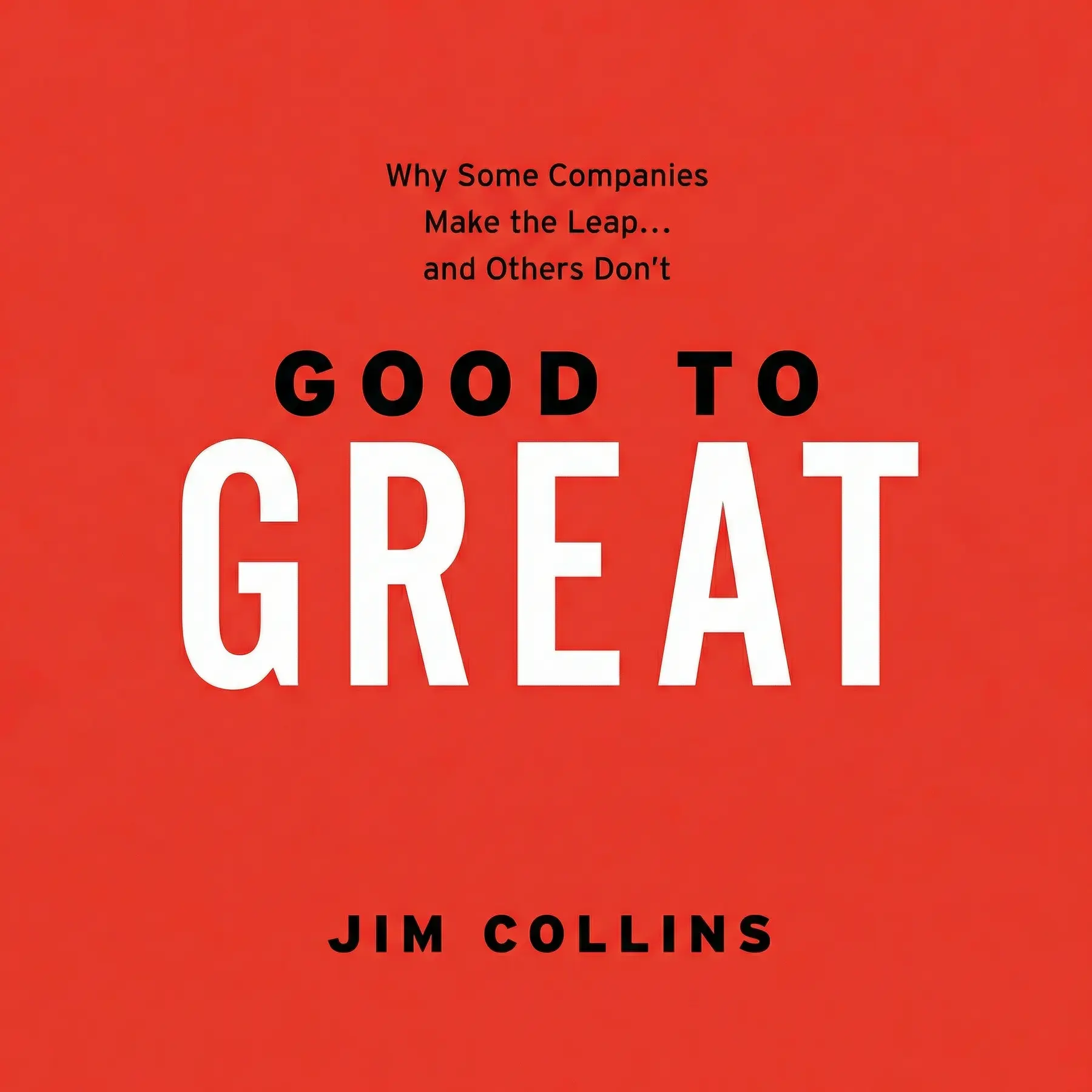
Good to Great: A Study of Management Strategies of Companies with Lasting Growth
By Jim Collins
Jim Collins explores how companies transition from average performance to long-term excellence. Through rigorous research, he identifies the specific leadership traits, cultural disciplines, and strategic focuses that separate the great from the mediocre.
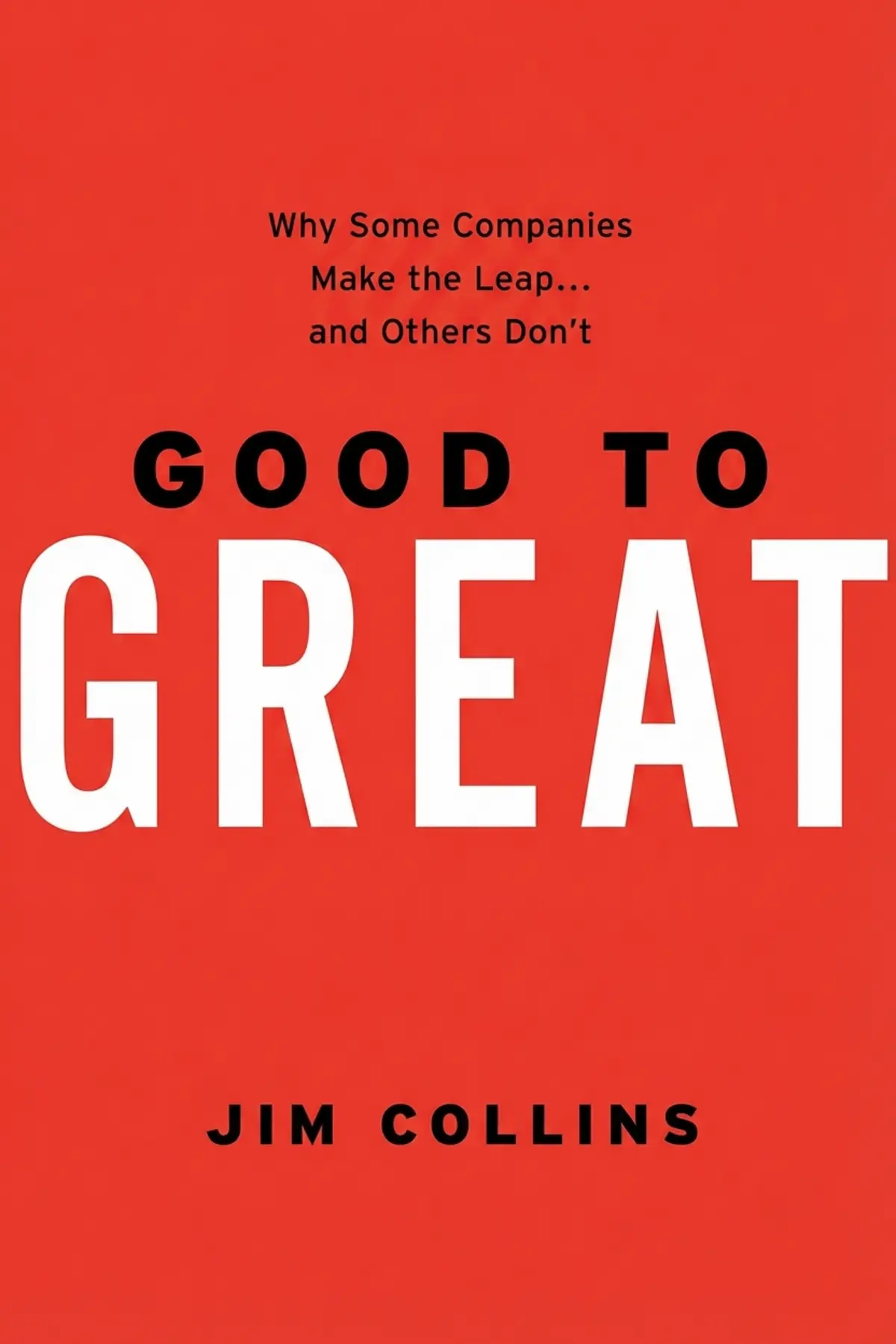
Table of Content
1. Introduction
1 min 37 sec
Why do some companies stay moderately successful for decades while others suddenly skyrocket to a level of performance that outpaces the entire market? Most organizations are ‘good,’ but very few ever become ‘great.’ In fact, being good is often the biggest obstacle to becoming great because it breeds a sense of complacency that prevents the search for something better. This is the starting point for a deep dive into the mechanics of corporate transformation.
To understand this transition, a dedicated research team spent five years investigating American public companies. They weren’t just looking for successful businesses; they were looking for ‘good-to-great’ companies. These were organizations that had spent fifteen years performing at or below the market average, only to hit a transition point and then deliver cumulative returns at least three times the market for the next fifteen years. To make the findings even more robust, the team compared these successes against two other groups: companies that stayed mediocre despite having the same opportunities, and those that achieved greatness only briefly before sliding back into obscurity.
The goal of this exploration is to move past the myths of business success. We aren’t looking for flashy slogans or celebrity CEOs. Instead, we are looking for the underlying DNA of greatness. Through the following ideas, we will uncover a specific sequence of disciplined people, disciplined thought, and disciplined action. This throughline suggests that greatness is not an act of God or a stroke of luck, but a predictable result of following a specific set of principles. Whether you are leading a massive corporation or a small team, these insights offer a guide for making the leap from the status quo to something truly extraordinary.
2. The Level 5 Leadership Profile
1 min 52 sec
Discover why the most successful corporate transformations are led by modest individuals who combine personal humility with an indomitable professional will to succeed.
3. First Who, Then What
1 min 54 sec
Learn why the best companies prioritize getting the right talent into the organization before they even decide on a specific strategic direction or vision.
4. Confronting the Brutal Facts
1 min 56 sec
Explore how successful organizations balance an unwavering faith in their ultimate victory with the discipline to face the harshest realities of their current situation.
5. The Simplicity of the Hedgehog Concept
1 min 58 sec
Understand the strategic advantage of focusing on one simple, crystalline concept rather than being distracted by a multitude of complex but disparate opportunities.
6. A Culture of Rigorous Discipline
1 min 55 sec
See why a culture of self-disciplined people eliminates the need for bureaucratic oversight and allows for a fanatical adherence to core strategic goals.
7. Technology as an Accelerator, Not a Driver
1 min 57 sec
Learn how the most successful firms use technology as a tool to enhance an existing strategy rather than using it as the foundation for their success.
8. The Flywheel Effect
2 min 02 sec
Discover how long-term success is built through the accumulation of many small wins that eventually create an unstoppable momentum of breakthrough results.
9. The Core Logic of the Study
1 min 58 sec
Review the rigorous methodology and comparative groups that Jim Collins used to isolate the variables that actually lead to corporate greatness.
10. Conclusion
1 min 19 sec
The journey from good to great is not a matter of a single lucky break or a charismatic savior coming to the rescue. It is a process of accumulation—a series of disciplined decisions made over a long period. We’ve seen that it begins with Level 5 leadership: people who are modest enough to put the company first but driven enough to do whatever it takes to succeed. We’ve seen the importance of getting the right people on the bus before deciding where to go, and the necessity of confronting the brutal facts of your situation while never losing faith in the final outcome.
At the heart of the transformation is the Hedgehog Concept: the simple, focused understanding of what you can be the best at, what you are passionate about, and what drives your economic engine. When this concept is combined with a culture of discipline and the strategic use of technology as an accelerator, the results begin to build. Like a massive flywheel, the momentum starts slowly but eventually becomes unstoppable. This isn’t just a strategy for businesses; it’s a philosophy of excellence that can be applied to any endeavor. The most actionable takeaway is to start by looking at your ‘who’—ensure you are surrounded by the right people—and then have the courage to ask the hard questions that lead to your Hedgehog Concept. Greatness is within reach for those willing to embrace the discipline it requires.
About this book
What is this book about?
What distinguishes a merely successful company from one that achieves truly exceptional, long-term greatness? This is the central question Jim Collins and his research team sought to answer in a massive five-year study. By analyzing thousands of pages of data and executive interviews, they identified a specific set of characteristics shared by companies that made the leap from good to great and sustained those results for at least fifteen years. The book reveals that greatness is not a matter of circumstance or luck, but a matter of conscious choice and discipline. It outlines a framework involving Level 5 leadership, the 'First Who, Then What' principle of hiring, and the Stockdale Paradox of confronting harsh realities while maintaining faith. It also introduces the Hedgehog Concept, which helps organizations find their core focus, and the Flywheel effect, which explains how small, consistent efforts lead to massive breakthroughs. This summary provides a roadmap for any leader or organization looking to transcend mediocrity and achieve sustainable, high-impact success.
Book Information
About the Author
Jim Collins
Jim Collins is an American author, lecturer, and consultant. He has taught at the Stanford Graduate School of Business and is a frequent contributor to Fortune, BusinessWeek, and Harvard Business Review.
Ratings & Reviews
Ratings at a glance
What people think
Listeners find this guide to be essential for those in leadership, admiring its thoroughly investigated conclusions and functional advice. The work delivers a structural approach to management with compelling illustrations for every pillar, while one listener remarked on how it fundamentally altered their life. They respect the accessible theories and high level of detail, finding it truly valuable.
Top reviews
Cholada
This business classic lives up to the hype by providing a tangible roadmap for organizational excellence. Jim Collins and his research team spent years digging through data, and it shows in the depth of the case studies. I particularly enjoyed the concept of 'Level 5 Leadership,' which emphasizes humility and professional will over the typical loud, charismatic CEO archetype. It is refreshing to see a book argue that the best leaders are often the quietest ones in the room. While some of the featured companies like Circuit City have since struggled, the core principles regarding the 'Flywheel Effect' and the 'Hedgehog Concept' remain incredibly relevant for any modern entrepreneur. It offers practical wisdom that changed how I view my own professional discipline. If you want a framework that moves beyond simple platitudes, this is the investment you need to make for your career.
Show moreElise
The chapter on Level 5 Leadership changed my entire perspective on what it means to be an effective executive in today's world. I always thought you needed to be the loudest voice in the room to get things done, but Collins proves that humility is a superpower. By focusing on the 'Who' before the 'What,' the book provides a clear path for building a team that can weather any storm. The 'Stockdale Paradox'—balancing unwavering faith with a confrontation of brutal facts—has become my new mantra for quarterly planning. Not gonna lie, I was skeptical of the age of the book, but the principles of disciplined thought and action are timeless. This isn't just a business book; it is a masterclass in how to build something that lasts far beyond your own tenure. I highly recommend it to anyone feeling stuck in a 'good' but stagnant organization.
Show moreSaovapa
Ever wonder why some companies thrive while their direct competitors crumble into obscurity? This book provides the most comprehensive answer I have ever found in the business literature section. Jim Collins avoids the 'celebrity CEO' trap and instead focuses on the systems and cultures that drive sustainable, long-term growth. The 'Three Circles' concept helped me realize where my own small business was leaking energy on projects that didn't actually fit our core mission. I loved the section on 'Technology Accelerators,' which argues that tech should only be used to enhance an existing plan, not as a replacement for strategy. It is a dense read but absolutely worth the investment of time for the clarity it provides. If you are serious about taking your career to the next level, you need to digest these principles. Truly a life-changing framework for anyone in a leadership position.
Show moreTariq
As a manager struggling with a chaotic team, I found the concept of a 'Culture of Discipline' to be exactly what I needed. It isn't about being a tyrant; it's about finding people who are naturally disciplined and giving them the freedom to excel within a clear system. Personally, I found the story of the transition at Abbott and Kroger to be incredibly motivating and well-documented. The book is full of these fascinating narratives that make the technical data much easier to swallow. While the references to 'portables' and the lack of AI might feel old, the fundamental truths about human behavior and organizational momentum haven't changed. It is a well-researched, practical guide that offers more wisdom per page than almost any other management book I've encountered. This belongs on the desk of every aspiring leader who wants to make a real impact.
Show moreSupranee
Finally got around to reading this, and I was genuinely surprised by how much the 'Hedgehog Concept' resonated with my current project. The idea of finding the intersection between passion, competence, and your economic engine is a simple yet powerful framework. Many business books are filled with fluff, but Collins provides significant detail that helps you visualize how these concepts play out in real-world scenarios. My only real gripe is that the book is quite repetitive and could have been half as long without losing much of its impact. The author tends to hammer his points home with endless examples that eventually start to feel like the same story told ten different ways. Still, the focus on getting the 'right people on the bus' is a fundamental truth that every manager should take to heart. It is a solid, thought-provoking addition to any leader's bookshelf.
Show moreNew
After hearing countless mentions of the 'Flywheel' in boardrooms, I decided to see what the fuss was about for myself. The book is remarkably well-researched, moving beyond the usual fluff you find in the self-help section of the bookstore. I appreciated the comparison between 'great' companies and their 'goatee-wearing' comparison rivals, as it highlighted how small differences in discipline lead to massive gaps in results. Truth is, the 'Culture of Discipline' chapter is probably the most useful part of the entire text for those in middle management. It emphasizes that you don't need to micromanage if you have the right people and a clear, focused plan. Some of the tech references are hilariously old, like mentioning Dell portables as the height of innovation, but the human psychology remains spot on. It is a must-read for anyone who wants to understand the mechanics of long-term corporate success.
Show moreJin
Frankly, the most valuable takeaway here is the focus on getting the right people on the bus before figuring out the destination. In my experience, most companies do the exact opposite by setting a strategy and then trying to force people to fit into it. Collins uses great examples to show how this people-first approach creates a self-motivating culture that doesn't require constant incentives or management. The book is written in a very accessible tone, making complex organizational theories feel like common sense. I did find the 'Hedgehog' metaphor a bit silly at times, but the logic behind focusing on one core competency is undeniable. Even though some of the companies have fallen from grace, the 'Doom Loop' descriptions perfectly match what I've seen in failing businesses today. It is a great framework for anyone looking to simplify their business strategy and achieve better results.
Show moreMax
Why do people still treat this like a sacred text despite the questionable methodology and the eventual collapse of several featured companies? Frankly, reading about Fannie Mae and Wells Fargo as paragons of greatness in the year 2024 feels a bit surreal and dated. Collins uses a 'panning for gold' approach that feels more like hindsight bias than actual scientific inquiry, which makes the conclusions feel a bit forced. To be fair, the writing style is engaging and the metaphors like 'First Who, Then What' are easy to remember and apply. I found the 'Stockdale Paradox' to be a truly insightful takeaway for navigating difficult business cycles. However, the lack of diverse leadership and the reliance on stock market metrics as the sole definition of greatness left me wanting more. It is a decent read for the catchphrases, but take the 'science' behind it with a massive grain of salt.
Show moreKasemsan
Look, I appreciate the depth of research Collins and his team put into this, but the data feels incredibly cherry-picked. The book defines 'greatness' almost exclusively by stock market returns, which is why we end up with a tobacco giant like Philip Morris as a hero. It completely ignores social impact and employee welfare, which are arguably just as important for a company's longevity. To be fair, the concept of the 'Flywheel'—the idea that success comes from small, consistent pushes rather than one big miracle—is a fantastic lesson for impatient leaders. The writing is clear, though it often slides into the repetitive 'journal' style that could have used a tighter edit. It is an interesting historical document of early 2000s business thought, but it shouldn't be your only guide to modern management. Use it for the metaphors, but develop your own metrics for success.
Show moreWitthaya
Wow, what a frustrating experience it was to sit through hundreds of pages of hindsight bias and square pegs being forced into round holes. Collins claims this is a scientific study, yet there is no attempt to find information that disproves his theories. The 'Level 5' leader concept is a nice sentiment, but the author essentially admits he has no idea how people actually become such leaders. He just shrugs and says some people have it while others don't, which is incredibly unhelpful for a book that purports to be a guide. Look, the metaphors are catchy and the stories about Walgreens are interesting, but the lack of actual practical steps is glaring. It feels more like a collection of anecdotes designed to support a pre-existing worldview rather than a replicable business strategy. I really expected more substance from such a famous title.
Show more
Readers also enjoyed
7 Powers: The Foundations of Business Strategy
Hamilton Helmer

A Bigger Prize: How We Can Do Better Than the Competition
Margaret Heffernan
A Year with Peter Drucker: 52 Weeks of Coaching for Leadership Effectiveness
Joseph A. Maciariello
AUDIO SUMMARY AVAILABLE
Listen to Good to Great in 15 minutes
Get the key ideas from Good to Great by Jim Collins, plus 5,000+ more titles in English and Thai.
- 5,000+ titles
- Listen as much as you want
- 7-day free trial
- Cancel anytime







