
19 min 22 sec
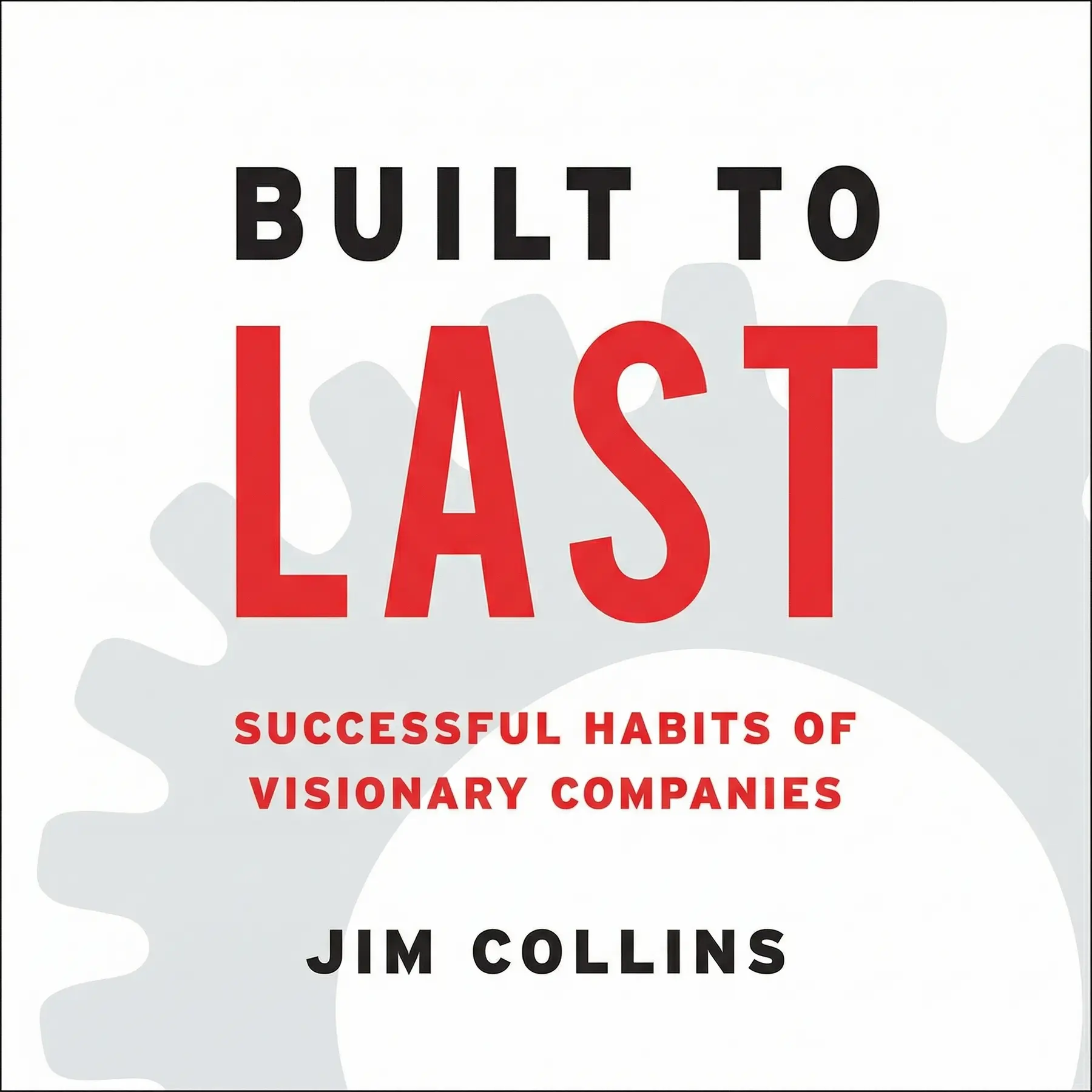
Built to Last: Successful Habits of Visionary Companies
By Jim Collins
Explore how iconic organizations achieve decades of dominance by balancing unwavering core values with a relentless drive for progress. This study uncovers the specific habits that distinguish visionary companies from their competitors.
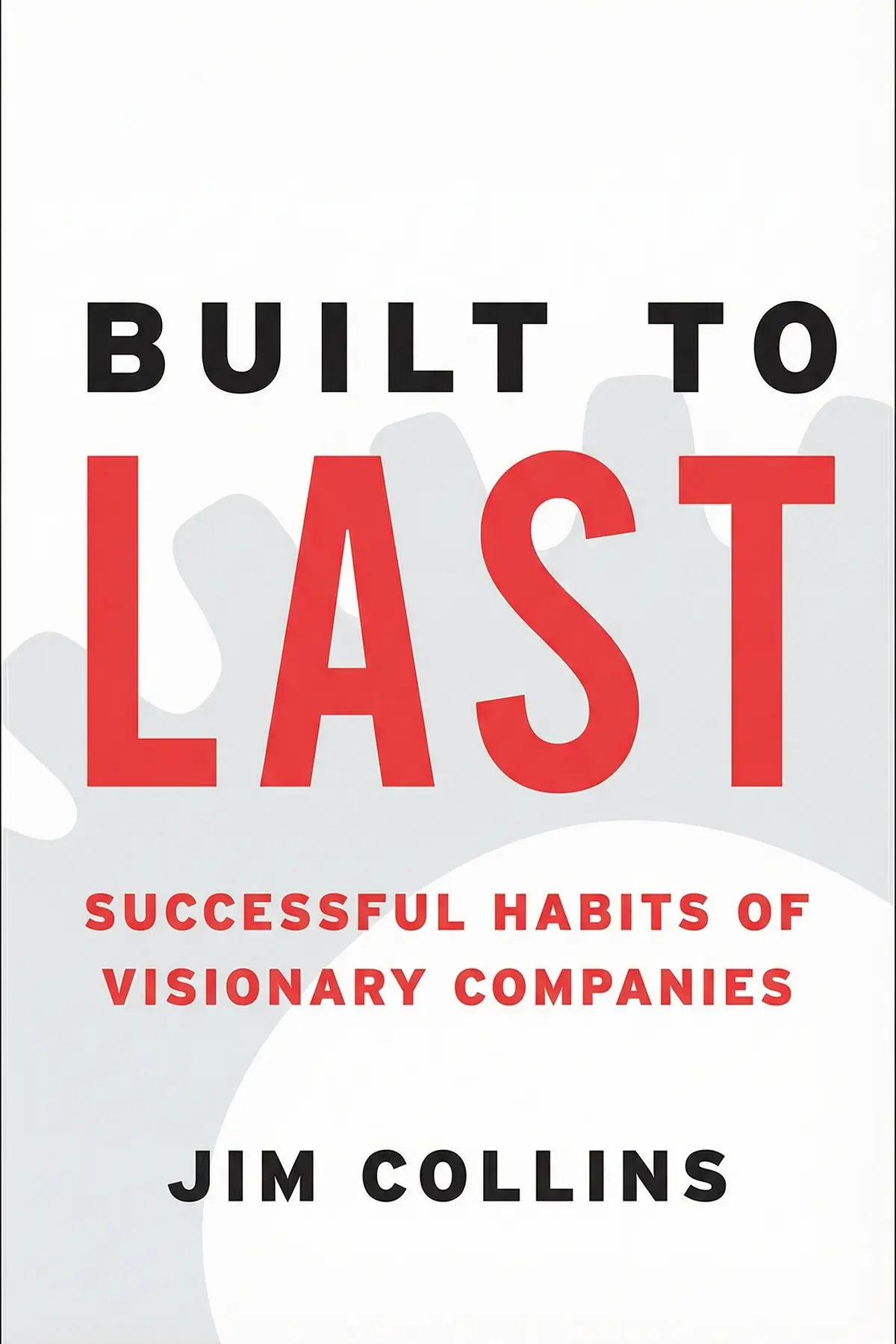
Table of Content
1. Introduction
1 min 51 sec
Think about the most respected names in the business world—the icons that seem to have been around forever, weathering every economic storm and technological revolution. These are the visionary companies, the organizations that are not just successful, but legendary. They are the crown jewels of the corporate landscape, admired by their peers and studied by everyone who wants to understand the secrets of long-term greatness. But what is it that truly separates these titans from the average firms that eventually lose their way?
To answer this, researchers spent years meticulously studying eighteen of these elite companies, including names like Marriott, Merck, and Disney. They didn’t just look at them in isolation; they compared them to a set of ‘comparison’ companies—firms that started at roughly the same time with similar products but never quite reached the same level of enduring prestige. The results were staggering. If you had invested a single dollar in the visionary companies back in 1926, by the year 1990, that dollar would have grown to over six thousand dollars. In contrast, that same dollar in the general market would have only reached about four hundred dollars.
This gap in performance isn’t just a fluke of the market. It’s the result of specific, repeatable habits and organizational structures. In this summary, we are going to walk through the foundational throughline of these companies: the ability to preserve a sacred core ideology while simultaneously pushing for restless, never-ending progress. We will see how they operate more like machines than individual flashes of brilliance, and how they cultivate cultures so strong they are almost indistinguishable from a cult. This is a journey into what it takes to build something that doesn’t just work today, but lasts for a century or more. By the end, you’ll see that the greatest ‘product’ these founders ever created wasn’t a piece of software or a physical tool—it was the company itself.
2. Building the Clock Over Telling the Time
1 min 56 sec
Discover why the world’s most enduring companies didn’t start with a revolutionary product, but rather focused on creating an organizational machine that generates greatness.
3. The Power of a Core Ideology
2 min 02 sec
Explore how visionary companies prioritize a sense of purpose and a set of fundamental values over the simple pursuit of short-term profits.
4. Embracing the Genius of the AND
2 min 00 sec
Learn how top-tier organizations avoid the trap of choosing between stability and change by mastering both simultaneously.
5. Using Big Hairy Audacious Goals
1 min 55 sec
Understand how setting massive, seemingly impossible objectives can galvanize an entire workforce and propel a company toward greatness.
6. The Cult-Like Culture of Visionary Firms
1 min 55 sec
See why these companies often feel like exclusive societies and how that intense alignment creates a powerful competitive advantage.
7. Cultivating Leadership from Within
1 min 54 sec
Observe how the most successful organizations prioritize long-term succession planning to ensure a steady stream of high-caliber leaders.
8. Success Through Evolutionary Progress
2 min 01 sec
Understand how visionary companies use a ‘trial and error’ approach to discover their next big breakthroughs, much like the process of natural selection.
9. Turning Ideology into Concrete Action
2 min 13 sec
Explore the specific mechanisms and ‘catalytic tools’ that visionary companies use to ensure their values aren’t just words on a wall.
10. Conclusion
1 min 35 sec
As we look back at the habits of these visionary companies, a clear picture emerges. Greatness isn’t the result of a single brilliant stroke of luck or the presence of a once-in-a-generation genius. Instead, it is the result of a disciplined adherence to a core ideology, combined with an equally disciplined drive for change. This is the ‘Genius of the AND’ in its most powerful form: the ability to be both a rock and a rocket.
If there is one actionable takeaway from the study of these legendary firms, it is to stop looking for the ‘great idea’ and start looking at your ‘clock.’ Whether you are leading a massive corporation, a small team, or even just managing your own career, ask yourself: What are my non-negotiable values? What is my fundamental purpose beyond just making a living? Once you have that core, you must then become your own most restless critic. Set goals that are so big they scare you, and create daily habits that force you to ‘beat yesterday.’
Building something that lasts requires the humility to realize that no single person is as important as the system they leave behind. By focusing on the organization—the culture, the succession, and the mechanisms of progress—you create an entity that can thrive in any environment. The visionary companies show us that longevity isn’t about avoiding change, but about knowing exactly what should never change, so that everything else can. This balance is the secret to enduring success, and it is a blueprint that anyone, in any field, can begin to follow today.
About this book
What is this book about?
Built to Last investigates why some companies manage to stay at the top of their industries for generations while others eventually fade away. The book is based on a massive six-year study conducted by Jim Collins and Jerry I. Porras at Stanford University, where they analyzed eighteen truly visionary companies—like Disney, Boeing, and Merck—and compared them to a control group of similar firms that were successful but not legendary. By comparing these high-performing pairs throughout their entire histories, the authors debunk several common myths about corporate success. They reveal that enduring greatness isn't about having a single brilliant idea or a charismatic leader; instead, it is about building an organization that can thrive through constant change. The promise of the book is to provide a blueprint for creating an institution that survives market shifts, leadership changes, and the passage of time. It explores how these firms maintain a cult-like adherence to their core values while simultaneously fostering an environment of radical experimentation and growth.
Book Information
About the Author
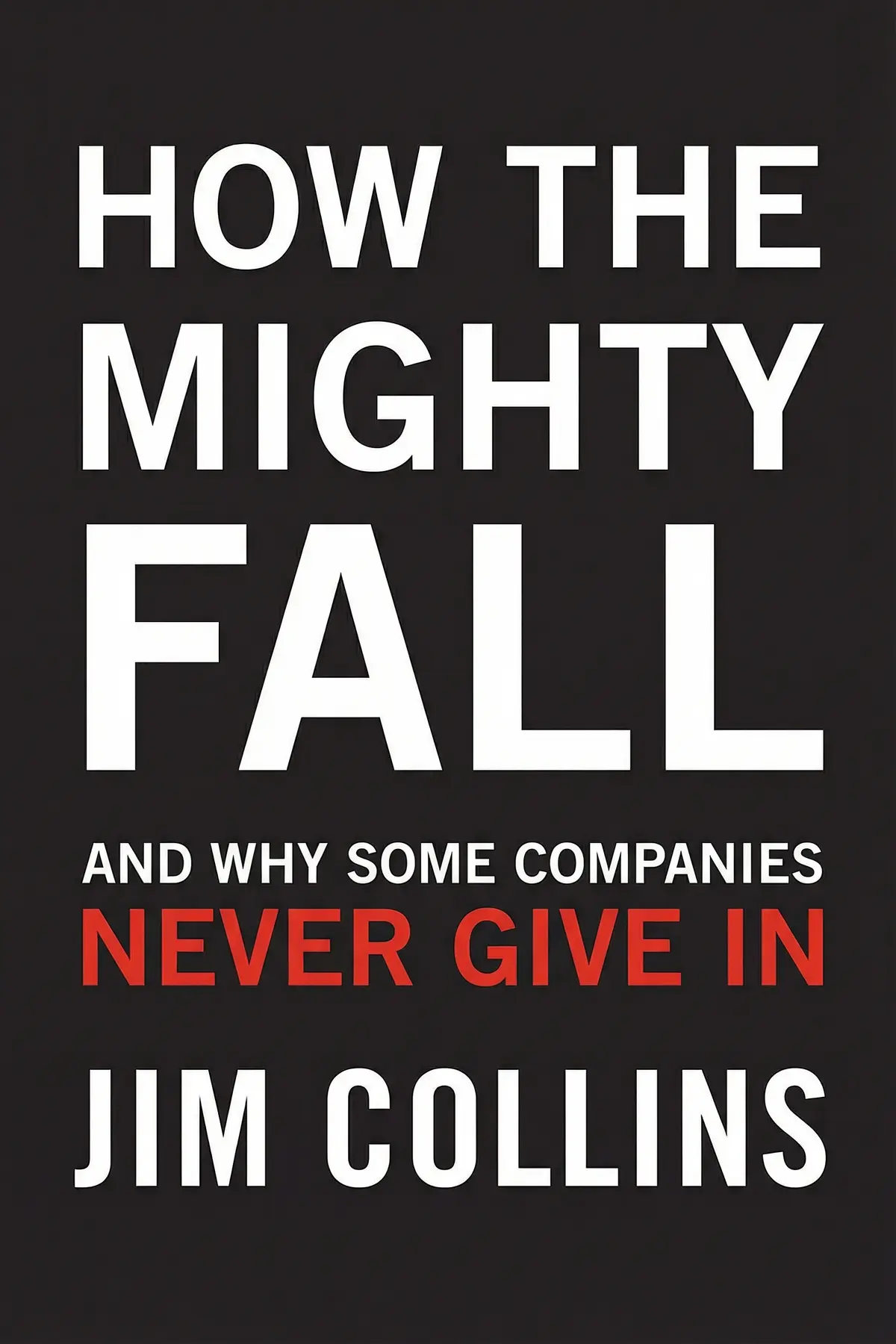
Jim Collins
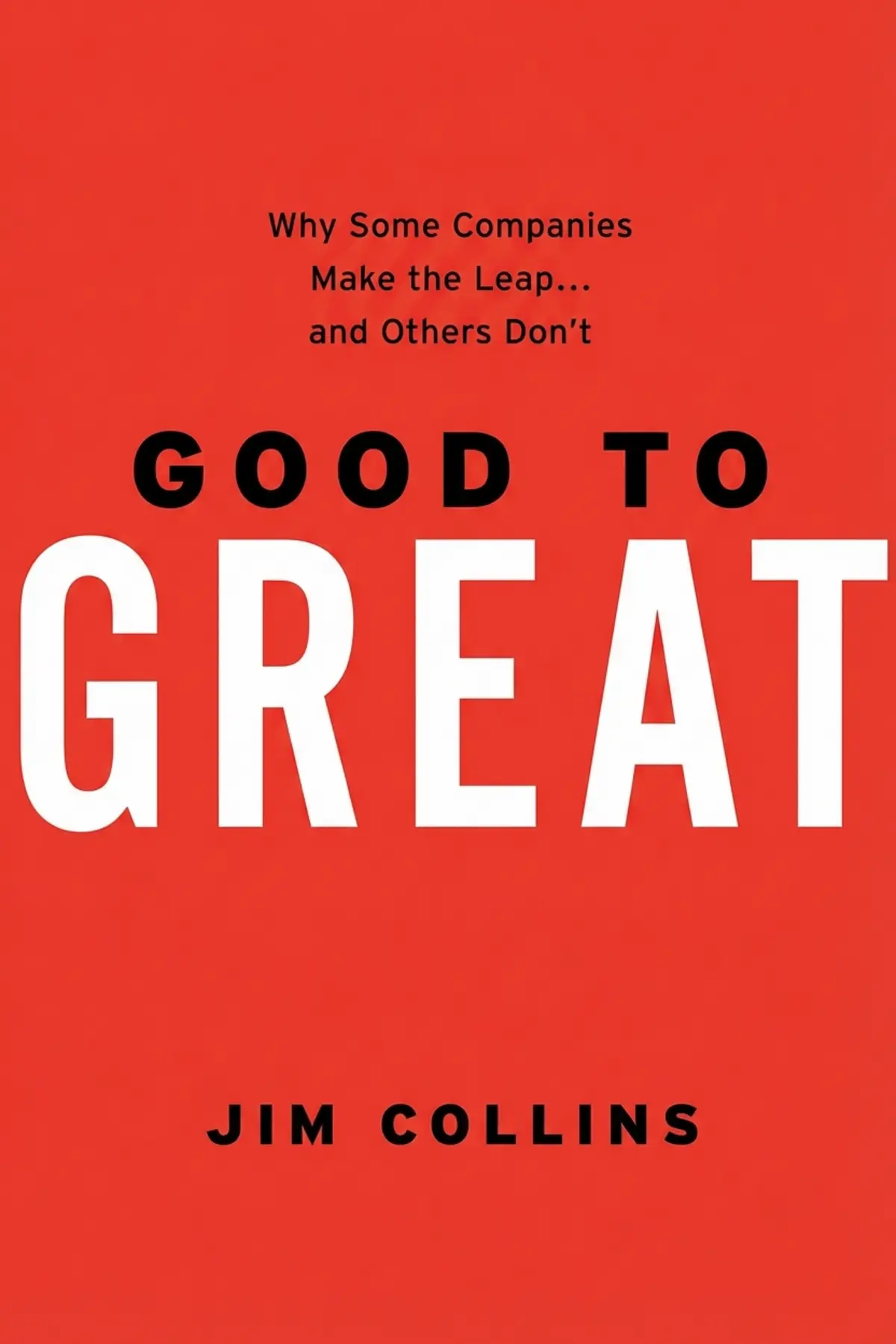
Jim Collins is an American author, lecturer and consultant, who, among other things, has taught at the Stanford University Graduate School of Business and is a frequent contributor to Fortune, Business Week and Harvard Business Review. His other book, Good to Great, has sold over four million copies. Jerry I. Porras is an academic and business analyst. He is the Lane Professor Emeritus of Organizational Behavior and Change at the Stanford University Graduate School of Business. His primary interest lies in finding methods for aligning companies with their core purpose and values.
Ratings & Reviews
Ratings at a glance
What people think
Listeners find the work deeply stimulating and loaded with useful data, particularly enjoying how it supports different leadership styles. The text provides high-quality observations on flourishing organizations, with one listener pointing out how it examines the DNA of great businesses. Furthermore, the content feels applicable and motivating, helping listeners reach great heights. However, opinions on readability are split; some find it easy to follow, whereas others have trouble with particular chapters.
Top reviews
Uraiwan
The concept of 'clock building' instead of just 'time telling' completely shifted how I view organizational growth. Jim Collins provides a wealth of information that goes beyond the typical charismatic leader myth, focusing instead on the underlying architecture that keeps a company breathing for decades. I found the breakdown of the 'Genius of the AND' particularly practical, as it challenges the binary thinking most managers fall into. While some of the case studies feel a bit dated now, the core principles regarding ideology and BHAGs remain incredibly relevant for anyone trying to build something that outlasts themselves. It is a deep dive into the historical DNA of corporate giants like 3M and Boeing. This isn't just a manual; it’s an inspiring blueprint for cultural endurance. I highly recommend it for leaders who are tired of quick-fix management trends and want to understand the long game of institutional excellence.
Show moreSophia
Wow, this really puts the 'vision' back in visionary. Most business books today are full of fluff, but Built to Last offers a genuine deep dive into the DNA of greatness. The authors do an incredible job of shattering common myths—especially the one about needing a charismatic, god-like CEO to succeed. Instead, they focus on 'preserving the core and stimulating progress,' which is a mantra I’ve already started applying to my own team’s workflow. Setting a BHAG (Big Hairy Audacious Goal) has actually revitalized our office morale! It’s inspiring to see how companies like Disney and 3M stayed true to their values while constantly evolving. Truly a must-read for any serious leader looking to reach great heights.
Show moreMaja
This is easily one of the most influential business books I've encountered in the last decade. Collins and Porras provide an incredible look into what truly differentiates the premier institutions from the 'also-rans.' The idea that a company should have a purpose beyond just maximizing profit is not just a feel-good sentiment; the authors back it up with decades of performance data. It's inspiring to read about how these organizations use cult-like cultures to eject those who don't fit their core values. Not gonna lie, some of the research is dense, but the payoff is a much clearer understanding of how to architect a legacy. If you want to move beyond being a 'time teller' and start building a 'clock,' this is your roadmap. It’s essential reading for anyone in a leadership position.
Show moreNarongrit
Simply put: this book changed how I think about my career and the kind of company I want to lead. It’s more than just a business manual; it’s an exploration of what it means to create something enduring and meaningful. Reading about the 'Genius of the AND' gave me the permission I needed to stop compromising between my values and my goals. Collins writes with a sense of authority and passion that makes even the data-heavy sections feel important. I was particularly moved by the stories of leaders who weren't charismatic superstars but 'clock builders' who cared deeply about the institution's future. It’s incredibly inspiring to think that a company can be a force for good while also being a financial powerhouse. This book provides excellent insights into the human side of corporate DNA.
Show moreTaweesak
After hearing so many people quote this book in meetings, I finally decided to see what the hype was about. It is undeniably packed with a wealth of information regarding what makes certain institutions stand the test of time. I really connected with the idea that visionary companies don't necessarily start with a 'great idea' but rather an obsession with the organization itself. However, I’ll admit the readability is a bit of a mixed bag. Some chapters fly by with fascinating stories about Hewlett-Packard or Sony, while others feel like a slog through repetitive data points. Despite the dense academic tone in parts, the insights into leadership styles are worth the effort. It really forces you to ask: are you building a product, or are you building a company? It’s a solid 4-star read that offers a lot of 'Aha!' moments for current entrepreneurs.
Show moreNatchaya
As someone who appreciates data, I wanted to love this, but it felt a bit like a collection of tall tales at times. The book is definitely thought-provoking and offers some excellent insights into corporate culture, but the reality check is that some of these 'visionary' companies have struggled significantly since the book was published. Motorola and Citicorp haven't exactly remained the 'crown jewels' Collins described. Frankly, it makes me question if the characteristics identified are actually the causes of success or just temporary traits of winning firms. On the positive side, the 'Genius of the AND' is a great framework for balancing stability and innovation. It’s worth a read for the historical context alone, though I would take the 'shattered myths' with a grain of salt. It’s a helpful resource, just not the definitive bible I expected.
Show morePornthip
Picked this up on a recommendation from my mentor, and I was pleasantly surprised by the focus on 'clock building'. The section on 'Home-grown Management' really hit home for me. It’s so common to see companies hire flashy outside CEOs only to watch the culture crumble, but this book proves that the most enduring institutions promote from within to preserve their core ideology. The writing is generally accessible, though it can get a little repetitive when they hammer home the same twelve myths. Still, the wealth of information provided is undeniable. It’s a very practical guide for anyone looking to understand the mechanics behind long-term corporate health. I especially liked the 'Try a lot of stuff and keep what works' philosophy—it’s basically evolutionary biology applied to business!
Show moreHana
Ever wonder why some companies thrive for a century while others vanish after one successful product cycle? Built to Last attempts to answer this by comparing 'visionary' companies against their less successful peers in the same industry. I found the analysis of 3M versus Norton particularly illuminating. The '12 Myths Shattered' section is a great way to open the book and immediately challenges your preconceived notions about charismatic leadership and strategic planning. While I agree with other reviewers that the readability fluctuates—some sections are quite dry—the overall wealth of information is staggering. It provides a rare look into the DNA of businesses that have survived multiple generations. It's a solid, research-driven piece that provides excellent insights, even if it feels a little overly optimistic about the power of vision statements.
Show moreGung
Finally got around to reading this classic, and I was struck by how much of its advice is still applicable in the digital age. Even though the examples like Philip Morris or Nordstrom might seem old-school, the concept of 'Preserve the Core / Stimulate Progress' is timeless. I’ve already started drafting a new BHAG for my startup because of this book. To be fair, some of the chapters are a bit long-winded and could have used tighter editing. The truth is, the book could probably be 50 pages shorter without losing much substance. However, the practical advice on creating mechanisms to ensure core values are actually lived—rather than just being words on a wall—is gold. It’s a decent book that belongs on the shelf, though I wouldn't call it a page-turner.
Show moreChanida
Wait a minute, isn't this just massive hindsight bias wrapped in fancy corporate jargon? While the writing is punchy and the 'Big Hairy Audacious Goals' make for great slogans, the underlying methodology feels shaky at best. Collins essentially cherry-picks successful companies and works backward to find commonalities, ignoring the thousands of failed startups that probably had those exact same traits. Just because a company has a 'cult-like culture' doesn't mean that's why they succeeded; it might just be a side effect of winning. To be fair, the anecdotes are interesting, but as Daniel Kahneman points out, luck and timing play a much bigger role than this book acknowledges. It’s easy to connect the dots looking back, yet that doesn't provide a reliable roadmap for the future. I felt like I was reading a collection of survivor bias stories rather than a scientific study. If you want inspiration, it's fine, but don't mistake it for a rigorous business manual.
Show moreReaders also enjoyed
A Year with Peter Drucker: 52 Weeks of Coaching for Leadership Effectiveness
Joseph A. Maciariello
Acting with Power: Why We Are More Powerful Than We Believe
Deborah Gruenfeld
All In: How Great Leaders Build Unstoppable Teams
Mike Michalowicz
7 Powers: The Foundations of Business Strategy
Hamilton Helmer

A Bigger Prize: How We Can Do Better Than the Competition
Margaret Heffernan
AUDIO SUMMARY AVAILABLE
Listen to Built to Last in 15 minutes
Get the key ideas from Built to Last by Jim Collins, plus 5,000+ more titles in English and Thai.
- 5,000+ titles
- Listen as much as you want
- 7-day free trial
- Cancel anytime







