
A Liberated Mind: How to Pivot Toward What Matters
Steven C. Hayes
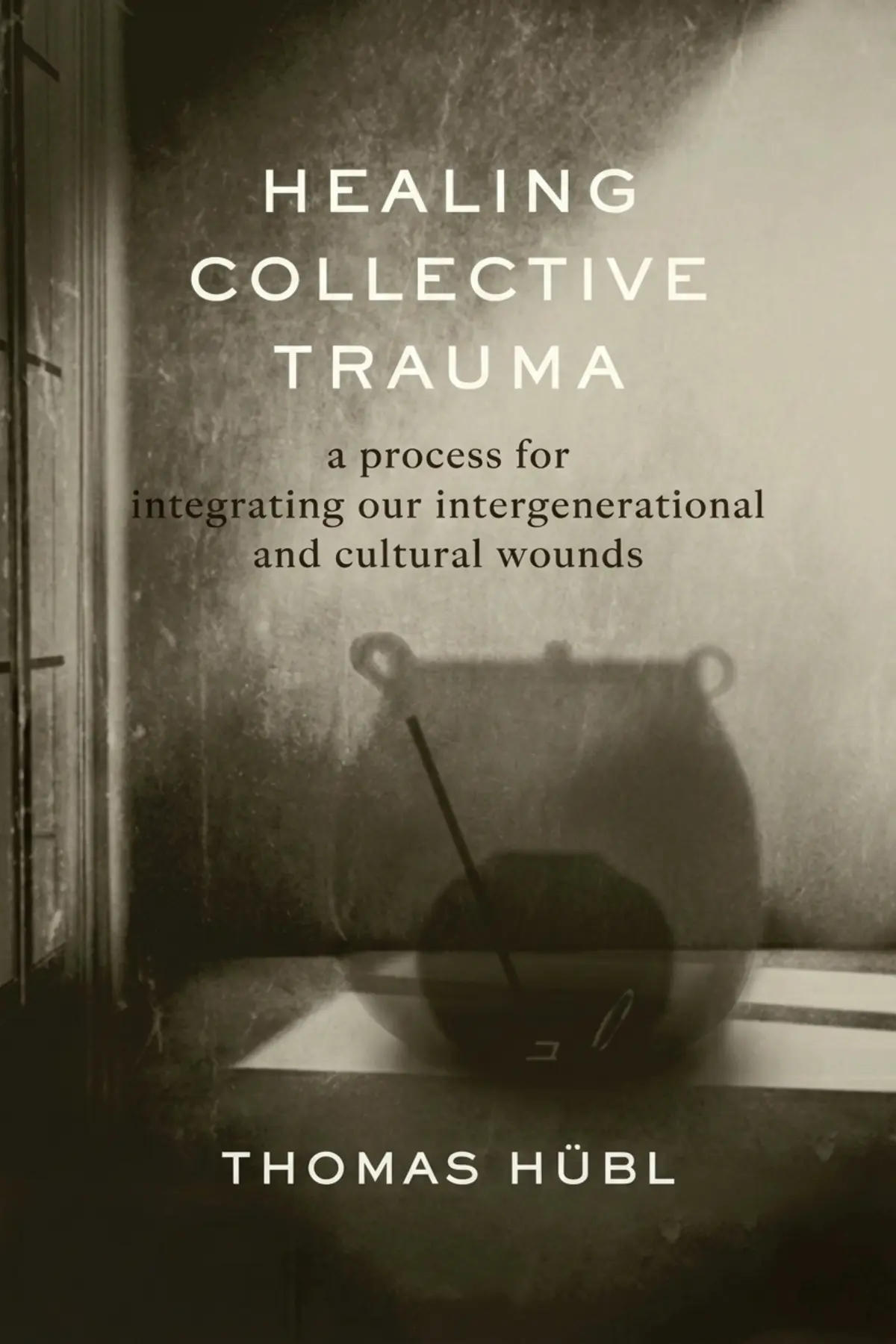
Healing Collective Trauma explores the invisible wounds shared by societies and lineages. Thomas Hübl provides a framework for integrating historical trauma through spiritual awareness, nervous system regulation, and the power of collective presence.
1 min 28 sec
When we think about the concept of trauma, we often imagine an individual person navigating the aftermath of a specific, painful incident. We think of personal recovery and one-on-one therapy. However, in recent years, a shift has occurred in how we perceive the lasting impact of suffering. Thinkers and researchers have begun to look beyond the individual to see how trauma weaves itself into the very fabric of society. This perspective suggests that our history—full of wars, systemic inequalities, and massive disruptions—leaves a mark that is shared by everyone in a culture. This is what we call collective trauma.
In Healing Collective Trauma, Thomas Hübl invites us to look at the world through a new lens. He argues that the unrest we see in our politics, the fragility of our environment, and the persistent divisions between groups are not just contemporary problems; they are the symptoms of unhealed, shared wounds. By bringing together the latest findings in science and the timeless wisdom of spirituality, Hübl provides a throughline for understanding how we got here and, more importantly, how we can move forward. This exploration isn’t just about looking at the past; it is about learning how to stay present with one another so that we can stop the cycle of repeating historical mistakes. Over the next few sections, we will explore how trauma rewires our bodies, how it travels through generations, and how we can use the power of the group to finally begin the process of integration and healing.
2 min 32 sec
Trauma is more than a memory; it is a biological survival strategy that fundamentally alters how our nervous system functions and responds to the world around us.
2 min 05 sec
Beyond the physical body, the soul serves as a bridge to a broader sacred dimension, and unhealed trauma acts as a shadow that blocks this connection.
2 min 13 sec
Our early interactions create the structures of our consciousness, and learning to attune our energy with others is the key to overcoming isolation.
2 min 20 sec
Trauma is not just personal; it moves through history and biology, affecting entire communities and the descendants of those who suffered.
2 min 28 sec
Healing shared wounds requires a group process rooted in presence, navigating the waves of denial and eruption to find a common voice.
1 min 33 sec
As we have seen, the path to healing is not one we can walk entirely alone. Trauma is a multifaceted force that shapes our nervous systems, our spiritual potential, and our cultural history. It is a biological reality that began as a way to help us survive, but left unaddressed, it becomes a barrier that keeps us from truly living. From the way our genes respond to stress to the way our ancestors raised their children in times of crisis, the marks of the past are everywhere.
However, the throughline of this journey is one of profound hope. By shifting our focus from individual symptoms to collective attunement, we can begin to dissolve the shadows that haunt our society. We have the tools to clear our inner space and build bridges of presence with others. When we come together in groups to face the weight of history, we find that the very structures that transmitted our pain can also be the channels for our recovery.
The final takeaway is a call to action: start where you are. Work on your own internal coherence, cultivate curiosity over fear, and look for opportunities to practice attunement in your relationships. As we each become more present, we contribute to the healing of the whole. Like the gold in the kintsugi pottery, our integrated wounds can become the light that guides us toward a more compassionate and connected world. The shadows of the past do not have to be our future; they can be the very ground upon which we build a new, more aware humanity.
We often think of trauma as an individual experience—a personal wound resulting from a specific painful event. However, this book argues that trauma also exists on a much larger scale, affecting entire communities, nations, and generations. These collective wounds create a hidden architecture that shapes our cultural behaviors, political tensions, and even our physical health. When trauma is left unintegrated, it creates a 'shadow' in our collective consciousness, causing us to repeat the same destructive patterns over and over. Thomas Hübl offers a unique synthesis of scientific research and spiritual practice to address these deep-seated issues. He promises a path toward healing that involves more than just personal therapy; it requires a collective process of attunement and presence. By understanding how trauma is transmitted through historical events and ancestral lineages, we can begin to dissolve the barriers that keep us isolated. The book provides a practical roadmap for groups to come together, acknowledge shared pain, and transform the fragments of the past into a source of wisdom and light. Ultimately, it is a call to awaken our shared humanity and build a more compassionate, connected future.
Thomas Hübl is a teacher, writer, the leader of the Collective Trauma summit, and the founder of the Academy of Inner Science. His other works include Attuned and Sharing the Presence.
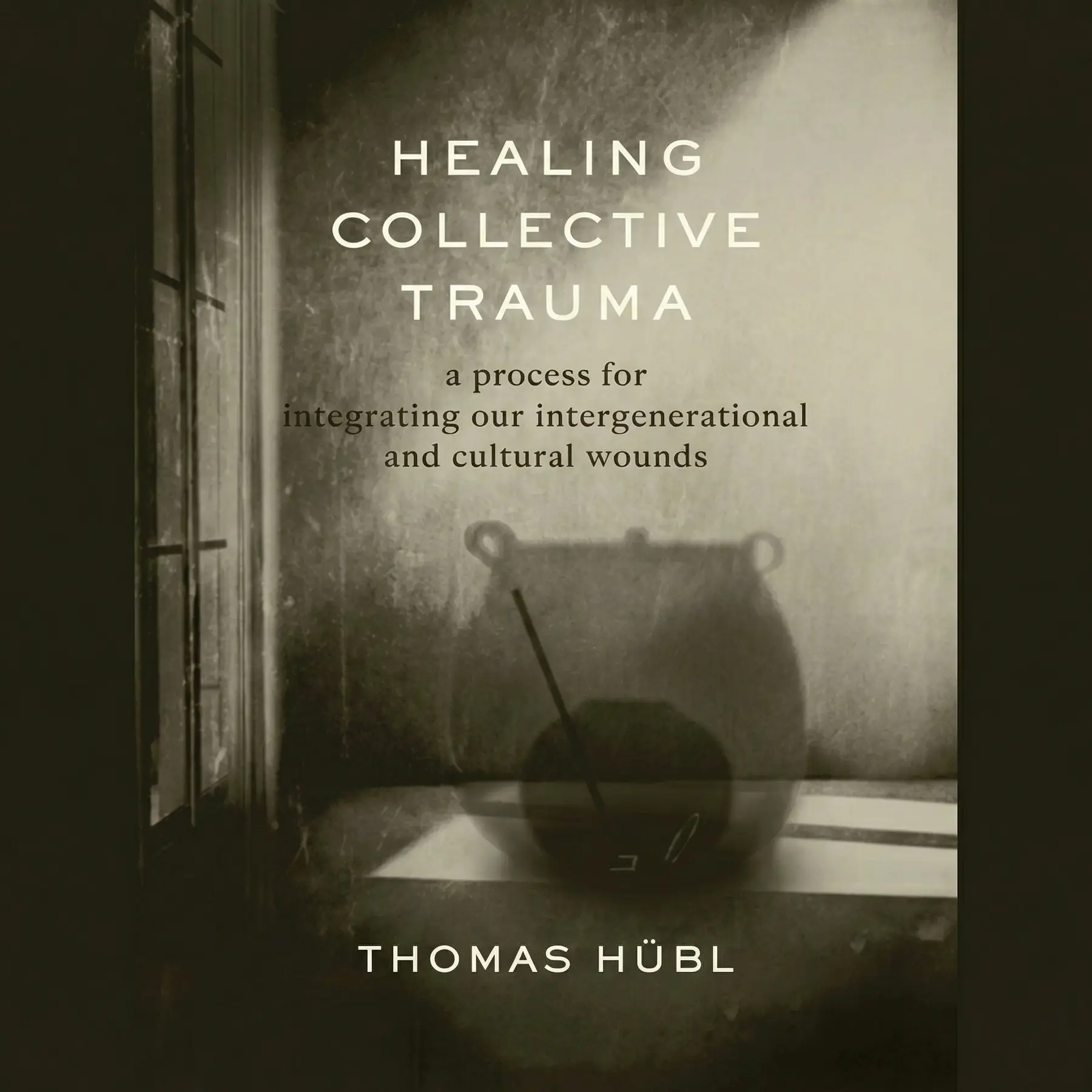
Listeners find this work exceptionally well-crafted and absorbing from the opening chapter, admiring its timeless sagacity and profound mystical foundations. They describe it as heart-stirring and hopeful, while also highlighting its restorative influence on the human collective. The author's prose receives significant praise, with one listener specifically drawing attention to its important new imagery.
Wow. This book is a rare find that manages to bridge the gap between hard science and deep, soulful mysticism without feeling forced. Hübl speaks about the 'elephant in the living room'—that massive, unacknowledged weight of collective trauma that dictates our politics, our economies, and our personal anxieties. While some might find the spiritual language a bit loftier than a standard textbook, the message is profoundly hopeful. It offers a structured blueprint for how we can move from a trauma-based society to one that is truly trauma-informed and resilient. I found the sections on the polyvagal theory and the nervous system's 'evolutionary intelligence' particularly enlightening. It’s not just a book you read; it’s a perspective shift that stays with you long after the final page. Truly, this feels like necessary medicine for the fragmented world we are currently living in.
Show moreThis isn't your average self-help manual; it’s a profound deep dive into the architecture of our social souls. Hübl has this refreshing way of bringing together medical backgrounds and mystical experiences to address why humanity keeps re-traumatizing itself. I was especially gripped by the chapter on the 'Architecture of Social Trauma,' which doesn't shy away from the horrors of lynchings and genocides. He shows us how victims and perpetrators are trapped in the same field of unintegrated pain. Personally, the writing felt like a hero’s journey into the dark and back out into the light. It gave me a new vocabulary for the subtle energies I’ve felt in groups but could never name. If you’re tired of surface-level fixes for the world’s problems, this book offers a much more rigorous and compassionate path forward.
Show moreThe metaphor of the 'elephant in the room' really stuck with me as I navigated through this beautiful text. Hübl and his co-author have crafted something that feels both ancient and cutting-edge at the same time. This is a must-read for anyone who feels that our current societal structures are fundamentally broken. The book argues that until we acknowledge the intergenerational wounds we carry, we are destined to repeat the same violent cycles. It’s heavy stuff, but the prose is so fluid and poetic that it never feels overwhelming. I found myself highlighting passages on almost every page, especially the parts about 'divine intelligence' educating our human mess. It’s a book that demands presence and rewards you with a much clearer understanding of your place in the human story.
Show moreFinally got around to reading this and it feels like medicine for the soul. In a world that is so polarized and fragmented, Hübl offers a path toward integration that doesn't involve ignoring the pain. Instead, he teaches us how to witness it. I’ve read a lot of books on PTSD and intergenerational trauma, but this is the first one that really addresses the collective dimension in a way that feels actionable. The emphasis on 'presence' and 'attunement' as tools for healing is so powerful. It gave me a lot of comfort to think that my own work on my internal wounds is actually contributing to the healing of the whole. This is a profound, compassionate, and deeply resonant book that everyone should have on their shelf.
Show moreEver wonder why we keep repeating the same cultural mistakes? This book provides the most comprehensive answer I've found yet. Thomas Hübl dives deep into the 'shadow' of our societies, showing how unhealed historical wounds act like a glitch in our collective software. The writing is incredibly thoughtful and the tone is one of deep respect for the human experience. I loved the connection between the material science of trauma—like how it affects our DNA—and the spiritual need for communal reconciliation. It’s a big, ambitious book that covers a lot of ground, but it feels cohesive. Even if you aren't into mysticism, the insights into how we communicate and relate to one another are worth the price of admission alone. Truly a transformative piece of work.
Show moreAfter hearing Thomas on a podcast, I knew I had to pick this up to understand his take on intergenerational healing. The book is incredibly ambitious, attempting to solve everything from individual dysfunction to global economic collapse through a single lens of collective trauma. Truth be told, it’s a bit of a dense read. The language is often academic and jargon-heavy, which might alienate some readers who aren't already familiar with Jung or Ken Wilber. But for those willing to do the work, there are some incredible gems here. The concept of 'integrating light' into our broken history—much like the Japanese art of kintsugi—is a beautiful way to think about our cultural scars. I did feel like some of the workshop protocols included at the end were a bit risky for amateurs to try without supervision, but the overall philosophy is deeply moving.
Show morePicked this up because I’ve been feeling the weight of the world lately, and this book definitely delivered on the 'uplifting' front. Thomas Hübl writes with a level of compassion that is honestly rare in the field of trauma studies. He doesn't just focus on the 'what'—he looks at the 'how' of collective processing. I appreciated the specific focus on how our nervous systems are interconnected. It’s not just about me healing; it’s about us healing together. Some of the middle chapters were a bit too 'woo-woo' for my taste, especially when he starts talking about changing the past through the present. But if you can look past the more esoteric bits, the framework for relational attunement is incredibly practical and life-changing. It’s a solid 4-star read that offers a lot of hope for a future that currently feels quite dark.
Show moreGotta say, the language can get a bit dense at times, almost like the author is trying to put you into a trance with his words. There were moments where I had to re-read a paragraph three times just to grasp what 'causal space' or 'subtle nadis' meant in this context. However, once you get into the rhythm of the writing, the wisdom is undeniable. The collaboration between Hübl and Julie Jordan Avritt is clear; you can see the balance between the direct, professional storytelling and the more abstract mystical insights. I particularly enjoyed the case studies that illustrated how trauma travels across groups. It helped make the theoretical concepts feel much more grounded. It’s an essential read for therapists or group facilitators, even if it requires a bit of intellectual heavy lifting to get through the jargon.
Show moreThe core premise here is absolutely fascinating, but the execution left me feeling a bit conflicted. On one hand, Thomas Hübl offers a brilliant analysis of how historical genocides and cultural wounds ripple through generations. On the other hand, the writing is frequently bogged down by self-invented terminology like 'we-space' and 'shared presencing' that can feel more like workshop marketing than actual methodology. Frankly, the blend of mystical narrative and scientific findings felt a little blurry at times, as if the author were trying to create his own 'spiritual science' out of thin air. To be fair, there is some perennial wisdom tucked away in these chapters, especially regarding relational intelligence. However, if you are looking for a grounded, peer-reviewed psychological study, you might find the abstract, repetitive metaphors a bit frustrating to navigate.
Show moreLook, I really wanted to like this, but I struggled with the lack of concrete evidence for some of the more 'mystical' claims. The author frequently weaves legitimate trauma research from sociologists and psychiatrists into his own spiritual narratives as if they are one and the same. It feels a bit manipulative. He talks about different 'dimensions' and 'layers of light' with a self-assuredness that isn't backed up by anything other than his own assertions. Also, the book is quite repetitive; it feels like it could have been half the length if it didn't keep circling back to the same abstract metaphors. While the intent to heal the world is noble, I found the constant mentions of his workshops a bit off-putting. It felt less like a book for the public and more like a long-form advertisement for his specific brand of mysticism.
Show moreSteven C. Hayes
Eckhart Tolle
Marianne Williamson
Deepak Chopra
Pico Iyer
Leanne Maskell
AUDIO SUMMARY AVAILABLE
Get the key ideas from Healing Collective Trauma by Thomas Hübl, plus 5,000+ more titles in English and Thai.







