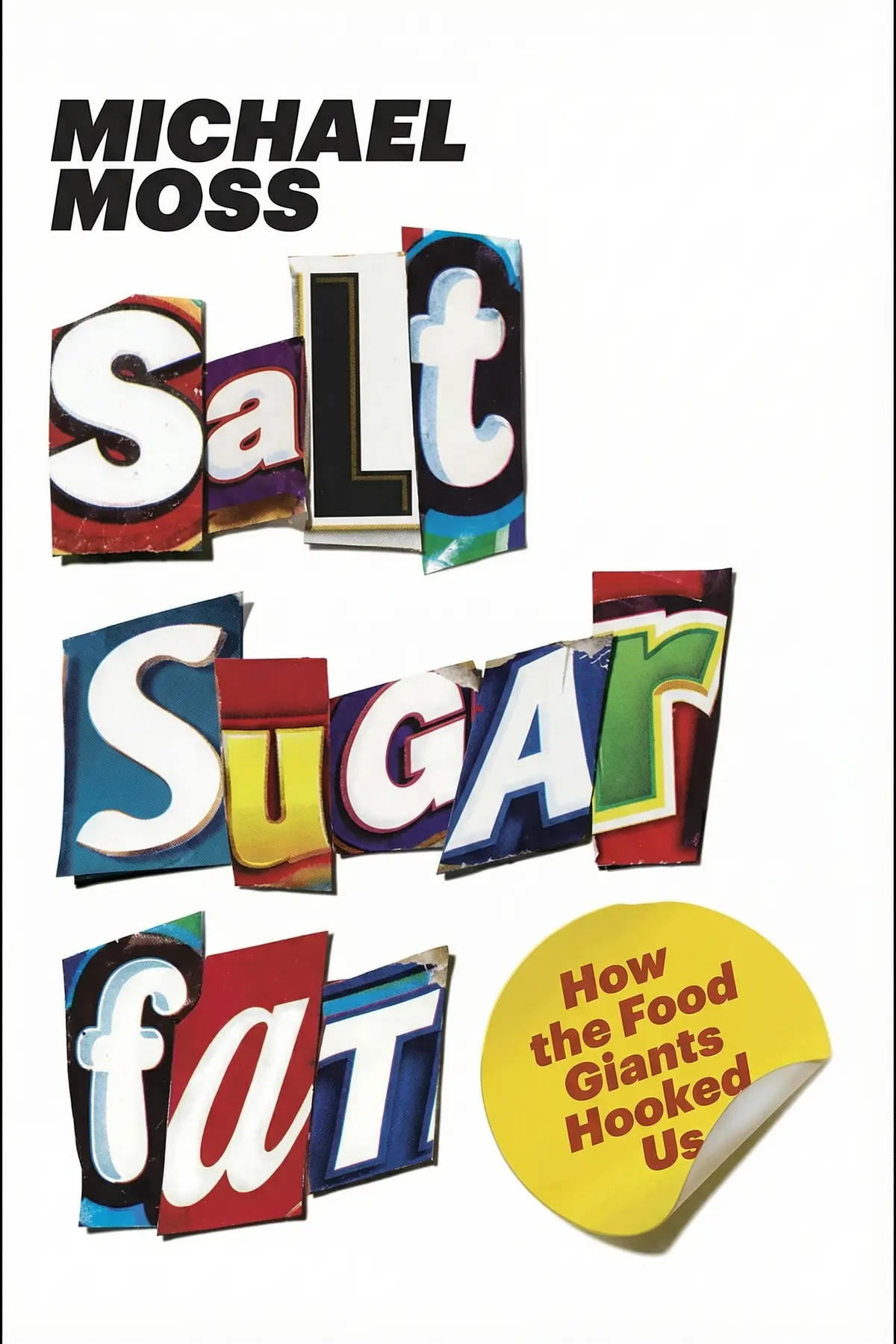
Salt Sugar Fat: How the Food Giants Hooked Us
Michael Moss
Investigative journalist Michael Moss explores the calculated strategies food giants use to bypass our willpower, revealing how processed foods are engineered to be as addictive as narcotics through biology and marketing.
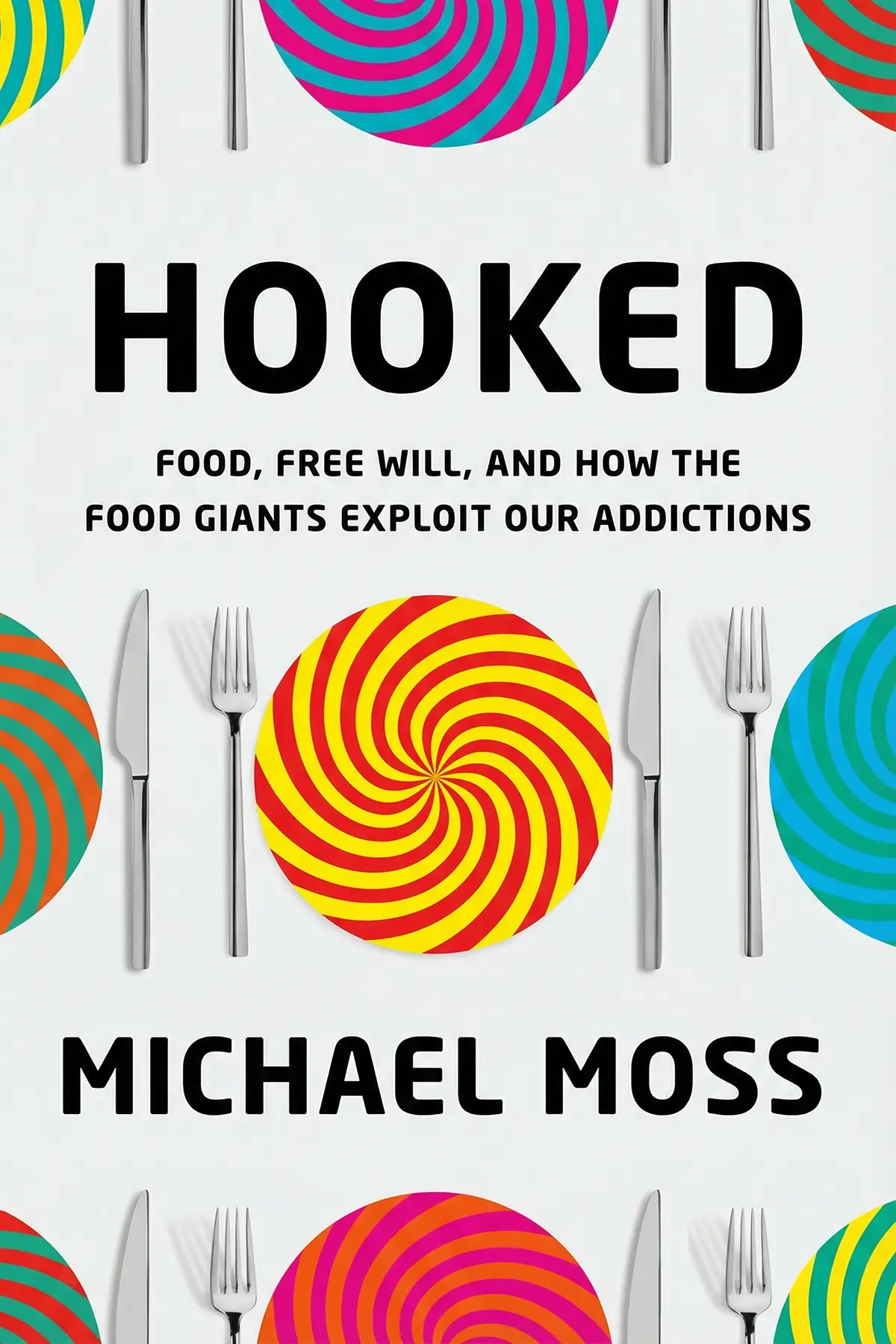
1 min 45 sec
Think about the last time you found yourself standing in the kitchen, staring into an empty bag of chips, wondering how you managed to finish it so quickly. You didn’t even feel hungry when you started. In those moments, it feels like a lapse in judgment or a lack of self-discipline. But what if that experience wasn’t really your fault? What if your brain was essentially hijacked by the very food you were eating? This is the unsettling question at the heart of our exploration today.
We often like to believe that we are the masters of our own choices, especially when it comes to what we put on our dinner plates. We view eating as a series of conscious decisions influenced by taste, health, or convenience. However, as we dive into the research of Michael Moss, we begin to see a much more complex and darker reality. We are living in an era where our food is no longer just nourishment; it is a meticulously engineered product designed to exploit our most basic biological instincts.
In this summary, we are going to look at the powerful forces that keep us coming back for more, even when we know a food is bad for us. We’ll examine the startling similarities between a bite of a cheeseburger and a hit of a controlled substance. We will see how the food industry has capitalized on the changing structure of the modern family and how our own evolutionary history—once our greatest tool for survival—has now become a vulnerability.
This isn’t just a story about calories and weight gain; it’s a story about the loss of free will. By the end of this journey, you’ll understand the ‘Bliss Point,’ the hidden power of childhood memories, and why the fight for our health is actually a battle for our brains. Let’s pull back the curtain on the food giants and see how they’ve managed to get us all hooked.
2 min 30 sec
Discover how modern brain imaging reveals that your favorite snacks might be triggering the same pleasure centers as illicit drugs, making ‘food addiction’ a scientific reality rather than a metaphor.
2 min 31 sec
Learn why feeling full doesn’t always stop us from eating and how the incredible speed of sugar’s ‘hit’ to the brain outpaces even the most addictive chemicals.
2 min 22 sec
Explore the ‘riverbed’ effect in your brain and how the snacks of your youth paved a permanent path for today’s cravings.
2 min 32 sec
See how our ancestors’ survival mechanisms—like the love for variety and calorie-dense foods—are being used against us by the food industry.
2 min 15 sec
Uncover the ‘Bliss Point,’ the secret formula food scientists use to bypass your natural ‘full’ switch and keep you eating indefinitely.
2 min 23 sec
Learn why simply counting calories might not be enough to combat weight gain when it comes to highly processed ‘fake’ foods.
2 min 16 sec
As we wrap up our look into the world of Michael Moss’s research, the picture that emerges is one of a sophisticated, multi-front assault on our autonomy. We’ve seen that the struggle with processed food is not a simple matter of ‘eating too much.’ It is the result of a perfectly timed collision between our ancient survival instincts and modern industrial ingenuity. From the rapid-fire dopamine hits that rival illegal drugs to the deep-seated neural pathways formed in our childhood, the food we eat is literally shaping our brains.
We have learned that our appetite is a mental construct that can be hijacked by the ‘Bliss Point’ and that even the way we metabolize calories is thrown into chaos by the synthetic nature of processed goods. The food industry has spent decades learning exactly how to silence our ‘stop’ signals and amplify our ‘go’ signals. This might feel overwhelming, but there is power in this knowledge. When we understand that the pull of the drive-thru or the snack aisle is a biological trap, we can stop blaming our lack of willpower and start changing our environment.
One practical step you can take immediately is to disrupt the visual triggers that the industry relies on. These companies spend billions on packaging designed to excite your brain’s reward centers. You can fight back by simply removing that packaging. When you bring processed foods into your home, transfer them into plain, clear glass jars or neutral containers. By stripping away the bright colors and the manipulative logos, you reduce the ‘cue-induced’ cravings that happen every time you open your pantry.
Ultimately, reclaiming our health requires us to move away from the convenience that the industry sold us and move back toward a relationship with food that our bodies actually recognize. It means being mindful of how our childhood memories are being exploited and recognizing that our evolution didn’t prepare us for the supermarket. We are all ‘hooked’ to some degree, but by understanding the mechanics of the hook, we can begin the work of unhooking ourselves and making choices that truly serve our well-being.
Have you ever wondered why it is so difficult to stop at just one potato chip or why a fast-food craving can feel more like a physical necessity than a simple preference? Hooked explores the intersection of human biology and corporate strategy, revealing that our struggle with junk food isn't a failure of character, but a calculated result of industrial design. Michael Moss takes us behind the scenes of the food industry to show how companies leverage salt, sugar, and fat to trigger the same neurological pathways as addictive drugs. This exploration covers the evolution of our species, the shifts in modern domestic life, and the cutting-edge neuroscience that explains how our brains are being rewired. By understanding the 'Bliss Point' and the deceptive nature of processed calories, readers can begin to see the grocery store and the drive-thru through a new lens. The book promises to unmask the hidden forces that exploit our ancestral instincts, offering a path toward reclaiming our dietary autonomy in a world designed to keep us eating.
Michael Moss is a highly respected investigative journalist and author. His rigorous reporting earned him the Pulitzer Prize in 2010 for his work on the safety of contaminated meat products. He is also the author of the New York Times bestseller Salt Sugar Fat, which established him as a leading voice in exposing the inner workings of the food industry.
Michael Moss
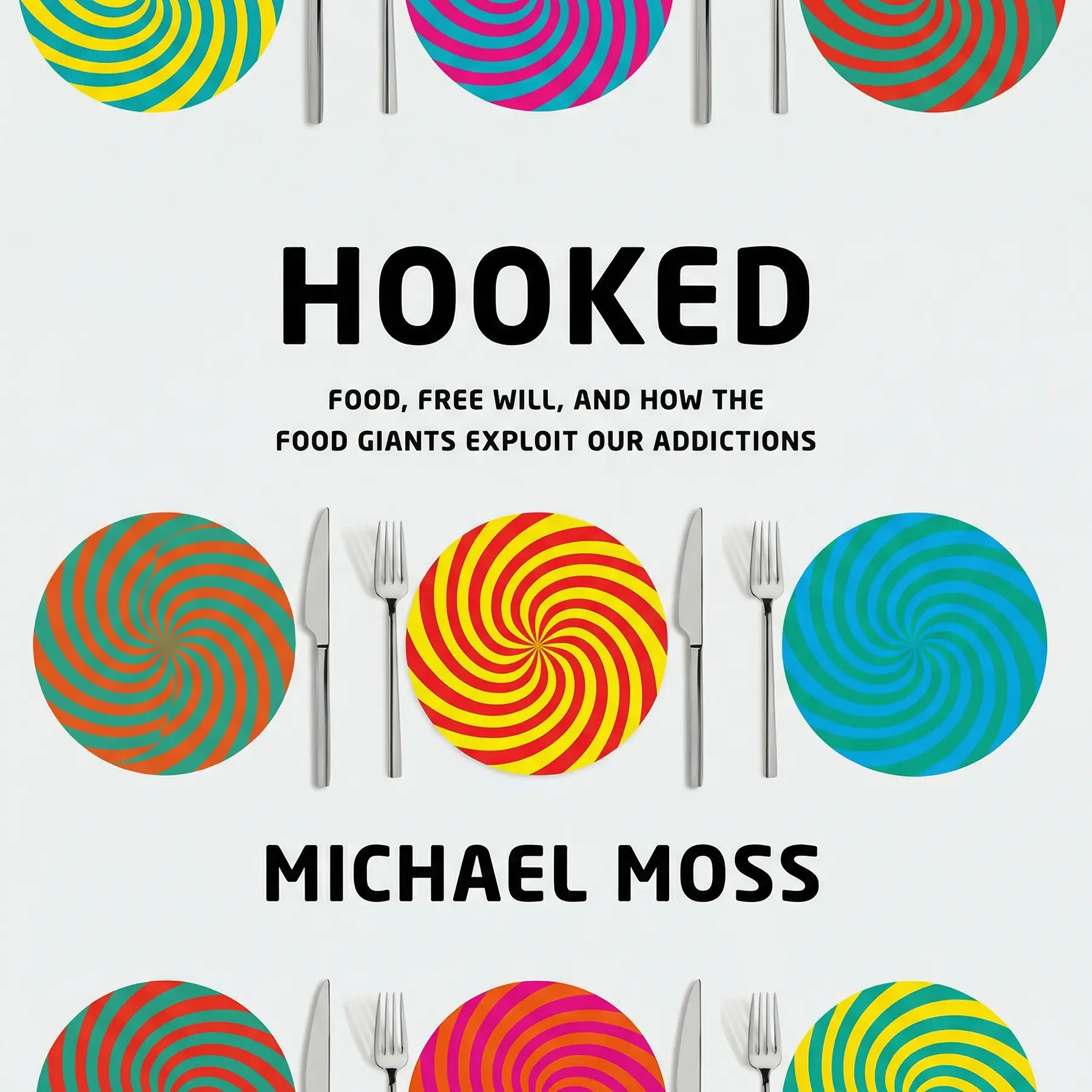
Listeners consider this title a must-read, with one person describing it as a captivating study of the food trade. Additionally, the book earns praise for its educational substance and high-quality writing. Listeners also appreciate the perspectives provided, with one listener mentioning how it clarifies the way personal physiology functions.
Wow. This book should be required reading in every high school health class across the country. After hearing about the 'bliss point' in his last book, I thought I knew it all, but the way Moss breaks down the evolution of our fat cells is revolutionary. I spent my last grocery trip staring at the 'bright packaging' and 'new look' labels, realizing exactly how much I was being manipulated by marketing geniuses. It’s infuriating to realize that multi-billion dollar corporations are using neuroscience to hack the brains of toddlers for profit. The truth is, we are living in a food environment that is biologically toxic, and Moss provides the tools to finally understand why our self-control fails. It is a dense read, but every single page is packed with revelations that will change how you eat forever. Five stars for the investigative depth.
Show moreMichael Moss has done it again by providing a terrifyingly in-depth look at how the food industry treats us like lab rats. I listened to the audio version and the narration was fantastic, making the complex biological segments much easier to follow while I was commuting. The way he describes 'fat' as an organ that actively fights against weight loss was a total 'aha' moment for me. It’s not just about greed; it’s about how these companies use fMRI technology to find the exact 'reward' signals in our brains. Personally, I think this is even better than his first book because it moves beyond ingredients and into the actual hard science of addiction. If you want to understand why you can't stop eating processed junk, you absolutely have to pick this up. It is mandatory reading for the health-conscious.
Show morePicked this up after struggling with my own snack habits and it was a total eye-opener regarding our personal physiology. The most chilling part was definitely the deep dive into how Philip Morris applied cigarette-style addiction models to processed food brands like Kraft. It makes so much sense now why it’s impossible to stop at just one Oreo when the science is literally designed to override your willpower. I found the sections on 'fat as an organ' particularly fascinating because it reframes weight loss as a biological battle rather than a moral failure. While some of the science gets a bit dense in the middle, the overall message is mandatory reading for anyone who shops at a modern grocery store. You’ll never look at a 'limited edition' snack the same way again after reading this.
Show moreAs someone who has always struggled with 'willpower,' learning about the evolutionary drive to seek out calories was a massive relief. Moss explains that our ancestors survived because they were hardwired to store fat, but now that instinct is being exploited by companies like Nestlé and PepsiCo. The technical details about how sugar reaches the brain in half a second are absolutely wild and help explain the physical rush of a soda. Look, the book is a bit long-winded in places, and I agree with other reviewers that the prologue is excessively long for no apparent reason. However, the information regarding how the government fails to regulate these 'addictive' substances is too important to ignore. It’s a sobering look at capitalism’s role in the obesity epidemic. The writing is very informative and well-written throughout the majority of the chapters.
Show moreThis book is a fascinating exploration of the food industry that will likely make you very angry at your local supermarket. It’s not just a health book; it’s an indictment of a system that prioritizes corporate profits over the literal survival of the population. Moss is a gifted writer who can take boring corporate history and turn it into a fast-paced thriller about the takeover of our taste buds. I particularly appreciated the discussion on how low-income families are targeted because cheap, processed calories are often their only viable option. My only real gripe is that I wish he spent more time on social solutions rather than just individual self-control at the very end. Still, it is an essential piece of investigative journalism that everyone should consume to understand the world around them. The insights into personal physiology were worth the price alone.
Show moreNot what I expected at first, as I thought it would be more of a diet guide, but it turned out to be a deep dive into human physiology. It’s fascinating to see the breakdown of how our guts signal the brain to keep eating even when we are technically full. The writing style is engaging, though some of the science got a bit much for me during the middle chapters on hormone signaling. To be fair, it’s a lot more academic than a typical 'pop science' book, but that’s what makes the information feel so credible and urgent. I’ve already started shopping the 'periphery of the store' for fresh foods because I can’t un-know what I’ve learned here. It’s definitely a well-written wake-up call for anyone trapped in the cycle of processed food addiction. Don't skip the notes at the end.
Show moreAfter hearing the author on a podcast, I knew I had to grab a copy of Hooked to see the full data. The connections he draws between the tobacco industry and the rise of hyper-processed snacks are some of the most compelling arguments I've ever read. Even though the book looks thick, it's actually a super fast read because the last huge chunk is just acknowledgments and detailed notes. Gotta say, the section on how 'little hands' are targeted by Oreo packaging was heart-wrenching and really changed how I view my kids' snack requests. It’s an informative and well-researched piece of work that manages to be both academic and accessible at the same time. This is mandatory reading for anyone who wants to take their health back from Big Food. It really helps you understand your own cravings.
Show moreEver wonder why you can finish a whole bag of chips without even blinking? Moss explains the 'how' with incredible detail, focusing on how Big Food uses psychology and fMRI scans to map out our cravings. To be fair, if you’ve already read his previous work, some of this might feel like a repeat of the same themes with slightly more updated neuroscience. The writing is polished, but the structure is a bit messy and meanders into historical tangents that don't always feel relevant to the core thesis. I enjoyed the audiobook version, though I think I need the print copy to actually digest the complex data on hormones like ghrelin. It’s a solid three-star read that offers great insights but lacks a cohesive through-line. Some of the meandering thesis points really slowed down my progress.
Show moreFinally got around to reading this after loving Salt Sugar Fat, but I have to admit I’m a little disappointed by the execution. The research is top-notch, which you’d expect from a Pulitzer winner, but the book desperately needs a more aggressive editor to trim the fat. There are long stretches about tobacco and early human history that feel like they belong in a completely different book. Not gonna lie, I found myself skimming several chapters just to get back to the actual discussion of modern food engineering and marketing tactics. When it stays on topic, it’s brilliant and terrifying, especially the parts about how we’ve been 'hooked' from infancy. It’s worth a read for the new science alone, but be prepared for a lot of wandering before you get to the good stuff. It’s shorter than it looks.
Show moreThe chapter on early humans and tobacco felt like a massive detour from the actual premise of food industry exploitation. Frankly, I expected a sharp follow-up to Salt Sugar Fat, but this felt more like a collection of leftover notes that didn't make the first cut. Moss is an incredible researcher, but the narrative here lacks the punch and focus needed to keep a casual reader engaged for 300 pages. Why was the prologue forty pages long? It takes forever to get to the point, and by the time you reach the meat of the addiction science, you’re already exhausted by the history lessons. It’s informative in patches, sure, but a tighter edit would have turned this into a brilliant long-form article rather than a bloated book. I wouldn't bother with it if you want something fast-paced and direct.
Show moreAUDIO SUMMARY AVAILABLE
Get the key ideas from Hooked by Michael Moss, plus 5,000+ more titles in English and Thai.