
17 min 08 sec
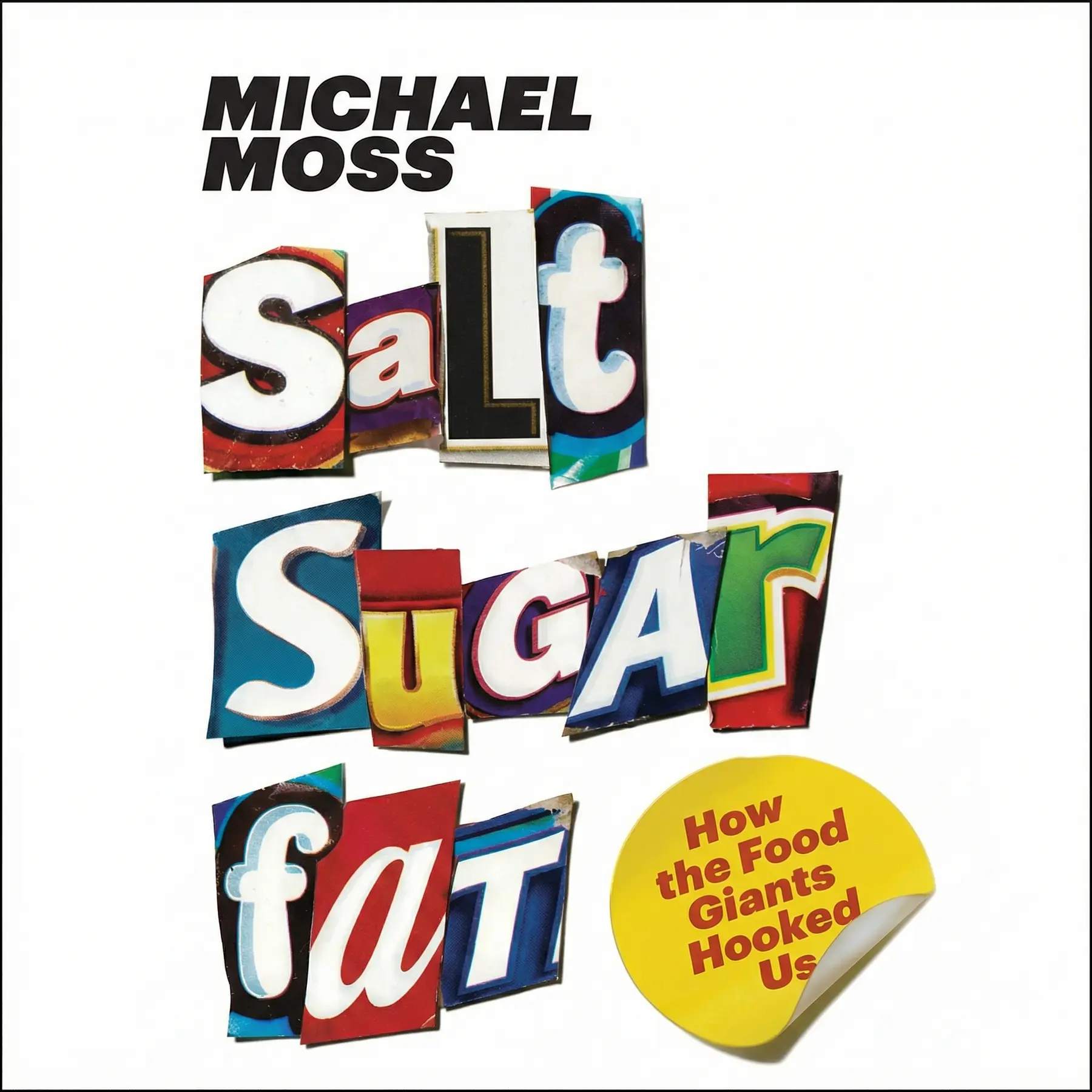
Salt Sugar Fat: How the Food Giants Hooked Us
By Michael Moss
Pulitzer Prize-winning journalist Michael Moss explores how the processed food industry uses salt, sugar, and fat to engineer addictive products, revealing the science and marketing tactics that have reshaped the global diet.
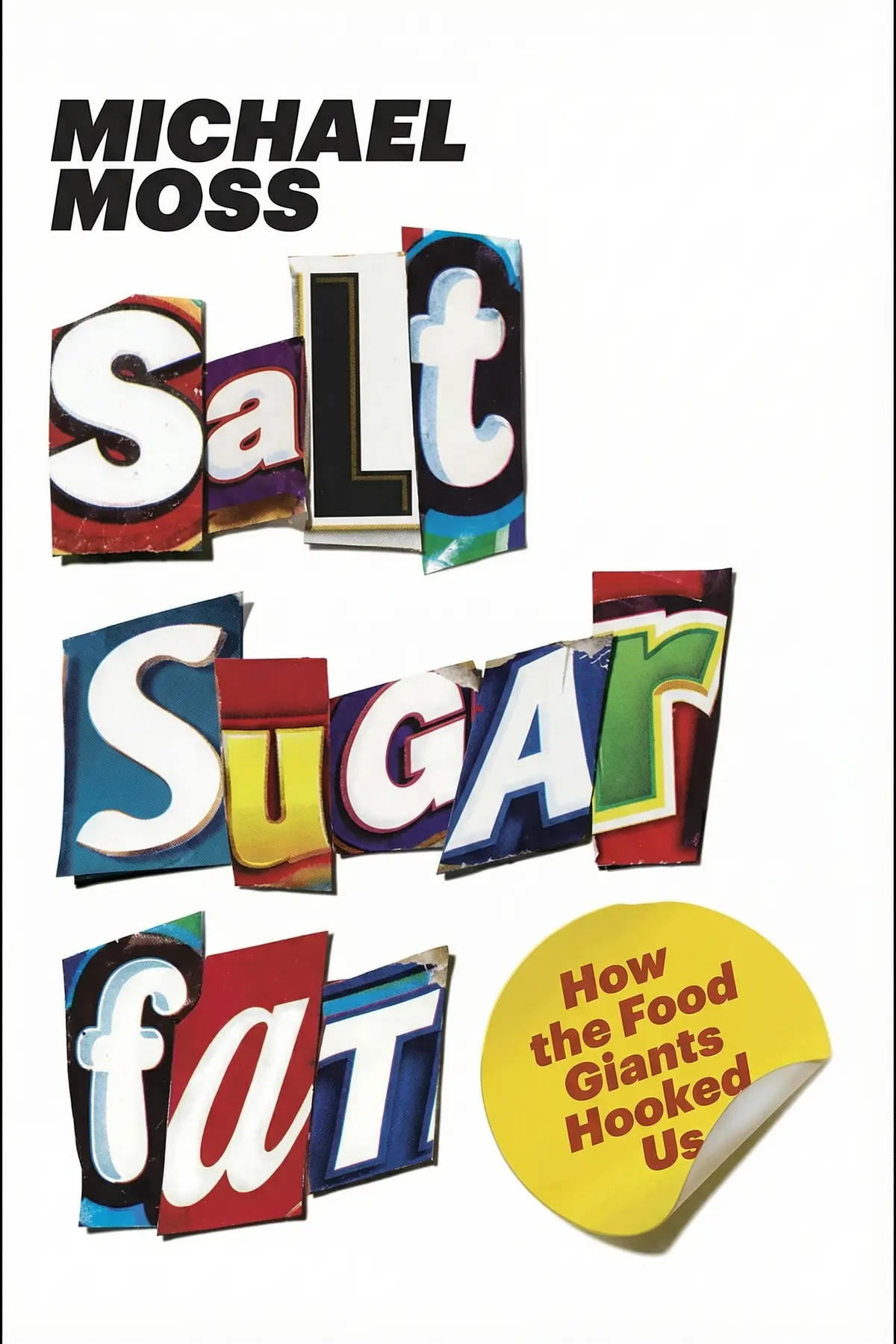
Table of Content
1. Introduction
1 min 49 sec
Have you ever found yourself reaching for just one more chip, or finishing a whole sleeve of cookies without even realizing it? Most of us have been there, and it is usually followed by a wave of guilt. But what if that lack of self-control wasn’t entirely your fault? What if the food in your pantry was specifically engineered to ensure you couldn’t stop eating it? This is the central question explored in Michael Moss’s deep dive into the world of industrial food production.
To understand how we got here, we have to look back at the radical shift in how human beings eat. For most of history, food was something pulled from the earth and prepared in a kitchen. But starting in the middle of the 20th century, a massive transformation took place. We moved away from the stove and toward the microwave, trading the labor of cooking for the ease of the plastic tray. This change wasn’t just about time; it was about the very chemistry of our fuel.
As we transitioned to processed convenience, the industry discovered a powerful trifecta: salt, sugar, and fat. These aren’t just ingredients; they are biological triggers. When combined in just the right ways, they bypass our natural signals of fullness and tap directly into our reward centers. In this summary, we will explore the history of this shift, the intense laboratory science used to hook consumers, and the political and corporate pressures that keep these unhealthy products on our shelves. We’ll see how marketing icons were created to win our trust and how even the government played a role in filling our diets with excess saturated fat. By the end, you’ll see the grocery store in a completely new light, and you’ll understand why reclaiming the home-cooked meal might be the most radical act of health you can perform.
2. The Post-War Shift Toward Industrial Convenience
2 min 17 sec
Discover how cultural changes and the rise of television helped food companies replace the traditional home-cooked meal with factory-made products.
3. The Biological Lure of the Sugar Bliss Point
2 min 09 sec
Explore the calculated science behind sugar and why food researchers work tirelessly to find the exact mathematical point of maximum craving.
4. The Limitless Appeal of Dietary Fat
2 min 08 sec
Unlike sugar, our brains don’t seem to have a ‘stop’ signal for fat, making it one of the industry’s most potent tools.
5. The Strategic Marketing of the Cheese Surplus
2 min 22 sec
Learn how a government-backed surplus of dairy led to a massive, decades-long increase in American cheese consumption.
6. Salt as the Industry's Ultimate Chemical Mask
2 min 18 sec
Discover why processed food is loaded with sodium and how it’s used to hide the ‘off-notes’ of industrial manufacturing.
7. The Failure of Voluntary Reform and the Power of the Consumer
2 min 31 sec
Examine why even well-intentioned companies struggle to make healthier products and what it takes to actually change the food system.
8. Conclusion
1 min 34 sec
As we have seen, the landscape of the modern grocery store is not an accident. It is the result of decades of biological engineering, clever marketing, and political influence. The trifecta of salt, sugar, and fat has been used to turn our own evolutionary instincts against us, creating a food environment where addiction is a feature, not a bug. From the fictional warmth of Betty Crocker to the literal mountains of government-subsidized cheese, the industry has gone to great lengths to ensure that processed food is the easiest and most appealing choice for busy families.
But this convenience comes at a staggering cost to our collective health. The rise of obesity, diabetes, and heart disease is the direct consequence of this industrial shift. While it can feel overwhelming to fight against such massive corporate forces, the solution is surprisingly simple, though it requires effort. The most effective way to break the cycle is to stop playing the game.
By cutting down on processed items and returning to the practice of home cooking, you regain control over exactly what goes into your body. Start small—perhaps by swapping out one frozen meal for a large batch of homemade soup that you can freeze for later. Avoid the middle aisles of the grocery store where the most engineered products live. By choosing whole ingredients, you are not just eating better; you are sending a clear message to the food giants that your health is no longer for sale. It’s time to rediscover the kitchen and take back the power over what we eat.
About this book
What is this book about?
This investigation takes listeners behind the closed doors of the world’s largest food corporations to see how they manipulate our biological cravings. It examines the post-war transition from home-cooked meals to factory-made convenience, highlighting the calculated use of three primary ingredients to reach a state of maximum snackability. The book reveals the high-stakes world of food chemistry, where 'bliss points' and 'mouthfeel' are meticulously tested to ensure we keep reaching for more. It also looks at the historical role of government subsidies and the marketing machines that convinced several generations to trade their long-term health for short-term convenience. Ultimately, it serves as a wake-up call about the physical and societal costs of our modern pantry.
Book Information
About the Author
Michael Moss
Michael Moss is a Pulitzer Prize-winning journalist who has written for the New York Times and the Wall Street Journal.
Ratings & Reviews
Ratings at a glance
What people think
Listeners find this work gripping and meticulously documented, characterizing it as a deep factual dive that reads like fiction. They prize the revelatory material, with one listener pointing out how it transforms their perspective on daily nourishment. The title earns high marks for its narrative approach, educational merit, and health-conscious perks, particularly for those keen on nutrition. Listeners prize its perspective on ingredient standards, with one review calling out how it lucidly details the complications of processed items.
Top reviews
Ingrid
Wow. This book completely shattered my perspective on what I’m actually putting into my body every single day. I expected a boring health lecture, but it reads more like a fast-paced thriller about corporate greed and biological manipulation. Moss dives deep into the labs where scientists calculate the exact 'bliss point' of sugar to keep us coming back for more. It’s scary to realize how much the government actually helps these companies push cheese and meat on us through subsidies. I found myself checking every label in my pantry and feeling a little betrayed by the brands I used to trust. If you care about your long-term health or just want to know why you can’t stop eating that bag of chips, you need this. It’s an eye-opening deep dive that manages to be educational without being preachy.
Show moreRuangrat
Walking through the grocery store feels different now, almost like that scene in 'They Live' where the hidden messages become visible. Michael Moss has written a masterpiece of investigative journalism that exposes the dark side of the processed food industry. The details about how salt is used to mask the metallic taste of industrial processing were absolutely revolting. I couldn't believe the section on Lunchables and how they were marketed to busy parents as a form of empowerment. This book is well-researched, compelling, and honestly a bit heartbreaking when you consider the health consequences for children. It’s a novel-like experience that provides a wealth of information without feeling like a dry textbook. Everyone who buys groceries for a family should read this at least once.
Show moreDiego
The chapter on Lunchables was a total gut punch for me as a parent who grew up eating them. Seeing the cold, hard numbers behind the fat and salt content made me feel sick to my stomach. Moss humanizes the scientists involved, showing they aren't necessarily "evil," but they are trapped in a cycle of corporate competition. This book is a fascinating look at the arms race of flavor that has left our collective health in shambles. I love how the author connects the dots between different industries and government agencies. It's an educational journey that manages to be both infuriating and enlightening at the same time. This is easily one of the most important books I’ve read in the last decade.
Show moreAna
Moss’s investigative work is top-tier, providing a historical roadmap of how we ended up in an obesity epidemic. He doesn't just blame the consumer; he shows how the entire system is rigged to favor salt, sugar, and fat. The stories about Philip Morris moving from tobacco into food brands like Kraft were particularly chilling. To be fair, some of the sections on specific food scientists dragged on a bit too long for my taste. However, the revelation that these executives often avoid their own processed products says everything you need to know. It’s a compelling read that feels like a necessary wake-up call for the modern shopper. I’ll definitely be spending a lot more time in the produce section from now on.
Show moreWacharapol
After hearing about the 'bliss point' concept, I knew I had to pick this up to understand my own cravings. It turns out that my addiction to certain snacks isn't just a lack of willpower, but a calculated result of intense food engineering. The book does a fantastic job of explaining complex biology in a way that feels accessible and even entertaining at times. I was shocked to learn about the government's role in campaigns that weren't actually about our health. My only gripe is that the writing style can feel a little disjointed as it jumps between different decades and companies. Still, it’s a powerful piece of journalism that makes you rethink every meal. It's not a diet book, but it will definitely change the way you eat.
Show moreWilliam
It’s fascinating and terrifying to learn how the executives themselves don’t even touch this stuff. This class issue in food production really stuck with me throughout the entire reading experience. Moss presents a wealth of facts that are impossible to ignore, especially regarding the rise of Type 2 diabetes. The writing is sharp and investigative, reminding me of a long-form New Yorker piece that never loses its momentum. I do wish there were more actionable steps included for readers, but the awareness alone is worth the price of admission. It certainly makes you question the health claims on every box of cereal you see. A great choice for anyone interested in the intersection of science, business, and nutrition.
Show moreTen
This is not your typical diet book; it’s an autopsy of the American food system. Moss does a brilliant job of showing how salt, sugar, and fat are the three pillars holding up a trillion-dollar industry. I found the sections on the pre-1980 weight charts particularly enlightening and disturbing. It’s not that we suddenly became lazy; it’s that our food was redesigned to bypass our internal full signals. Personally, I found the technical details about fat and cream mixtures to be the most interesting part of the book. It’s a long read, but the depth of research justifies the page count. Highly recommended for anyone who wants to understand the why behind our national health crisis.
Show moreLily
As someone who grew up in the 80s, reading about the rise of convenience foods felt like a trip down a very unhealthy memory lane. Moss captures the era perfectly, explaining how marketing and science combined to change the way we think about dinner. The book is dense with information, but the prose is clear enough that it never feels overwhelming or confusing. I was especially interested in the Cola Wars and how they led to the supersizing of everything in our diets. To be fair, I think he could have spent a bit more time on the global impact outside of just the US. Regardless, it’s a stellar piece of reporting that will stay with you long after you finish the last page.
Show moreMoo
While the information here is undeniably vital, the delivery occasionally feels a bit dry and overly academic. I appreciated the deep dive into the history of Kellogg’s and General Mills, but some chapters felt like they were retreading the same ground. It’s a thick book that requires a lot of patience to get through all the data and interview transcripts. Look, the core message is important, but I think a shorter, punchier version would have been more effective for the average reader. That said, the insights into how sugar is added to almost everything—even bread—were quite surprising. It’s a solid 3-star read that provides great reference material even if it isn't always a page-turner.
Show moreMadison
I really wanted to like this more, but it felt incredibly one-sided and repetitive after the first hundred pages. We get it: companies want to make money and people like things that taste good. The author seems to demonize basic business practices as if there's some grand conspiracy behind a cracker tasting salty. Frankly, the book is about 150 pages longer than it needs to be to make its core points. While the research is clearly there, the tone felt a bit too cynical and "doom and gloom" for me to enjoy. It didn't offer many solutions other than just avoiding the center aisles, which isn't exactly groundbreaking advice. I appreciate the effort, but I struggled to stay engaged until the end.
Show moreFeatured in
Readers also enjoyed

AUDIO SUMMARY AVAILABLE
Listen to Salt Sugar Fat in 15 minutes
Get the key ideas from Salt Sugar Fat by Michael Moss, plus 5,000+ more titles in English and Thai.
- 5,000+ titles
- Listen as much as you want
- 7-day free trial
- Cancel anytime







