
29 min 38 sec
How Bad Are Bananas?: The Carbon Footprint of Everything
Discover the hidden environmental costs of everyday life, from the food we eat to the emails we send, and learn how to reduce your personal impact through practical, science-based choices.
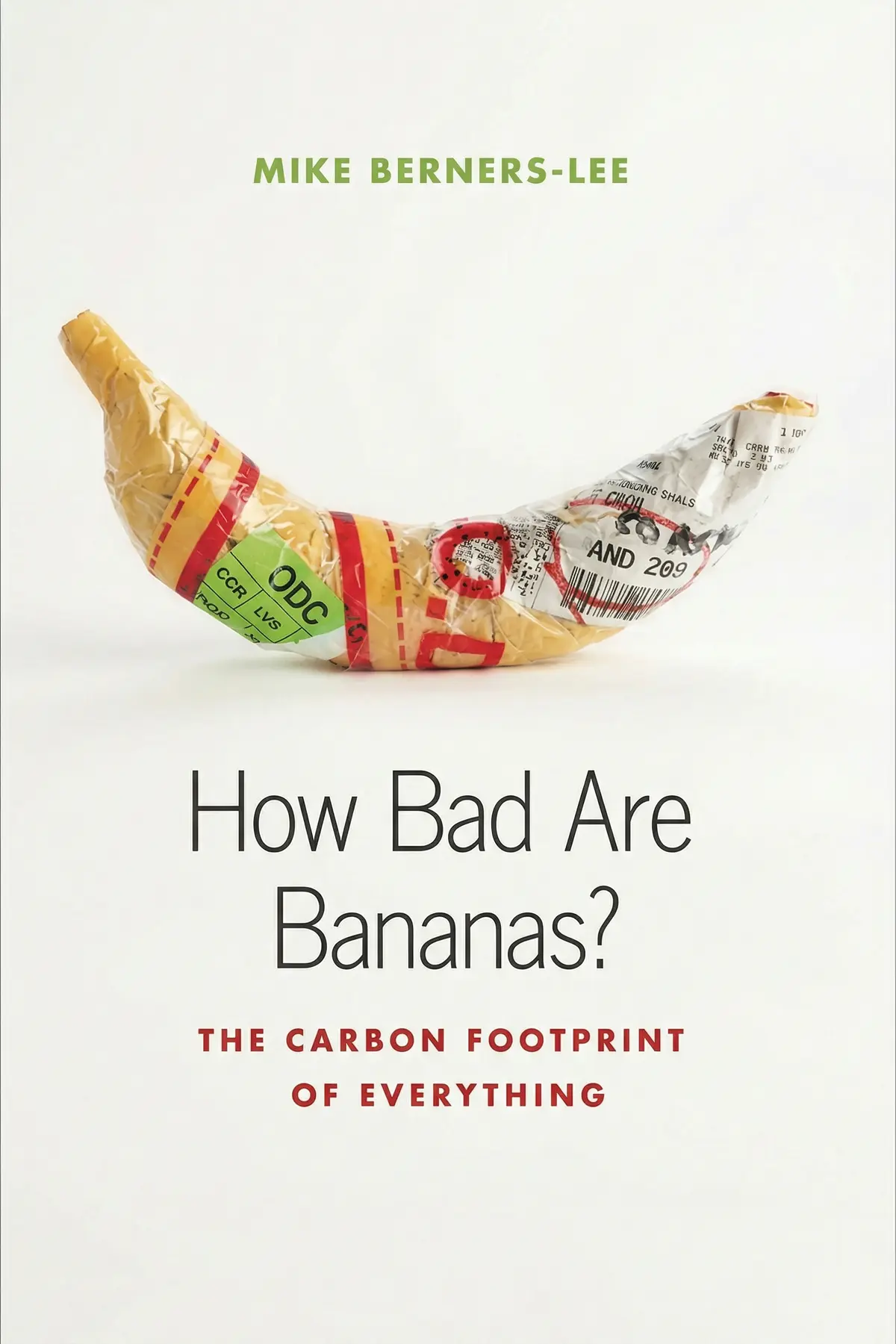
Table of Content
1. Introduction
2 min 07 sec
In the modern world, we are constantly bombarded with messages about the environment. We hear about the warming of the oceans, the shrinking of the ice caps, and the increasing frequency of extreme weather events. It can feel overwhelming, leaving many of us wondering what we can actually do to help. We know that systemic change is necessary and that political leaders must take bold action, but we also feel a personal responsibility for the way we live our lives. Every day, we make thousands of tiny decisions: what to eat, how to get to work, which products to buy, and even how we communicate.
What if we could see the invisible cost of those choices? Imagine if every item in your shopping cart or every mile you traveled came with a clear label showing its contribution to global warming. This is the core concept behind Mike Berners-Lee’s investigation into the carbon footprint of everything. It’s about more than just carbon dioxide; it’s about understanding the total package of greenhouse gases we release into the atmosphere through our daily routines.
In this summary, we are going to look at the hidden reality behind common habits. We’ll explore why some of the things we assume are eco-friendly might actually be more damaging than we think, and conversely, why some of our small guilty pleasures might not be as bad as we fear. The goal here isn’t to demand perfection or to suggest that we all move into caves. Instead, it’s about providing a clear-eyed, data-driven perspective that helps us prioritize our efforts.
By looking at everything from the impact of a single text message to the massive footprint of international flights, we can start to build a mental map of our own environmental impact. This map allows us to identify the big-ticket items—the changes that will yield the greatest results—and the minor adjustments that can add up over time. We will dive into the specific numbers and the logic behind them, giving you the tools to live what Berners-Lee calls a 10-tonne lifestyle. This is a guide to navigating the complexities of sustainability in the twenty-first century, one banana at a time.
2. Defining the Carbon Footprint and the CO2e Metric
2 min 43 sec
Uncover why measuring your environmental impact requires looking at more than just carbon dioxide, and how different nations stack up in their total emissions.
3. The Invisible Footprint of Digital Communication
2 min 59 sec
Explore the surprising ways your smartphones and computers contribute to global warming, from the energy used by servers to the manufacturing of microprocessors.
4. The Counter-Intuitive Truth About Paper and Plastic
3 min 02 sec
Think plastic is always the enemy? Learn why the carbon math occasionally favors plastic over paper, and how waste management changes the equation.
5. The Hierarchy of Transportation Impact
2 min 55 sec
Compare the carbon costs of walking, cycling, driving, and flying to understand why your travel choices are the biggest part of your footprint.
6. Deciphering the Food Chain: Local, Global, and the Banana
2 min 40 sec
Discover why the distance your food travels matters less than how it’s grown, and why the humble banana is actually an environmental hero.
7. The High Carbon Cost of What We Drink
2 min 40 sec
From the hidden emissions in your morning latte to the packaging of your evening beer, learn how beverages impact your carbon budget.
8. Optimizing Household Chores for a Lower Footprint
2 min 58 sec
Small changes in how you wash your clothes, dry your hair, and clean your dishes can shave hundreds of kilograms off your annual carbon total.
9. The Myth of Natural Dominance over Human Emissions
3 min 01 sec
Learn why natural events like volcanic eruptions are often blamed for climate change, and how they actually pale in comparison to human activity.
10. Strategic Choices for the 10-Tonne Lifestyle
2 min 51 sec
Take a final look at the most effective ways to restructure your diet and habits to hit the ambitious goal of a one-third reduction in your footprint.
11. Conclusion
1 min 42 sec
The journey through the carbon footprint of everything reveals a world that is far more interconnected than we might have imagined. We’ve seen that every action, from the smallest text message to the largest international flight, carries a hidden cost in carbon dioxide equivalent. This metric provides us with a powerful tool: it allows us to step back from the confusion and see our lives through a clear, analytical lens. We can stop worrying about the trivialities and start focusing on the choices that actually move the needle.
The throughline of this exploration is that while our individual impact is small in the context of billions of people, it is not insignificant. The 10-tonne lifestyle is not just a target; it is a philosophy of mindfulness. It asks us to look at the invisible trail we leave behind and to make conscious decisions about how to shorten it. We’ve learned that some of our instincts about what is ‘green’ can be misleading, and that the real culprits are often the ones we’ve come to take for granted, like the convenience of air travel or the prevalence of dairy in our diets.
As you move forward, remember that you don’t have to be perfect to be part of the solution. You don’t have to adopt every single change mentioned here to make a meaningful difference. The key is to identify the changes that work for your life and to start there. Maybe it’s switching to tap water, or perhaps it’s deciding to take the train instead of a short-haul flight. Every ton of CO2e you save is a victory. By becoming more aware of the hidden contributors to greenhouse gas emissions, you can begin to navigate the world with a lighter step, contributing to a more sustainable future for everyone. The data is clear, the path is defined, and the choice is yours.
About this book
What is this book about?
Have you ever wondered if choosing a paper bag over plastic really makes a difference for the planet? Or if that morning latte is doing more harm than your daily commute? Mike Berners-Lee provides a comprehensive guide to understanding carbon footprints, translating the complex science of greenhouse gases into the language of everyday objects and actions. By using the metric of carbon dioxide equivalent, or CO2e, the book allows readers to compare the impact of vastly different things, like a text message versus a cheeseburger. This summary explores the nuances of modern consumption, revealing why some local products might actually have a higher footprint than imported ones and how our digital habits contribute to global warming. It moves beyond simple guilt-tripping to offer a realistic roadmap toward a more sustainable existence. You will learn about the 10-tonne lifestyle, a target for reducing individual impact without necessitating a complete societal withdrawal. By the end, you'll have a clearer picture of which changes matter most and how to navigate a world where every choice carries an invisible weight.
Book Information
About the Author
Mike Berners-Lee
Mike Berners-Lee is a professor at Lancaster University and the founding director of Small World Consulting, a company that specializes in measuring the carbon footprint of services and products worldwide. He is also the author of The Burning Question: We Can't Burn Half the World's Oil, Coal and Gas. So How Do We Quit? (2013) and a frequent contributor to the Guardian.
Ratings & Reviews
Ratings at a glance
What people think
Listeners find the book educational and stimulating, with one listener noting that it serves as a practical guide for lifestyle choices. The layout receives favorable feedback, with one listener describing it as well-organized. The accessibility, premise, and flow receive varied reactions; while some find the content captivating, others say it is difficult to read, and one listener points out that the subject matter is complicated.
Top reviews
Hana
Ever wonder how much damage your morning latte actually does? This book is a fascinating deep dive into the hidden carbon costs of our daily existence. Mike Berners-Lee breaks things down from 10 grams to millions of tons, making the abstract concept of a carbon footprint feel tangible. I loved the section on how a banana is actually a relatively low-impact snack compared to out-of-season asparagus. It’s written with a dry wit that keeps the data-heavy chapters from becoming a total slog. Truly eye-opening stuff for anyone trying to live more sustainably without losing their mind over every plastic bag. The comparisons are what really make it work.
Show moreTom
Finally got around to reading this and it’s a total game-changer for my grocery shopping. I had no idea that a loaded car could actually be more carbon-efficient than a train per person, or that my cheese habit was so much worse than eating fruit. The author has a great way of putting things into perspective—like comparing a text message to a flight to Spain. It helps you prioritize the big changes instead of sweating the small stuff like hand dryers. It’s witty, well-researched, and doesn't preach at you. If you want to actually understand climate impact instead of just feeling guilty, read this. It is absolutely worth it.
Show moreCooper
This book is essentially the bible for anyone who wants to understand their impact on the world without getting bogged down in 500-page academic papers. Mike Berners-Lee (yes, Tim’s brother!) manages to make carbon footprints actually interesting. I loved the diverse range of topics, from forest fires and wars down to the energy cost of a single Google search. It’s not just about what you buy; it’s about understanding the whole system, including the subsidies that keep certain industries afloat. It’s an empowering read because it gives you the data to make your own choices rather than just following green trends blindly. Highly recommended for every household.
Show moreThida
Picked this up because I was tired of hearing conflicting advice about paper versus plastic. The truth is much more nuanced than I thought, involving things like methane release in landfills that I hadn't even considered. Berners-Lee is upfront about his guesstimation approach, which I actually appreciated because it feels more transparent than claiming 100% precision in a field this complex. My only gripe is the Kindle formatting; there are some annoying typos and weird layout glitches that pull you out of the experience. Still, it’s a brilliant reference guide that I’ll be keeping on my digital shelf for a long time. It really puts things into perspective.
Show moreHannah
The chapter on Bitcoin and space tourism was a real shocker for me. It’s wild to see how seemingly virtual activities have such a massive physical footprint on the planet. Berners-Lee writes in a very accessible way, though some of the technical sections on methane conversion got a bit dense. To be fair, he’s trying to simplify a massive amount of data, so I forgive the occasional rough estimate. It’s organized brilliantly, moving from tiny impacts to global catastrophes like volcanoes and war. This isn't a book you read for the plot; it’s a manual for modern life. It helps you pick your battles wisely in an era of climate anxiety.
Show moreGai
After hearing my brother-in-law rave about this, I decided to see if the hype was real. It definitely changed my perspective on a few things, especially the whole diaper debate—turns out disposables aren't the absolute villains I thought they were compared to the energy used to wash reusables. The book is structured in a way that makes it easy to look up specific items, which is its greatest strength. However, the pacing is a bit uneven; some sections fly by while others feel like a math textbook. I’d recommend it as a reference tool rather than a weekend read, but the insights provided are undeniably valuable for a conscious consumer.
Show moreWilliam
Look, we all know we need to do better, but this book actually shows you where to start. The comparison between cycling fueled by cheeseburgers versus bananas was hilarious and deeply informative. It highlights the rebound effect—how saving energy in one place often leads us to waste it elsewhere—which is something more people need to talk about. The writing style is conversational and punchy, though it can get a bit repetitive if you read too many chapters in one sitting. It's a solid 4-star read that will definitely make you think twice before buying out-of-season produce. It's thinky and entertaining all at once. Great for a gift.
Show moreRod
As someone who lives in the US, I found the heavy UK bias a bit distracting at times. The author focuses a lot on very specific British habits and brands—like the obsession with Lake District sheep farms—which didn't always translate for me. While the general principles are solid, the constant reminders that he's roughly guessing started to grate after the first hundred pages. It's informative, sure, but the tone can feel a little smug, like a middle-class lecture on why you shouldn't buy air-freighted flowers. It's a good book to dip into for specific stats, but reading it cover-to-cover was a bit of a chore for me personally.
Show moreVera
Wait, so bananas aren't actually that bad? That's the main takeaway for me, but the rest of the book was a bit of a mixed bag. The author uses a lot of ballpark figures, which makes sense given the complexity, but it leaves you feeling a bit unsure about the actual science. Also, the edition I read was riddled with typos and weird layout issues that made the charts hard to follow. It’s a clever concept and I like the affable narrator, but it feels a bit dated now. It’s okay for a quick look at your footprint, but don't expect a definitive scientific manual. It is better as a coffee table book.
Show moreJoy
Frankly, this book did more to spike my anxiety than it did to help the planet. Every page felt like a new list of horrors that I’m personally responsible for, from the clothes I dry in the machine to the emails I send. While the author claims he isn't being judgmental, there’s an underlying vibe of unbearable smugness that felt very elitist and upper-middle-class. I also found the sheer number of spelling mistakes in the text to be really unprofessional for a book that's supposed to be scientific. If you're already stressed about the environment, maybe skip this one for your own sanity. It's a bit of an encyclopaedia of triggers.
Show moreReaders also enjoyed
Beyond Words: What Animals Think and Feel
Carl Safina
Cod: A Biography of the Fish That Changed the World
Mark Kurlansky
Comfortably Unaware: What We Choose to Eat is Killing Us and Our
Richard A. Oppenlander
Cradle to Cradle: Remaking the Way We Make Things
William McDonough
Drinking Water: A History
James Salzman
AUDIO SUMMARY AVAILABLE
Listen to How Bad Are Bananas? in 15 minutes
Get the key ideas from How Bad Are Bananas? by Mike Berners-Lee, plus 5,000+ more titles in English and Thai.
- 5,000+ titles
- Listen as much as you want
- 7-day free trial
- Cancel anytime







