
20 min 46 sec
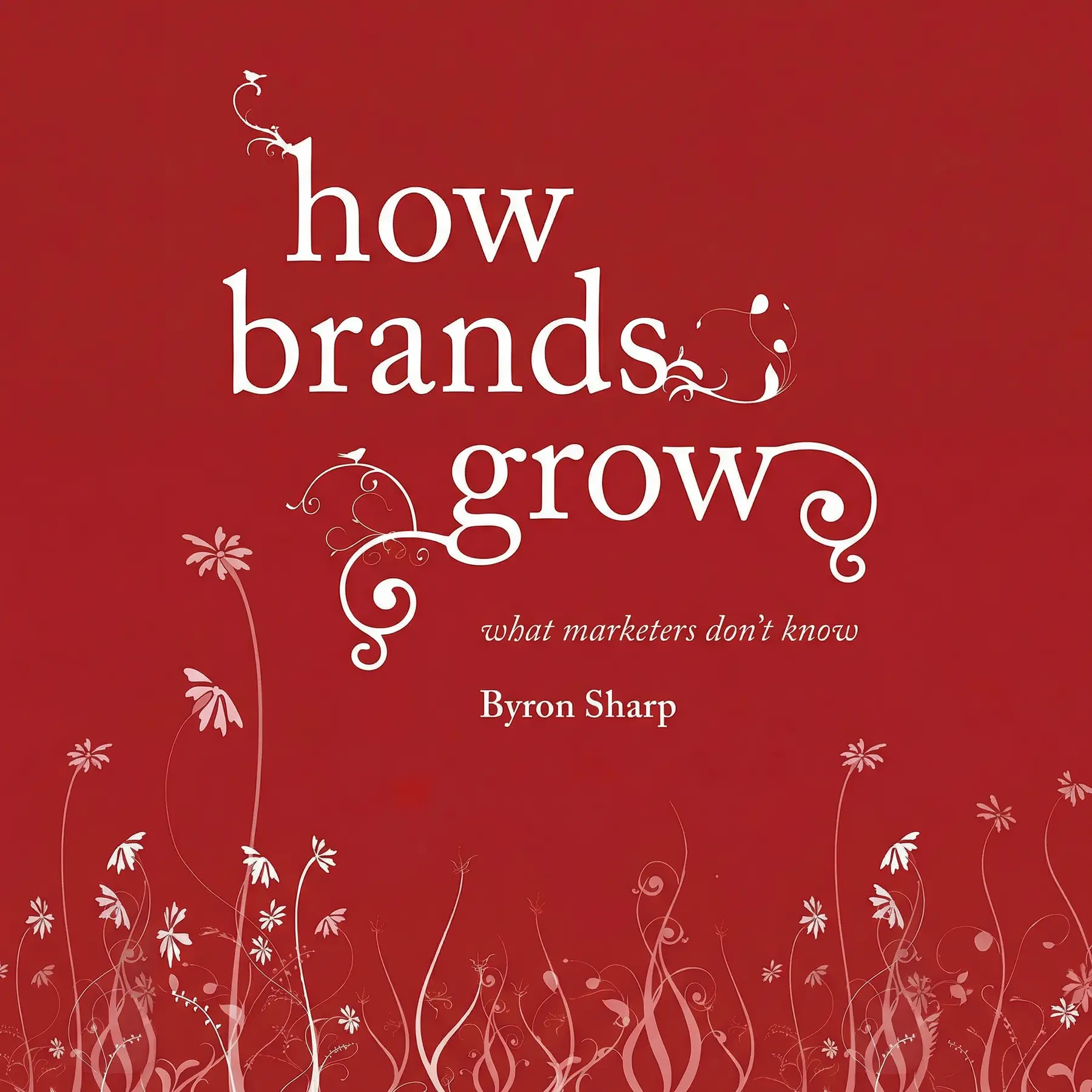
How Brands Grow: What Marketers Don’t Know
By Byron Sharp
Discover why traditional marketing strategies often fail and how evidence-based research reveals the true drivers of brand growth, focusing on broad reach, distinctiveness, and making products easy for every consumer to buy.
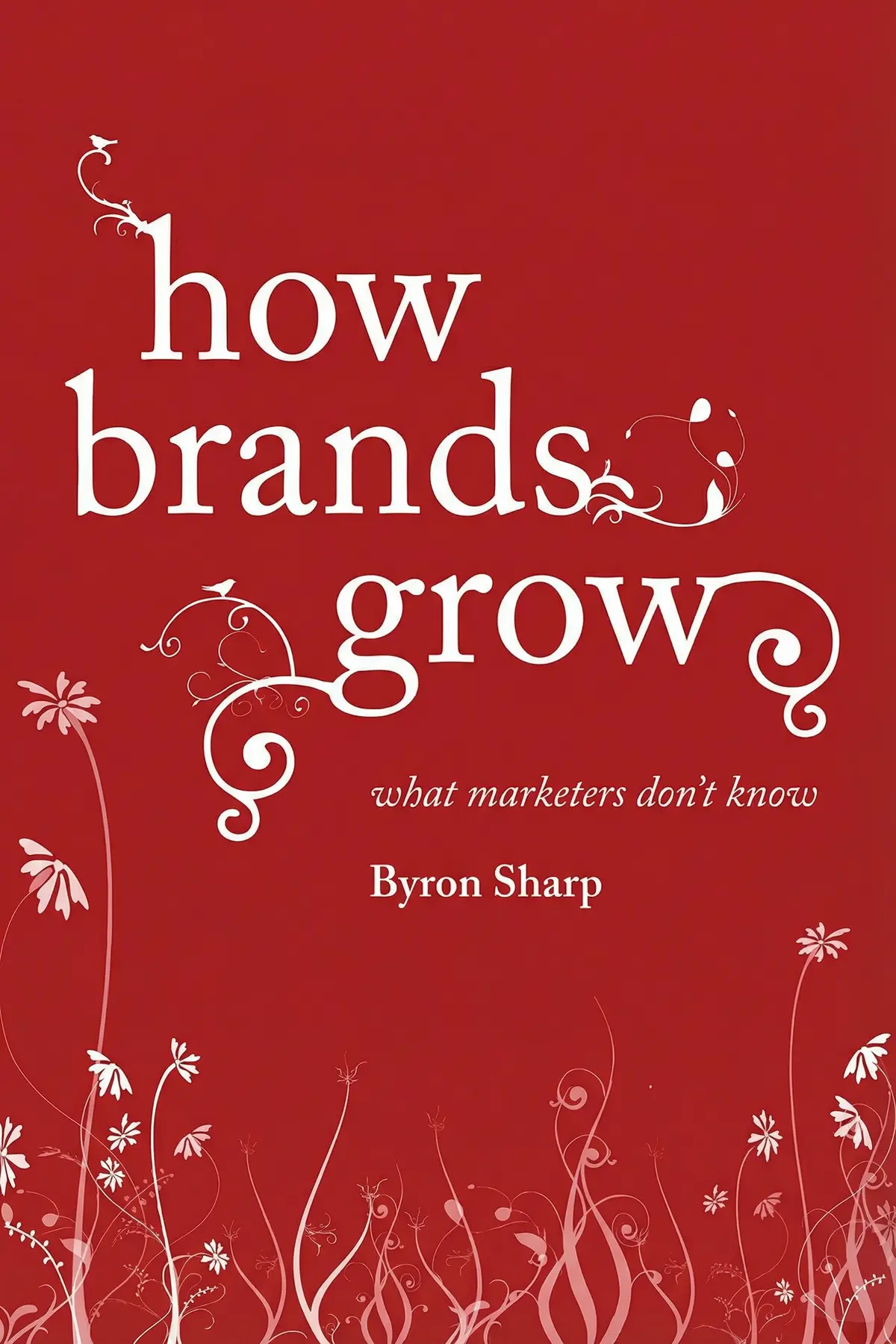
Table of Content
1. Introduction
1 min 59 sec
Every day, marketing professionals around the globe make massive decisions that involve millions of dollars in budget. They decide which audiences to target, which advertisements to run, and how to price their products. But if you were to pull back the curtain and ask why they make these specific choices, you might be surprised by the answer. For a long time, the industry hasn’t been guided by hard science. Instead, it’s been driven by tradition, intuition, and long-held beliefs that have rarely been put to the test.
In this exploration of Byron Sharp’s groundbreaking work, we are going to look at how brands actually grow. It isn’t through the methods you might expect, like obsessively catering to a small group of loyal fans or trying to make a product seem radically unique compared to everything else on the shelf. Instead, growth is governed by empirical laws—rules that work the same way every time, regardless of whether you’re selling toothpaste, soda, or banking services.
We will navigate the shift from marketing as a creative craft to marketing as a science. Think of this as a journey into the reality of consumer behavior. We’ll uncover why many of the strategies companies use to keep customers from leaving are actually a waste of time and why the key to success is often as simple as being the first thing a person sees when they’re in a hurry.
Through the lens of Byron Sharp’s research, we’ll see that much of what marketers thought they knew is actually a myth. From the way our memories store brand information to the true impact of those ‘On Sale’ signs in the window, we are going to break down the mechanics of the marketplace. By the end of this summary, you’ll have a clearer understanding of the throughline that connects every successful brand: the relentless pursuit of being easy to think of and easy to buy. Let’s dive into the evidence and see what the data really says about how brands reach the top.
2. The Necessity of Evidence-Based Marketing
2 min 17 sec
Imagine a world where doctors still used medieval treatments because they simply didn’t know better. Is your marketing strategy stuck in the past?
3. Why Acquisition Trumps Retention
2 min 07 sec
Is it really five times cheaper to keep a customer than to find a new one? The data suggests we’ve been looking at growth all wrong.
4. The Overlooked Power of Light Buyers
1 min 48 sec
We’ve all heard of the 80/20 rule, but in the world of shopping, the numbers tell a much more surprising story about who really pays your bills.
5. The Reality of Brand Commitment
1 min 58 sec
Do consumers really love brands, or are they just making the easiest choice possible? The truth about brand loyalty is a bit of a reality check.
6. Distinctiveness Over Differentiation
1 min 59 sec
Is being different really the key to standing out, or is there a more effective way to capture the consumer’s eye?
7. Advertising as a Memory Tool
1 min 40 sec
Why do the biggest brands in the world spend billions on ads for products everyone already knows? The answer lies in how our brains forget.
8. The Hidden Risks of Price Promotions
1 min 47 sec
Sales and discounts can give your numbers a quick boost, but what are they doing to your brand’s long-term health?
9. The Importance of Availability
1 min 50 sec
Being the best doesn’t matter if you aren’t there when the customer is ready to buy. Here’s why convenience is the ultimate marketing tool.
10. Marketing as a Predictable Science
1 min 35 sec
What if the secret to brand growth isn’t a creative spark, but a set of rules that have been right in front of us all along?
11. Conclusion
1 min 46 sec
As we wrap up this look into the evidence-based world of Byron Sharp, the central theme is clear: marketing is at its most powerful when it is grounded in reality rather than myth. We have seen that the traditional ways of thinking—focusing on customer retention, targeting narrow niches, and striving for complex differentiation—often miss the mark of how consumers actually behave in the wild.
The real throughline of brand growth is simplicity and scale. To grow, a brand must relentlessly expand its reach to include the light buyers who make up nearly half of the market. It must build distinctive assets that serve as mental shortcuts, making the brand instantly recognizable in a cluttered world. And perhaps most importantly, it must ensure that it is physically there, ready to be bought, at the exact moment a consumer feels a need.
The actionable takeaway for any business leader or marketer is to audit your current strategy against these empirical laws. Are you spending too much time trying to convince your loyal fans to buy more, when you should be reaching out to people who have never heard of you? Is your brand identity changing so often that it’s failing to build lasting memory structures? Are you sacrificing your profit margins for short-term sales spikes that won’t last?
By prioritizing mental and physical availability and trusting the data over intuition, you can stop the cycle of marketing ‘bloodletting’ and start building a brand that is designed for sustainable, long-term growth. The science is there; the laws are established. The brands that win are the ones that make it easy for the world to choose them.
About this book
What is this book about?
How Brands Grow challenges the conventional wisdom that has dominated marketing departments for decades. Instead of relying on gut feelings or outdated myths about customer loyalty and niche targeting, Byron Sharp presents a rigorous, scientific approach to understanding how consumers actually behave. The book introduces empirical laws, such as the Law of Double Jeopardy, which explains why brand size is the primary driver of both popularity and loyalty. The promise of this work is a shift from creative guesswork to predictable growth. By focusing on building mental and physical availability, brands can move beyond the trap of trying to differentiate through complex messaging. Instead, they learn the value of being easy to find and impossible to forget. It’s a foundational text for anyone who wants to understand the mechanics of the marketplace, proving that the secret to expansion lies in reaching the widest possible audience rather than obsessing over a small group of heavy users.
Book Information
About the Author
Byron Sharp
Byron Sharp is a prominent professor of marketing science at the University of South Australia. Throughout his distinguished career, he has authored over a hundred academic articles focused on the intersection of research and practical marketing application. Sharp is best known for his commitment to establishing empirical laws, providing a scientific framework that helps professionals move away from traditional assumptions and toward data-driven practice.
Ratings & Reviews
Ratings at a glance
What people think
Listeners find this marketing book accessible and well-crafted, noting the inclusion of significant data throughout. Its perceptive content is highly regarded, with one listener observing that it provides an unbiased perspective on the drivers of growth. However, listeners have varied reactions regarding the work's pacing and how simple it is to comprehend.
Top reviews
Sirirat
Finally got around to reading Byron Sharp’s manifesto and frankly, it's the cold shower the marketing world desperately needed. While Philip Kotler’s textbooks describe the 'what' of marketing, Sharp uses hard data to challenge the 'how' we’ve all been taught. He systematically dismantles the obsession with brand loyalty, proving that market penetration is the only true engine for sustainable growth. The writing is punchy and direct, though his tone can sometimes border on arrogant when he’s dismissing decades of established theory. I particularly appreciated the sections on mental and physical availability, which feel much more grounded in reality than vague 'brand love' concepts. If you’re tired of fluff and want to see the actual math behind consumer behavior, this is essential. It’s not just another business book; it’s a data-driven assault on marketing myths that will make you question every campaign you've ever run. Highly recommended for those who value evidence over intuition.
Show moreWipawan
This book is a wrecking ball for traditional marketing departments. Sharp takes aim at the idea of 'targeted loyalty' and shows that brands grow by reaching the entire category, not just a small sliver of heavy users. Truth is, most of your 'loyal' customers are just light buyers who haven't switched yet. The data is meaningful and presented in a way that is surprisingly easy to read for an academic work. Some might find the lack of focus on digital marketing or social proof a bit dated, but the fundamental laws of buyer behavior haven't changed. He makes a compelling case that distinctiveness—being easy to identify—is far more important than trying to be 'different' in a way consumers don't even notice. It’s a polarizing read, but that’s exactly why it’s valuable. Don't expect a warm and fuzzy guide to brand building. Expect a clinical, evidence-based autopsy of marketing failures.
Show moreSue
Sharp provides an objective lens through which we can finally view the messy reality of consumer behavior. This book is beautifully written and serves as a much-needed antidote to the 'purpose-led' marketing fluff that has dominated the industry lately. By focusing on physical and mental availability, he offers a clear roadmap for growth that relies on reach rather than the myth of deep brand love. The meaningful data included throughout the chapters makes this a standout in a sea of anecdotal business books. Some readers might find his stance on mass marketing a bit old-fashioned in the age of hyper-targeting, but his evidence suggests the old ways of broad reach still win. The truth is, most people are just trying to get through their shopping list as quickly as possible. This book respects that reality. It’s a refreshing, well-paced guide for anyone who wants to understand the actual mechanics of the marketplace.
Show moreSarawut
Picked this up on a whim and ended up finishing it in two sittings because it was so provocative. Sharp’s takedown of the 'differentiation' myth is particularly satisfying, especially for anyone who has sat through endless meetings about 'brand essence.' He argues that being easy to find and easy to buy is 90% of the battle. While I found his critiques of Kotler a bit repetitive, the empirical evidence he brings to the table is hard to ignore. The pacing is excellent, and he avoids the usual business-speak that makes most marketing books unreadable. My main criticism is the lack of attention to digital-first brands, but the psychological principles he describes likely still apply. It’s a powerful, data-driven look at growth that cuts through the noise. If you want to stop guessing and start growing based on how people actually shop, buy this. It’s easily one of the most important marketing books of the last two decades.
Show moreWittaya
Ever wonder why small brands stay small despite having 'loyal' followers? This book explains it through the Law of Double Jeopardy, showing that niche brands suffer twice—having fewer buyers who also buy less frequently. It's a forehead-slappingly obvious realization once you see the stats laid out so clearly. Sharp views customers as 'cognitive misers' who just want to make a quick decision without overthinking their choice of detergent. The pacing is a bit uneven, and some chapters feel like they’re repeating the same point, but the core message is undeniable. I love how he pits scientific evidence against the fashionable, yet unproven, theories that dominate most boardrooms today. You might not agree with his dismissive take on differentiation versus distinctiveness, but you can't ignore his numbers. It’s a refreshing, objective look at growth drivers that every CMO should keep on their desk. Truly an eye-opener.
Show moreBee
As someone who spent years worshiping at the altar of target marketing, reading this felt like a betrayal in the best way possible. Sharp’s argument for mass marketing and broad reach is backed by empirical evidence that is hard to argue with, even if it feels counterintuitive at first. He tackles the 'loyalty vs. penetration' debate with a level of objectivity that is rare in business literature. I found the chapter on how advertising actually works—by refreshing memory structures rather than 'persuading'—to be particularly brilliant. However, the book does drag in the middle, and the dismissal of niche strategies feels a bit oversimplified. To be fair, not every brand has a Coca-Cola budget to achieve the kind of reach he advocates for. Despite the FMCG bias, the underlying logic about mental and physical availability is universal. It’s a well-written, provocative piece that forces you to justify your strategy with data rather than just buzzwords.
Show moreClara
Wow, talk about a reality check. Sharp essentially tells us that everything we thought about 'brand personality' is mostly nonsense because consumers don't actually care that much. We like to think people have deep relationships with their dish soap, but they really just buy what's available and familiar. The writing style is surprisingly accessible, making complex statistical patterns easy to digest for a non-academic audience. I appreciated the critique of the Pareto Law; it’s not the 80/20 rule we’ve been told, but more like a 50/20 reality. My only gripe is that the author spends so much time attacking Philip Kotler that it occasionally feels personal. Some of the charts are also a bit manipulative with their scaling, which is ironic for a book preaching scientific rigor. Still, the core insights into how brands actually scale are invaluable. It provides a much-needed objective view on what actually moves the needle.
Show moreLek
After hearing so much hype about the Ehrenberg-Bass Institute, I finally dove into this. It’s a fascinating, if somewhat repetitive, look at why traditional segmentation often fails. Sharp’s central thesis—that brands are more similar than they are different—is backed by some pretty staggering cross-category data. I especially liked the section debunking the idea that you can't influence brand churn. He proves that loyalty is mostly a function of market share, which is a total flip of how most marketers think. Got to say, the book is a bit light on how to apply these rules if you don’t have a massive advertising budget. It’s very geared toward global leaders and less toward the scrappy underdog. Nevertheless, the logic is sound and the writing is clear enough for anyone to follow. It’s a must-read if only to understand why your competitors are winning without having a 'better' product.
Show moreLook
The data is compelling, but I can’t help feeling that Sharp throws the baby out with the bathwater regarding differentiation. He argues that being 'distinctive' is enough, yet many of his own examples rely on brands that were once highly differentiated. It’s a dense read at times, and the pacing fluctuates between thrilling revelations and dry statistical analysis. I also found his dismissal of customer complaints as a factor in churn to be quite reckless for any service-oriented business. If you ignore your customers, they will leave, regardless of what the 'laws' of growth say. That being said, the evidence regarding light buyers being the real drivers of growth is a game-changer. It’s a polarizing book that will either make you a disciple or a skeptic. I fall somewhere in the middle, admiring the research while questioning the universal application of his 'laws.' It's useful, even if the delivery is a bit arrogant.
Show moreNora
Look, I wanted to love this, but the heavy focus on FMCG brands like Coke and Pepsi makes it feel a bit one-dimensional. Sharp is an incredibly self-important writer who seems to delight in sneering at everyone who came before him. While his 'Double Jeopardy' law is interesting, he even admits in the text that it doesn't always apply to categories like shampoo, which makes the 'law' label feel a bit misleading. The graphs are also frustrating because they often use modified Y-axes to make small differences look massive. If you’re a small B2B startup or a service-based business, a lot of this advice about mass marketing via TV might feel completely irrelevant or even dangerous. He basically tells small brands to give up if they can't afford massive reach. It’s an insightful read for the data alone, but the tone is grating and the scope is narrower than the author wants to admit.
Show moreFeatured in
Readers also enjoyed



AUDIO SUMMARY AVAILABLE
Listen to How Brands Grow in 15 minutes
Get the key ideas from How Brands Grow by Byron Sharp, plus 5,000+ more titles in English and Thai.
- 5,000+ titles
- Listen as much as you want
- 7-day free trial
- Cancel anytime







