

23 min 04 sec
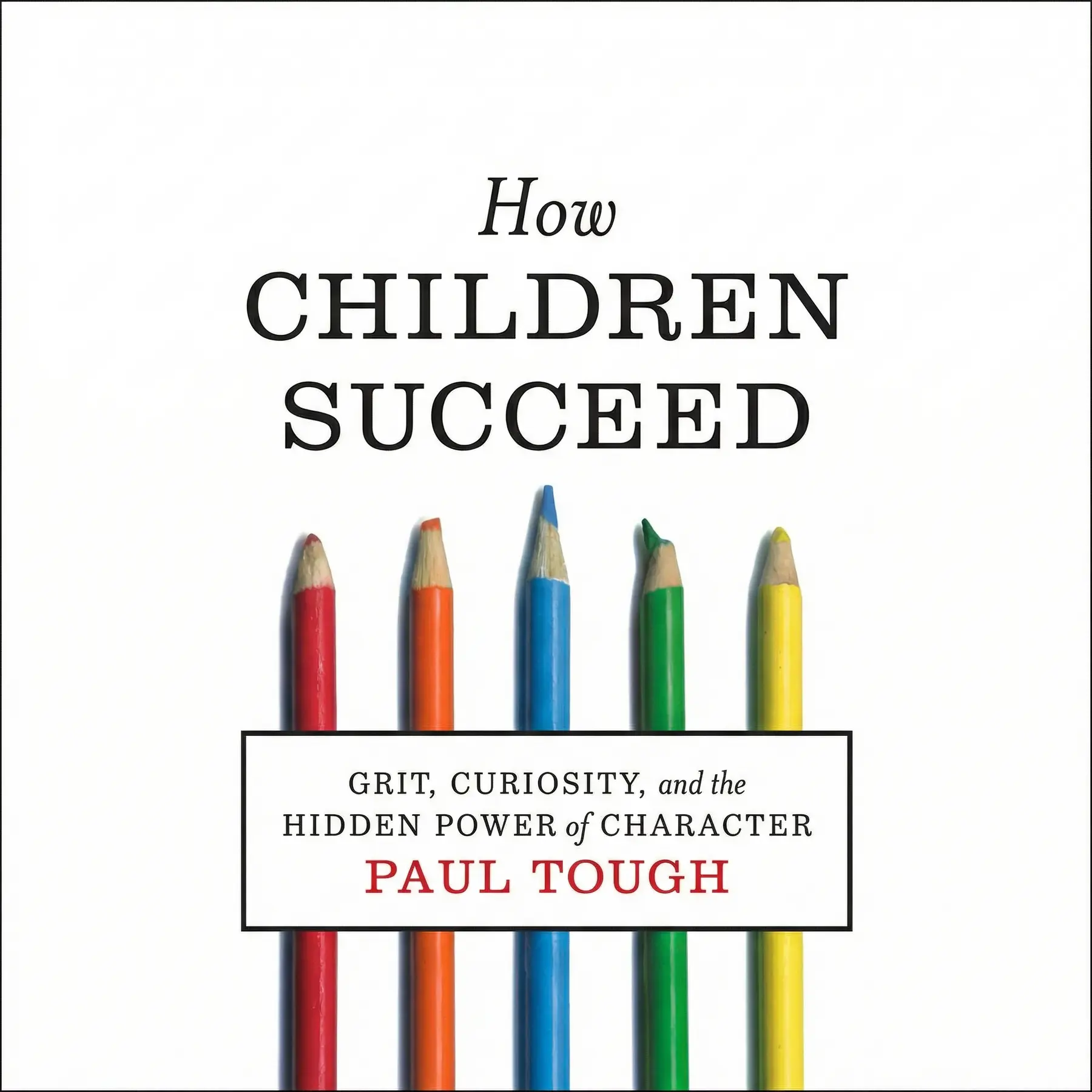
How Children Succeed: Grit, Curiosity, and the Hidden Power of Character
By Paul Tough
Explore why non-cognitive traits like grit, self-control, and curiosity are more predictive of a child's future success than high IQ scores or early academic drilling in this insightful look at character development.
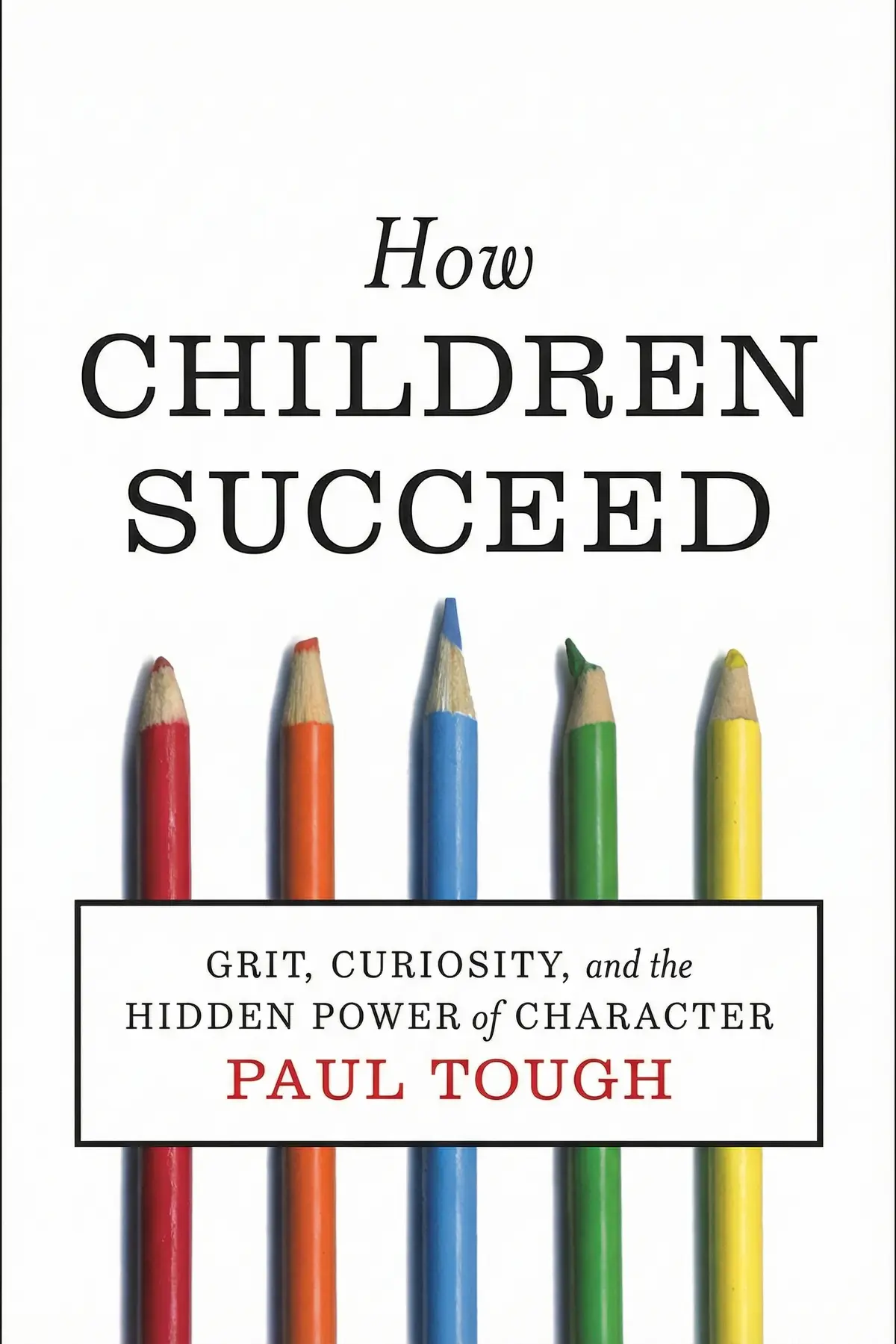
Table of Content
1. Introduction
2 min 17 sec
Most parents share a common dream: they want to see their children thrive, find professional success, and lead fulfilling lives. In recent years, this desire has fueled a massive industry dedicated to ‘cognitive stimulation.’ Walk into any toy store or browse any educational website, and you’ll find an endless array of products designed to give toddlers a head start. From mobiles that teach the solar system to videos designed to turn infants into math prodigies, the underlying belief is clear: the earlier and more intensely we stimulate a child’s brain, the more successful they will be. This perspective is known as the ‘cognitive hypothesis.’ It suggests that success is primarily a matter of how much information we can pack into a young mind and how high we can push those early IQ scores.
But what if this focus is misplaced? What if the secret to a prosperous life isn’t found in a periodic table wallpaper or a set of flashcards? In the summary of How Children Succeed, we explore the groundbreaking research that challenges the obsession with raw intelligence. Author Paul Tough reveals that while cognitive skills are certainly useful, they aren’t the most reliable predictors of long-term achievement. Instead, the qualities that truly matter are those related to character—traits like perseverance, curiosity, self-discipline, and grit.
Throughout this journey, we will look at how the environment a child grows up in—especially the levels of stress they face—can fundamentally alter their biology and their ability to succeed. We’ll see why some children from disadvantaged backgrounds manage to beat the odds, while some children from affluent families struggle despite having every resource at their disposal. We will also discover why shielding children from every possible obstacle can actually do more harm than good. Ultimately, we’ll establish a new throughline for understanding success: it’s not just about what a child knows, but how they handle the challenges that come their way. By focusing on the hidden power of character, we can better equip the next generation to handle whatever the future holds.
2. The Lasting Weight of Early Adversity
2 min 32 sec
Childhood trauma is not just a memory; it’s a biological reality that can predict long-term health and behavioral challenges well into adulthood.
3. The Biological Mechanism of Stress
2 min 22 sec
The body’s ancient stress response system is ill-suited for the modern world, especially for developing brains that lack impulse control.
4. The Shield of Attentive Parenting
2 min 19 sec
A nurturing caregiver can act as a biological buffer, protecting a child’s brain from the harmful effects of a stressful environment.
5. Questioning the Primacy of IQ
2 min 23 sec
Early cognitive gains often fade, but the character traits developed in childhood provide a lasting foundation for achievement.
6. The Power of Grit and Conscientiousness
2 min 37 sec
Success is often more about staying power and attention to detail than raw talent or high test scores.
7. Teaching Character in the Classroom
2 min 11 sec
Specific, actionable character traits can be taught through constant reinforcement and a school culture that prioritizes ‘character point averages.’
8. The Hidden Struggles of the Affluent
2 min 00 sec
Wealth and resources don’t guarantee character; in fact, overprotection can leave children ill-equipped to handle the realities of adulthood.
9. Mastering Failure and the Power of Optimism
2 min 23 sec
True resilience comes from confronting mistakes directly and adopting an optimistic mindset that sees setbacks as temporary and specific.
10. Conclusion
2 min 00 sec
As we reach the end of this exploration into how children succeed, the central throughline is unmistakable: the qualities that define a flourishing life are not found on a standardized test or in an IQ score. Success is built on the foundation of character. We’ve seen how the environment, specifically the presence of chronic stress, can act as a physiological weight on a child’s potential, but we’ve also discovered the incredible buffering power of a nurturing, attentive parent. A secure attachment can literally rewrite a child’s biological response to the world.
We’ve learned that grit, conscientiousness, and self-discipline are the real engines of achievement. These traits allow a student to push through the boredom of study and a professional to weather the storms of a career. We’ve also seen that character is not a fixed trait—it’s a set of skills that can be modeled, taught, and reinforced in our homes and our schools. Whether it’s through the message-saturated hallways of a KIPP Academy or the rigorous move-by-move analysis of a champion chess team, children can learn to manage their impulses and embrace their failures.
Perhaps the most actionable lesson for all of us is to change how we view mistakes. The next time you face a setback, or see a child face one, resist the urge to see it as a permanent mark of identity. Instead, practice the ‘optimistic reframe.’ Look for the specific, temporary factors that led to the result and use them as a roadmap for improvement. Encourage the children in your life to take risks and, when they fail, help them see that ‘losing is something you do, not something you are.’ By moving away from the narrow focus on cognitive intelligence and embracing the hidden power of character, we can help the next generation become not just smarter, but more resilient, curious, and ultimately, more successful.
About this book
What is this book about?
For decades, the prevailing wisdom suggested that cognitive intelligence was the primary driver of life outcomes. How Children Succeed challenges this 'cognitive hypothesis' by demonstrating that character strengths—often referred to as non-cognitive skills—play a much larger role in determining who flourishes and who falters. This book explores the intersection of biology, psychology, and education, revealing how early childhood stress shapes the brain and how nurturing relationships can buffer those effects. It provides a roadmap for parents and educators to move beyond test scores and focus on building the resilience and perseverance children need to navigate the complexities of the modern world.
Book Information
About the Author
Paul Tough
Paul Tough is a Canadian-American author. His previous publications include Whatever It Takes: Geoffrey Canada's Quest to Change Harlem and America. His work often focuses on the challenges of education, poverty, and child development.
Ratings & Reviews
Ratings at a glance
What people think
Listeners find this book exceptionally clear and readable, loaded with applicable research that distills complicated theories into straightforward ideas. They prize its instructional significance, specifically how it guides teachers and parents toward understanding the roots of student success, and they describe the content as deeply moving and insightful. The work earns praise for its use of narrative, mixing student accomplishments with vivid real-life anecdotes, and for its focus on cultivating character by identifying 24 key character skills that adults can help develop in children.
Top reviews
Scarlett
This book completely reframed how I think about child development and the American education system. Paul Tough argues convincingly that our obsession with IQ and cognitive testing is missing the mark. Instead, he points toward 'non-cognitive' traits like grit, curiosity, and self-control as the real predictors of long-term success. The storytelling is incredibly moving; I found myself tearing up at some of the anecdotes about kids overcoming immense trauma through the help of dedicated mentors. To be fair, some might find the 'brain science' sections a bit dense, but Tough does a great job translating complex neuroscience into something accessible for the average parent. It’s an inspiring look at how character isn't just something you're born with, but a set of skills that can be nurtured and taught. If you’re an educator or a parent, this is essential reading. It really challenges the status quo of how we define a 'successful' student.
Show moreCharles
Picked this up after seeing it on every 'must-read' list for teachers, and it lived up to the reputation. The way Tough interweaves the stories of individual students with neurobiological research is masterful. It helps you understand the 'why' behind student behavior, particularly for those coming from high-stress backgrounds. The focus on character skills—like zest, gratitude, and self-control—provides a much more holistic view of education than the standard curriculum. I’ve already started implementing some of the ideas about 'malleable intelligence' in my own classroom. Truth is, we've focused on the wrong metrics for far too long. This book provides a necessary corrective, emphasizing that persistence is a skill that can be coached. It’s enlightening, packed with relevant research, and surprisingly easy to digest given the complexity of the subject matter. Highly recommended for anyone who works with youth.
Show moreLaor
Not what I expected at all, but in a good way. I thought this was going to be a dry academic text, but it's actually a series of rich stories that happen to be backed by cutting-edge science. The way it explains the link between early childhood trauma and later academic failure is a revelation. It shifts the blame away from 'lazy' kids and puts the focus on their physiological responses to stress. This is an inspiring and empowering book for parents because it suggests that we can actually shape our children’s character through the way we respond to their challenges. It’s not just about what’s in their DNA. The insights into the 24 key character skills are incredibly practical. Even if you don't agree with every conclusion Tough reaches, the book will absolutely change the way you look at every child you meet. A truly powerful and educational piece of work.
Show moreRome
Why do some children from disadvantaged backgrounds thrive while others fall behind? Tough explores this question by looking at everything from the physiological effects of cortisol to the intensity of high-stakes middle school chess. The chapter on Elizabeth Spiegel’s chess program was easily the highlight for me, showing how learning to manage failure is more important than the game itself. My only real gripe is that the book sometimes feels like a collection of magazine articles rather than a cohesive thesis. He bounces from KIPP schools to private academies like Riverdale without always bridging the gap perfectly. Still, the core message about 'performance character' is powerful. It’s a thought-provoking read that suggests our current policy of 'testing everything' is fundamentally broken. I appreciated the honesty regarding how difficult it is to move the needle for kids in high-stress environments. Definitely worth your time.
Show moreRungtip
Wow, Paul Tough really digs into the 'hidden' factors that keep kids from reaching their potential. I was particularly struck by the discussion on how 'helicopter parenting' in wealthy communities like Riverdale actually hinders character development by protecting kids from the very failures they need to experience. On the flip side, the description of how poverty-induced stress literally re-wires a child's brain was eye-opening and heartbreaking. The writing is lively and the pacing is excellent, making what could be dry social science feel like a compelling narrative. I do think he leans a bit too heavily on the 'grit' narrative without fully addressing the systemic barriers that grit alone can't overcome. However, the book succeeds in making the reader rethink the entire concept of intelligence. It’s a great choice for a book club because there is so much to debate regarding the role of the family versus the role of the school.
Show morePruet
To be fair, I went into this thinking it would be another 'pull yourself up by your bootstraps' manual, but it’s much more nuanced than that. Tough acknowledges that while character matters, the environment plays a massive role in whether those traits can even develop. He highlights the OneGoal program in Chicago, which was fascinating to read about. My main critique is that he focuses almost exclusively on the extremes—either the very poor or the very rich—leaving the middle class largely out of the equation. Also, his definition of 'success' is very tied to the American class structure and upward mobility. Despite that, the book is incredibly well-researched and converts complex psychological theories into simple, actionable concepts. It makes you realize that being a 'good' student involves a lot more than just being smart. It’s about how you handle the moments when things go wrong.
Show moreSaranya
After hearing a lot of hype, I finally dived in and found Tough’s exploration of the 'character' gap to be genuinely enlightening. The writing style is unpretentious and honest, which makes the stories of the kids he follows feel authentic rather than exploitative. I liked the comparison between the KIPP model and more traditional approaches. It’s clear that character development isn’t just about being a 'nice person,' but about building the internal tools to navigate a difficult world. Personally, I would have liked to see more follow-up on the students after they finished college to see if these traits actually translated into career success. As it stands, the book stops right at the finish line of graduation. Nevertheless, it is a very readable and important contribution to the debate on how we fix our schools. It's a solid 4-star read for its ability to make social science feel personal.
Show moreOoi
The chapter on chess was the most engaging part of the book, but I struggled with the rest of the narrative. Frankly, the title 'How Children Succeed' feels like a bit of a misnomer because Tough never actually defines what success looks like beyond graduating from a four-year university. Is a kid who skips college but starts a small business a failure? The book doesn't say. I also found the constant use of the word 'non-cognitive' to describe things like persistence and optimism quite annoying—aren't those mental processes too? While the research on early childhood trauma and its impact on the brain is fascinating, the book offers very few concrete policy solutions for people who aren't in experimental charter programs. It’s an interesting starting point for a conversation about income inequality, but it leaves a lot of questions unanswered. It felt a bit repetitive by the final third.
Show moreZoey
Look, we've been told for decades that IQ is everything, so I appreciate the attempt to change the subject to 'character.' However, this book feels a bit lopsided. Tough spends hundreds of pages talking about grit and conscientiousness but barely touches on the importance of actual content knowledge. You can have all the grit in the world, but if you can't read at grade level, you're going to struggle. The sections on brain science and cortisol are great, yet the transition to policy implications feels a bit weak. It’s a collection of interesting ideas that don't quite add up to a unified theory. The chess section was the highlight for me, but it also highlighted the book's problem: the boy who was a chess genius still struggled with basic academics. It left me wondering if these 'non-cognitive' skills are really the silver bullet the author wants them to be.
Show moreDarawan
As someone who was looking for evidence-based strategies for child-rearing, I was deeply disappointed by the lack of proven results here. Tough spends way too much time hanging out at specialized schools and telling touching 'Hollywood' stories that don't necessarily scale to the national level. He mentions programs that 'seem' to work, but where is the hard data? He glosses over successful metropolitan areas like Raleigh in favor of trendy 'grit' theories and studies involving lab rats. Not gonna lie, I expected something much more solid than a series of anecdotes about KIPP and the Gates Foundation, especially since many of those interventions haven't lived up to the hype. Calling behaviors 'character' just muddies the water. It’s a well-written book, sure, but it feels more like a collection of interesting observations than a roadmap for actual success. I wanted a manual; I got a travelogue of educational experiments.
Show moreFeatured in
Readers also enjoyed



AUDIO SUMMARY AVAILABLE
Listen to How Children Succeed in 15 minutes
Get the key ideas from How Children Succeed by Paul Tough, plus 5,000+ more titles in English and Thai.
- 5,000+ titles
- Listen as much as you want
- 7-day free trial
- Cancel anytime







