
23 min 55 sec
How to Be an Epicurean: The Ancient Art of Living Well
Explore the ancient wisdom of Epicurus to find tranquility in the modern world. This guide reframes pleasure, science, and mortality, offering a practical philosophy for a meaningful and joyful life.
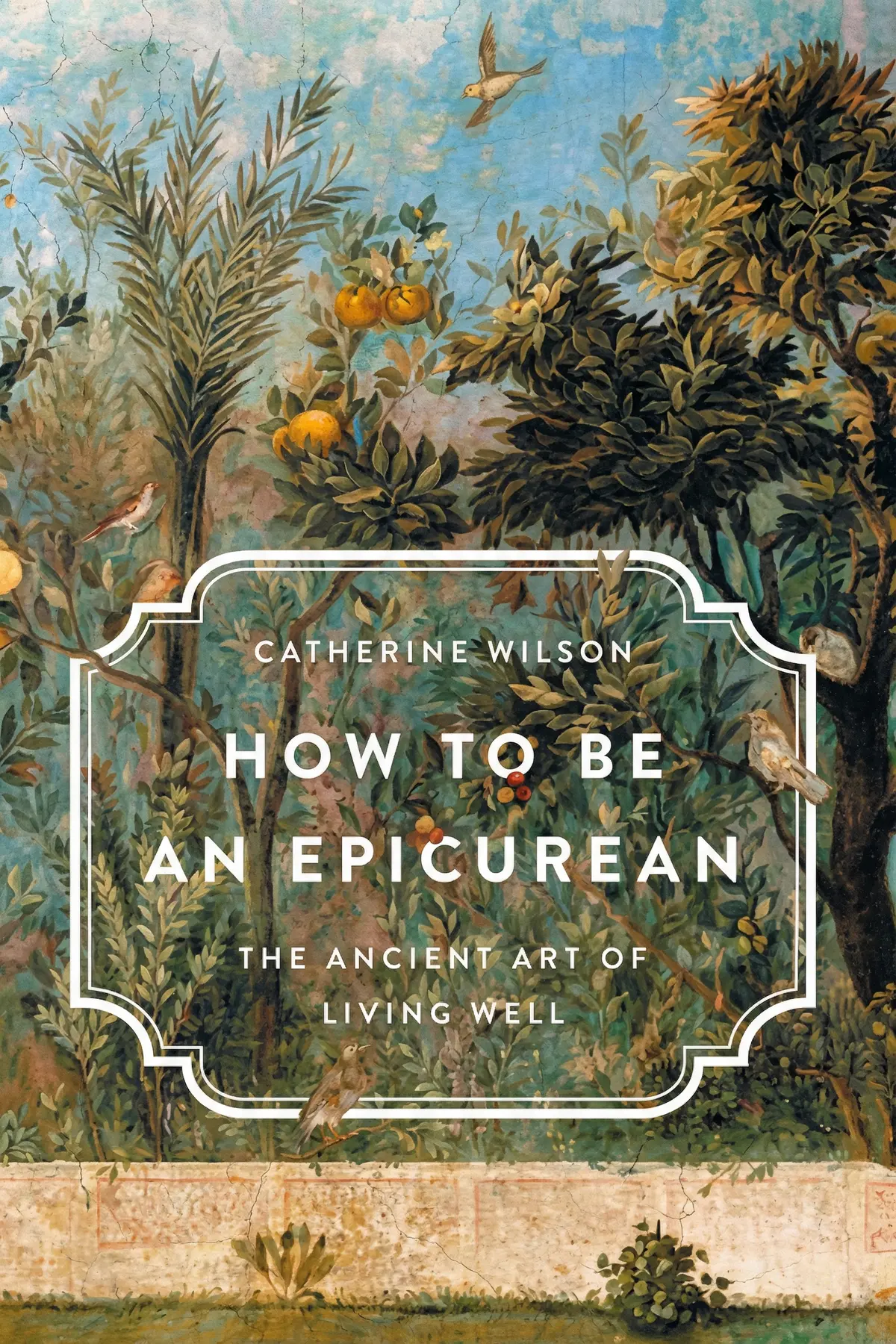
Table of Content
1. Introduction
1 min 54 sec
In the modern world, we are often overwhelmed by a relentless pressure to achieve, to accumulate, and to climb ever higher on the social and professional ladder. We ask ourselves: Is the purpose of life found in the next promotion, a larger bank account, or perhaps a more prestigious zip code? Or is there a deeper, more spiritual calling we are missing? These questions aren’t new; they have echoed through the halls of history for millennia. However, the answers provided by one ancient Greek thinker offer a startlingly simple and liberating alternative. Epicurus, a philosopher who lived over two thousand years ago, proposed that the most sensible way to live is to prioritize the pursuit of pleasure and the avoidance of pain.
Now, before you imagine a life of reckless indulgence or mindless hedonism, it’s important to understand that Epicurus was a far more nuanced thinker than his critics suggested. His philosophy, Epicureanism, wasn’t just about food and wine; it was a comprehensive framework for understanding reality, science, and the human condition. It was a guide to finding ‘ataraxia’—a state of profound tranquility and freedom from fear. This summary will take you on a journey through the ‘Garden’ of Epicurus, where we will explore how his ancient insights into physics, ethics, and the nature of the soul can serve as a powerful toolkit for navigating the complexities of the twenty-first century.
Over the course of this exploration, we will see how Epicureanism aligns with modern scientific thought, why a life without supernatural oversight can actually be more meaningful, and how we can find balance in our relationships and our relationship with mortality. We will discover a philosophy that is not about striving for the impossible, but about appreciating the miraculous reality of our existence. By the end of this journey, the goal is to see that living well isn’t about escaping reality, but about engaging with it more deeply and prudently.
2. A Comprehensive Framework for Life
2 min 30 sec
Discover why Epicureanism is far more than a simple pursuit of luxury, offering instead a foundational theory of the universe that influenced great historical thinkers.
3. A Modern Science of the Soul
3 min 04 sec
Explore how ancient atomic theories paved the way for natural selection and a biological understanding of human consciousness and emotions.
4. The Art of Prudent Living
3 min 12 sec
Learn why the Epicurean path to happiness requires a careful balance of long-term consequences and moral responsibility rather than reckless indulgence.
5. Navigating Love, Equality, and Mortality
2 min 46 sec
Discover the revolutionary Epicurean stance on gender equality and how to accept the natural cycles of passion and death with grace.
6. The Divide Between Nature and Convention
3 min 01 sec
Understand the vital distinction between the fixed laws of physics and the changeable rules of society, and how this shapes our view of rights and history.
7. The Quest for Truth in an Uncertain World
3 min 01 sec
Learn how to use empiricism to navigate conflicting information, from scientific consensus to the moral challenges of climate change.
8. The Meaning of Life in a Purposeless Universe
2 min 31 sec
Contrast the Epicurean path with Stoicism and religion to find out how a life of simple joys and human connection can be deeply fulfilling.
9. Conclusion
1 min 56 sec
As we conclude our exploration of Catherine Wilson’s insights into Epicureanism, it’s clear that this ancient philosophy is far more than a justification for indulgence. It is a rigorous, compassionate, and deeply rational approach to life. By centering our lives on the pursuit of tranquility and the avoidance of unnecessary suffering, we don’t become selfish; we become more mindful of ourselves and more helpful to those around us. We’ve seen that the world is made of matter, that our consciousness is a precious physical gift, and that the laws of society are ours to shape for the better.
The throughline of the Epicurean journey is the transition from a state of fear—fear of gods, fear of death, fear of social judgment—to a state of ‘ataraxia.’ We achieve this not by working harder or accumulating more, but by practicing prudence and distinguishing between what we need and what we merely want. We learn to accept the natural cycles of passion and mortality, recognizing that the end of our lives is as natural as the beginning. In a universe that doesn’t care about us, we have the incredible opportunity to care for each other.
The final takeaway for any modern student of Epicurus is this: look around you. Your life is not a dress rehearsal for an afterlife, nor is it a race to be won. It is a collection of moments, sensations, and relationships. By applying the tools of empiricism and the virtue of prudence, you can filter out the noise of modern anxiety and focus on what truly brings peace. Be kind, be curious, and remember that you are a miracle of atomic arrangement. The Garden is not just a place in ancient Athens; it is a state of mind you can inhabit today. Use this wisdom to live a life that is not just successful by society’s standards, but deeply pleasurable and profoundly meaningful by your own.
About this book
What is this book about?
This summary dives into the often-misunderstood philosophy of Epicureanism, moving beyond the stereotypes of gluttony and luxury. It explores how Epicurus and his followers developed a comprehensive 'theory of everything' that encompasses physics, ethics, and the nature of the human soul. By examining the world through the lens of atomism and empiricism, the book provides a surprisingly modern framework for understanding our place in the universe. You will learn how to navigate the complexities of pleasure and pain through the practice of prudence, the importance of distinguishing between natural laws and human conventions, and how to face mortality without fear. The promise of this work is a pathway to a life of 'ataraxia'—a state of serene tranquility—achieved by embracing our nature and making mindful choices in a world without divine oversight.
Book Information
About the Author
Catherine Wilson
Catherine Wilson is a distinguished philosopher who has held teaching positions across the United States, Canada, and Europe. She currently serves as a Visiting Presidential Professor of philosophy at the Graduate Center of the City University of New York. A prolific scholar of Epicureanism, she has authored several books on the subject, including A Very Short Introduction to Epicureanism, alongside works exploring the philosophical contributions of Gottfried Wilhelm Leibniz and René Descartes.
Ratings & Reviews
Ratings at a glance
What people think
Listeners find the book to be an enjoyable read. Opinions on the academic material are varied; some enjoy the methodology, but others point out that it deviates from standard instructional manuals. Perspectives on the philosophical depth and accessibility are also split, as one listener considers the arguments well-crafted, while another characterizes the work as dry philosophical analysis. The clarity of the prose gets inconsistent responses, with one listener finding the writing easy to understand and another highlighting muddled sentence structure.
Top reviews
Tom
Picking this up was a revelation for me. I’ve always felt a certain kinship with the idea that life should be about more than just duty and suffering, and within the first hundred pages, I realized I’ve been an Epicurean all along. Catherine Wilson does a fantastic job of stripping away the modern misconceptions that Epicureanism is just about wine and orgies. Instead, she presents it as a thoughtful, disciplined way to find peace in a chaotic world. To be fair, it’s not your average 'how-to' guide with bulleted lists and exercises, but the intellectual scaffolding she provides is much more valuable. It’s the kind of book that changes how you look at your morning coffee and your deepest friendships. Simply wonderful.
Show moreSirirat
What does it mean to live a life of pleasure without falling into the trap of mindless gluttony? Wilson answers this by building a comprehensive intellectual scaffolding for the modern reader. Truth is, I walked into this expecting a light self-help book, but I came away with a profound appreciation for the Epicurean view of the natural world. The sections on Lucretius and the atomic nature of the soul were particularly enlightening. It’s refreshing to see a philosophy that doesn’t demand we suppress our human needs, but instead teaches us to manage them with wisdom and friendship. While some might find the prose a bit dense in the middle chapters, the clarity of the overall argument is impressive. It’s a bold, thoughtful reclaim of a denigrated school of thought that feels incredibly relevant today.
Show moreVilaiporn
Ever wonder why Stoicism gets all the love while Epicureanism is left in the dust? Catherine Wilson tries to correct that imbalance here, providing a readable, often entertaining defense of the 'Garden' over the 'Porch.' I appreciated how she grounded the philosophy in materialism and ancient science, showing how the Epicureans were precursors to our modern understanding of the universe. However, the 'how-to' aspect of the title is a bit misleading. This isn't a step-by-step guide to happiness, but rather a scholarly yet accessible overview of a belief system. My main gripe is that she occasionally projects her own modern political views onto ancient texts, which can feel a bit forced. Still, for anyone tired of the grit-and-bear-it Stoic trend, this offers a much-needed alternative perspective on seeking tranquility through modest pleasures.
Show moreWacharapol
The chapter on science and materialism is easily the strongest part of the book, illustrating how these ancient thinkers paved the way for the Enlightenment. Wilson is clearly a scholar who knows her Lucretius, and her analysis of De Rerum Natura is both deep and intelligible. Frankly, I found this much more engaging than the typical dry philosophical analysis you get in academic journals. However, the book does lose some steam when it tries to tackle modern economics and health care. Those sections felt less like Epicureanism and more like a rationalization of the author's own political opinions. If you can look past the occasional bias, there is a wealth of wisdom here about living a meaningful, moderate life. It’s an excellent bridge between ancient thought and modern science.
Show moreKenji
Finally got around to reading this, and while it’s entertaining, I have to warn potential readers about the Stoicism section. Wilson clearly has a bone to pick with the Stoics, but her characterization of their school is frankly inaccurate. If you've read Massimo Pigliucci or actual Stoic texts, you’ll see where she misses the mark on their ethics. That aside, the overview of Epicureanism itself is quite good. I loved the focus on 'ataraxia' and the idea of minimizing pain rather than just chasing thrills. The author makes a compelling case for why this philosophy is a better fit for the modern scientific age than its rivals. It’s a bit scholarly for a general audience, but the effort is rewarded with a much deeper understanding of why pleasure—rightly understood—is a noble pursuit.
Show moreMalee
Wilson’s attempt to bridge ancient atomism with contemporary social justice issues is, frankly, a bit of a stretch. While I appreciate the effort to make Epicurus relevant to the 21st century, the book often feels like a rationalization of the author's own beliefs rather than a pure exploration of the philosophy. There are very few references to primary texts, which is a bit disappointing for a book with such a scholarly tone. I found the chapter on economic growth and social justice particularly poorly argued, as it seemed to stray far from the original Epicurean focus on personal tranquility. That said, the writing is generally clear and the book is entertaining to read if you don’t mind the occasional political detour. It’s a decent introduction, but I’d recommend reading Lucretius alongside it to get the full picture.
Show moreSumalee
To be fair, I expected a practical guide, but what I got was a dry philosophical analysis that felt more like a textbook at times. The title 'How to Be an Epicurean' is a bit of a bait-and-switch; don't go in expecting '10 steps to a happier life.' Instead, you get a deep dive into the ethics of pleasure and pain, which is interesting but occasionally muddled by complex sentence structures. I struggled with the author’s tendency to gloss over certain topics—like the actual day-to-day practices of the ancient Garden—while spending pages on abstract modern applications. It’s an intelligible work, but it lacks the 'pop' of other recent philosophy books. If you enjoy a slow, academic burn that makes you question your own materialistic habits, you'll find value here, even if it isn't the smoothest ride.
Show moreOmar
After hearing so much about the Stoic revival, it was refreshing to finally see a defense of the Garden. Wilson manages to make the ancient concepts feel relevant, though the book is far from a standard self-help manual. It’s more of a scholarly exploration than a 'how-to' guide, which might frustrate some readers looking for quick fixes. Personally, I found the comparisons between Epicureanism and later thinkers like Hobbes or Marx to be a bit of a stretch, as they ignore a lot of historical context. It’s an odd sort of book that jumps from ancient physics to modern abortion debates in the same breath. While I enjoyed the intellectual challenge, I think a tighter focus on the primary texts would have made for a stronger argument. It’s a solid three-star read that offers good food for thought but lacks a bit of focus.
Show moreMay
Look, the writing is intelligible enough in some parts, but the author spends far too much time on her own political leanings instead of the actual philosophy. I found the sentence structure to be quite muddled in the later chapters on social justice, which made it a slog to finish. I was hoping for more practical tips on how to actually live as an Epicurean today—you know, the 'how-to' part promised by the title. Instead, it’s a lot of dry analysis that feels disconnected from the core teachings of Epicurus himself. It’s not a total waste of time, but you’ll probably learn more about Catherine Wilson’s worldview than you will about ancient Greek ethics. If you're looking for a rigorous, unbiased introduction to the Garden, you might want to look elsewhere.
Show moreSatit
Remarkably fuzzy thinking permeates these pages, leaving me more frustrated than enlightened. Wilson argues that Epicureanism supports various modern progressive stances, but her logic is circular. She suggests morality isn't absolute, yet she treats her own specific political leanings as if they are the natural evolution of enlightened thought. If there are no eternal truths, then society isn't 'advancing,' it’s just changing its mind. The author fails to address the glaring issue of enforcement: if there’s no higher moral law and only social pressure keeps us in check, then cheating is fine as long as you don't get caught. No real solution is offered for this moral vacuum. It felt less like a discovery of Epicurus and more like a convenient scaffold for the author’s personal biases. A disappointing, muddled read that lacks rigor.
Show moreReaders also enjoyed
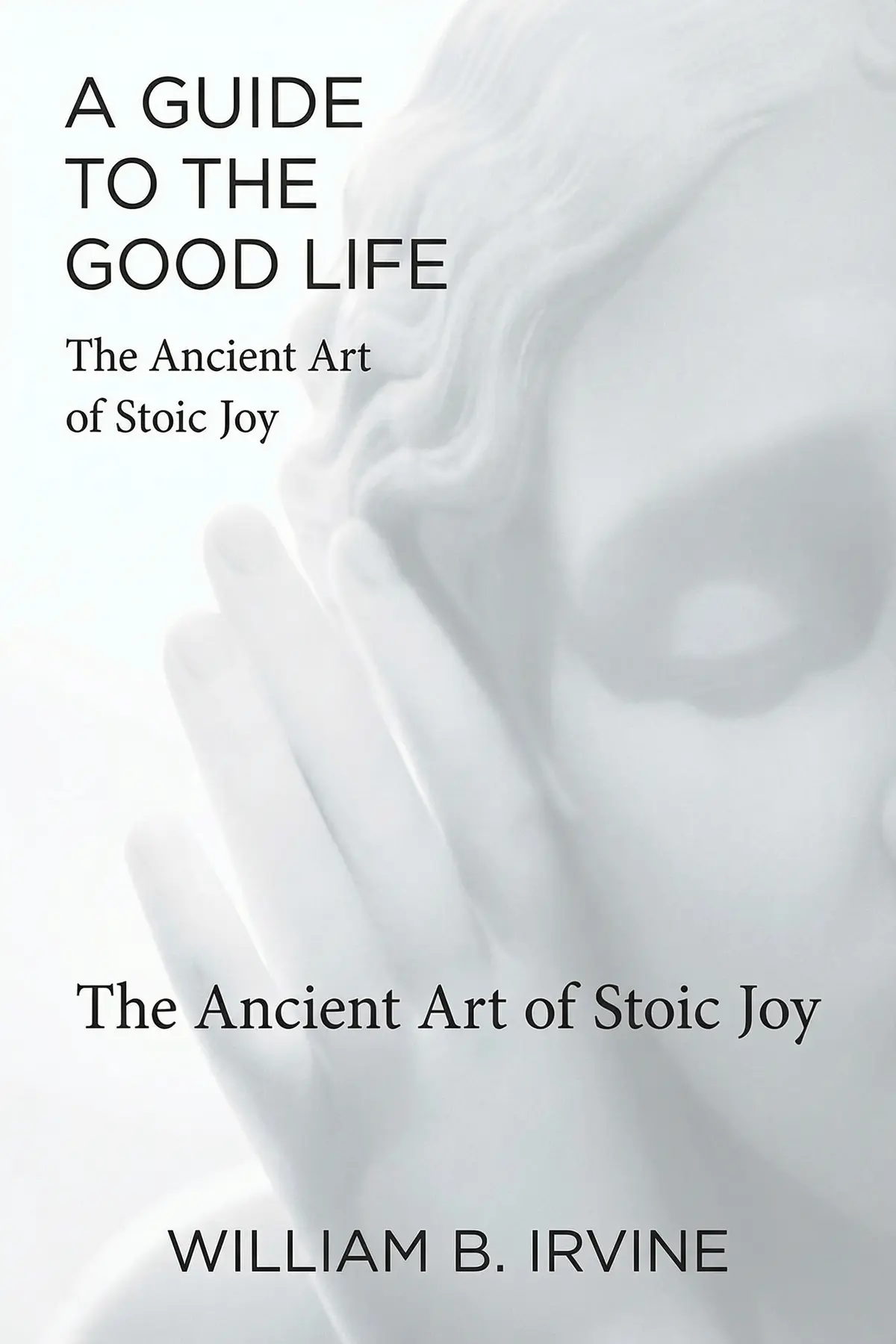
A Guide to the Good Life: The Ancient Art of Stoic Joy
William B. Irvine
A Little History of Philosophy
Nigel Warburton
A Theory of Justice
John Rawls

Anarchy, State, and Utopia
Robert Nozick

Antifragile: Things That Gain from Disorder
Nassim Nicholas Taleb

Areopagitica: Philosophy)
John Milton
AUDIO SUMMARY AVAILABLE
Listen to How to Be an Epicurean in 15 minutes
Get the key ideas from How to Be an Epicurean by Catherine Wilson, plus 5,000+ more titles in English and Thai.
- 5,000+ titles
- Listen as much as you want
- 7-day free trial
- Cancel anytime







