
59 Seconds: Change Your Life in Under a Minute
Richard Wiseman
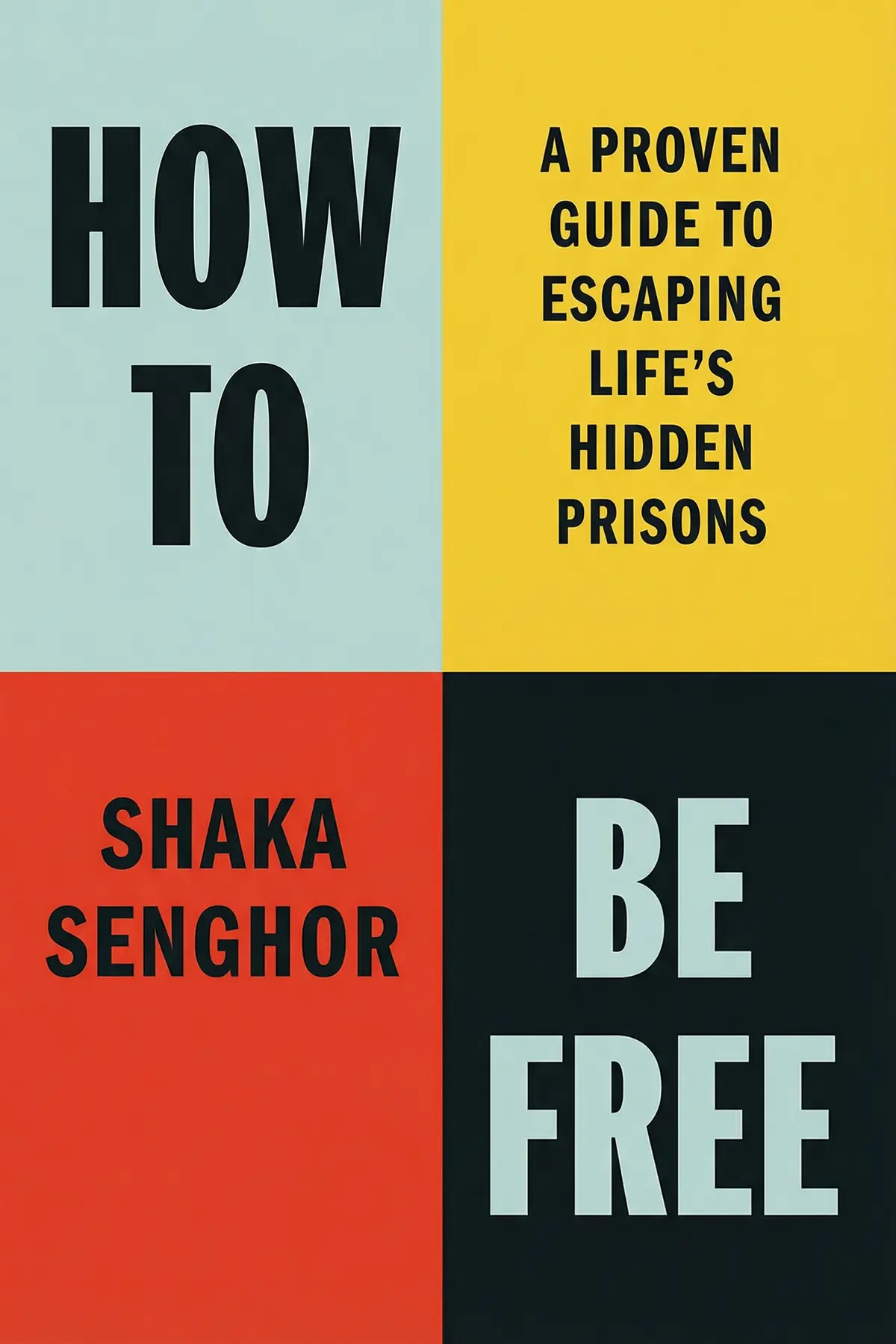
Explore a transformative path to personal liberation with Shaka Senghor. This guide reveals how internal shifts in love, joy, and courage can break the invisible chains holding you back from your truest self.
1 min 43 sec
We often think of freedom as something that exists ‘out there.’ We imagine it’s a place we arrive at once we’ve finally finished that grueling project, moved into a bigger home, or exited a stressful situation. We spend our days chasing a finish line that always seems to move just a few inches further away. But what if we’ve been looking at the map upside down? What if the most restrictive prisons aren’t the ones made of brick and mortar, but the ones we carry within ourselves?
In this exploration of Shaka Senghor’s insights, we dive into a radical way of looking at existence. This isn’t just about feeling better; it’s about a fundamental shift in how you operate in the world. It’s about moving from a state of being reactive—where the world dictates your peace—to a state of being sovereign, where your inner landscape is governed by your own choices. We are going to look at the invisible bars of shame, the cages of expectation, and the locks of self-doubt that keep us small.
The journey we’re about to take focuses on the idea that freedom is actually the presence of choice. It’s the ability to choose how you lead, how you love, and how you respond to the chaos around you. It’s about realizing that you don’t need a key from anyone else because you’ve had it in your pocket all along. We’ll look at how love can become a strategic tool for leadership, why joy is a discipline rather than a lucky break, and how the examples of legendary figures show us that persistence is the real superpower. By the end of this summary, the goal is for you to see your life not as a series of constraints to be managed, but as a vast field of possibilities where you finally have the permission to show up as your full, unburdened self. Let’s begin by looking at the foundation of this freedom: how we direct our energy toward others and ourselves.
3 min 00 sec
Discover why love is the ultimate leadership strategy and how setting firm boundaries is actually the kindest thing you can do for yourself and others.
3 min 02 sec
Learn the vital distinction between temporary fun and deep-seated joy, and how to use the concept of purpose to build a life that feels genuinely fulfilling.
2 min 50 sec
Fear often acts as a silent jailer, but by reframing your internal stories and detaching your worth from results, you can reclaim your power.
2 min 43 sec
Greatness isn’t about being perfect; it’s about the relentless consistency of showing up, even when the world isn’t watching.
2 min 38 sec
Final liberation isn’t found in the future; it’s found in the immediate choice to be present and to stop waiting for permission to live.
1 min 41 sec
As we wrap up this journey, let’s look back at the path we’ve traveled. We’ve seen that freedom isn’t a trophy we win at the end of a long race, but a way of running the race itself. It starts with the radical decision to lead our lives with a love that is both fierce and disciplined, protected by the boundaries that keep our inner garden healthy. We’ve learned that while fun is a pleasant distraction, joy is a deep-seated purpose that we must actively build using the tools of intention and self-awareness.
We’ve confronted the truth that fear is often just a storyteller we’ve given too much authority over our lives. By naming our fears and detaching our worth from the fickle winds of external success, we shrink those giants down to size. We’ve been reminded by the examples of greats like Muhammad Ali and Diana Ross that being unstoppable isn’t about perfection; it’s about the stubborn, daily consistency of showing up, rain or shine. And finally, we’ve realized that the ‘permission slip’ we’ve been waiting for was signed by us all along.
True liberation is available to you right now, in this very moment, simply by choosing to be present and aligned with your highest values. The invisible prisons of your life only have power as long as you believe the bars are real. The moment you decide to live as a free person, the walls begin to crumble. So, as you move back into the rhythm of your day, take this thought with you: You are the architect of your own peace. Walk with your head held high, lead with a heart full of love, and never again wait for anyone else to tell you that you are allowed to be free. The door is open. All you have to do is walk through it.
Many people spend their entire lives searching for freedom in the outside world, believing it will arrive once they have the right job, the perfect relationship, or enough financial security. However, this book argues that true liberation is not a destination or a gift from others; it is a profound internal state that you must claim for yourself. Drawing on powerful life lessons and a journey of deep transformation, it explores how the walls of our 'hidden prisons' are often built from our own fears, habits, and cultural expectations. Through a series of actionable insights and philosophical shifts, you will discover how to lead your life with love, differentiate between fleeting fun and lasting joy, and harness fear as a catalyst for growth rather than a barrier to success. The promise of this work is a practical roadmap to emotional and mental independence. It teaches that by mastering your mindset, setting firm boundaries, and committing to daily consistency, you can unlock a level of personal power that no external circumstance can ever take away.
Shaka Senghor is a writer, mentor, and motivational speaker who discovered his passion for writing while serving 19 years in prison. He has written six books, including the best-selling memoir Writing My Wrongs, the detective series Crack: Volume 1 and Volume 2, and Live in Peace: A Youth Guide to Turning Hurt into Hope, which complements his youth mentoring work. His writing and programs focus on transformation, healing, and building pathways to freedom.
Listeners find the book deeply moving and eye-opening, with one listener highlighting how it provides specific guidance for breaking free from hidden prisons. This title receives praise for its self-improvement material, as one listener points out that it features practical tools and simple rituals.
This book acts like a spiritual compass for anyone feeling trapped in their own mind. Senghor moves past the usual "pull yourself up" rhetoric to explore why we build invisible prisons in our daily lives through fear and self-judgment. I loved the section on how freedom isn't the absence of struggle, but the presence of choice. To be fair, some of the metaphors feel a bit lofty, but the emotional weight behind his words makes it hit home. It’s less about escaping your job and more about shifting the energy you bring to the table every morning. Truly transformative for my daily routine.
Show morePicked this up on a whim after hearing the author on a podcast, and I’m so glad I did. It’s a powerful soul mirror that reflects your potential back at you without the usual self-help fluff. The practical tools and simple rituals he describes—like reconnecting with your inner child through play—felt surprisingly grounded and actionable. Frankly, I expected more of a memoir, but this is a legitimate manual for mental liberation. He uses examples like Stephen Curry and Muhammad Ali to show that greatness is just stamina in disguise. Highly recommend for anyone feeling burnt out or directionless.
Show moreFinally got around to reading this, and the intersection of passion, skill, and mission—the Ikigai section—was worth the price of admission alone. Senghor has this way of making profound truths feel simple and accessible. He reminds us that freedom doesn't mean our problems vanish; it just means they no longer define who we are. Not gonna lie, I teared up a bit reading about his perspective on parenting and breaking generational patterns. It’s a rare book that manages to be both deeply personal and universally applicable. It's a manual for anyone ready to step into their worth.
Show moreEver wonder why you feel stuck despite checking all the boxes for success? Shaka Senghor suggests that we’re often running in circles chasing a feeling that was never external to begin with. The book is packed with specific guidance for breaking free from those hidden emotional cages we construct for ourselves. I found the connection between leadership and compassion particularly insightful because it reframes "soft" skills as core strengths. While the writing can get a little repetitive in the middle chapters, the core message about choosing joy on hard days is something I really needed to hear.
Show moreAs someone who often struggles with setting boundaries at work, the chapter on "love without limits" really hit a nerve. Senghor argues that true commitment isn’t martyrdom; you can be dedicated to your mission without sacrificing your personal well-being. It’s a refreshing take on professionalism that emphasizes trust and clarity over control or resentment. The truth is, I’ve read a lot of these types of books, and while the "freedom within" theme isn't brand new, his unique perspective makes it feel urgent. Some parts felt a bit brief, but the overall impact is undeniable.
Show moreAfter hearing so much about Senghor's previous work, I wanted to see how he handled the self-help space. He succeeds by turning fear into an indicator of growth rather than a stop sign. The book teaches you to move with your nerves instead of trying to bury them, which is a game-changer for someone like me who overthinks everything. Look, it’s not a perfect book—some of the transitions between his personal stories and the advice are a bit jarring. However, the message that freedom is a present-moment choice is incredibly empowering. It definitely makes you look at your "hidden prisons" differently.
Show moreNot what I expected given the hype, though it definitely has its moments of brilliance. Shaka Senghor has an incredibly inspiring life story, but I found the actual advice and some of the language to be a bit cliché in places. He talks a lot about "finding your purpose" and "choosing awareness," which are great concepts but felt a little thinly spread across the chapters. To be fair, his insights on using fear as fuel were genuinely helpful for my anxiety. It’s a solid read if you’re new to the genre, but seasoned self-help readers might find it a bit familiar.
Show moreThe chapter on joy as a practice was the highlight of an otherwise hit-or-miss experience for me. Personally, I felt like certain sections were written more for the author's own catharsis than for the reader's practical application. There’s a lot of focus on internal narratives, which is important, but sometimes it felt like we were circling the same point for twenty pages. That said, the idea of a "joy budget" is a fantastic takeaway that I’ve already started implementing. It’s a decent book for reflection, just don’t expect a step-by-step roadmap to solve all your external problems overnight.
Show moreThis book explores the mental and emotional prisons we build for ourselves with a lot of heart, but it lacks a bit of polish. The core message is powerful: freedom is an internal stance we claim, not a reward we earn. But the writing style fluctuates between being very grounded and being almost too abstract to follow. I appreciated the specific mention of how over-identification with roles becomes a trap. Gotta say, it’s a bit of a slow burn, and you have to be in the right headspace to appreciate the slower, more reflective chapters. A decent 3-star read.
Show moreHonestly, this felt like a collection of blog posts that didn't quite gel into a cohesive narrative. I picked this up because I forgot my Kindle at an appointment, and while I respect Senghor’s journey, the book relies too heavily on a "shotgun approach" to self-help topics. It touches on leadership, parenting, fear, and joy, but doesn't go deep enough into any of them to feel truly revelatory. The language is a bit flowery for my taste, often prioritizing "vibe" over substance. It’s fine for a quick hit of inspiration, but it lacked the practical depth I was looking for.
Show moreRichard Wiseman
William B. Irvine
Andrew D. Thompson
Deepak Chopra
AUDIO SUMMARY AVAILABLE
Get the key ideas from How to Be Free by Shaka Senghor, plus 5,000+ more titles in English and Thai.







