
15 min 57 sec
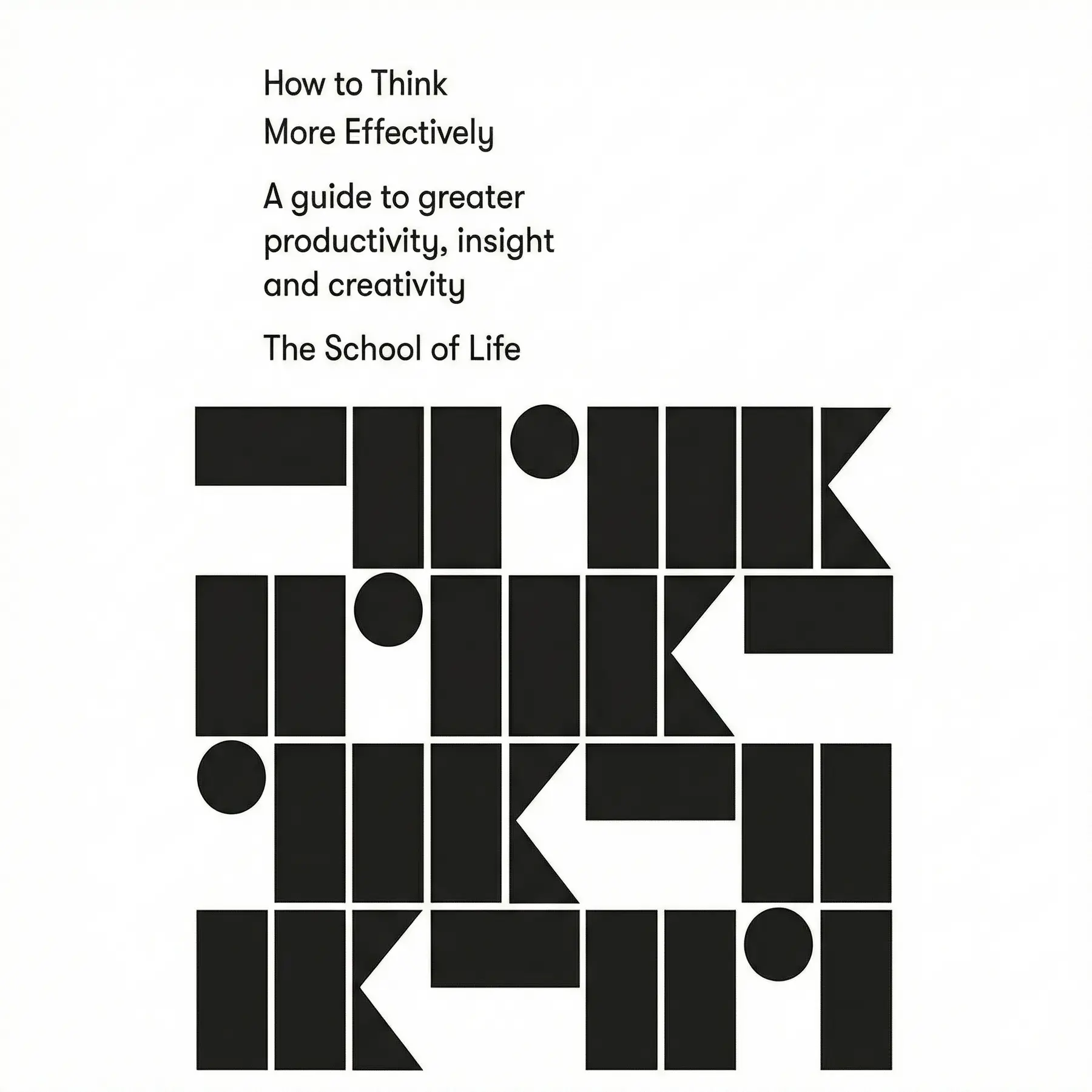
How to Think More Effectively: A guide to greater productivity, insight and creativity
Explore the art of thinking with this guide to mental clarity. Learn to navigate cognitive biases, harness the power of envy, and use strategic reflection to build a more insightful and productive life.
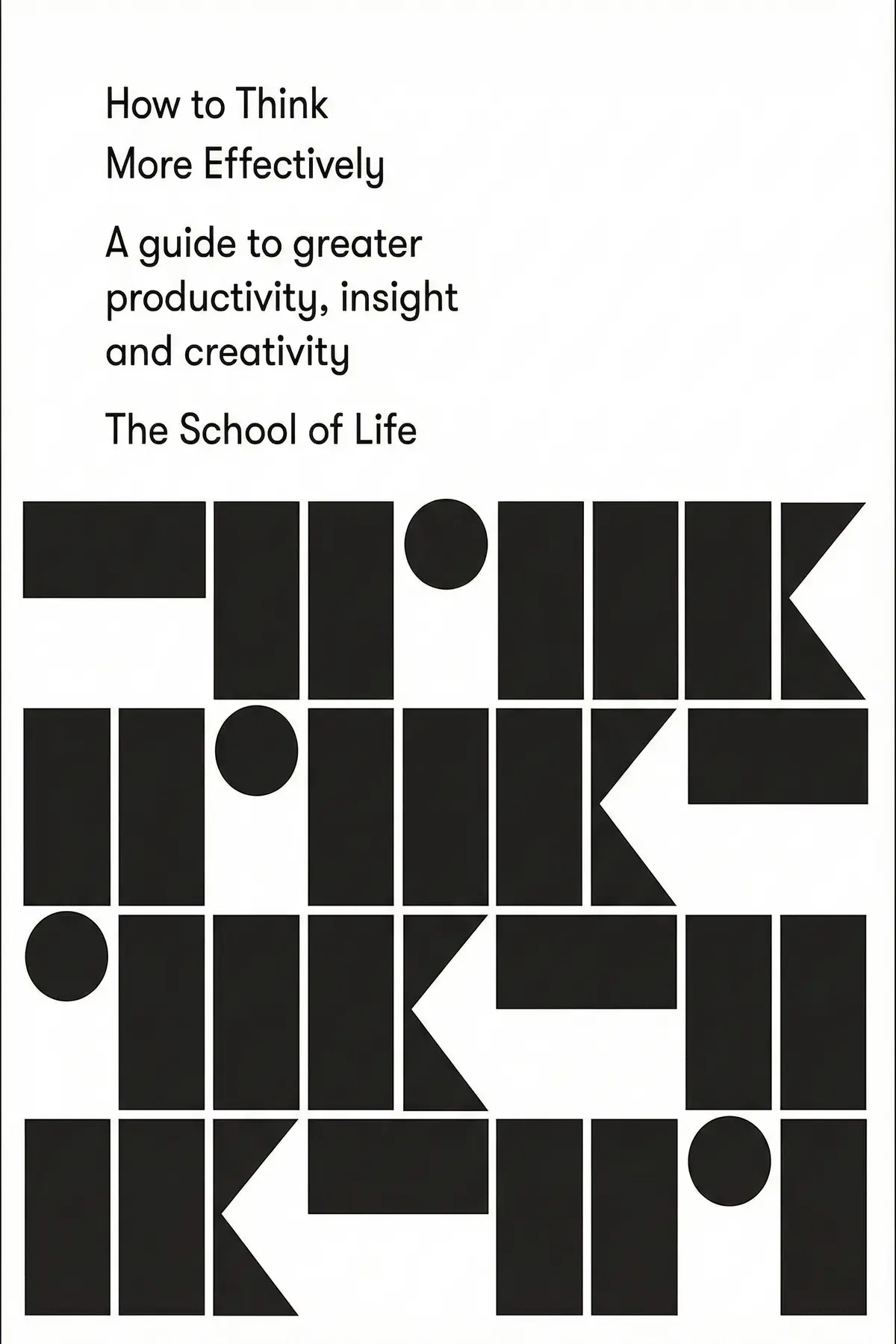
Table of Content
1. Introduction
1 min 28 sec
Every day, your body performs a series of complex miracles without you ever having to lift a finger or issue a command. Your heart beats in a rhythmic pulse, your lungs expand and contract to draw in oxygen, and your hair grows at its own steady pace. These are automatic processes, baked into our biology. However, almost every other aspect of our existence—our careers, our relationships, our creative output, and our most intimate conversations—relies on a process that is far less automatic: our ability to think.
We depend on our thoughts to navigate the complexities of modern life, yet it is a rare person who stops to ask how they might improve the very engine of their reality. Most of us take our thinking for granted, assuming that because we have thoughts, we are thinking well. But there is a profound difference between the standard mental noise we experience daily and the kind of precise, creative, and effective thinking that can transform a life.
In the following insights, we will explore a roadmap for mental refinement. We will look at why our most uncomfortable emotions, like envy, are actually hidden treasures of data, and why the most productive thing you can do for your brain might be to step into a hot shower or stare out a train window. We will challenge the idea that brilliance arrives in a single flash and instead learn to embrace the slow, fitful nature of the human mind. By the end, the goal is to shift from a state of impulsive reaction to one of deep, evaluative insight. Let’s begin this journey into the architecture of a more effective mind.
2. Prioritizing Strategy Over Execution
2 min 24 sec
We often rush to finish tasks without questioning if they are worth doing. Discover why shifting your focus from ‘how’ to ‘why’ can prevent a lifetime of misplaced effort.
3. The Fitful Nature of Genius
2 min 14 sec
Great ideas rarely arrive in a single, polished moment. Learn how to work with your brain’s natural tendency to progress in small, messy increments.
4. Capturing Elusive Thoughts Through Distraction
2 min 02 sec
Your best ideas often show up when you aren’t looking for them. Discover why a half-occupied mind is the secret to unlocking profound insights.
5. Using Envy as a Compass
2 min 02 sec
Envy is usually seen as a flaw, but it might actually be your most honest guide. Learn to decode your jealousies to find out what you truly want.
6. The Clarity of Mortality
2 min 07 sec
The thought of death is often avoided, but it can be a powerful tool for focus. Discover how reflecting on your end can help you live better now.
7. The Power of Intellectual Skepticism
1 min 53 sec
The most effective thinkers are often the ones who doubt themselves the most. Learn why skepticism is the foundation of true wisdom.
8. Conclusion
1 min 47 sec
As we have seen, thinking effectively is not a passive activity that just happens to us; it is a deliberate craft that requires patience, honesty, and a fair amount of courage. We have explored the necessity of pausing our frantic execution to ask the deeper ‘why’ behind our actions, and the importance of accepting the messy, non-linear way our brains actually produce brilliance. We’ve learned that our wandering minds in the shower are not being lazy, but are instead providing the perfect environment for elusive ideas to land.
We’ve also reframed some of our most difficult internal experiences. Envy, once a source of shame, becomes a vital compass for our desires. The daunting reality of death becomes a tool for both gravity and levity, helping us prioritize the meaningful over the trivial. And finally, we’ve seen that true wisdom often begins with the humility to doubt ourselves and the skepticism to look past easy answers.
To put these ideas into practice, try to engage in ‘mad thinking’ every so often. This means intentionally stepping outside the boundaries of your normal, practical thoughts. Ask yourself hypothetical questions that have no immediate utility, such as ‘What would my ideal society look like?’ or ‘If I were guaranteed not to fail, what would I attempt tomorrow?’ By stretching your mind into these imaginative territories, you break the ruts of daily routine and keep your cognitive faculties sharp and expansive. The throughline of all these insights is simple: your life is a direct reflection of the quality of your thoughts. By refining the way you think, you are quite literally refining the world you inhabit. Keep questioning, keep reflecting, and above all, keep thinking.
About this book
What is this book about?
Thinking is an automatic function, but thinking effectively is a skill that must be cultivated. This summary explores the philosophy and practical techniques developed by The School of Life to help individuals refine their mental processes. It addresses common pitfalls, such as the rush to execution without evaluation and the fear of skepticism, while offering unique tools for discovery like using mild distraction and mortality as a lens for perspective. By following these insights, listeners can expect to move beyond impulsive reactions and toward a more deliberate, creative, and profound way of interacting with the world. The promise of the book is a richer, more fulfilling existence achieved through the intentional improvement of one's inner dialogue and decision-making framework.
Book Information
About the Author
The School of Life
The School of Life is an organization devoted to helping people lead richer, more fulfilling lives. It believes that the humanities can help us develop emotional intelligence, wisdom, empathy, communication skills, and much more. With premises in cities like London, Amsterdam, and Seoul, the School of Life offers educational films and books, classes, and therapy sessions.
How to Be Alone: The School of Life
Sara Maitland
The School of Life: An Emotional Education
Alain de Botton
Ratings & Reviews
Ratings at a glance
What people think
Listeners value the way this title enhances cognitive skills, as one listener points out its functional tools for achieving mental clarity while another remarks on the elegantly written essay compilation regarding smarter thinking. The work earns high marks for being accessible, with one listener labeling it a must-read for everyone.
Top reviews
Cherry
The chapter on 'Butterfly Thinking' was exactly what my cluttered brain needed. Instead of forcing focus until my eyes hurt, this book argues for a more tangential, relaxed approach to problem-solving. It’s a beautifully written collection of essays that treats the mind with a kind of gentle dignity I haven't seen in other self-help titles. While some might find the 'Philosophical Meditation' section a bit slow, the practical tools for mental clarity are undeniably effective. I particularly loved the 'mental manoeuvres' suggested at the end of each section. It’s less of a rigid 'how-to' and more of a companion for those of us who feel paralyzed by the vagueness of our own ambitions. A must-read for anyone feeling stuck in their own head.
Show moreWin
Picked this up after realizing my decision-making process was basically just panicking until a deadline hit. This book changed the game for me. The concept of 'Philosophical Meditation'—taking the time to actually sit and untangle the messy web of worries in your head—has become a daily habit. I love how it treats thinking as a skill that requires the right environment and attitude rather than just raw processing power. The writing is incredibly accessible, yet it touches on these profound truths about human nature, like how our envy is just a map of what we truly want. It’s a slim volume, but the insights regarding independent thinking alone are worth the price of admission. Highly recommend.
Show moreArm
Finally got around to this and I'm honestly annoyed I waited so long. This isn't just a book about 'thinking'; it's a guide on how to be a more self-aware human being. The insights into 'Envy' and 'Love' as cognitive tools were mind-blowing. Most books tell you to suppress envy, but this book tells you to use it as a compass to find your true desires. That shift in perspective is what makes The School of Life so special. Every chapter feels like a mini-meditation that leaves you feeling a bit more grounded and a lot more capable of handling the chaos of life. The advice is practical without being patronizing. Truly a must-read for everyone who wants to understand their own brain better.
Show moreSau
This book doesn't just improve your 'thinking power' in a cold, logical sense; it softens your approach to your own flaws. I was deeply moved by the sections on 'Empathy' and 'Death.' Remembering that we are all essentially foolish and fragile makes it much easier to navigate social interactions and personal failures. The 'Cumulative Thinking' chapter was also a great reminder to write everything down, as the best ideas often arrive in fleeting bits and pieces. It’s a short read, but it’s packed with these 'mental manoeuvres' that actually help you reach what you’re seeking. It’s one of those rare books that I know I’ll be returning to whenever I feel the fog of vagueness starting to roll in again.
Show moreBig
Ever wonder why your best ideas happen in the shower? This book labels that 'Butterfly Thinking,' and it’s just one of the fifteen distinct styles explored here. Truth is, I expected a dense academic text on cognitive science, but what I got was a meditative guide on understanding the subconscious processes we usually ignore. The section on 'Death Thinking' was surprisingly refreshing—it’s not morbid, just a stark reminder to stop putting off the things that actually matter. My only gripe is that a few chapters felt a bit repetitive, almost like the author was reaching to hit that fifteen-type quota. Still, the prose is elegant, and the advice on navigating envy by getting specific about our desires is genuinely transformative.
Show moreViroj
As someone who spends way too much time searching for wisdom in other people's books, the chapter on 'Independent Thinking' was a much-needed reality check. It reminds us that our own lived experiences are often more insightful than the most 'brilliant' philosophical texts if we actually bother to analyze them. The layout is great; it breaks down complex cognitive habits into manageable 'types' like strategic or cumulative thinking. I did find the 'Love Thinking' section a bit soft for my taste, but the overall emphasis on moving from vagueness to precision is solid. Good thinking is indeed precise, and this book gives you the hammer to chip away at the marble. A solid four stars for the clarity it provided.
Show moreMichael
It’s a beautifully written exploration of the mind that focuses more on the 'why' than the 'how.' I particularly appreciated the discussion on 'Strategic Thinking' and how rarely we actually question the direction of our lives before jumping into action. The book argues that a little forethought can prevent a lifetime of pain, which hit home for me. While the 15 types of thinking vary in their usefulness—some feel a bit like filler—the overall message about the importance of mental clarity is vital. It’s a very soothing read. If you’re looking for a book that will help you feel more in control of your internal monologue, this is a fantastic starting point. It’s definitely not your typical dry self-help manual.
Show moreAisha
Frankly, I went in expecting a workout for my brain, but it felt more like a long walk through a museum. The School of Life has a very specific, polished tone that can sometimes feel a bit detached from the grit of real-life decision-making. I found the 'Mad Thinking' concept fascinating—the idea of temporarily suspending all restrictions on our imagination—but other chapters felt like common sense dressed up in fancy vocabulary. For a relatively quick read, parts of it were surprisingly difficult to get through without my mind wandering. If you’re looking for a rigorous, data-driven guide to increasing your IQ, this isn’t it. However, if you want to reflect on your emotions and untangle some deep-seated anxieties, it might be worth a browse.
Show moreWipawan
To be fair, the prose is gorgeous, which is what you’d expect from The School of Life, but I struggled with the 'slog' factor mentioned by others. Some of the categories, like 'Sceptical Thinking' or 'Strategic Thinking,' felt like things we already do, just with new labels attached. I was hoping for more practical exercises to 'train' my brain like an athlete, but this is much more focused on the philosophical and subconscious side of things. It's a collection of essays that are nice to read one by one before bed, but trying to power through the whole thing felt repetitive. The 'Butterfly' and 'Mad' thinking chapters were the highlights for me, as they offered something genuinely different from the usual productivity drivel.
Show moreLucas
Look, the advice is decent, but I’m not sure I learned anything 'new' here. Much of the book feels like a reorganization of basic Stoic principles or standard mindfulness techniques. The idea that we should 'think for ourselves' or 'be precise' isn't exactly a revelation in 2024. That said, the way they categorize 'Mad Thinking' as a leap of imagination necessary for social change was a highlight. It’s a very pretty book with very pretty sentences, but the substance felt a little thin in places. I'd recommend it as a gift for someone who doesn't read much philosophy, but for those already familiar with the genre, it might feel a bit like retreading old ground. It's fine, just not groundbreaking.
Show moreReaders also enjoyed
Abundance: The Inner Path to Wealth
Deepak Chopra
A Room of One’s Own
Virginia Woolf
59 Seconds: Change Your Life in Under a Minute
Richard Wiseman
AUDIO SUMMARY AVAILABLE
Listen to How to Think More Effectively in 15 minutes
Get the key ideas from How to Think More Effectively by The School of Life, plus 5,000+ more titles in English and Thai.
- 5,000+ titles
- Listen as much as you want
- 7-day free trial
- Cancel anytime







