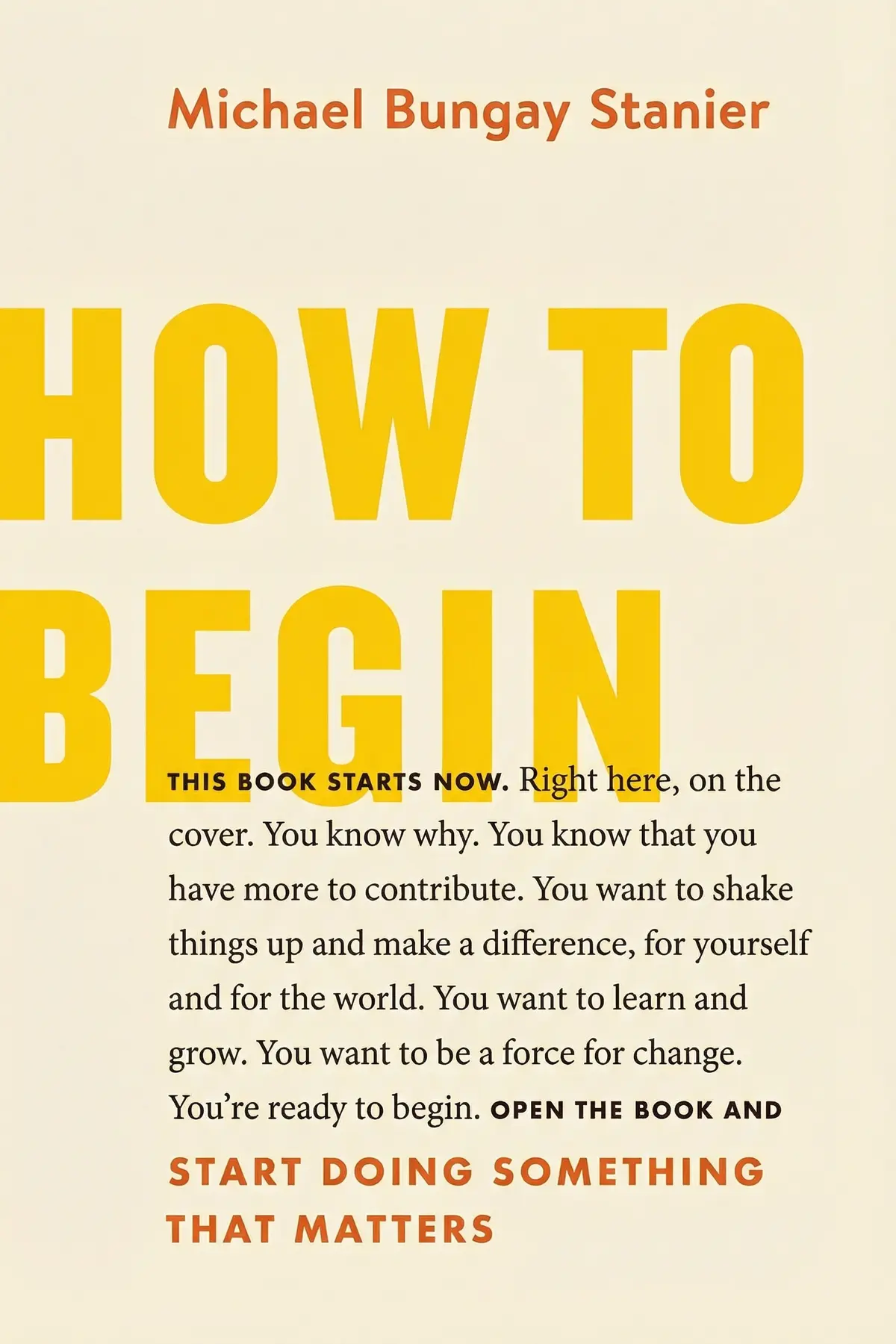
How to Begin: A Proven Plan to Start Something That Matters
Michael Bungay Stanier
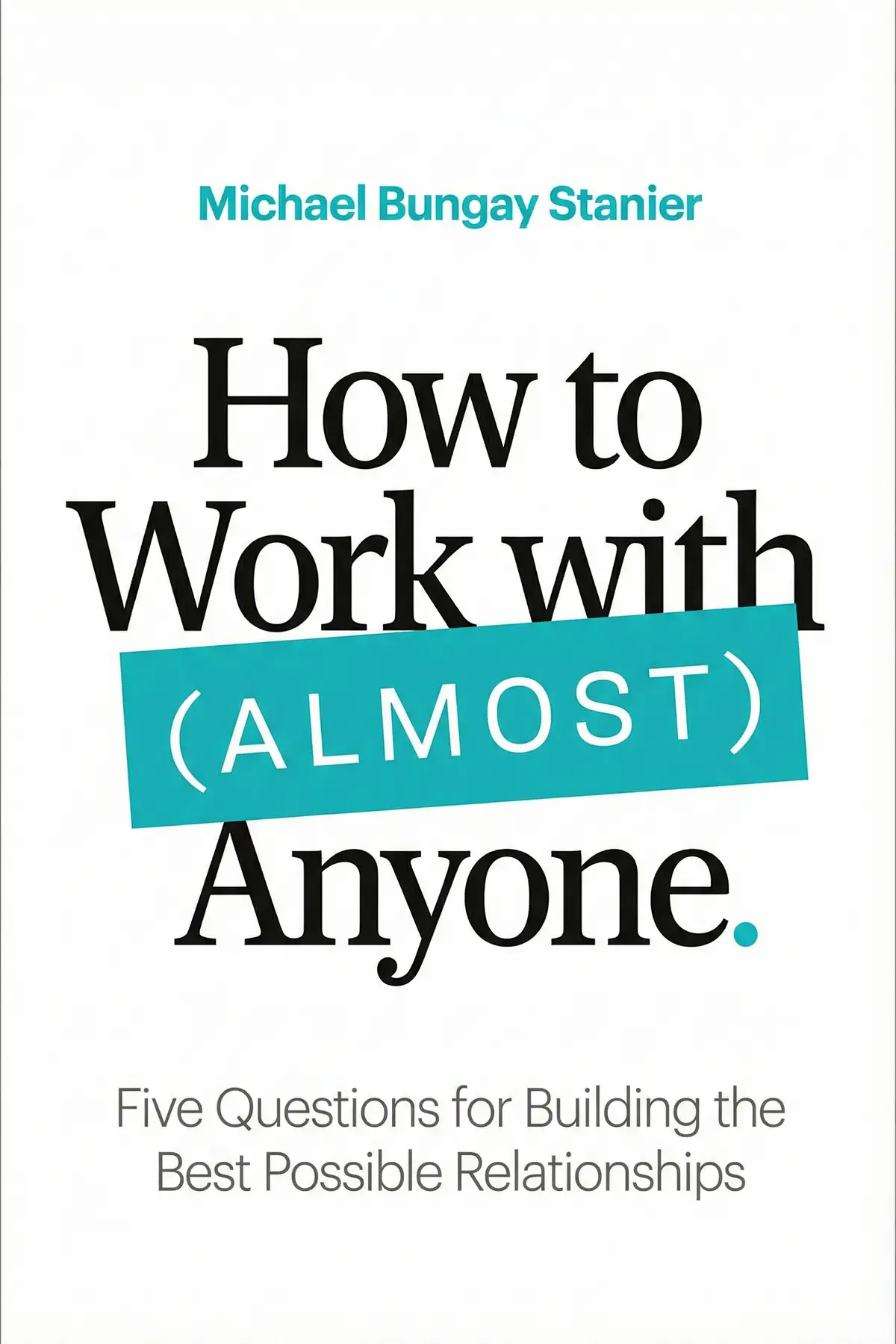
Building effective workplace relationships doesn't have to be a mystery. By using a structured approach called the Keystone Conversation, anyone can align expectations, leverage strengths, and navigate conflicts with intentionality and mutual respect.
1 min 29 sec
Think about the best working relationship you’ve ever had. Everything just clicked. You understood each other’s rhythms, you balanced each other’s weaknesses, and communication felt effortless. Now, think about the worst. It was likely a source of constant stress, characterized by misunderstandings and friction. Most of us view these experiences as matters of luck—you either have chemistry with a colleague, or you don’t. But what if you could take the guesswork out of professional dynamics?
The central premise here is that great working relationships aren’t just found; they are built with intention. This process involves moving toward what is called a Best Possible Relationship, or a BPR. Achieving this doesn’t mean you have to become best friends with everyone in the office. Instead, it means establishing a high-functioning partnership where trust, productivity, and clarity are the standards.
In this summary, we are going to explore a practical roadmap for transforming your professional interactions. We will delve into a concept known as the Keystone Conversation, a structured dialogue that serves as the bedrock of a BPR. You’ll learn the five essential questions that reveal a colleague’s true strengths and potential pitfalls. We will also look at how to maintain that relationship over time, using curiosity and kindness to navigate the inevitable bumps in the road. By the end, you’ll have a toolkit for separating facts from feelings and knowing exactly when it’s time to repair a bond or hit the reset button entirely. Let’s begin by looking at the architecture of a great connection.
2 min 54 sec
Discover the specific sequence of five questions that can transform any professional partnership from a gamble into a calculated success by aligning strengths and expectations.
2 min 55 sec
Learn why the way you initiate a deep conversation matters as much as the content itself, and how to create a safe environment for transparency.
3 min 03 sec
Explore the three essential mindsets—curiosity, vulnerability, and kindness—that act as an internal compass for keeping your professional connections on track.
3 min 22 sec
Uncover a powerful method for de-escalating tension by separating objective data from personal judgments, feelings, and underlying needs.
2 min 55 sec
Understand how to perform “controlled burns” and hit the reset button when a working relationship feels out of sync or headed for a breakdown.
1 min 11 sec
Building a Best Possible Relationship is a journey that requires both courage and a commitment to transparency. We’ve seen that these professional bonds don’t have to be left to chance. By using the Keystone Conversation, you can establish a foundation of trust before the first task is even started. You’ve learned how to use the five essential questions to uncover hidden strengths and plan for future challenges.
But the real work happens in the daily maintenance. By carrying a compass of curiosity, vulnerability, and kindness, you can navigate the complexities of any workplace. You now have a map to separate objective facts from the stories and emotions that often cloud our judgment. Whether you are performing a small adjustment or a total relationship reset, the goal remains the same: to work with almost anyone in a way that is productive, sustainable, and respectful.
As you move forward, remember that you are the architect of your professional dynamics. Don’t wait for others to initiate the change. Take the lead, offer the invitation, and start building your own BPR today. The quality of your work life is directly tied to the quality of your relationships, and with these tools, you have everything you need to make those relationships the best they can possibly be.
In the modern professional landscape, we often treat our working relationships as something that either works or doesn't, leaving the outcome to luck or chemistry. This book argues for a different approach: the Best Possible Relationship, or BPR. It suggests that by being proactive and asking five specific questions before diving into the work, you can create a resilient foundation with almost any colleague. The core of the book is the Keystone Conversation—a guided dialogue designed to surface personal strengths, work preferences, and past experiences. By exploring what has worked in the past and planning for how to handle future disagreements, professionals can build trust and clarity. The book also provides a framework for maintaining these relationships through constant curiosity and vulnerability. It teaches readers how to separate objective facts from personal judgments and feelings, allowing for smoother repairs and resets when things inevitably go off track. Ultimately, the promise is a more productive, less stressful work environment where collaboration is a deliberate choice rather than a happy accident.
Michael Bungay Stanier is a highly regarded author and the visionary founder of Box of Crayons, a firm dedicated to enhancing organizational learning and development. He is widely recognized for his best-selling works, including The Coaching Habit and How to Begin, which have helped countless professionals improve their leadership and communication skills.
Michael Bungay Stanier
Michael Bungay Stanier
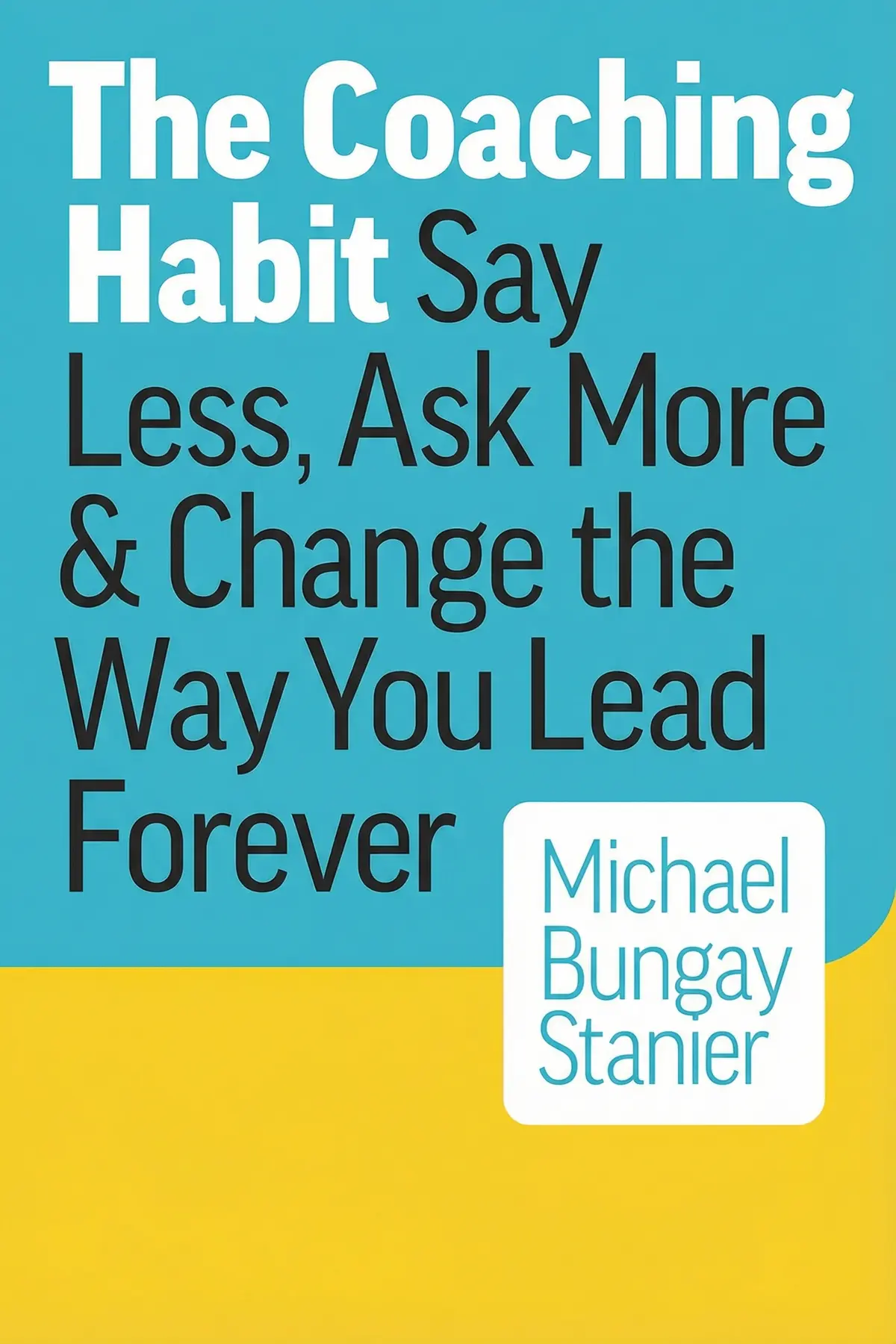
Michael Bungay Stanier
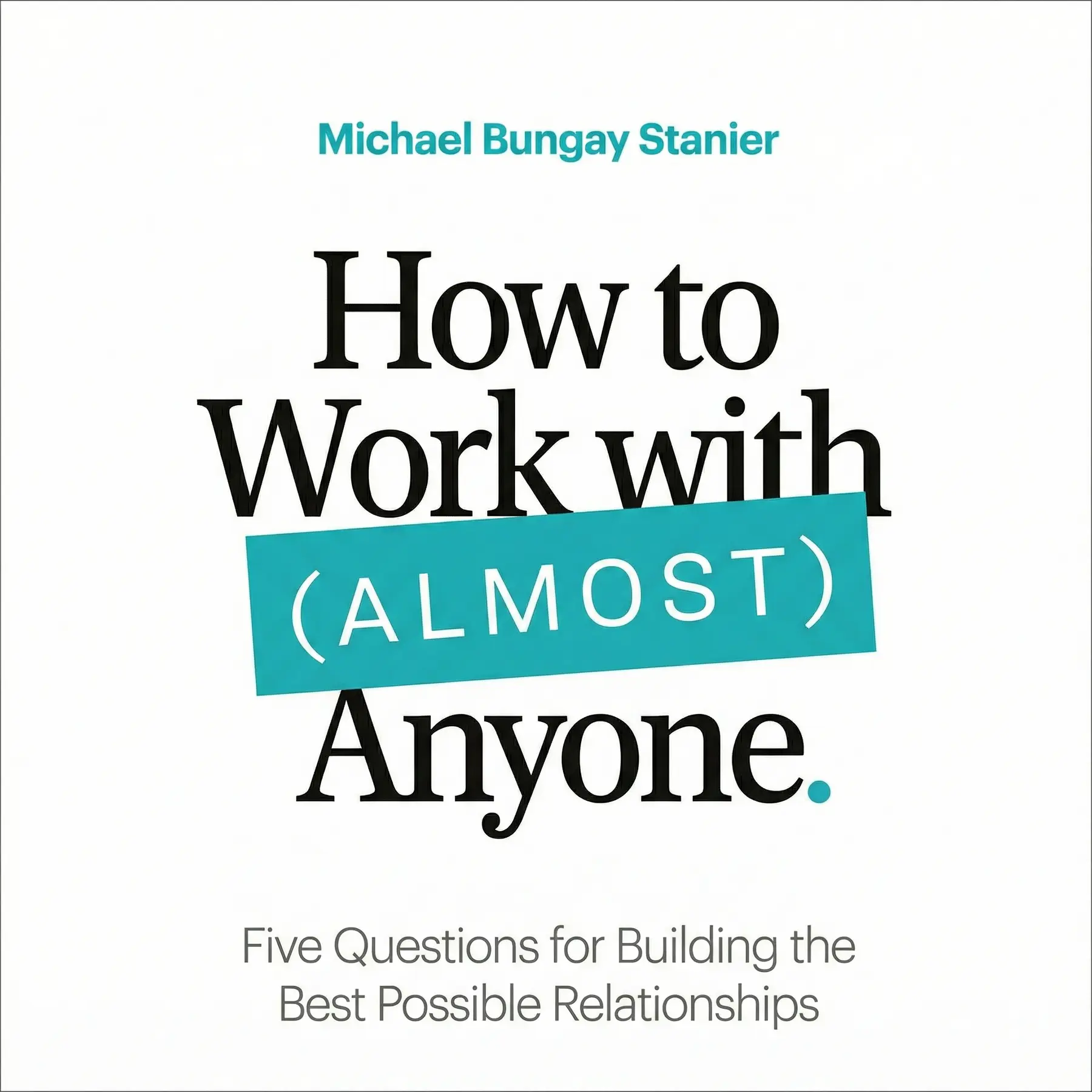
Listeners find this book highly applicable and simple to digest, written in a straightforward and brief style. They value the stimulating ideas and useful material provided, which makes for an entertaining and immersive experience. This guide assists in fostering effective professional bonds, with one listener even calling it a "Bible for building better relationships."
If you’re looking for a definitive manual for professional harmony, this is basically the new bible for building better relationships. Michael Bungay Stanier has a way of making 'meta' conversations—talking about how we talk—feel less awkward and more like a tactical advantage. The five specific questions provided are absolute gold for any manager who is tired of the 'guess-what-I'm-thinking' game that ruins productivity. I love that he included the word 'almost' in the title because it acknowledges the reality that some people are simply impossible to work with. The actionable steps are so clear that you can implement them five minutes after reading. It’s thought-provoking, fun, and highly engaging for anyone who manages people or deals with difficult clients daily. This is mandatory reading for my entire department.
Show moreThis manual should be mandatory reading for every manager before they hire a single soul. The way MBS breaks down the 5 essential questions is both brilliant and accessible, allowing for immediate application in high-stress environments. I particularly loved the section on how to repair a relationship when things go sideways, as that’s usually where most teams fail. It’s a short read, but every page is packed with actionable content that helps maximize the success of your working life. We’ve started using the BPR framework in our project kick-offs, and the difference in team clarity is already palpable. It's engaging, funny, and surprisingly profound for such a slim volume. I would highly recommend it to anyone who is old enough to have a job and a boss.
Show moreMBS delivers exactly what he's known for—actionable, punchy advice that cuts through the corporate fluff. This book focuses heavily on the concept of the 'Best Possible Relationship' (BPR), which I found incredibly refreshing for my team meetings. Instead of vague advice about active listening, you get a concrete framework involving five essential questions that actually change how you interact with colleagues. Truth is, we often expect work relationships to just 'happen' organically, but this book argues for being intentional right from the start. Some might find the layout a bit gimmicky with the large fonts and whitespace, but for a busy professional, the brevity is a feature, not a bug. It’s a fast read that stays with you long after you close the cover, provided you actually have the nerve to use the prompts.
Show moreEver wonder why some work relationships flourish while others just... don't? This book tackles that head-on by suggesting that we need to be more deliberate about our interactions from day one. I appreciated the focus on 'repairing' relationships, as most business books assume everything will be perfect once you start. The writing is clear and concise, making it an easy weekend read for a busy executive who needs results over theory. While some points felt a bit simplistic, the overarching framework for establishng a BPR is genuinely useful for navigating office politics. Look, it’s not a deep psychological treatise, but it is a very practical guide for anyone who wants to stop dreading their morning Zoom calls. It makes the 'weird' stuff about relationship dynamics feel surprisingly normal and manageable.
Show moreShort, punchy, and surprisingly profound for its size, this book helped me rethink how I approach new partnerships. The focus isn't on fixing people, but on fixing the *way* we work together, which is a vital distinction most leaders miss. I’ve read a lot of leadership books, but few are this straightforward about the awkwardness of being intentional in our conversations. Stanier's tone is casual and fun, which makes the 'work' of relationship building feel less like a chore and more like a game. There are some minor criticisms regarding the brevity, as it can feel a bit light on theory, but the practical results speak for themselves. In my experience, having a clear framework like this is far more valuable than a 400-page academic text you'll never actually finish.
Show moreTo be fair, the 'almost' in the title does a lot of heavy lifting here, which I really appreciated. The book doesn't promise miracles, but it does offer a very solid structure for improving 90% of your professional interactions. I found the five questions to be a great way to skip the small talk and get into what actually makes a collaboration successful. It’s an easy and fast read, perfect for a plane ride, and it provides simple principles that even the most socially awkward manager can follow. While some sections felt a bit like a repeat of his other work, the specific focus on the 'Keystone Conversation' makes it a worthy addition to the shelf. It’s a practical, no-nonsense guide for anyone trying to navigate the complexities of human connection in a modern office.
Show moreThe content is solid, but the execution of the audiobook left a bad taste in my mouth. I found it incredibly irritating that the author felt the need to read the exact same introduction for every single testimonial included in the recording. It made what should have been a quick, breezy listen feel like a repetitive slog through a marketing pitch. To be fair, the actual questions and the blueprint for the keystone conversation are quite practical and something I plan to use with my direct reports. However, the gimmicky structure and the constant self-promotion detract from what is otherwise a very insightful premise. It’s a helpful tool if you can ignore the fluff and focus purely on the prompts provided for your next one-on-one.
Show moreAfter hearing so much buzz, I expected a deep dive into the psychology of workplace dynamics. What I got instead was a very short, albeit practical, list of questions to ask during a specific type of meeting. The 'keystone conversation' is a great concept, but I’m not entirely sure it needed a whole book to explain it. Not gonna lie, the layout feels a bit like they were trying to hit a page count with massive margins and repetitive summaries. That said, the questions themselves are ones I’m now fond of and plan to use with my new hires next month. It’s a fast read—maybe too fast—but it does provide a decent blueprint for anyone who finds the 'people' part of work to be the most challenging bit.
Show moreIs this even a book, or just an extended blog post wrapped in a hardback cover? While the core idea of having a 'keystone conversation' is useful, I felt the content was stretched thin to justify the price point. Personally, I found the constant references to the author's website for 'extra documents' to be a major distraction, especially since the links didn't always work as promised. The writing style is energetic, sure, but it borders on being overly simplistic in parts where I wanted more psychological depth. If you’ve read his previous work, you might find this repetitive and unnecessarily short. It’s not that the advice is bad, but it definitely feels like it could have been a 2,000-word article rather than a standalone publication.
Show moreFrankly, this was a massive letdown given the hype surrounding the author's previous successes. I picked this up hoping for strategies to deal with truly toxic coworkers, but the advice felt incredibly naive and surface-level. Some days I would rather boil from the inside out than try to have a 'keystone conversation' with people who are fundamentally incompetent. The book assumes that everyone wants to improve the relationship, which simply isn't the case in the real world of cutthroat corporate environments. It felt like a collection of worksheets rather than a cohesive narrative, and the layout was so distracting I could barely focus on the message. Save your money and just Google 'communication prompts'—you'll get roughly the same amount of value without the annoying self-help tone.
Show more

AUDIO SUMMARY AVAILABLE
Get the key ideas from How to Work with (Almost) Anyone by Michael Bungay Stanier, plus 5,000+ more titles in English and Thai.