
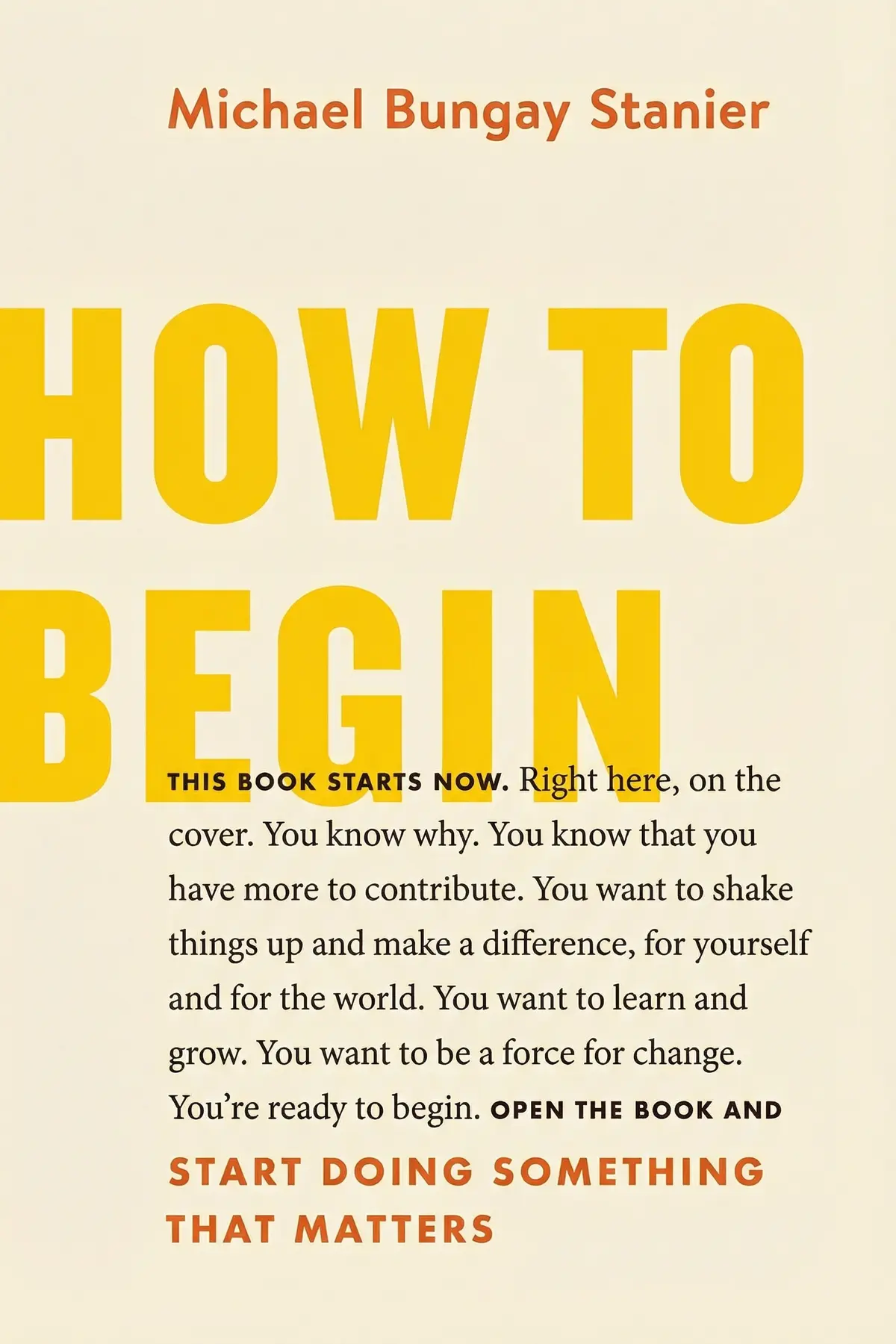
How to Begin: A Proven Plan to Start Something That Matters
Michael Bungay Stanier
Discover how to quiet your inner Advice Monster and lead through curiosity. Michael Bungay Stanier provides a roadmap for moving from expert-led solutions to a question-based coaching approach that empowers your team.
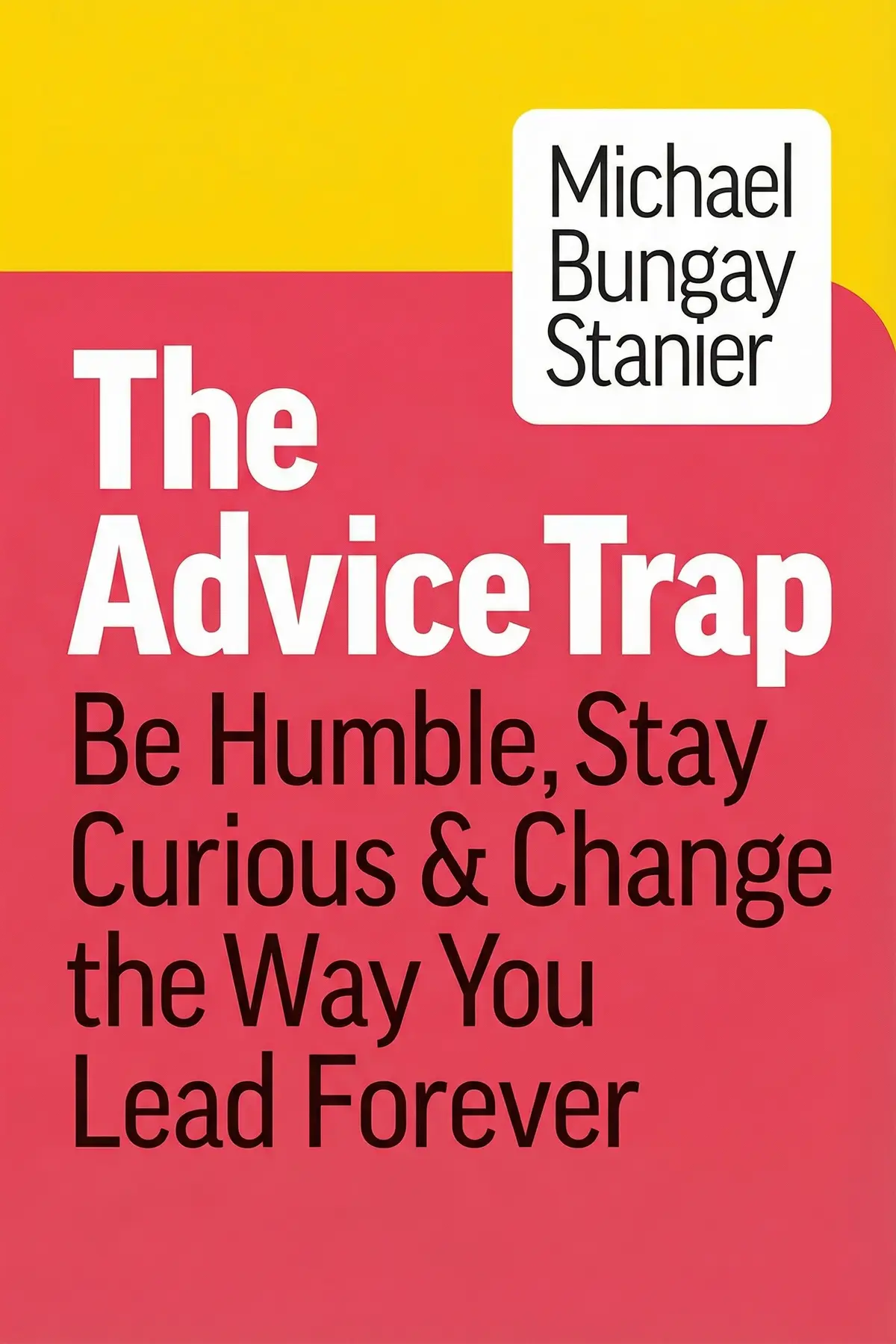
1 min 38 sec
We often think that being a leader means having all the answers. When someone brings us a problem, our instinct is to swoop in, analyze the situation, and offer a brilliant solution. It feels good. It feels helpful. But what if this reflex is actually the biggest obstacle to your team’s success? In this exploration of leadership and communication, we look at the core principles of The Advice Trap. The central idea here is that our deep-seated need to be the expert—the person with the plan—often prevents us from solving the real challenges and stops the people we lead from growing.
Throughout this journey, we will explore the concept of the Advice Monster, that internal voice that demands you take control and fix things. We will see how this monster manifests in different ways and why it is so difficult to silence. But silencing it is exactly what is required to become a great coach and a more effective human being. By the time we finish, you’ll understand that the most powerful tool in a leader’s arsenal isn’t a collection of answers, but a set of insightful, open-ended questions.
We are going to look at why advice is often mediocre and how it can actually damage your relationships. We will dive into the specific personas your inner Advice Monster might adopt and how to recognize the triggers that set it off. Most importantly, we’ll discuss how to build a habit of curiosity that allows you to stay focused on what really matters, even when the conversation gets difficult or messy. This isn’t just about professional coaching; it’s about changing the way you interact with every person in your life by being more humble and staying curious just a little bit longer. Let’s begin by uncovering the hidden costs of our well-intentioned but often misplaced advice.
2 min 24 sec
Offering solutions too quickly can lead to fixing the wrong problems and exhausting yourself. Learn why your reflex to help might actually be a leadership hurdle.
2 min 37 sec
We all have an internal drive to take control through advice. Discover the three distinct personas this monster takes and how they shape your leadership style.
2 min 27 sec
Stressful interactions trigger our advice-giving habits. Learn how to identify the specific people and situations that activate your Advice Monster and the rewards that keep you stuck.
2 min 35 sec
The most effective leaders ask rather than tell. Discover the specific, open-ended questions that unlock potential and keep the focus on real challenges.
2 min 18 sec
Conversations often get stalled by superficiality or tangents. Learn how to recognize the ways people hide from the real work and how to bring the focus back.
2 min 37 sec
The human brain is wired to avoid threat. Discover the four key elements required to make people feel safe enough to have truly transformative, vulnerable conversations.
2 min 14 sec
Taming your Advice Monster is a lifelong process, not a one-time event. Learn why you must become coachable yourself to effectively lead others through change.
1 min 39 sec
As we reach the end of this summary of The Advice Trap, the throughline should be clear: true leadership is not about being the source of all wisdom, but about being the architect of an environment where wisdom can emerge from everyone. We’ve seen how the Advice Monster—in its forms of Tell-It, Save-It, and Control-It—undermines our effectiveness by solving the wrong problems, disempowering our teams, and leading us to burnout. We’ve explored the power of staying curious just a little bit longer and the specific questions that can break the cycle of dependency.
The shift from an advice-giver to a coach is a fundamental change in how you show up in the world. It requires the humility to admit you don’t know everything and the courage to let others find their own way. It’s about creating safety, navigating through the fog of distractions, and committing to the long-term work of habit change. By choosing curiosity over the quick fix, you don’t just get better results; you build better relationships and a more resilient, innovative team.
To put this into practice immediately, try this simple exercise: in your very next conversation where someone presents a problem, resist the urge to give your first piece of advice. Instead, ask ‘What else is on your mind?’ and then truly listen to the answer. If you feel absolutely compelled to offer a solution, do so sparingly and always follow it up by asking, ‘How does that land with you?’ This small shift keeps the autonomy with the other person and ensures that your interaction remains a partnership rather than a lecture. Stay humble, stay curious, and watch how the world around you begins to change when you finally stop trying to fix it all yourself.
The Advice Trap explores the psychological barriers that prevent leaders from being truly effective coaches. It identifies the compulsive need to provide solutions—a behavior the author calls the Advice Monster—and explains how this reflex actually shuts down innovation and exhausts managers. By understanding the different personas this monster takes, leaders can begin to dismantle the habit of rescuing others and instead foster an environment of growth. The book promises a fundamental shift in leadership style. It moves beyond the mechanics of coaching to address the underlying mindset required for lasting change. You will learn how to identify personal triggers that cause you to stop listening and start talking, as well as how to navigate the common distractions that people use to avoid vulnerable conversations. Ultimately, the book offers a set of practical tools for asking better questions, building psychological safety, and creating a culture where curiosity is valued over quick fixes.
Michael Bungay Stanier was recognized as the leading Thought Leader in Coaching in 2019. He is the founder of Box of Crayons, a learning-and-development company that has advised organizations worldwide on leadership development. His previous work, The Coaching Habit, achieved massive success with 700,000 copies sold and extensive critical acclaim.
Michael Bungay Stanier
Michael Bungay Stanier
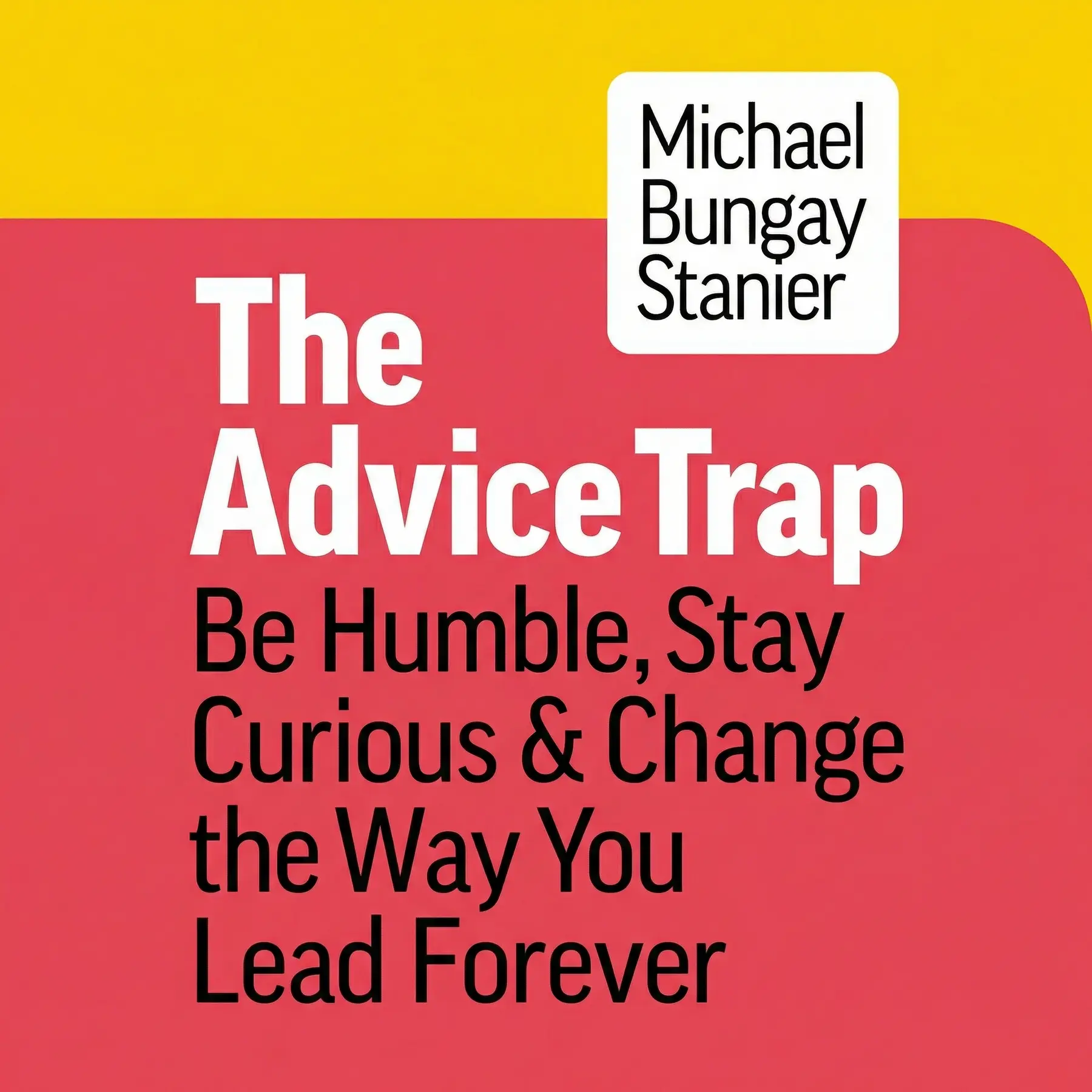
Listeners find the book accessible and immersive, delivering useful coaching insights that build upon *The Coaching Habit*. They value the relatable tone and sophisticated writing, with one listener highlighting the instruction on effective questioning methods. The text earns acclaim for its layout, wit, and benefit, making it a necessary read for those in leadership.
Michael Bungay Stanier has a knack for making complex behavioral changes feel totally accessible. This book picks up right where The Coaching Habit left off, diving deeper into why we feel this pathological need to provide solutions instead of listening. Truth is, taming my 'Advice Monster' has been the hardest part of my leadership journey so far. I loved the focus on powerful questions like 'What’s the real challenge here for you?' because it forces the other person to actually think. The writing is witty and fast-paced, though some might find the layout a bit airy with all the whitespace. Still, the actionable tools and journal pages at the end of each section make it a practical handbook for anyone wanting to empower their team. It’s a rare business book that actually feels like a conversation rather than a lecture.
Show moreWow, the shift from 'What's the challenge?' to 'What's the real challenge for you?' is a total game-changer for my 1-on-1 meetings. I used to think I was helping by offering quick fixes, but Stanier makes a compelling case that I was actually just strangling innovation. The book is jam-packed with diamonds of wisdom that you can start using five minutes after putting it down. I especially appreciated the section on making people feel safe through autonomy and respect. It’s not just about professional coaching; it’s about being a better human who actually listens to what people are saying. Some might call the advice obvious, but in my experience, common sense is rarely common practice in high-pressure corporate environments. This is a must-read for any leader who wants to stop being a bottleneck for their own team.
Show moreThis isn't just for business leaders; the principles here apply to almost any human interaction you care about. I’ve started using the 'What’s on your mind?' opener in my personal life, and the results have been incredible. The author teaches you how to be a coach without it feeling like a therapy session or a weird power play. The concept of maintaining equal rank through vulnerability was especially moving for me. Most leadership books are about being 'more,' but this one is about being 'less'—less talkative, less certain, and less of a fixer. It’s brilliant in its simplicity. I can see myself returning to the journal pages at the end of each section whenever I feel my Advice Monster trying to take over again. Absolutely worth every penny.
Show moreThe chapter on creating safety through 'us' and 'we' language was worth the price of admission alone for my current project. Stanier manages to take the ego out of leadership and replace it with a genuine, infectious curiosity. By staying curious just a little bit longer, we give our teams the space to tune into their own inner wisdom. The book is filled with actionable advice that doesn't feel like a lecture, which is a rare feat for a business text. It’s a very quick read, but the lessons on autonomy and mastery are things I’ll be thinking about for months. If you want to stop feeling exhausted from trying to solve everyone else's problems, buy this book. It’s the perfect companion to his previous work and a masterclass in modern, empathetic leadership.
Show moreFinally got around to this sequel and it's a solid follow-up that expands on the foundational habits of coaching. The author identifies three specific advice monsters—Tell, Save, and Control—and I felt personally attacked by how accurately he described my management style. It’s a very quick read, taking maybe two hours total, which is both a blessing and a curse. While the insights are gold, I can see why some reviewers feel it’s a bit thin on page count given the large font and numerous quotes. However, the focus on creating psychological safety by being on the same team is a game-changer for difficult conversations. If you struggle with jumping to conclusions or assuming you have the best answer, this is a necessary mirror to hold up. It’s practical, humorous, and immediately implementable in any office environment.
Show moreAs a manager who defaults to fixing everything, this book felt like a necessary and slightly uncomfortable wake-up call. Stanier writes in a conversational style that makes the hard truths about our ego much easier to swallow. He explains that our brain goes into fight or freeze mode during tough talks, and he provides a clear structure to bypass those survival instincts. Look, the book isn't long, but the value lies in the clarity of the questions he suggests. Questions like 'What do you want?' or 'If you're saying yes to this, what are you saying no to?' are simple but deeply provocative. My only gripe is that the bonus material mentioned in the text can be a bit hit-or-miss to find online. Regardless, the core message of staying curious just a little bit longer is something I’ll be practicing for a long time.
Show moreEver wonder why your team stops thinking the moment you open your mouth to give a suggestion? Stanier argues that we are our own worst enemies because we underestimate the capabilities of the people around us. This book is a fast and ready-to-start-implementing catalogue of ideas that focuses on taming that inner reflex to jump in. The intelligence of the writing shines through even in the lighter, more humorous sections. I found the 'us and we' language advice particularly helpful for building empathy during high-stakes projects. While it is a short read, the impact of the questions provided is quite profound if you actually take the time to use them. It’s a great aid for anyone who wants to build a culture of learning rather than a culture of dependence.
Show moreLooking back at my recent coaching sessions, I can see exactly where I let my Advice Monster take the wheel and drive us into a ditch. Stanier’s breakdown of why we give mediocre advice based on limited information was a huge 'aha' moment for me. We rush for the quick fix because we don’t listen deeply enough to pick up the actual information we need. The book’s structure is very user-friendly, with clear takeaways like 'Check if your advice has landed.' It’s a bit of a conversational starter for a management team, and I’d recommend reading it with a partner. Not gonna lie, I wish there was more content and fewer full-page graphics, but the gold that is there is undeniably valuable for anyone in a leadership role.
Show moreTo be fair, while the core concept is brilliant, I struggled with the physical layout of the content. There are roughly 40 pages of quotes that take up entire sheets, making the book feel more like a long pamphlet than a comprehensive guide. The advice itself is good, particularly the 'And what else?' technique, but it isn't exactly reinventing the wheel if you’ve read any modern leadership literature. I enjoyed the Romanian perspective in some of the community reviews I saw elsewhere, noting how we all recognize these 'monsters' in ourselves. It’s useful for a work book club because it sparks fast discussion, yet I wanted more depth regarding the 'why' behind our survival mechanisms. It’s a decent refresher, but perhaps not substantial enough to stand entirely on its own without the first book.
Show moreIt’s a bit frustrating when a book that could be a blog post is stretched out this much. Frankly, if you need a 200-page book to tell you to listen more and talk less, you might be lacking some basic social awareness. The 'Advice Monster' metaphor is cute for a while, but it gets repetitive fast. I appreciated the specific questions like 'What else?', yet the filler content—especially those massive quotes taking up entire pages—felt like a waste of paper. It’s fine for a quick plane ride, but don't expect deep psychological insights or rigorous case studies. It’s very much 'pop-management' at its most basic level. If you’ve already read The Coaching Habit, you’ve basically already read this one too.
Show more
Hamilton Helmer

Margaret Heffernan
Joseph A. Maciariello

AUDIO SUMMARY AVAILABLE
Get the key ideas from The Advice Trap by Michael Bungay Stanier, plus 5,000+ more titles in English and Thai.







